2026 Top 10 Solenoid Coil Manufacturers: An Engineer’s Supplier Selection Guide
Solenoid coil manufacturers can look equally capable when engineers compare catalogs, sample prices, and compliance logos. The real differences usually appear later—when a bobbin deforms during winding, resistance drifts between batches, a coil overheats under the actual duty cycle, or a prototype cannot be repeated consistently in mass production.
The top solenoid coil manufacturers for an OEM project are not necessarily the largest brands. Our recommendation is to select from the application backward: define the valve architecture, voltage, power, duty cycle, temperature, compliance requirements, dimensions, and connection method first. Then compare each manufacturer’s engineering support, process control, validation capability, traceability, and ability to reproduce sample performance in production.
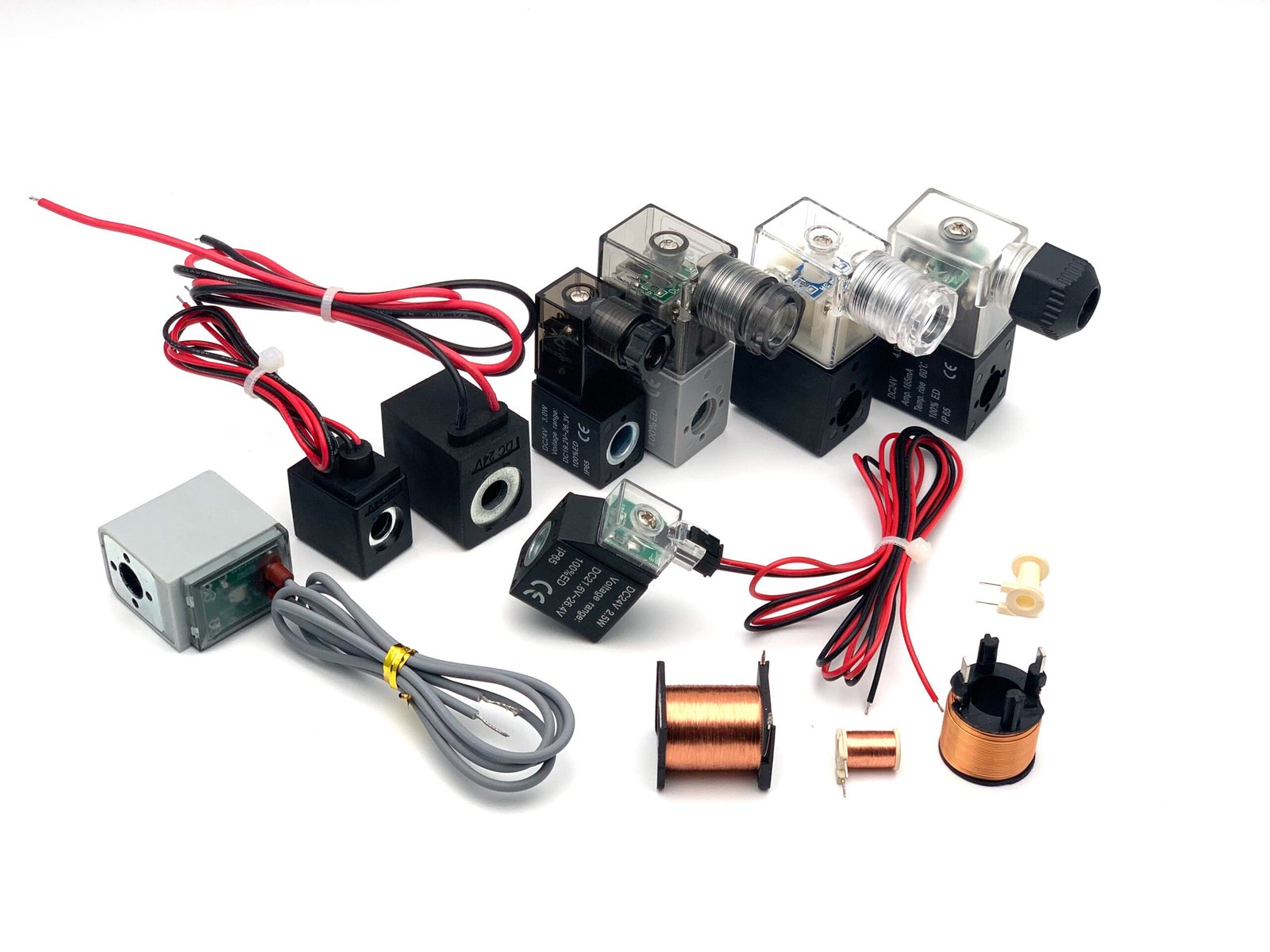
The numbered list below is a practical shortlist rather than a global market-share ranking. Manufacturer No. 3 is not automatically larger or technically superior to No. 4. The more useful question is:
> Which supplier model best fits the application?
A company that is strong in proprietary valve systems may be the safest choice for an existing platform, while a specialized custom solenoid coil manufacturer may offer more flexibility for a new OEM design.
If you are specifying a coil rather than comparing brand catalogs, start from the application:
- Voltage: What voltage do solenoids use · 12V vs 24V for pneumatic OEMs
- Connector / interface: How to choose a DIN connector coil
- Valve body / application: Coil selection for pneumatic valves · Steam valve leakage on espresso machines
- Replacement fit: Drop-in coil compatibility checklist
- Operating temperature: How ambient temperature affects coil selection
- Products: Solenoid valves · Solenoid coil series
What Should Engineers Look for in a Solenoid Coil Manufacturer?
A catalog can confirm that a supplier sells the right general type of coil. It cannot prove that the product will survive the intended application or that the supplier can reproduce the same performance across thousands of units.
For OEM projects, we recommend evaluating whether the manufacturer can translate application requirements into a controlled production process.
That means looking beyond voltage and external dimensions to factors such as:
- Winding design
- Bobbin geometry
- Insulation system
- Temperature rise
- Magnetic compatibility
- Material selection
- Encapsulation
- Electrical connection
- Tooling
- Inspection
- Traceability
- Engineering change control
- Prototype-to-production transfer

Catalog Customization Is Not the Same as Engineering Customization
Catalog size does not equal custom engineering capability.
A large standard product range is valuable when an engineer needs a proven replacement coil. However, it does not necessarily show whether a supplier can:
- Redesign a bobbin
- Evaluate limited winding space
- Adjust wire diameter and turn count
- Change the bore or envelope
- Select a different insulation system
- Modify encapsulation
- Evaluate thermal performance
- Design around a new magnetic structure
Changing only the lead-wire length, label, or voltage option may still be useful, but it should not be confused with full coil-level engineering.
For a serious OEM program, we look for control over:
- Coil voltage, current, resistance, and power
- Winding wire diameter and turn count
- Bobbin bore, wall thickness, flange geometry, and overall dimensions
- Insulation class and material compatibility
- Encapsulation or overmolding materials
- Continuous, intermittent, or pulsed duty
- Ambient and internal temperature conditions
- Magnetic compatibility with the armature, tube, and valve design
- DIN, flying-lead, or plug-in connections
- Prototype, tooling, pilot production, and mass-production transitions
Thermal Performance Should Be Evaluated as a System
A solenoid coil does not operate in isolation.
Its temperature depends on:
- Electrical input
- Duty cycle
- Ambient temperature
- Valve-body temperature
- Mounting
- Heat transfer
- Enclosure conditions
- Magnetic behavior
- Nearby components
The same nominal coil can therefore behave differently on two different valve assemblies.
Likewise:
We use questions like these during an initial supplier review:
| Evaluation Area | What Engineers Should Ask | Useful Evidence |
|---|---|---|
| Electrical design | How are resistance, current, power, and tolerances defined? | Drawing, specification, test method |
| Thermal behavior | At what duty cycle and ambient temperature was the coil validated? | Temperature-rise data and test conditions |
| Mechanical design | Can the bobbin withstand winding, molding, and assembly forces? | Drawing and engineering review |
| Materials | Are plastics, copper wire, insulation, and encapsulants controlled? | Material specifications and lot records |
| Production | Which key processes are controlled in-house? | Process flow and equipment information |
| Quality | How are winding and dimensional variation detected? | Control plan and inspection records |
| Traceability | Can finished coils be linked to material and process batches? | Lot coding or MES records |
| Compliance | Do documents cover the exact product construction? | Current certificates and reports |
A certificate can support supplier qualification, but certification is not the same as application validation. The final coil still needs to be evaluated under the real electrical, thermal, mechanical, magnetic, and environmental conditions of the equipment.
Who Are the Top 10 Solenoid Coil Manufacturers in 2026?
A useful Top 10 list should not give every company the same generic praise.
Some manufacturers are strongest when supporting their own valve ecosystems. Others specialize in pneumatic automation, hydraulic cartridge systems, HVAC, refrigeration, process control, or independent custom coil development.
Our 2026 shortlist includes:
- ASCO / Emerson
- Parker Hannifin
- SolenElec
- Bürkert
- SMC
- Danfoss
- Festo
- Norgren
- Sun Hydraulics
- Shako
> Important: This is not a ranking by revenue, market share, factory size, or technical superiority. Engineers should verify current official datasheets, model-specific documentation, regional availability, and application compatibility before making a supplier decision.
Quick Comparison of the Top 10 Solenoid Coil Manufacturers
| Manufacturer | Supplier Type | Best Fit | Main Advantage |
|---|---|---|---|
| ASCO / Emerson | Valve ecosystem | Industrial fluid control | Established valve platform |
| Parker Hannifin | System/component ecosystem | Hydraulic and pneumatic systems | Broad system integration |
| SolenElec | Specialized coil manufacturer | Custom OEM solenoid coils | Coil-level engineering flexibility |
| Bürkert | Integrated fluid-control supplier | Process automation | Integrated valve/control solutions |
| SMC | Pneumatic ecosystem | Factory automation | Mature pneumatic platforms |
| Danfoss | Application-focused supplier | HVAC, refrigeration, fluid control | Application specialization |
| Festo | Automation ecosystem | Pneumatic automation | System integration |
| Norgren | Pneumatic/motion supplier | Pneumatic and industrial automation | Broad industrial experience |
| Sun Hydraulics | Hydraulic specialist | Cartridge hydraulics | Hydraulic specialization |
| Shako | Pneumatic/fluid-control supplier | General industrial applications | Standard component availability |
1. ASCO / Emerson
Best Fit: Established ASCO valve platforms and industrial fluid-control projects.
Why Engineers Consider ASCO:
ASCO is a logical choice when the equipment already uses an established ASCO valve architecture. Its official portfolio covers a broad range of solenoid-valve and fluid-control products, making it particularly relevant when engineers want to remain within an existing valve ecosystem.
Staying within the original valve platform generally reduces uncertainty around the coil-to-valve interface, electrical options, and environmental compatibility.
What to Check Before Selecting ASCO:
- Exact valve-series compatibility
- Voltage and frequency
- Duty rating
- Connector format
- Ambient limits
- Environmental protection
- Regional documentation
- Product lifecycle and availability
For an existing validated ASCO platform, the original coil is usually the lowest-risk starting point.
2. Parker Hannifin
Best Fit: Hydraulic, pneumatic, mobile, refrigeration, and industrial equipment applications.
Why Engineers Consider Parker:
Parker is particularly relevant when the coil is one component within a larger hydraulic, pneumatic, or fluid-control architecture.
Its official product documentation includes multiple solenoid-valve and coil configurations across industrial applications. The value for many OEMs is therefore system-level integration rather than coil-only customization.
What to Check Before Selecting Parker:
- Coil-to-valve interface
- Approved voltage options
- Environmental requirements
- Product-family compatibility
- Regional availability
- Lifecycle status
- Documentation for the exact model
A similar-looking Parker coil should not automatically be treated as interchangeable with another Parker family.
3. SolenElec
Best Fit: Custom OEM solenoid coils and coil-level engineering flexibility.
Unlike the large valve-system brands in this list, SolenElec is included primarily for OEM engineers who need the coil itself customized around a new valve, actuator, or equipment design.
SolenElec supports:
- In-house coil winding
- Injection molding
- OEM / ODM development
- Voltage and power customization
- Bore and dimensional customization
- Wire diameter, turn count, and resistance design
- Bobbin material selection
- Insulation and encapsulation options
- DIN, flying-lead, and plug-in connections
- Tooling and sample development
- Prototype-to-mass-production transfer
- Production inspection and traceability
From our manufacturing perspective:
> For a custom OEM project, supplier size matters less than whether the manufacturer can control the parameters that determine coil performance and repeatability.
These include:
- Winding design
- Thermal behavior
- Magnetic compatibility
- Bobbin geometry
- Material selection
- Dimensional consistency
- Process stability
- Inspection and traceability
What to Check Before Selecting SolenElec:
As with any custom solenoid coil manufacturer, buyers should define and verify:
- Design inputs
- Critical dimensions
- Resistance tolerances
- Material specifications
- Duty conditions
- Thermal requirements
- Test conditions
- Tooling responsibility
- Change-management process
- Application-specific validation
General factory capability should not replace product-level technical approval.
4. Bürkert
Best Fit: Process automation and integrated fluid-control systems.
Why Engineers Consider Bürkert:
Bürkert is especially relevant when valves, actuation, sensing, and process control are being selected as part of an integrated fluid system.
Its official solenoid-valve portfolio covers industrial applications including food and beverage, water technology, laboratory and analysis equipment, energy, and plant engineering, with both standard and customized solutions.
For projects already based on a documented Bürkert platform, selecting the original coil or valve assembly can simplify qualification.
What to Check Before Selecting Bürkert:
- Valve function
- Media compatibility
- Voltage and power
- Duty cycle
- Connector options
- Environmental rating
- Temperature limits
- Model-specific approvals
For alternate-source projects, engineers should also determine whether the coil is designed to operate independently of the original valve assembly.
5. SMC
Best Fit: Pneumatic automation and factory automation.
Why Engineers Consider SMC:
SMC is a logical choice when a machine already uses an established SMC pneumatic platform, valve manifold, or automation architecture.
Using the original coil can simplify:
- Spare-parts management
- Interface compatibility
- Maintenance
- Documentation
- Existing platform qualification
SMC's solenoid-valve portfolio is strongly aligned with pneumatic automation, so the brand is particularly relevant where the coil is selected as part of a complete pneumatic valve platform rather than as an independent electromagnetic component.
What to Check Before Selecting SMC:
- Valve-series compatibility
- Electrical connection
- Surge-suppression or indicator options
- Voltage tolerance
- Duty requirements
- Environmental conditions
- Regional availability
For an independent replacement or OEM alternative, engineers should validate bore size, magnetic compatibility, electrical power, duty cycle, and hot-state thermal performance—not only voltage and external dimensions.
6. Danfoss
Best Fit: Refrigeration, HVAC, heating, and industrial fluid-control applications.
Why Engineers Consider Danfoss:
Danfoss is particularly relevant when application knowledge, valve compatibility, and established fluid-control products are central to the project.
Its official industrial solenoid-valve range covers applications involving air, steam, oil, gas, industrial washing equipment, compressors, boilers, food-processing machinery, and other fluid-control systems.
Danfoss also supplies valve bodies and electrical coils as configurable components within its platform, making it useful when engineers want an established valve-and-coil ecosystem.
What to Check Before Selecting Danfoss:
- Exact valve and coil pairing
- Voltage and frequency
- Power consumption
- Connection method
- Operating temperature
- Environmental exposure
- Regional documentation
- Application-specific requirements
For refrigeration, HVAC, and fluid-control projects, application familiarity may be more valuable than maximum coil-level customization flexibility.
7. Festo
Best Fit: Pneumatic automation and integrated factory-automation systems.
Why Engineers Consider Festo:
Festo is particularly relevant when the solenoid coil is part of a broader pneumatic valve or automation architecture.
Festo offers both standalone solenoid coils and extensive electrically actuated pneumatic valve platforms. Its official valve portfolio includes compact directional valves, valve terminals, multiple electrical interfaces, and products for a wide range of factory-automation applications.
The engineering value is often platform compatibility rather than modifying the coil as an independent component.
What to Check Before Selecting Festo:
- Platform compatibility
- Supply voltage
- Connection method
- Permitted duty
- Ambient conditions
- Environmental protection
- Replacement strategy
- Interaction with valve terminals or control electronics
If the machine already uses a validated Festo valve platform, the original coil is normally the logical first option.
8. Norgren
Best Fit: Pneumatic, motion-control, and industrial fluid-control applications.
Why Engineers Consider Norgren:
Norgren is relevant to OEMs and machinery builders that already use established pneumatic or industrial-control platforms and want system-level application support.
Its official product portfolio includes control valves, proportional valves, miniature solenoid valves, fluid-control valves, valve islands, pneumatic actuators, and related automation components.
This makes Norgren particularly relevant when the coil is part of a wider pneumatic or motion-control solution.
What to Check Before Selecting Norgren:
- Exact product family
- Coil interface
- Voltage and power
- Connector
- Duty cycle
- Environmental limits
- Documentation
- Availability
- Lifecycle planning
Lifecycle support becomes particularly important when equipment is expected to remain in service for many years.
9. Sun Hydraulics
Best Fit: Hydraulic cartridge-valve applications.
Why Engineers Consider Sun Hydraulics:
Sun Hydraulics is a useful example of why application specialization matters.
Its official technical documentation covers solenoid-operated hydraulic cartridge valves and multiple coil configurations designed around defined cartridge architectures.
In hydraulic systems, the coil is part of a complete electromagnetic and hydraulic assembly. Temperature, vibration, contamination, pressure, duty cycle, and cartridge geometry can all influence the final performance.
What to Check Before Selecting Sun Hydraulics:
- Cartridge and coil pairing
- Voltage
- Connection method
- Duty rating
- Environmental protection
- Temperature limits
- Assembly requirements
For this type of application, validated cartridge-platform compatibility may be more important than selecting a general-purpose coil supplier.
10. SHAKO
Best Fit: General pneumatic and industrial fluid-control applications.
Why Engineers Consider SHAKO:
SHAKO offers pneumatic solenoid valves, 2/2-way solenoid valves, pneumatic control components, and OEM/ODM services.
Its standard product portfolio makes it relevant when a project fits established pneumatic or fluid-control configurations and does not require extensive coil-level redesign.
What to Check Before Selecting SHAKO:
- Model compatibility
- Voltage
- Frequency where relevant
- Power
- Connection type
- Duty cycle
- Ambient conditions
- Documentation
- Local technical support
- Replacement availability
Engineers should rely on current manufacturer documentation rather than specifications copied from reseller listings.
Standard Coil Supplier vs Custom Solenoid Coil Manufacturer: Which Do You Need?
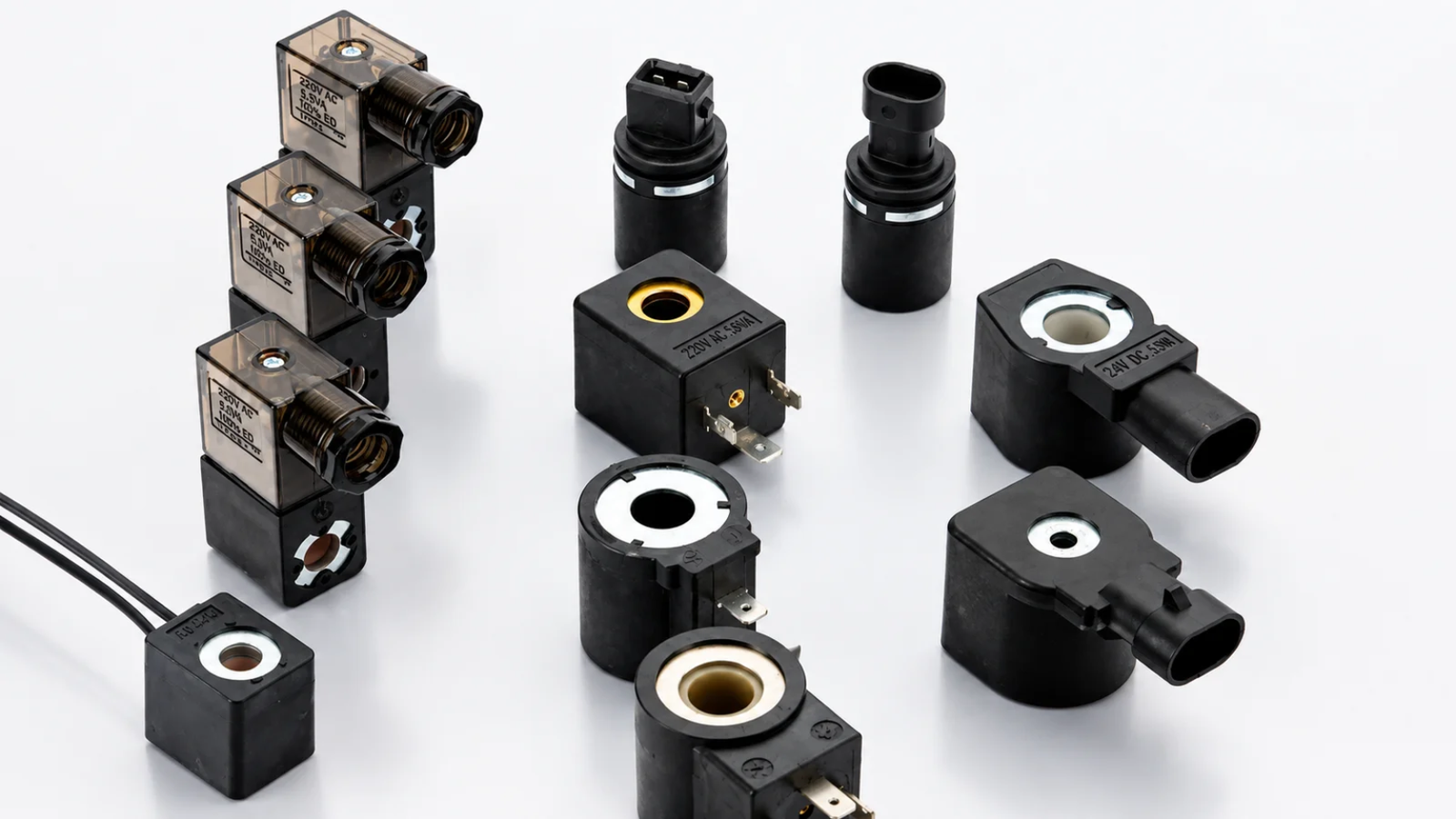
Engineers can lose time by requesting a custom design when a validated standard coil already meets the requirements.
The opposite problem can be more expensive: forcing a catalog coil into an unsuitable valve or assembly and discovering thermal, dimensional, magnetic, or connection problems after tooling and qualification have already started.
When a Standard Coil Is Usually the Better Choice
A standard coil is generally the more practical option when:
- The valve architecture is already established
- The original coil has documented compatibility
- Required voltages and connections are available
- The physical envelope is suitable
- Duty cycle is within documented limits
- Operating temperature is within the validated range
- Relevant approvals cover the exact product
- Spare-part availability is important
- Project volume does not justify new tooling
A standard product can reduce engineering time, tooling cost, and qualification risk.
Our recommendation is simple:
> If an existing proprietary valve platform already works reliably, start with the original manufacturer's coil unless there is a clear technical or commercial reason to change.
When Custom Solenoid Coils Are Justified
A custom solenoid coil manufacturer becomes more valuable when the project requires:
- A non-standard bore or flange
- Limited winding space
- A specific resistance, current, or power profile
- Continuous duty in a demanding thermal environment
- Special plastic, insulation, or encapsulation materials
- An unusual connector, cable exit, or terminal
- Private labeling or controlled drawings
- Traceability requirements
- New valve geometry
- A cost or assembly optimization that standard coils cannot provide
| Decision Factor | Standard Coil Supplier | Custom Coil Manufacturer |
|---|---|---|
| Development speed | Usually faster | Requires engineering and validation |
| Tooling | Usually none | May require bobbin or mold tooling |
| Dimensional flexibility | Limited | High within manufacturing limits |
| Electrical optimization | Limited to existing options | Can be designed around the application |
| Material flexibility | Usually fixed | Can be evaluated and specified |
| MOQ | Often lower | Usually tied to tooling and production economics |
| Engineering ownership | Platform-based | Requires clear drawings and change control |
| Validation burden | Lower if used as documented | Higher because design is application-specific |
Real OEM Example: When Prototype Success Was Not Enough
One SolenElec project involved a very small coil for a micro stepper motor.
The key challenge was not simply whether a sample could be wound once. The bobbin wall was extremely thin, which created several connected manufacturing risks:
- Injection molding had to maintain a stable thin wall
- The bobbin needed sufficient structural strength
- Winding space was extremely limited
- Winding tension could deform the bobbin
- Small dimensional variation could affect winding consistency
- A successful manual sample process might not remain stable during production
The structure and manufacturing constraints were reviewed with the customer, the design was optimized, and revised samples were validated before stable production.
The lesson is:
> A prototype proves that a coil can be made once. A production-ready design proves that it can be made repeatedly.
For custom coil projects, this distinction matters more than how attractive the first sample looks.
How to Evaluate a Solenoid Coil Manufacturer Before Mass Production
A polished sample can create false confidence.
Several acceptable prototypes do not prove that the normal production process can reproduce the same performance across:
- Different material lots
- Production machines
- Mold cavities
- Operators
- Shifts
- Production rates
- Months of manufacturing
We recommend a staged supplier evaluation.
1. Define the Technical Inputs
Before comparing quotations, define:
- Rated voltage and permitted variation
- AC or DC supply
- Target power, current, or resistance
- Continuous, intermittent, or pulsed duty
- Ambient temperature
- Media or valve-body temperature
- Bore and interface dimensions
- Available envelope
- Valve, armature, and tube compatibility
- Connection method
- Moisture, oil, chemical, vibration, or cleaning exposure
- Regulatory requirements
- Expected annual volume
- Product lifecycle
Without clear design inputs, suppliers may be quoting different technical assumptions.
2. Review Product-Level Documentation
Useful records can include:
- Controlled drawing
- Electrical specification
- Material specification
- Test criteria
- Dimensional inspection data
- Temperature-rise data
- Process flow
- Control plan
- Traceability example
- Applicable certificates or reports
- Change-control procedure
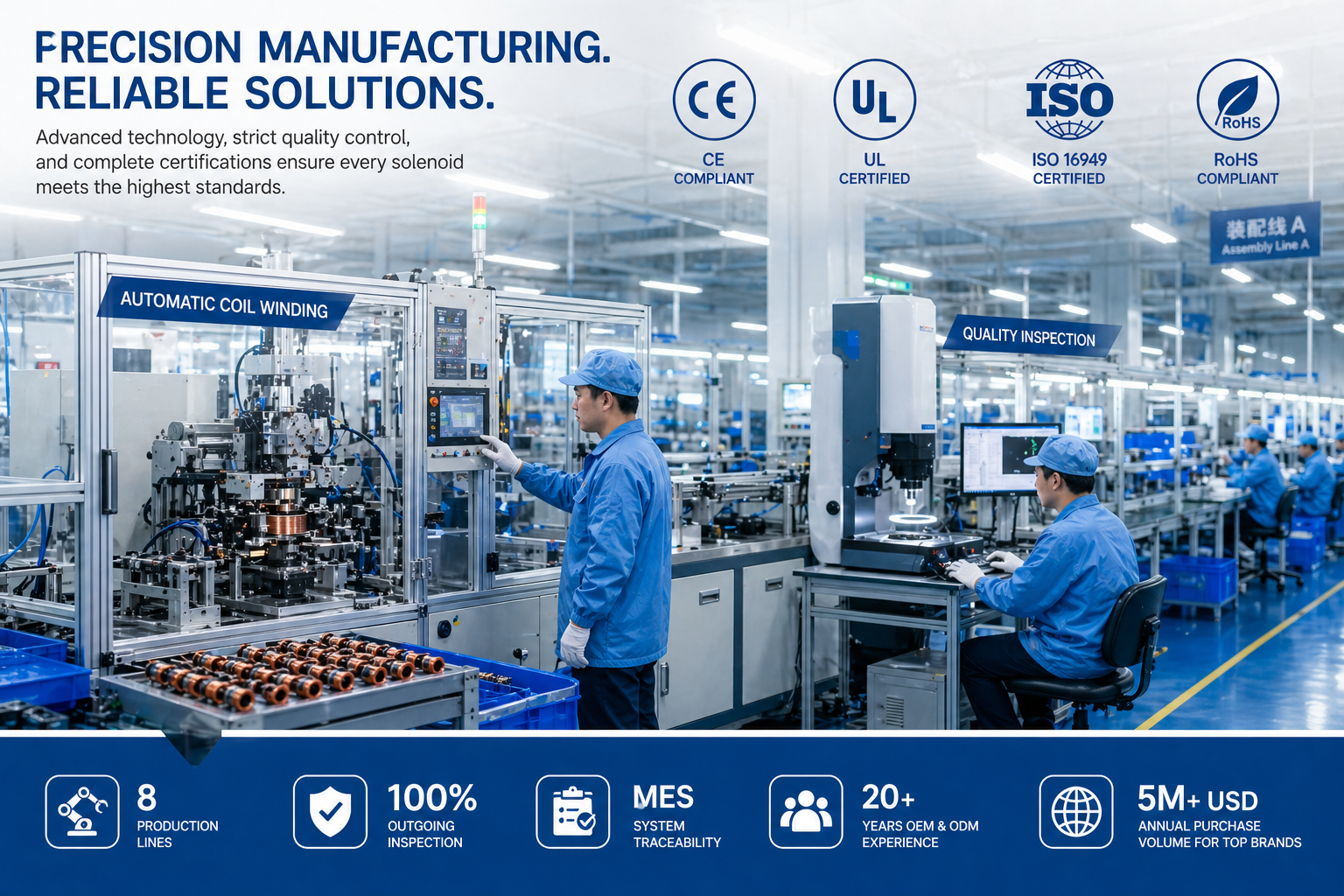
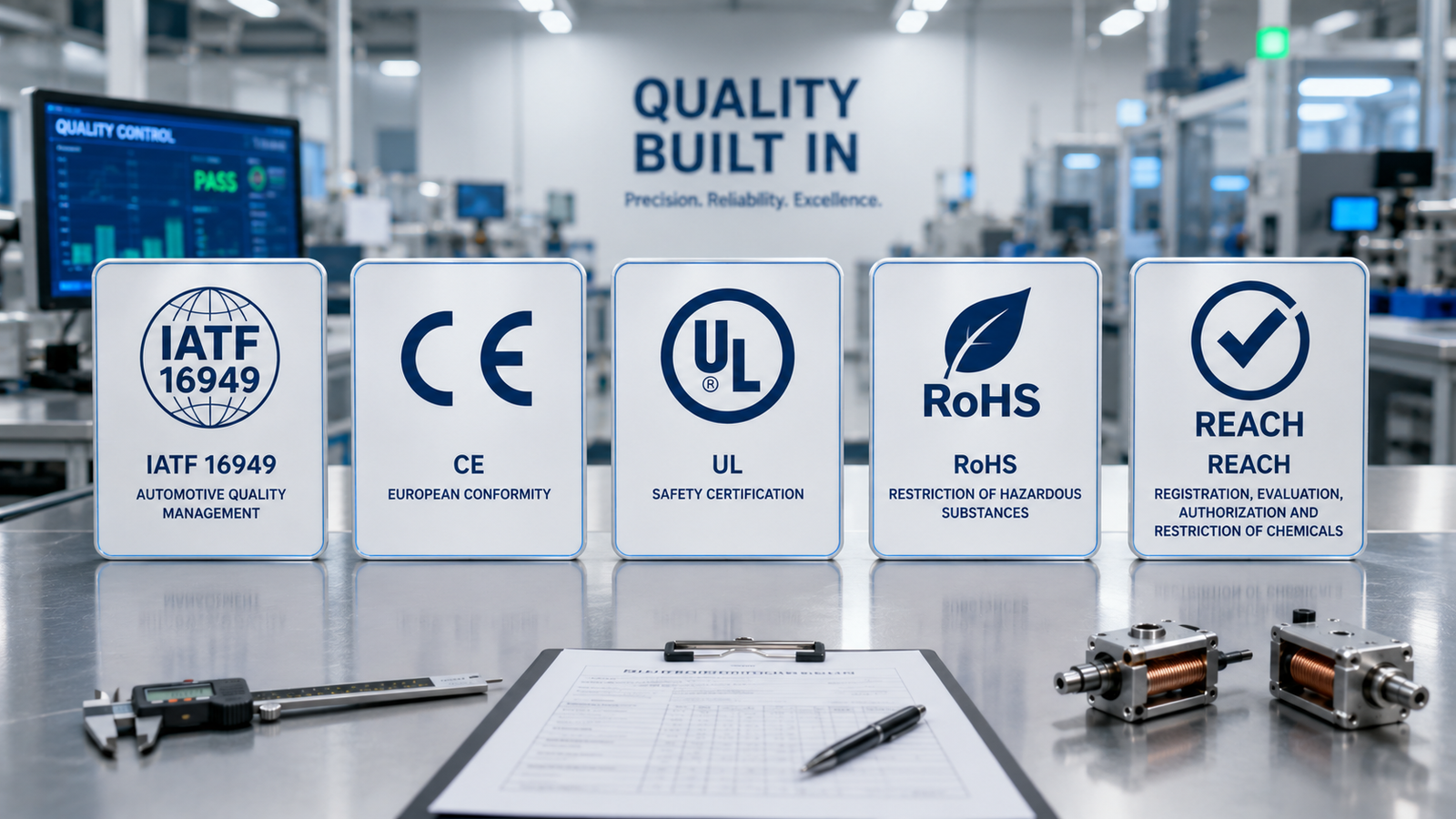
For certification claims, verify the exact:
- Issuer
- Certificate holder
- Product or model
- Construction covered
- Applicable standard
- Validity
- Production site where relevant
A logo on a presentation is not enough.
3. Review the Manufacturing Process
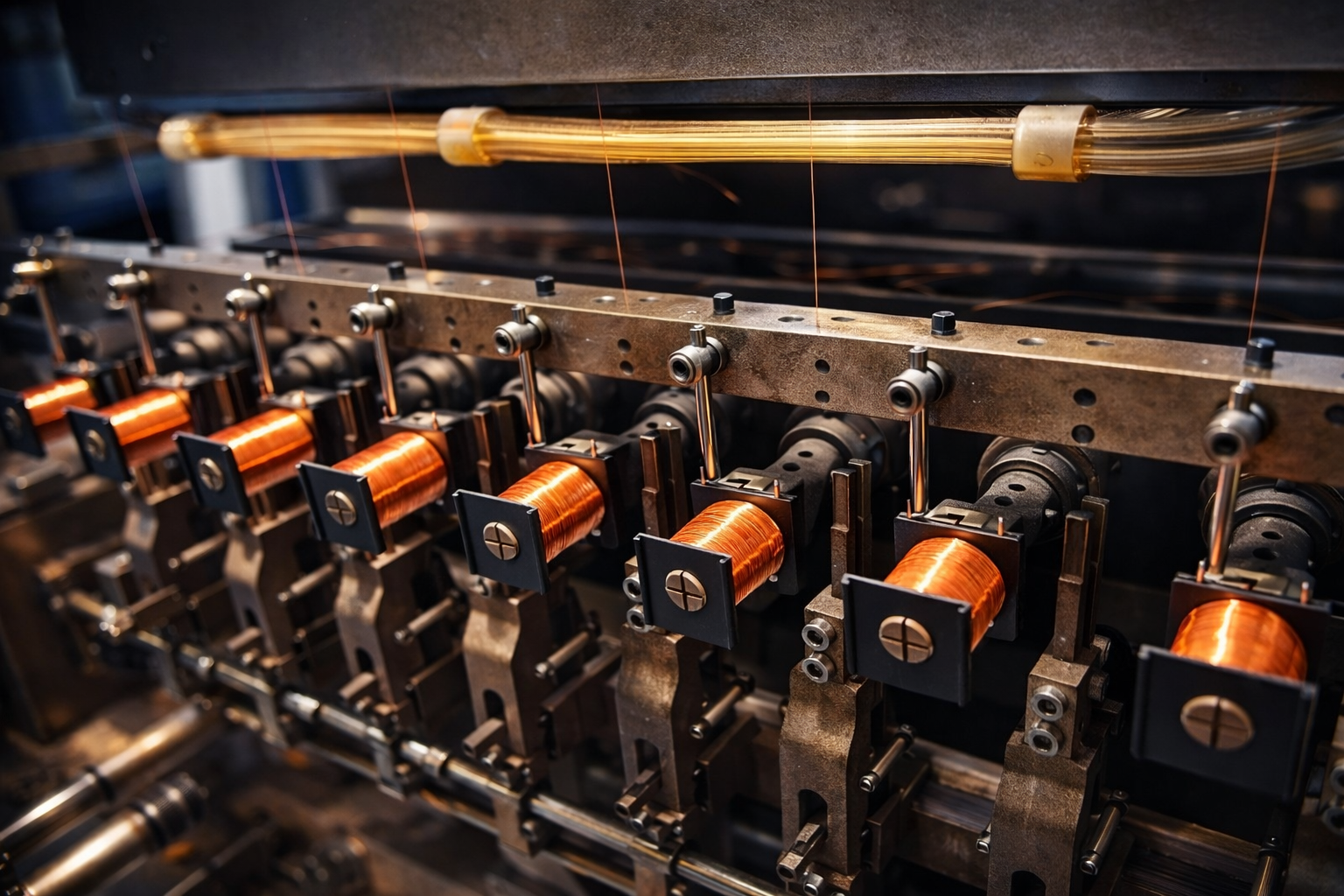
For a custom or high-volume project, we focus on the actual production process:
- Incoming copper wire and plastic inspection
- Material identification and storage
- Bobbin molding or incoming bobbin inspection
- Winding setup and program control
- Wire termination
- Electrical testing
- Encapsulation or overmolding
- Curing or cooling where applicable
- Dimensional and visual inspection
- Marking, packing, and final approval
Particular attention should be paid to:
- Winding tension
- Program control
- First-piece approval
- Resistance measurement
- Molding parameters
- Cavity identification
- Rejected-part control
- Calibration
- Rework rules
- Traceability
4. Run a Production-Intent Pilot Lot
A pilot lot should represent the intended production process as closely as practical.
Useful validation can include:
- Resistance distribution
- Current and power
- Critical dimensions
- Temperature rise
- Insulation or dielectric testing where applicable
- Connector retention
- Wire pull tests
- Moisture or environmental testing where required
- Assembly testing on the actual valve
- Functional testing at voltage and temperature limits
The objective is not only to confirm the average result.
It is to understand variation and repeatability.
5. Define Approval and Change Control
Before release, buyer and supplier should agree on:
- Controlled drawing revision
- Approved samples
- Critical-to-quality dimensions
- Electrical acceptance limits
- Material requirements
- Test methods
- Inspection frequency
- Pilot-lot acceptance
- Packaging
- Traceability
- Nonconformance handling
- Engineering-change notification
This turns an approved sample into a controlled production program.
How Should OEM Engineers Choose the Right Solenoid Coil Supplier?
Piece-price comparison becomes unreliable when suppliers quote different:
- Materials
- Tolerances
- Inspection levels
- Tooling assumptions
- Testing
- Packaging
- Engineering responsibility
A lower quoted coil price can become expensive if it creates:
- Requalification
- Production instability
- Incoming inspection
- Scrap
- Line stoppages
- Field failures
- Warranty claims
- Repeated engineering changes

Build the Specification Before Building the Shortlist
We recommend defining the project in this order:
- Valve architecture — bore, armature, tube, stroke, mounting, available space
- Electrical requirements — voltage, AC/DC, resistance, current, power
- Duty cycle — continuous, intermittent, pulse duration, switching frequency
- Temperature — ambient range, internal heating, nearby heat sources
- Environment — moisture, dust, oil, chemicals, cleaning, vibration
- Compliance — market and application requirements
- Customization — materials, connection, dimensions, marking, packaging
This prevents the supplier brand from driving the engineering decision.
Use a Weighted Supplier Scorecard
A practical starting point is:
| Category | Suggested Weight | What to Evaluate |
|---|---|---|
| Application and technical fit | 25% | Electrical, thermal, mechanical, magnetic compatibility |
| Engineering capability | 20% | Design review, DFM, prototyping |
| Manufacturing control | 20% | Winding, molding, tooling, process controls |
| Quality and traceability | 15% | Inspection, records, lot control, corrective action |
| Compliance documentation | 8% | Validity, scope, product coverage |
| Capacity and continuity | 5% | Equipment, lead time, contingency |
| Commercial terms | 5% | Tooling, price, MOQ, forecast flexibility |
| Communication | 2% | Technical clarity and change coordination |
The exact weighting should change by project.
For a standard replacement coil, availability may matter more.
For a new OEM design, engineering capability and manufacturing control deserve more weight.
Compare Total Program Cost, Not Only Piece Price
Consider:
- Engineering charges
- Tooling
- Unit price
- MOQ
- Testing
- Documentation
- Packaging
- Freight
- Incoming inspection
- Lead time
- Safety stock
- Engineering changes
- Warranty exposure
- End-of-life planning
A slightly higher component price can be justified when it materially reduces qualification risk, assembly problems, field failures, or supply instability.
Four Common Mistakes When Selecting a Solenoid Coil Manufacturer
Mistake 1: Choosing the Largest Brand Automatically
Large brands reduce certain risks, especially when the project already uses their valve platform.
But brand size does not automatically provide the best flexibility for a custom OEM coil.
Mistake 2: Comparing Mainly by Unit Price
The lowest piece price is not always the lowest total program cost.
Tooling, validation, lead time, quality consistency, engineering changes, and field failures can outweigh a small component-price difference.
Mistake 3: Assuming the Same Voltage and Dimensions Mean Equivalent Coils
They do not.
Two coils can share the same voltage, wattage, bore size, and external dimensions but still differ in:
- Resistance
- Turn count
- Wire diameter
- Insulation
- Encapsulation
- Magnetic compatibility
- Duty rating
- Hot-state thermal performance
Mistake 4: Treating Certifications as Proof of Application Suitability
Certification is a qualification requirement, not proof that the coil is suitable for every application.
Always confirm:
- Product scope
- Model
- Construction
- Factory or certificate holder
- Target market
- Actual application conditions
Solenoid Coil Manufacturer Selection Checklist
| Question | Why It Matters |
|---|---|
| Is this an existing valve platform or a new OEM design? | Determines original-brand vs custom-supplier strategy |
| Do we need a complete valve or only the coil? | Separates system brands from coil specialists |
| What voltage and power are required? | Defines electrical requirements |
| What bore and interface are required? | Determines mechanical and magnetic compatibility |
| What is the real duty cycle? | Determines thermal load |
| What temperature will the coil see? | Determines thermal margin |
| Is custom material or encapsulation required? | Determines supplier engineering capability |
| What connection method is required? | DIN, flying lead, plug-in, or custom |
| Can samples be tested on the actual valve? | Reduces qualification risk |
| Are key processes controlled in-house? | Affects engineering control and consistency |
| Can the supplier support engineering changes? | Important during OEM development |
| Can production scale after sample approval? | Prevents later supply problems |
| Are documents model-specific? | Avoids relying on generic certification claims |
Frequently Asked Questions
Which Solenoid Coil Manufacturer Is Best for an Existing Branded Valve?
For a mature proprietary valve platform, we normally recommend starting with the original valve manufacturer.
The original coil generally represents the lowest compatibility risk because the valve, magnetic circuit, electrical characteristics, and coil interface have already been developed together.
An alternate coil should only be approved after electrical, mechanical, magnetic, thermal, and application compatibility have been verified.
Can I Replace a Coil With One That Has the Same Voltage and Dimensions?
Not automatically.
Matching voltage and dimensions are only the first checks.
Engineers should also compare:
- Resistance
- Power
- AC frequency where applicable
- Duty rating
- Insulation
- Winding design
- Connection
- Magnetic interface
- Temperature rise
Validation on the actual valve is strongly recommended.
Does a Successful Prototype Mean the Coil Is Ready for Mass Production?
No.
A prototype proves that the design can be manufactured under limited conditions.
It does not prove stable repeatability across:
- Production tooling
- Different material lots
- Operators
- Machines
- Cavities
- Production speed
Pilot production and process validation are still required.
What Documents Should I Request From a Solenoid Coil Supplier?
Useful documents can include:
- Controlled drawing
- Electrical specification
- Material specification
- Inspection plan
- Test method
- Pilot-lot results
- Traceability records
- Change-control procedure
- Applicable product-specific compliance documentation
When Does a Custom Solenoid Coil Make Commercial Sense?
Custom development becomes reasonable when standard products cannot meet:
- Bore size
- Envelope
- Power
- Thermal requirements
- Duty cycle
- Material requirements
- Connection method
- Environmental conditions
- OEM interface
- Assembly requirements
The commercial decision should also consider:
- Annual volume
- Tooling
- Product lifecycle
- Qualification cost
- Supply continuity
Conclusion: Choose the Manufacturer From the Application Backward
When comparing solenoid coil manufacturers, we recommend choosing the manufacturer from the application backward—not from the brand list forward.
Start by defining:
Valve architecture → Electrical requirements → Duty cycle → Temperature → Environment → Compliance → Customization
Then decide which supplier model fits the project.
If the equipment already uses a validated proprietary valve platform, the original manufacturer’s coil is usually the lowest-risk choice.
If the project involves a new valve or OEM equipment and requires control over voltage, power, bore, winding, materials, thermal behavior, dimensions, or connection method, a specialized custom solenoid coil manufacturer may offer more engineering flexibility.
> The better supplier is not necessarily the biggest company or the lowest quotation. It is the manufacturer that can identify application and manufacturing risks early, validate the design under realistic conditions, and reproduce that performance consistently in mass production.
If you are developing a new OEM solenoid coil project, SolenElec can review your voltage, power, bore size, valve interface, duty cycle, operating temperature, materials, dimensions, connection method, and expected production volume to determine whether a standard coil can be adapted or a custom design is justified.
Contact SolenElec About Your OEM Coil Project
Need a factory that can design the coil around your valve?
If you are qualifying an OEM coil source rather than comparing brand catalogs, start with the valve interface, voltage, duty cycle, and annual volume.