Solenoid Valve vs Directional Control Valve: What Is the Real Difference?
Struggling to differentiate between a solenoid valve and a directional control valve? You're not alone. This common confusion in fluid power systems often leads to sourcing the wrong components, causing project delays and system malfunctions. When your product's performance is on the line, a simple terminology mix-up can have costly consequences. Understanding the core distinction—how a valve is driven versus what it does—is the key to specifying the right part every time.
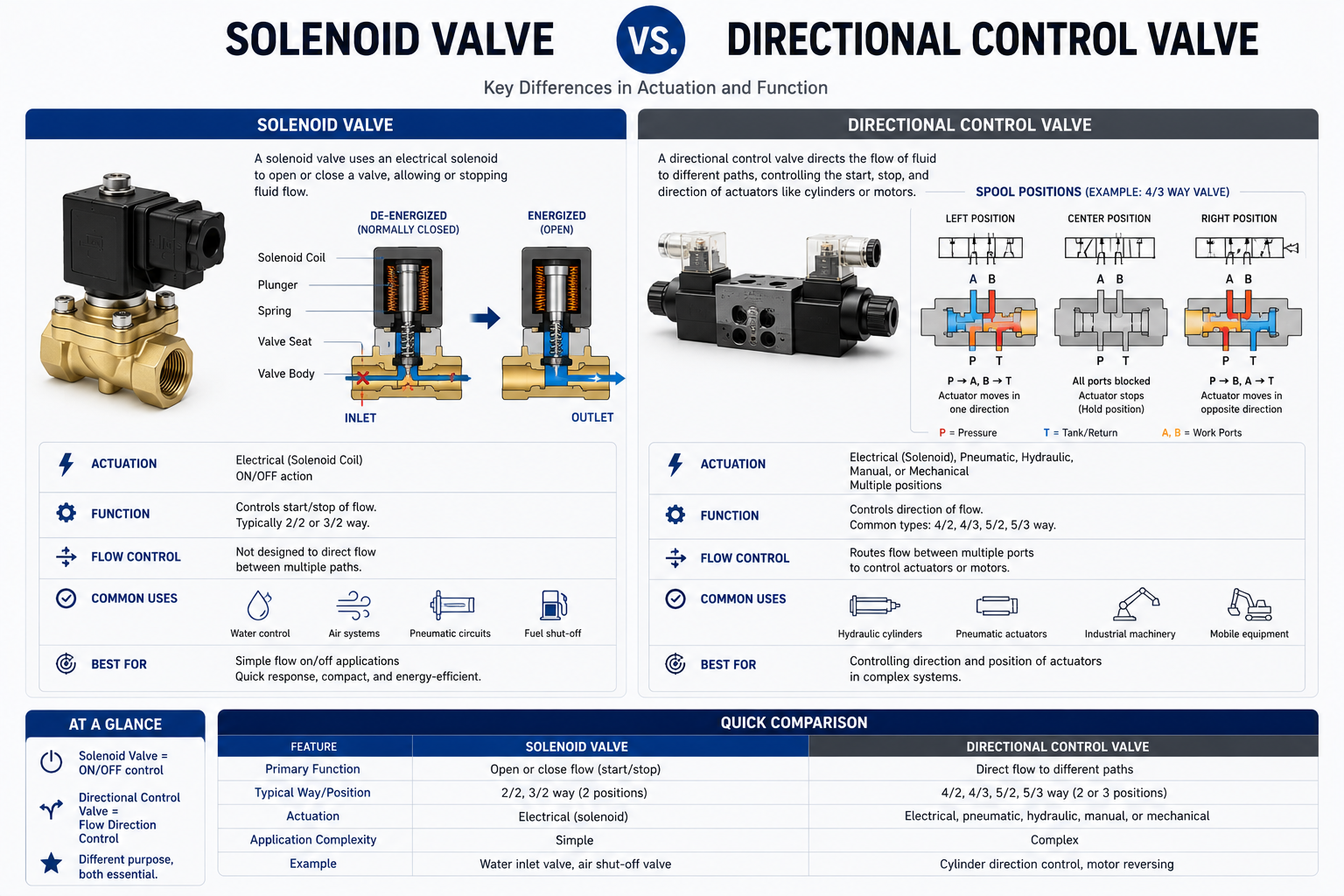
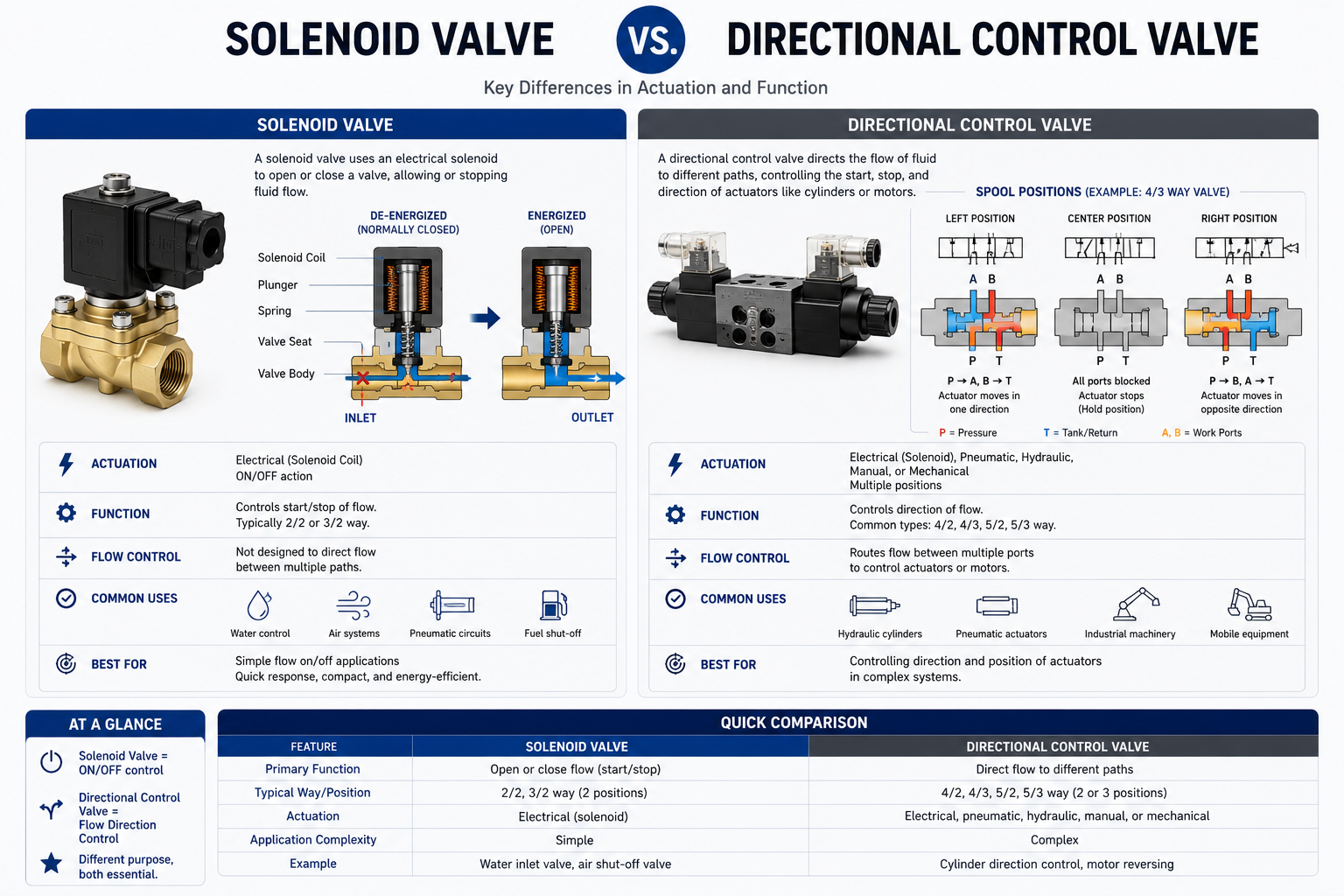
The real difference is that "solenoid valve" describes the actuation method (an electromagnetic coil), while "directional control valve" describes the function (changing the fluid's path)1. Therefore, a valve can be both. For example, a valve that uses a solenoid to switch airflow between multiple ports is both a solenoid valve and a directional control valve.
This might seem like a subtle distinction, but it's one of the most critical concepts in industrial automation and fluid control. Getting it right prevents procurement errors and ensures your system operates exactly as designed. Let's dive deeper into what each term means and how they relate to each other.
What Does “Solenoid Valve” Actually Mean?
The term "solenoid valve" is used so frequently that its precise meaning can get lost. Is it a specific type of valve, or a broad category? This ambiguity can complicate technical specifications and lead to miscommunication with suppliers. The answer lies in focusing on its core component: the actuator.
A solenoid valve is any valve that uses a solenoid—an electromagnetic coil—to actuate its mechanism.2 This actuation controls the flow of a fluid, such as air, water, or oil. The "solenoid" part of the name refers only to how the valve is opened or closed, not to the complexity of its function.
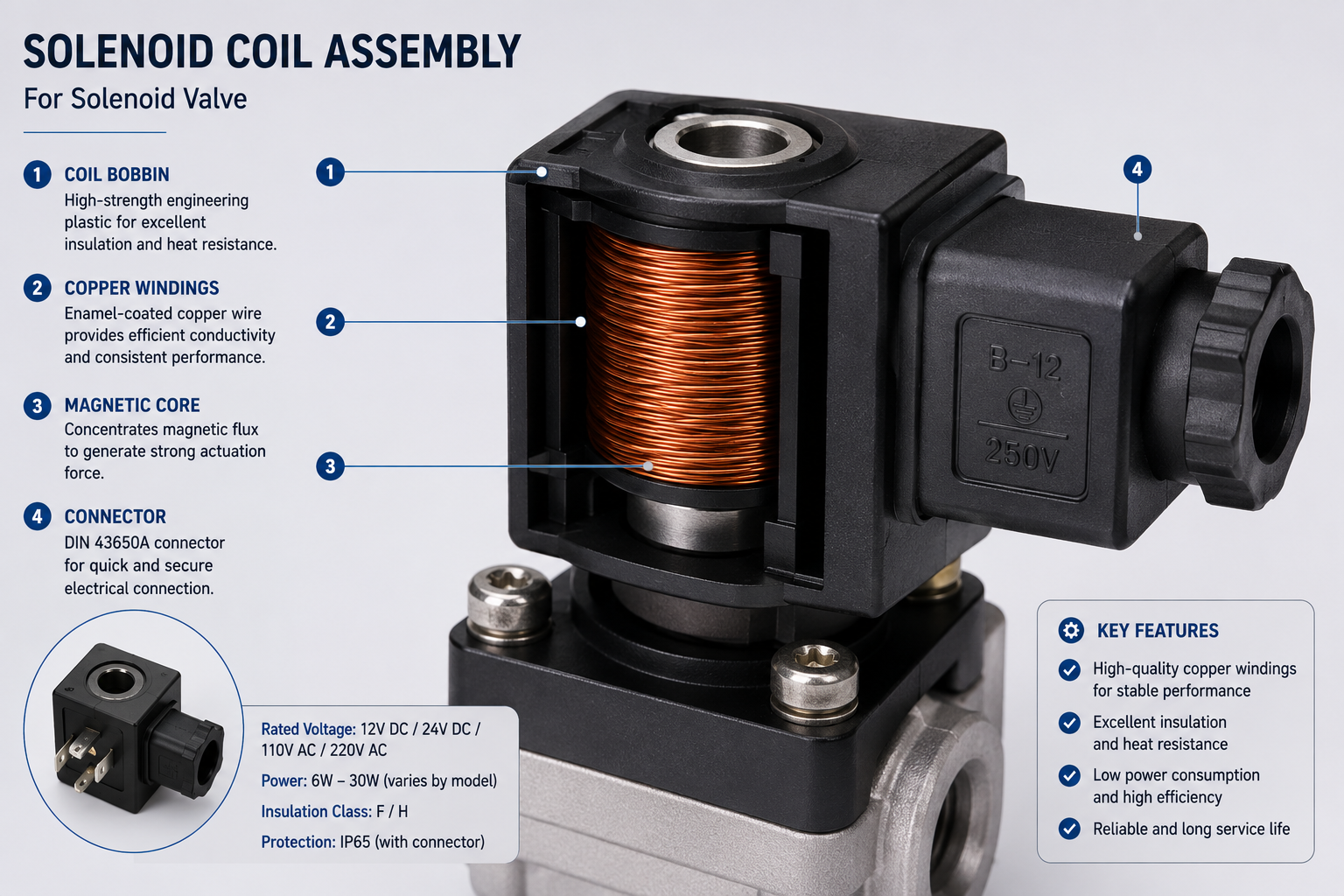
The Role of the Solenoid Coil
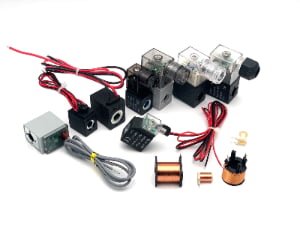
At its heart, a solenoid is an engineered assembly consisting of a copper wire coiled around a hollow tube. When an electric current passes through this coil, it generates a controlled magnetic field.3 This magnetic field acts on a movable plunger (or armature) located inside the tube, causing it to shift position.4 This movement is what physically opens or closes the valve's internal passages.
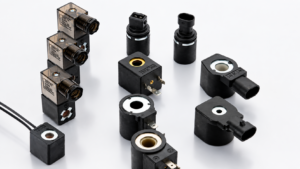
The quality of this solenoid coil is paramount to the valve's reliability and lifespan. As a manufacturer with over 20 years of OEM experience, we at SolenElec know that factors like copper purity, winding precision, and bobbin material are critical. A well-made coil ensures a consistent magnetic force, rapid response time, and resistance to heat and vibration, which are essential for high-performance applications in home appliances and industrial machinery.
A perfect example of a basic solenoid valve is the water inlet valve in a washing machine. It is a simple two-port valve that is "normally closed." When you start a cycle, the machine's controller sends an electrical signal to the solenoid coil. The resulting magnetic field lifts the plunger, opening the valve and allowing water to fill the drum. When the signal stops, the magnetic field collapses, and a spring returns the plunger to its original position, shutting off the water flow. Here, the valve's function is simple on/off control, and its actuator is a solenoid.
What Does a Directional Control Valve Do?
Sometimes, simple on/off control isn't enough. You may need to extend and retract a pneumatic cylinder, power a hydraulic motor in two directions, or divert fluid between multiple circuits. This is where a directional control valve comes in. While the terminology can seem complex, its purpose is straightforward: to manage the path of the fluid.
A directional control valve (DCV) is a valve whose primary function is to direct or block the flow of a fluid through selected paths in a pneumatic or hydraulic system.5 Its job is to manage where the fluid goes, enabling the control of actuators and complex machine operations.
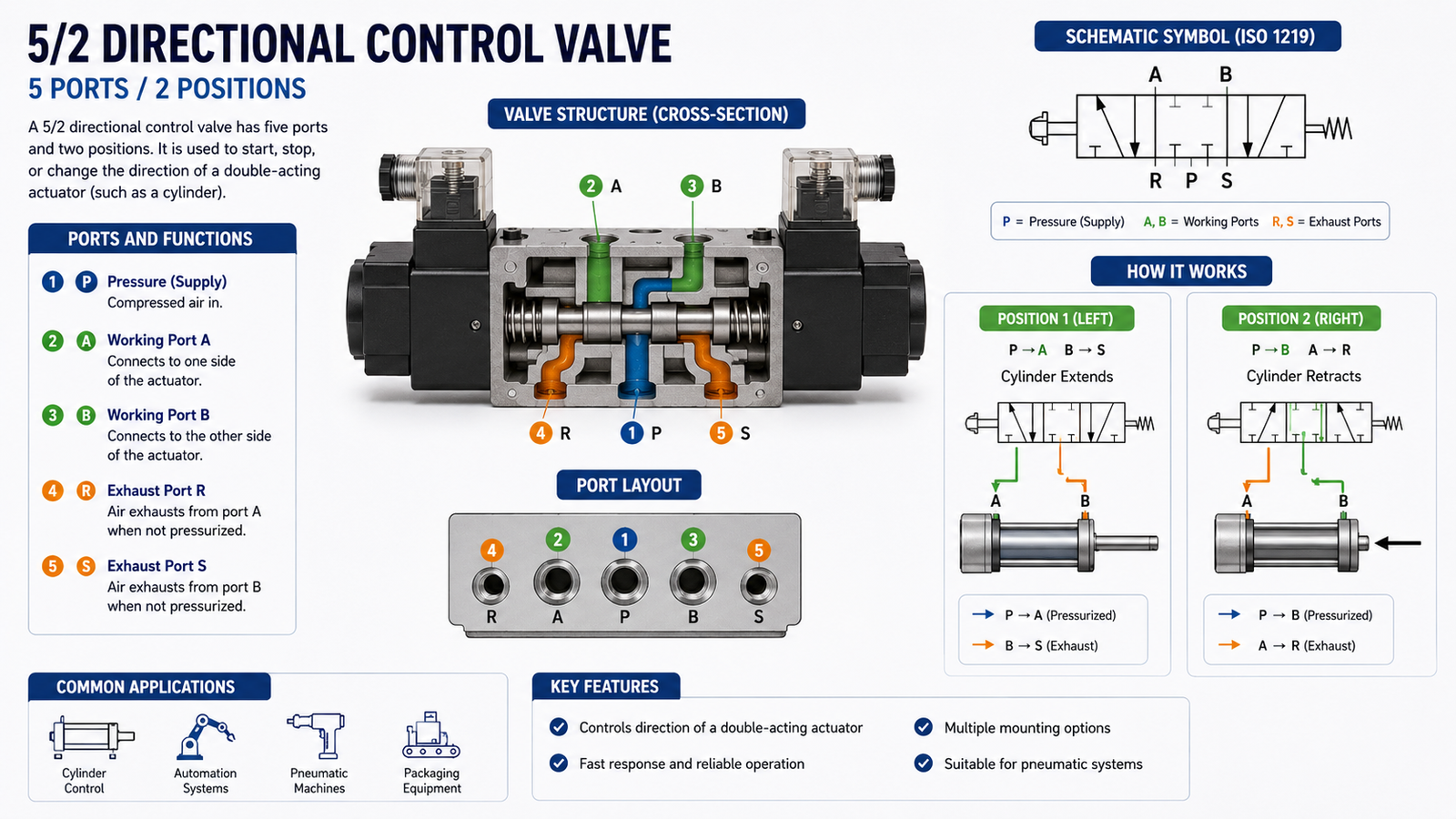
Understanding Ports and Positions
To understand how a DCV works, you need to know its naming convention, which is based on "ports" and "positions."
- Ports: These are the connection points for fluid lines. A valve will have an inlet port (where the pressurized fluid enters), one or more outlet ports (which lead to an actuator), and one or more exhaust ports (where the fluid exits the system).
- Positions: These refer to the different states the valve's internal mechanism (often a spool) can be in. Each position creates a unique set of connections between the ports, thus creating a different flow path.
For example, a 5/2 directional control valve is a common component in industrial automation. The "5" means it has five ports, and the "2" means it has two distinct positions.6 In one position, it might direct compressed air from the inlet to an outlet port to extend a cylinder, while the other side of the cylinder exhausts through another port. When the valve is shifted to its second position, it reverses these connections, sending air to retract the cylinder.
Crucially, a directional control valve can be actuated in many ways:7
- Manually: With a lever or push-button.
- Mechanically: By a cam or roller on a moving machine part.
- Pneumatically: Using an air pressure signal (pilot signal).
- Electrically: Using a solenoid.
This last point is the key to understanding the relationship between the two valve types.
Can a Solenoid Valve Also Be a Directional Control Valve?
After seeing that both terms describe different aspects of a valve, you might be asking if the categories can overlap. You’ve probably seen components in a catalog described as a "5/2 solenoid valve," which seems to combine both terms. This overlap is often a source of confusion, but the answer is a definitive yes.
Yes, a valve can be both. A valve is a "solenoid valve" if it's actuated by a solenoid and a "directional control valve" if its function is to change flow direction. Many common industrial valves, such as 3/2, 5/2, or 5/3 valves controlled by a PLC, fit both descriptions perfectly.8
Think of it like describing a car. "Electric car" defines its power source (like "solenoid valve"), while "SUV" defines its body type and function (like "directional control valve"). A single vehicle, like a Tesla Model Y, can be both an electric car and an SUV. The terms aren't mutually exclusive; they just describe different characteristics.
The same logic applies to valves.
Simple On/Off Solenoid Valves
A simple 2-port, 2-position (2/2) valve is a solenoid valve whose function is basic on/off control, not complex directional switching. Its job is to either permit flow or stop it completely. These are widely used in applications like coffee makers, irrigation systems, and car washes.9 They are solenoid valves, but they are not typically classified as directional control valves in the functional sense.
Solenoid-Operated Directional Control Valves
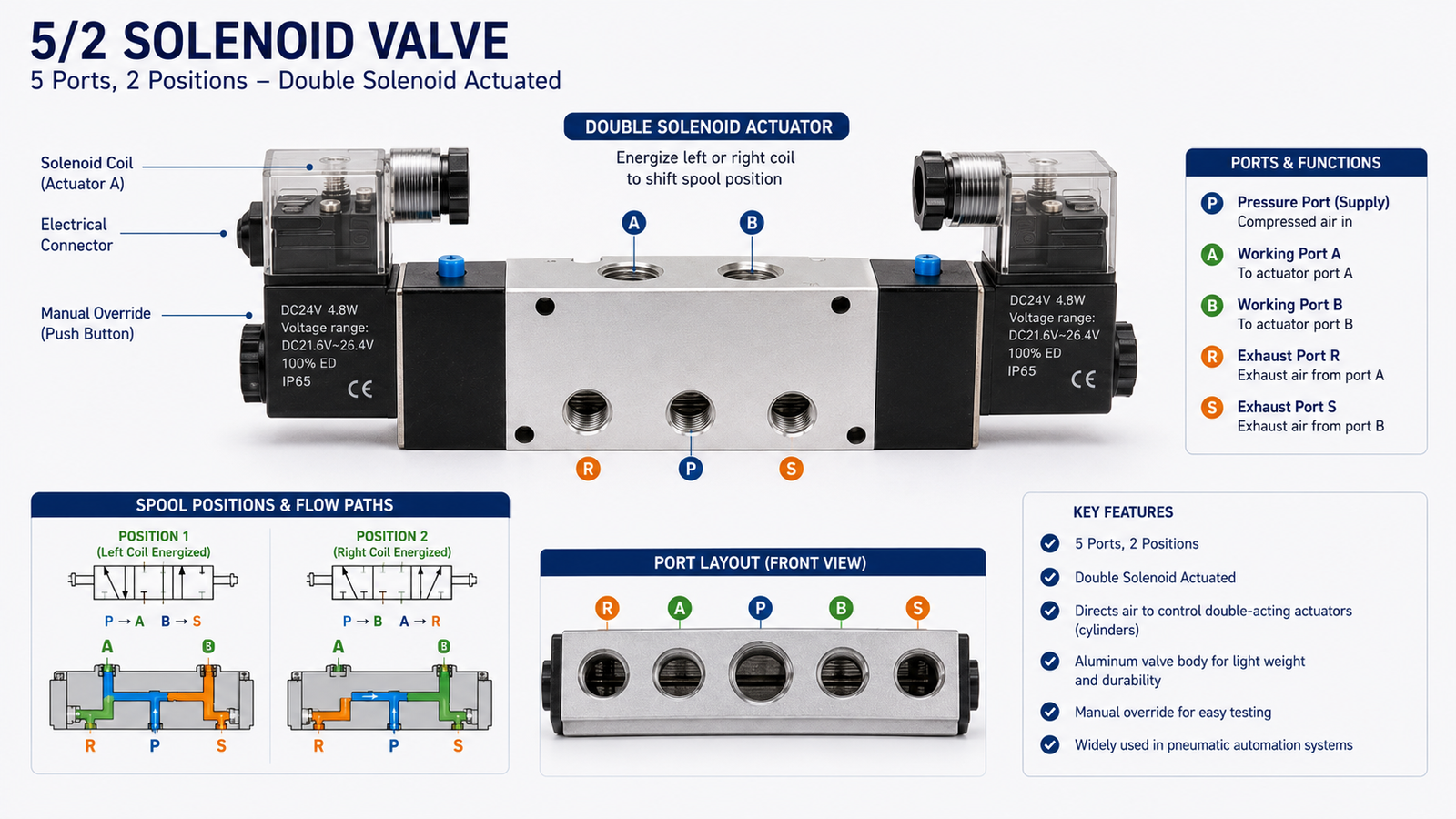
A 5-port, 2-position (5/2) valve that is actuated by one or two solenoid coils is the perfect example of the overlap.
- It is a directional control valve because its function is to direct fluid to control an actuator (like a double-acting cylinder).
- It is a solenoid valve because its actuation method is electrical.
When a procurement manager specifies a "5/2 solenoid-operated directional valve," they are clearly communicating both the required function (5 ports, 2 positions) and the required actuation method (solenoid) for integration with an automated control system like a PLC. This precision is vital for sourcing the correct component. I once had a client who kept ordering "solenoid valves" for their pneumatic press. They kept receiving simple on/off valves. Once we clarified they needed a 5/2 solenoid-operated directional control valve, their automation project finally moved forward.
What Are the Key Differences in Function, Ports and Actuation?
Now that we know the terms can overlap, how do we compare them when they are distinct? For instance, how does a simple on/off solenoid valve compare to a manually operated directional control valve? Focusing on the wrong criteria can lead you to specify a component that doesn't meet your system's needs. A side-by-side comparison makes the distinction clear.
The key difference lies in their primary definition. A simple solenoid valve is defined by how it's switched (electrically), while a directional control valve is defined by what it does (change the flow path). This fundamental distinction leads to practical differences in complexity, port count, actuation options, and cost.
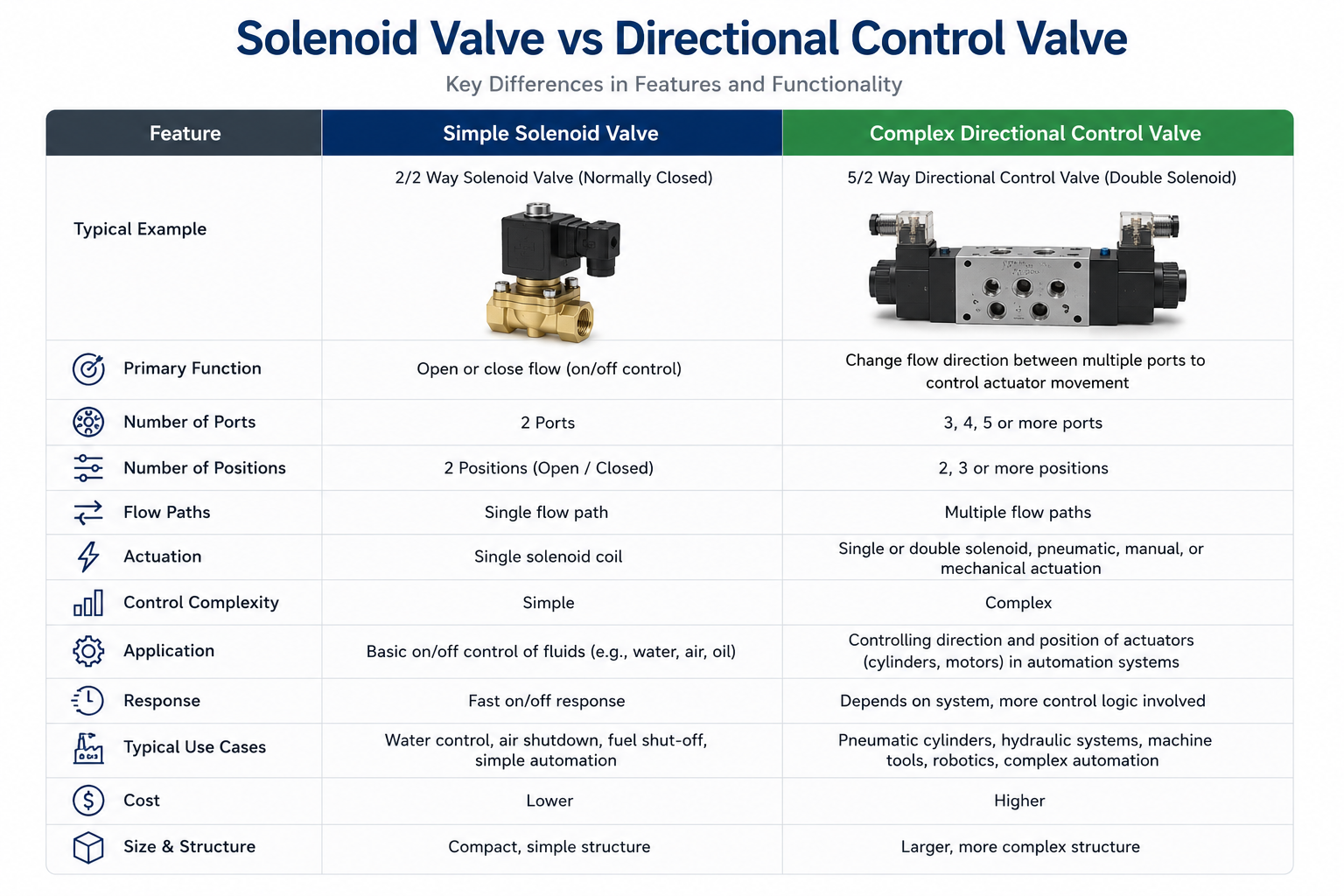
Let's compare a basic 2/2 solenoid valve with a generic directional control valve to highlight their core differences.
| Feature | Simple Solenoid Valve (e.g., 2/2) | Directional Control Valve (e.g., 5/2) |
|---|---|---|
| Primary Definition | Defined by its actuation method (solenoid coil). | Defined by its function (directing flow). |
| Primary Function | On/Off control. Starts or stops flow in a single line. | Path switching. Controls actuators like cylinders and motors. |
| Typical Port Count | 2 ports (one inlet, one outlet). | 3, 4, 5, or more ports for complex flow routing. |
| Actuation Methods | Exclusively solenoid (electrical). | Solenoid, manual (lever), mechanical (cam), pneumatic (pilot). |
| Complexity | Generally simpler internal design (e.g., poppet or diaphragm). | More complex internal design, often using a multi-landed spool. |
| Cost | Often lower due to simpler construction and fewer materials. | Can be higher due to greater complexity and more precise machining. |
| Common Applications | Fluid dispensing, circuit isolation, water/gas control. | Pneumatic/hydraulic cylinder control, process automation, robotics. |
The most telling difference is in Actuation Methods. A valve is only called a "solenoid valve" if it uses a solenoid. However, a directional control valve can be operated by a wide range of methods. The solenoid is just one of several options for actuating a DCV, making it the ideal choice for automated systems. This is why the debate over solenoid valve vs directional control valve is more about understanding categories than picking between two competing products.
How Do You Choose the Right Valve for Your System?
The theory is clear, but applying it to a real-world sourcing decision is the final challenge. Making the wrong choice can mean project delays, budget overruns, and even product failure in the field. To avoid this, follow a systematic checklist to ensure you specify the perfect valve for your application every time.
First, define the required function (on/off vs. directional change). Next, determine the necessary actuation method (manual, electric, etc.). Finally, specify all critical technical parameters like media type, pressure range, flow rate, and coil voltage to ensure complete compatibility.
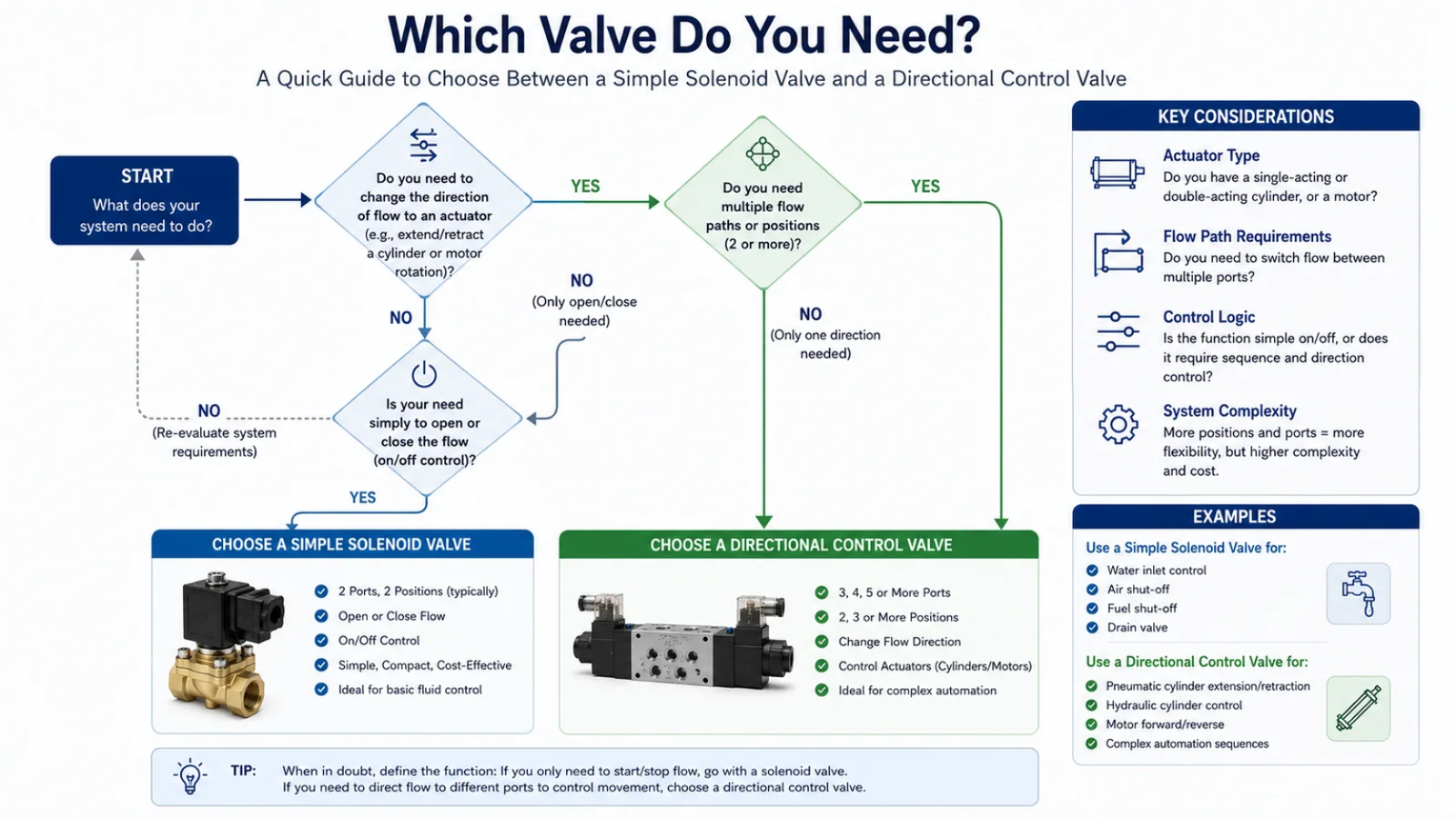
Here is a step-by-step process for procurement and brand managers to follow:
Step 1: Define the Core Function
Start by asking what the valve needs to accomplish. This is the most important step.
- Do you just need to start or stop the flow of a fluid in one line? If yes, you need a simple on/off valve. A 2/2 solenoid valve is likely the best choice for automated control.
- Do you need to extend and retract a cylinder, operate a motor, or switch fluid between multiple paths? If yes, you need a directional control valve. The specific type (e.g., 3/2, 5/2, 5/3) will depend on your actuator and circuit design.
Step 2: Determine the Actuation Method
Once you know the function, decide how you need to control the valve.
- Will it be controlled electronically by a PLC, computer, or simple switch? If yes, you need a solenoid-operated valve. This means you will specify a solenoid-operated directional control valve if you need path switching.
- Will it be operated by a person, a moving machine part, or an air pressure signal? If yes, you need a manual, mechanical, or pilot-operated directional control valve.
Step 3: Specify the Technical Details
With function and actuation decided, you must list the technical parameters to ensure performance and reliability. This is where you communicate the exact requirements to your supplier.
- Media: What fluid is the valve controlling (e.g., compressed air, water, hydraulic oil)? This affects material compatibility.
- Pressure: What is the minimum and maximum operating pressure of the system?
- Flow Rate (Cv): What is the required flow capacity? A valve that is too small will starve the system, while one that is too large can be inefficient and costly.
- Ports & Positions: How many connections and states are needed (e.g., 5/2 for a double-acting cylinder)?
- Response Time: How quickly must the valve switch from one position to another?
- Coil Voltage & Power: For solenoid valves, what are the electrical requirements (e.g., 24VDC, 110VAC)? The coil must match your control system's power supply. At SolenElec, we specialize in customizing coils to meet these exact voltage, power, and duty cycle needs for leading global brands.
By following these three steps, you transform a confusing choice into a logical process, ensuring you procure the exact component your system demands.
Frequently Asked Questions
What is the difference between a 2-way and 3-way solenoid valve?
A 2-way (or 2/2) solenoid valve has two ports (inlet and outlet) and provides simple on/off control.10 A 3-way (or 3/2) solenoid valve has three ports and is used to control single-acting cylinders or divert flow between two paths.11 It can pressurize one port while exhausting another.
Is a pneumatic valve the same as a directional control valve?
The terms often overlap. "Pneumatic valve" specifies that the media being controlled is air. "Directional control valve" describes the function of directing that air. So, a valve used to control an air cylinder is a pneumatic directional control valve. DCVs can also be hydraulic (for oil).
What does "normally open" vs "normally closed" mean for a solenoid valve?
This describes the valve's default state when the solenoid coil is not energized. A "normally closed" (NC) valve is closed until electricity is applied to open it. A "normally open" (NO) valve is open until electricity is applied to close it.12 The choice depends on the safety and logic requirements of the application.
Why is the solenoid coil so important in a solenoid valve vs a directional control valve?
For any valve classified as a "solenoid valve," the coil is its heart and brain. In directional control valves used in automated systems, the solenoid is the critical interface to the electronic controller. The coil's quality—its durability, heat resistance, and consistent performance—directly determines the reliability and lifespan of the entire valve assembly.
Conclusion
The debate over solenoid valve vs directional control valve is best resolved by understanding they aren't mutually exclusive. "Solenoid valve" refers to the actuation method (an electric coil), while "directional control valve" refers to the function (routing fluid to control an actuator). Many of the most useful valves in modern automation are both. Making the right choice comes down to a clear, three-step process: first define the function you need, then select the appropriate actuation method, and finally, detail all the technical specifications. This methodical approach ensures you source the right component that delivers both performance and reliability.
As a procurement or brand manager for a leading appliance or industrial manufacturer, you know that the reliability of every component is paramount. The solenoid coil is the heart of any solenoid-operated valve, and its failure can bring an entire system to a halt. If you need a partner with over 20 years of OEM/ODM experience in manufacturing high-quality, certified solenoid coils for your application, contact SolenElec today to discuss your project.
Need Help Choosing the Right Solenoid Valve or Coil?
Whether you're selecting a simple on/off valve or a solenoid-operated directional control valve, choosing the right coil and valve configuration is essential for long-term reliability.
👉 Contact us to discuss your OEM project with our engineering team.
"Solenoid valve", https://en.wikipedia.org/wiki/Solenoid_valve. A neutral technical reference distinguishes solenoid valves by their electromagnetic actuator and directional-control valves by their role in selecting fluid-flow paths, supporting the article's actuation-versus-function distinction. Evidence role: definition; source type: encyclopedia. Supports: The source should define solenoid valves by electromagnetic actuation and directional control valves by routing or blocking flow paths.. ↩
"Chapter 4: ElectroMagnetic Actuator Basics", http://commons.princeton.edu/motorcycledesign/wp-content/uploads/sites/70/2018/07/solenoid.pdf. A standard technical definition describes a solenoid valve as a valve operated by an electromagnetic solenoid, supporting the statement that the solenoid identifies the actuation method. Evidence role: definition; source type: encyclopedia. Supports: The source should state that solenoid valves use an electromagnetic solenoid to operate or actuate a valve.. ↩
"Solenoid", https://en.wikipedia.org/wiki/Solenoid. University-level electromagnetism materials explain that current in a solenoid produces a magnetic field along the coil axis, supporting the mechanism by which the valve actuator is energized. Evidence role: mechanism; source type: education. Supports: The source should explain that an electric current through a solenoid produces a magnetic field.. ↩
"Solenoid valve", https://en.wikipedia.org/wiki/Solenoid_valve. Engineering teaching materials on solenoid valves describe energization of the coil as producing magnetic force on an armature or plunger, which changes the valve position. Evidence role: mechanism; source type: education. Supports: The source should describe how energizing a solenoid moves an armature or plunger that changes valve state.. ↩
"Vascular Technology Program Description", https://catalog.spokane.edu/CourseOutcomes/SCC/FLPT104.pdf. Fluid-power reference materials define directional-control valves as devices that start, stop, or direct fluid flow among circuit paths, supporting the article's functional definition. Evidence role: definition; source type: institution. Supports: The source should define a directional control valve as a valve that directs, blocks, or changes paths of fluid flow in fluid-power systems.. ↩
"Glossary of American football terms", https://en.wikipedia.org/wiki/Glossary_of_American_football_terms. Fluid-power notation references describe directional valves by the number of ports and positions, so a 5/2 valve is identified as having five ports and two switching positions. Evidence role: definition; source type: institution. Supports: The source should confirm the port/position convention used for directional control valves, including 5/2 valves.. ↩
"Hydraulic And Pneumatic Actuators Actuator Fluid Control", https://exhibits.wilson.edu/upload/doc/F28574D/232910140726/hydraulic__and-pneumatic-actuators_actuator-fluid_control.pdf. Educational fluid-power sources classify directional-control valve actuation into manual, mechanical, pilot-pressure, and solenoid or electrical methods, supporting the article's list of actuation options. Evidence role: general_support; source type: education. Supports: The source should identify common actuation methods for directional control valves.. ↩
"Lab 6 Controlling Pneumatics", https://streamer.gulfcoast.edu/TECH/DEavey/EST%202542C%20Programmable%20Logic%20Controllers/PLC%20PowerPoints/Lab%206%20PowerPoints/Lab%206%20Controlling%20Pneumatics.pdf. Fluid-power instructional sources discuss solenoid-operated directional-control valves in standard 3/2, 5/2, and related configurations, supporting the claim that a valve may be classified by both actuation and function. Evidence role: general_support; source type: education. Supports: The source should show that directional control valves may be solenoid-operated and include common 3/2, 5/2, or 5/3 configurations.. Scope note: Such sources generally support the valve-category overlap; they may not specifically discuss PLC-controlled examples in every case. ↩
"Solenoid valve", https://en.wikipedia.org/wiki/Solenoid_valve. General engineering references list solenoid valves as common devices for automated water and fluid control in appliances and irrigation-type systems, providing contextual support for the article's application examples. Evidence role: general_support; source type: encyclopedia. Supports: The source should identify common solenoid valve applications in appliances, irrigation, or automated water-control systems.. Scope note: The source may support the general application categories without independently documenting each listed example, such as car washes. ↩
"Lab 6: Controlling Pneumatics", https://streamer.gulfcoast.edu/TECH/DEavey/EST%202542C%20Programmable%20Logic%20Controllers/PLC%20Labs/LAB%206-1%20%20Controlling%20Pneumatic.pdf. Fluid-control teaching resources define a 2/2 valve as having two ports and two positions, typically corresponding to open and closed flow states. Evidence role: definition; source type: education. Supports: The source should define 2/2 or two-way solenoid valves as two-port valves used to open or close flow.. ↩
"Product Data Sheet Damcos Solenoid Operated Directional", https://devcoil.suny.edu/short/wdlu/7375A5Q/160313080626/product_data_sheet-damcos-solenoid_operated-directional.pdf. Educational pneumatic references describe 3/2 valves as three-port, two-position valves used for functions such as operating single-acting cylinders or switching flow paths. Evidence role: definition; source type: education. Supports: The source should explain the port count and typical function of 3/2 or three-way valves.. ↩
"Solenoid Valve", https://mmrc.caltech.edu/Barnstead/Solenoid%20Valve.pdf. Technical training materials define normally closed valves as closed in the de-energized state and normally open valves as open in the de-energized state, supporting the article's terminology. Evidence role: definition; source type: education. Supports: The source should define normally closed and normally open valves by their state when the coil is not energized.. ↩