How to Choose the Right Solenoid Pump for Coffee Machines: OEM Buyer’s Guide
Choosing the right solenoid pump for coffee machines is a critical decision that directly impacts product performance and brand reputation. An underperforming pump can lead to inconsistent extraction, disruptive noise, and a surge in warranty claims. The key is to select a pump that not only meets technical specifications but also aligns with your machine's market positioning and long-term reliability goals.
Choosing the ideal solenoid pump for coffee machines requires matching specifications like pressure (9-15 bars1) and flow rate to the machine's design, while also evaluating material durability, noise levels, and operational consistency. Prioritize pumps with robust materials for longevity and select a supplier with proven OEM/ODM capabilities to ensure the component aligns with your product's quality targets.
While that provides a quick overview, the real challenge lies in the details. The nuances between pump types, the importance of secondary performance metrics, and the value of a reliable supplier are what separate a good coffee machine from a great one. Let's dive deeper into these critical factors.
Which Type of Solenoid Pump Is Best for Coffee Machines?
Deciding on a pump type can feel overwhelming, with different technologies seemingly offering similar results. You might worry that picking the wrong type will lock you into a design with inherent flaws in performance or cost. The goal is to find the type that best fits your specific application's balance of cost, size, and performance.
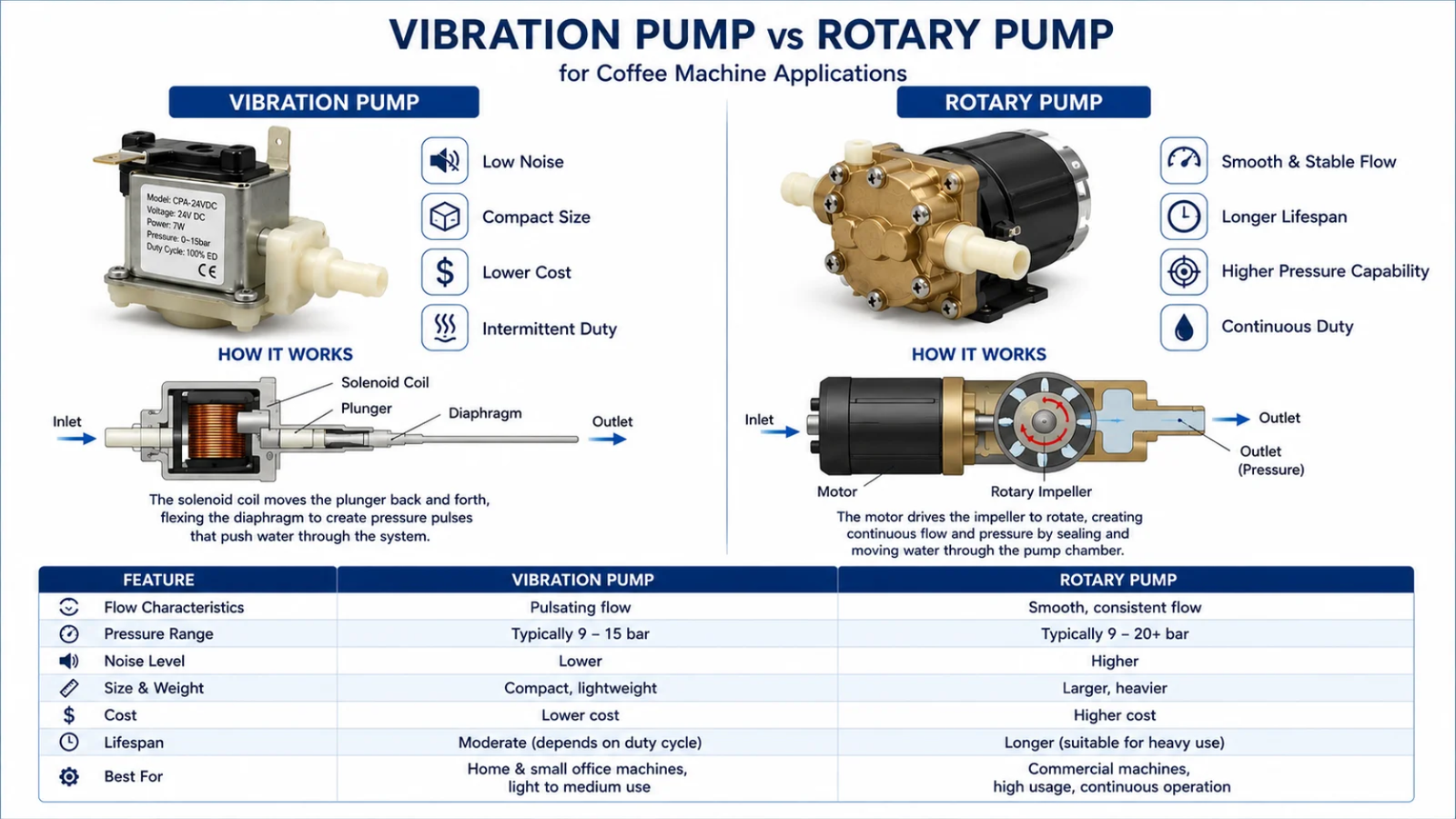
The best pump type for most home and prosumer coffee machines is the vibration pump2. It offers a compact, cost-effective solution capable of generating the necessary pressure for espresso extraction. For high-volume commercial machines, a rotary pump is often preferred for its consistency and durability under continuous use.
Vibration vs. Rotary Pumps
In my 20+ years of experience working with home appliance brands, the vast majority of projects for household coffee machines utilize vibration pumps. Let's break down why.
Vibration Pumps These are the workhorses of the home espresso machine market. They operate using an electromagnetic coil that moves a piston or shuttle back and forth at a high frequency (typically 50/60 Hz)3. This motion pushes small amounts of water with each stroke, rapidly building pressure against the resistance of the coffee puck.
-
Advantages:
- Cost-Effective: They are significantly less expensive to manufacture than rotary pumps.
- Compact Size: Their small footprint is ideal for countertop home appliances where space is at a premium.
- Self-Priming: They can often draw water from a tank without needing to be manually primed.
- Sufficient Pressure: They easily achieve the 9-15 bar pressure range needed for proper espresso extraction.
-
Disadvantages:
- Noise & Vibration: The "buzzing" sound characteristic of many home espresso machines comes from the vibration pump.
- Pressure Fluctuation: The pressure profile is not as flat as a rotary pump's, which can be a factor in high-end extraction theory (though many modern designs manage this well).
- Not for Direct Plumbing: They are designed for tank-fed machines, not for being connected directly to a water line.
Rotary Pumps Found in most commercial café machines, rotary pumps use a motor to spin a set of vanes inside a chamber to move water. This mechanism is larger, heavier, and more complex.
-
Advantages:
- Quiet Operation: They are significantly quieter and produce less vibration.
- Stable Pressure: They deliver a very consistent, stable pressure, which is ideal for back-to-back extractions in a commercial setting.
- Durability: Built for continuous use, they have a longer operational lifespan under heavy load.
- Direct Plumbable: They can be connected directly to a water main.
-
Disadvantages:
- High Cost: They are several times more expensive than vibration pumps.
- Large Size & Weight: They are not practical for most compact home machine designs.
For a procurement manager, the choice is clear: for a home appliance, the vibration pump provides the necessary performance within a manageable cost and size envelope. The key then becomes selecting a high-quality vibration pump and integrating it properly to mitigate noise and ensure consistency.
What Specifications Matter Most When Choosing a Solenoid Pump?
Looking at a spec sheet filled with numbers for pressure, flow, and power can be confusing. It's easy to focus only on the headline figures, but this can lead to overlooking critical details that determine real-world performance and longevity, causing unforeseen issues in the final product.
When choosing a solenoid pump, you must look beyond the basic pressure and flow rate. Critically evaluate the duty cycle, material compatibility of seals and internal components, and noise/vibration (NVH) levels. These secondary specifications often have a greater impact on the user experience and long-term reliability.
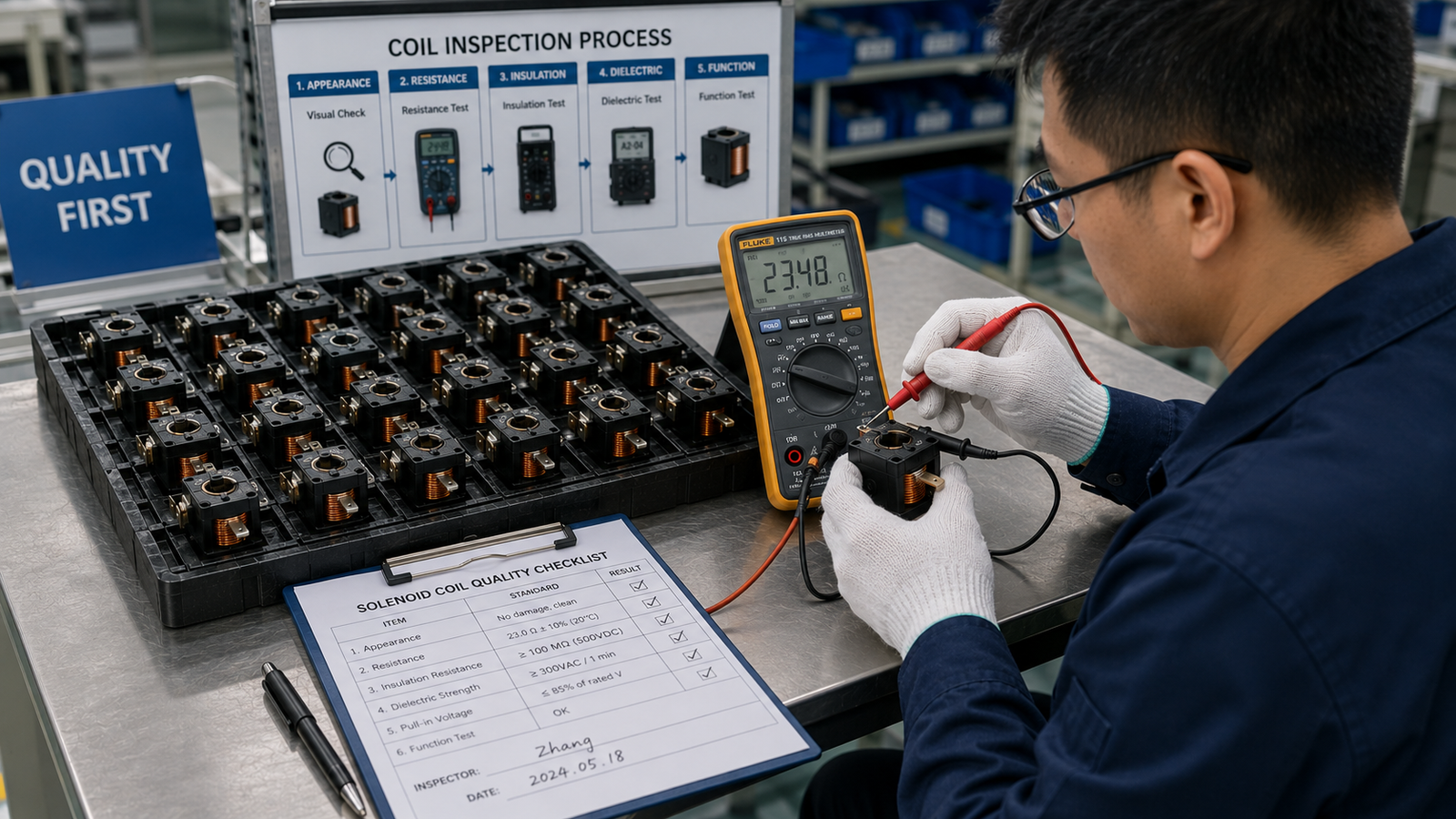
Beyond the Basics of Pump Specs
From our work with leading European brands, we've learned that the conversation about pump selection must go deeper than just a few numbers on a datasheet. These are the factors we advise our clients to scrutinize.
Pressure & Flow Rate: The Foundation
This is the starting point. For espresso, the industry standard is 9 bars of pressure at the group head4. Therefore, the pump must be capable of delivering pressure above this—typically in the 15-16 bar range—to overcome system resistance and achieve the target. The flow rate determines how quickly the machine can deliver water. A common spec might be around 650 cc/minute at open flow, but the effective flow rate under 9 bars of pressure is what truly matters for shot timing.
Duty Cycle & Thermal Performance
A pump's duty cycle indicates how long it can run continuously before needing to cool down5. It's often expressed as a ratio, like "1 min on / 1.5 min off."
- Problem: Choosing a pump with a duty cycle that is too short for your machine's intended use case is a common mistake. For a machine designed to make multiple drinks back-to-back, a pump with a short duty cycle will overheat.
- Solution: We work with clients to define the expected usage pattern. For a premium machine, we might recommend a pump with a higher-grade coil insulation (e.g., Class H vs. Class F6) and better thermal dissipation to support a more demanding duty cycle, ensuring it doesn't fail during the morning rush in a user's kitchen.
Noise & Vibration (NVH)
In the premium home appliance market, a quiet machine is a luxury feature. The pump is a primary source of noise.7
- Problem: A loud, rattling pump can make an otherwise high-end machine feel cheap. This is often a late-stage discovery in prototyping, leading to costly redesigns.
- Solution: We address NVH early in the design phase. This can involve customizing the pump's mounting points with rubber dampeners or even fine-tuning the internal piston/spring mechanism. In one project for a German client, reducing perceived vibration was the number one priority. We developed a custom mounting bracket and selected specific elastomers that isolated the pump's vibration from the machine chassis, a solution that came directly from our OEM experience.
Material Compatibility
The pump's internal components are constantly exposed to water of varying mineral content, as well as acidic descaling solutions.
| Component | Standard Material | Premium/Custom Material | Benefit of Premium |
|---|---|---|---|
| Seals | NBR (Nitrile) | FKM (Viton) or EPDM | Higher resistance to heat, chemicals, and wear.8 |
| Plunger | Stainless Steel 430 | Stainless Steel 304/316 | Better corrosion resistance, especially to acids. |
| Body | Brass or Plastic | NSF-certified plastic | Ensures food safety and prevents leaching. |
Choosing the wrong materials can lead to premature seal failure, corrosion, or contamination. We always ask our clients about the recommended cleaning agents and target markets (due to regional water hardness) to recommend the right material combination.
How Does Pump Performance Affect Coffee Extraction?
You might think that as long as the pump hits 9 bars, the coffee will be good. However, inconsistent performance can ruin a shot, leading to customer complaints about bitter or sour coffee, even if they are using high-quality beans. The pump is the heart of the machine; its stability is paramount.
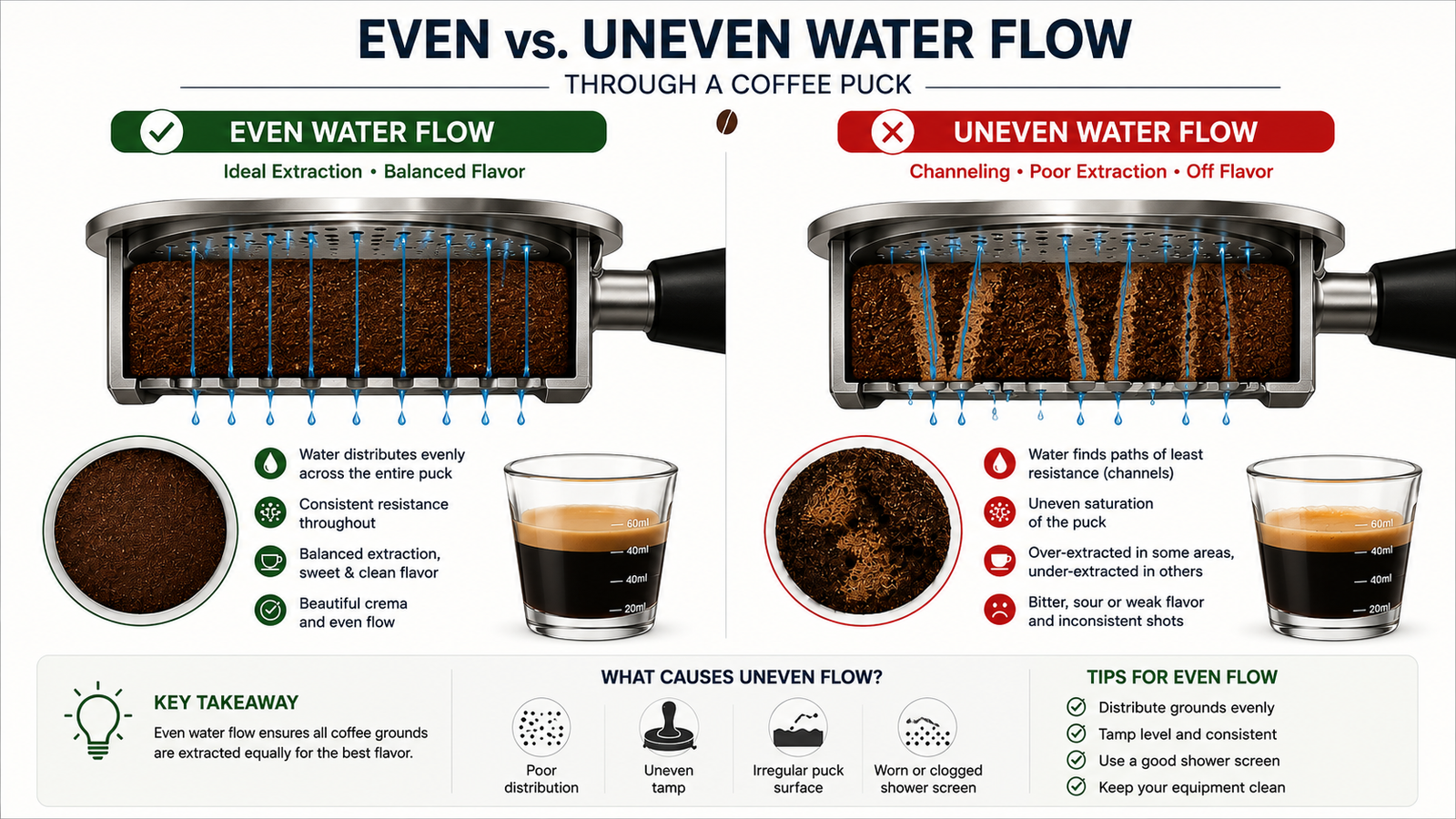
Inconsistent pump performance directly sabotages coffee extraction. Pressure fluctuations cause channeling9 in the coffee puck, leading to uneven extraction—some grounds are over-extracted (bitter) while others are under-extracted (sour). A stable pump ensures a balanced, repeatable, and delicious shot of espresso every time.
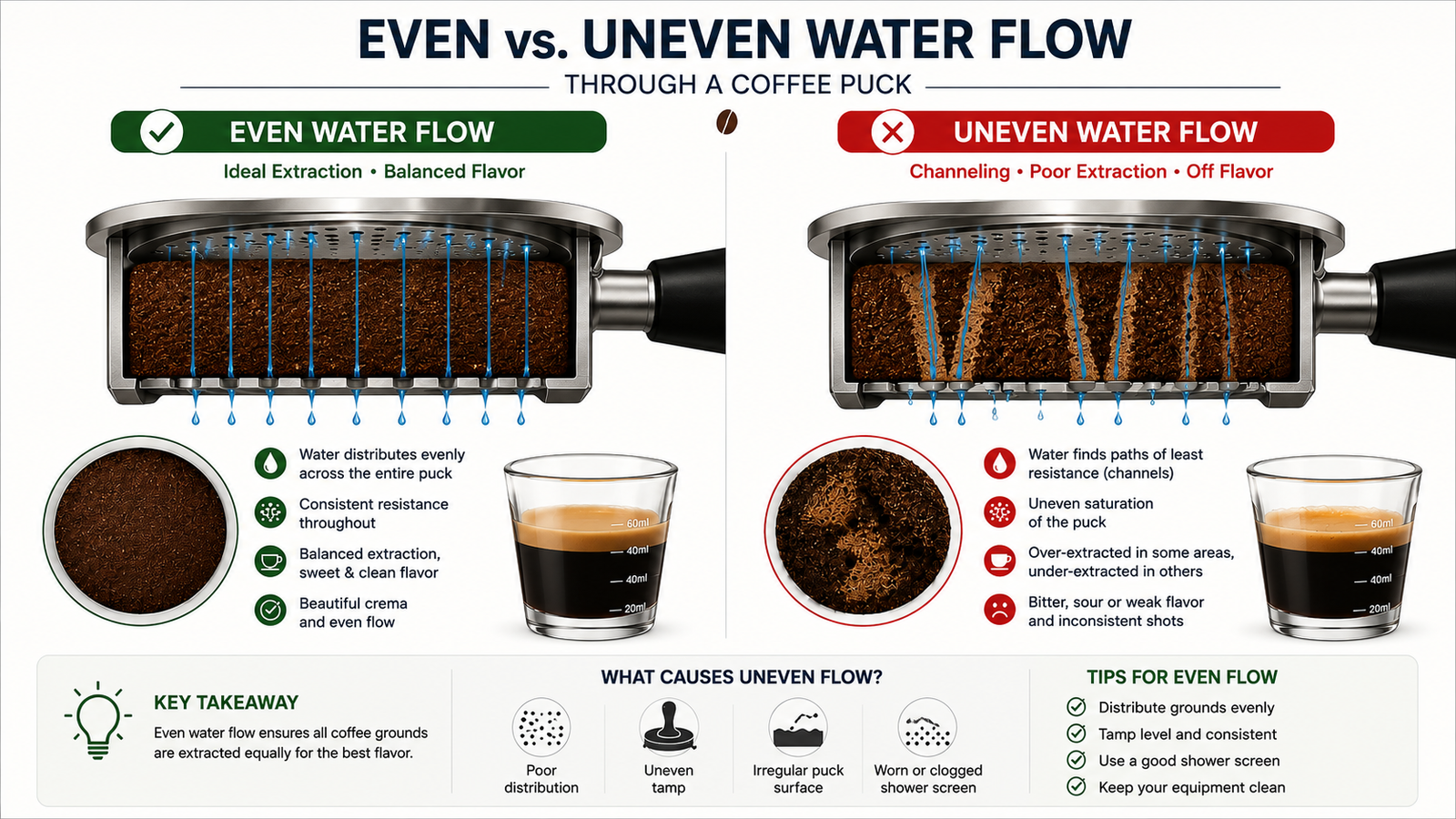
The Link Between Pump Stability and Coffee Quality
As a supplier, we see the direct consequences of pump choice on the final product. A great solenoid pump for coffee machines doesn't just move water; it enables the perfect extraction.
The Role of Consistent Pressure in Preventing Channeling
Channeling is the enemy of good espresso. It occurs when water finds paths of least resistance through the coffee puck instead of saturating it evenly.
- What happens: A vibration pump's pressure naturally ramps up. If this ramp-up is erratic or the peak pressure is unstable, it can fracture the puck, creating these channels.
- The result: Water rushes through the channels, over-extracting the coffee it touches and completely bypassing the rest. This results in a thin, sour, and bitter shot. A stable pump with a smooth pressure curve allows the puck to swell evenly, promoting a uniform extraction.
Pre-infusion and Flow Profiling
High-end machines now offer features like pre-infusion10, where water is introduced to the coffee at low pressure before the full 9 bars is applied. This allows the coffee to bloom and settles the puck, drastically reducing the risk of channeling.
This capability is entirely dependent on the pump and its controller. We can customize coil windings and work with the client's electronics team to enable precise control over the pump's power, allowing for sophisticated pressure and flow profiles. This transforms the pump from a simple on/off component into a tool for crafting the perfect cup of coffee, becoming a key marketing feature for the brand.
The Hidden Impact of Vibration
Excessive vibration from the pump can physically agitate the portafilter and the coffee puck during extraction. This subtle movement can disrupt the puck's integrity, creating micro-channels and leading to the same uneven extraction problems mentioned earlier. This is another reason why managing NVH isn't just about user comfort; it's about repeatable coffee quality. By ensuring our pumps run smoothly, we help protect the integrity of every single shot the machine pulls.
What Are the Most Common Pump Selection Mistakes?
Based on consultations with hundreds of procurement managers, I've seen the same preventable mistakes appear time and again. These errors often stem from a narrow focus on initial cost, leading to much larger expenses down the road related to warranty, service, and brand damage.
The most common mistake is focusing solely on the unit price instead of the Total Cost of Ownership (TCO). A cheap pump that fails prematurely or performs inconsistently will cost far more in warranty claims, negative reviews, and lost brand reputation than a slightly more expensive, reliable alternative.
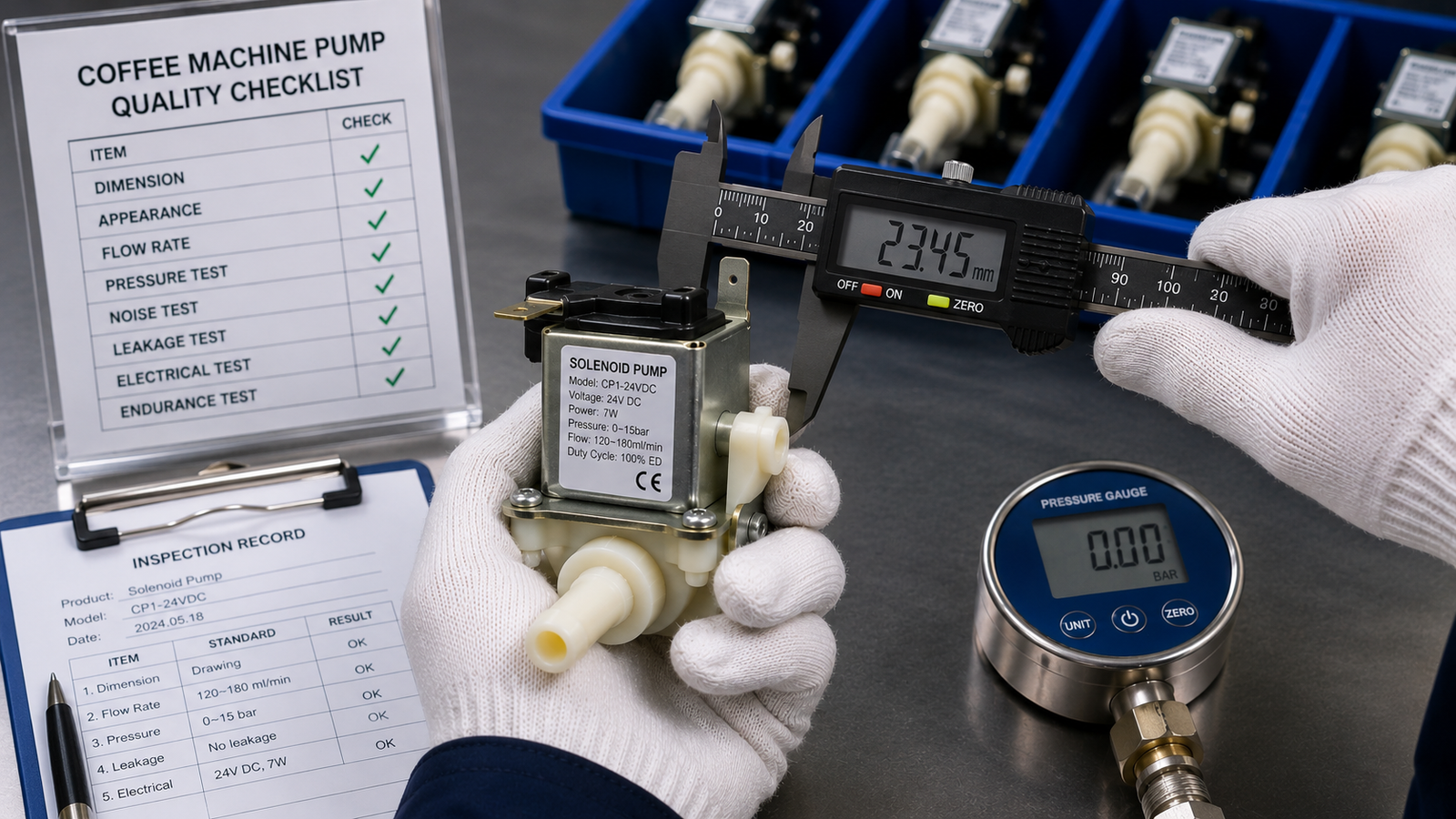
Learning from Common Pitfalls
Avoiding these mistakes is key to a successful product launch and a healthy long-term supply chain. Here are the top four pitfalls we help our clients navigate.
-
Mistake: Prioritizing Unit Price Above All Else A procurement manager's goal is often cost optimization, but focusing only on the per-unit cost of the pump is a classic trap. A pump that is 20% cheaper but has a 5% higher failure rate over three years can decimate profit margins.
- The TCO Calculation: Consider the cost of a service call, replacement parts, shipping, and the immeasurable cost of a negative online review. A reliable pump is a form of insurance for your brand's reputation. We encourage a TCO-based discussion, framing the investment in a quality pump as a risk mitigation strategy.
-
Mistake: Ignoring NVH Until the Final Prototype Noise and vibration are often treated as an afterthought. A common scenario we see is a brand getting ready for mass production, only to discover the machine is unacceptably loud.
- The Late-Stage Scramble: This leads to rushed, expensive fixes like adding sound-dampening foam or trying to source last-minute rubber mounts, which may not even be effective. As mentioned, addressing NVH should happen during the component selection and initial design phase with your pump supplier.
-
Mistake: Using a Standard Pump for a Non-Standard Application Not all coffee machines are the same. An off-the-shelf pump might be perfect for a standard home espresso machine, but it could fail in a machine designed for office use with higher daily volume.
- The Customization Imperative: A client once approached us after experiencing high failure rates with a competitor's standard pump in their new "prosumer" model. The issue was thermal overload from back-to-back use. We developed a custom version with a Class H coil and an integrated thermal cutout, solving the problem and securing the product's market viability.
-
Mistake: Underestimating Regional Voltage and Water Variations A pump that works perfectly on a 230V/50Hz test bench in Europe might struggle or overheat in a region with 220V/60Hz or unstable power grids. Similarly, hard water in one region can cause scale buildup and seal failure much faster than soft water elsewhere11.
- A Global Perspective: A reliable OEM partner will ask about your target markets and can adjust coil windings for specific voltages or recommend material upgrades (like FKM seals) for regions with aggressive water chemistry.
How to Choose a Reliable Solenoid Pump Supplier for OEM Coffee Machines?
Your supplier is more than just a vendor; they are a partner in your product's success. Choosing a supplier based on a low price from an online catalog is a massive risk. You need a partner who can mitigate risks, not create them.
To choose a reliable solenoid pump supplier for OEM coffee machines, verify their track record in your industry. Look for deep OEM/ODM experience, robust quality control systems like ISO 9001 and MES traceability, and a dedicated engineering team that can support customization from prototype to mass production.
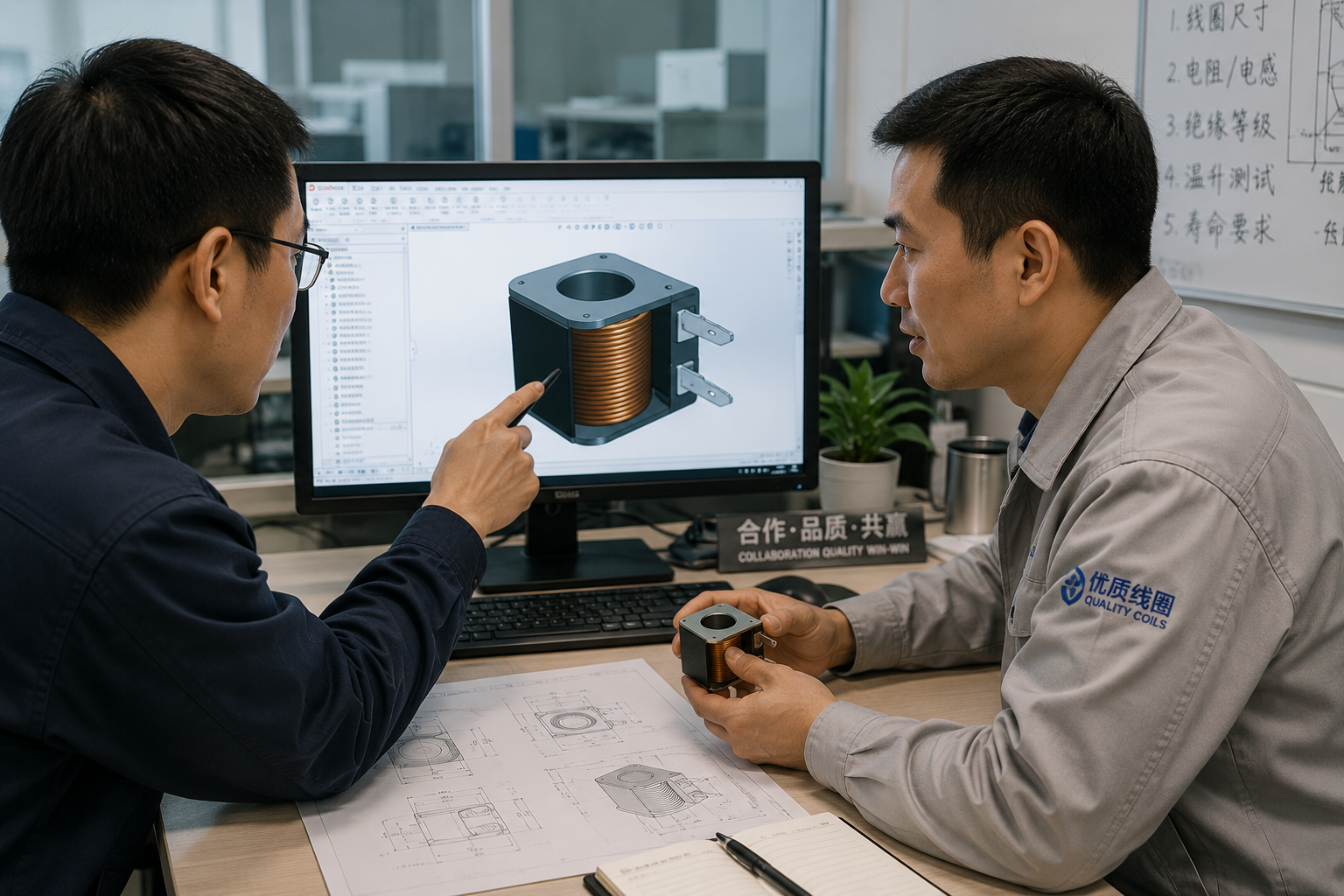
Vetting Your Supply Chain Partner
As a manufacturer who has been the OEM partner for top European brands for over 20 years, we know what separates a component seller from a true manufacturing partner. Here is the checklist we believe every procurement manager should use.
Look for Deep OEM/ODM Experience
A supplier with decades of OEM/ODM experience has seen it all. They understand the challenges of product development and have a library of proven solutions.
- What to ask: "Can you share examples of how you've customized a pump for a client with needs similar to ours?" Their answer will reveal if they are a strategic problem-solver or just an order-taker.
Verify Quality Control and Traceability Systems
Consistency is everything. You need to know that the 100,000th pump you receive is identical in performance to the first sample you approved.
- Look for evidence:
- ISO 9001 / IATF 16949 Certification12: This shows a commitment to standardized quality management processes.
- MES (Manufacturing Execution System): This digital system provides full traceability. If a problem arises, a supplier with an MES can trace the issue back to a specific batch of materials or a particular production shift, enabling quick and precise corrective action.
- 100% Outgoing Inspection: Ask about their testing protocol. Every pump should be tested for key parameters like pressure, flow, and electrical safety before it leaves the factory.
Assess Customization Capabilities and Engineering Support
Your product is unique. Your pump should be too. A strong supplier has an in-house engineering team that can act as an extension of your own.
- The collaboration process: They should be able to discuss material science, coil winding theory, and fluid dynamics to co-create the perfect pump for your application. This partnership is invaluable for innovation and problem-solving.
Check for Compliance and Certifications
Navigating the web of international standards is complex. Your supplier should make it simple.
- Key Certifications: Ensure their products comply with standards relevant to your target markets, such as CE (Europe), UL (North America), RoHS (hazardous substances), and REACH (chemicals). This isn't just a rubber stamp; it's a guarantee of market access and a reduction of your compliance risk.
Frequently Asked Questions
What is the ideal pressure for an espresso machine pump?
The industry standard for optimal espresso extraction is 9 bars of pressure measured at the group head. To achieve this, the pump itself must typically be rated for a higher maximum pressure, often around 15-16 bars, to compensate for pressure loss within the machine's hydraulic system.
How long should a solenoid pump for a coffee machine last?
The lifespan of a quality vibration pump in a home coffee machine is typically rated in thousands of cycles, often translating to 5-10 years of normal household use. Longevity depends heavily on the quality of internal materials (seals, plunger) and the machine's usage patterns.
Can I use any water in my coffee machine with a solenoid pump?
No, water chemistry is critical. Using very hard water can lead to rapid scale buildup, which can clog the pump and cause failure. Conversely, using purely distilled water can be aggressive to some metal components. It's best to use filtered water with a balanced mineral content as recommended by the machine manufacturer.
What's the difference between a 52W pump and a 48W pump?
The wattage (W) indicates the pump's power consumption. Generally, a higher wattage pump can generate higher pressure or maintain a higher flow rate under load. However, it may also generate more heat and noise. The choice between a 48W and 52W pump depends on the specific performance requirements of the coffee machine's hydraulic circuit.
Conclusion
Choosing the right solenoid pump for coffee machines is a strategic decision that extends far beyond a simple comparison of pressure and price. It's about understanding the intricate relationship between the pump's performance, the quality of the final beverage, and your brand's long-term reputation. By focusing on Total Cost of Ownership, collaborating with a supplier on customization for factors like NVH and material durability, and vetting their quality systems, you are not just buying a component; you are investing in product reliability and customer satisfaction. The best choice is a partnership with an experienced manufacturer who understands your risks and can help you build a machine that consistently delivers an exceptional experience.
If you are developing a new coffee machine and need an experienced partner to navigate these choices, our engineering team is ready to help. Contact us to discuss your specific OEM/ODM project requirements.
"Espresso", https://en.wikipedia.org/wiki/Espresso. A coffee-industry standards source identifies approximately 9 bar brew pressure as a conventional espresso target, supporting the article’s use of this range as a design reference; the source does not by itself prove that every solenoid pump should be rated to 15 bar. Evidence role: general_support; source type: institution. Supports: A neutral coffee standards or technical source should support that espresso machines commonly target about 9 bars at the group head and may use pumps rated higher to account for system losses.. Scope note: Contextual support for the pressure range, not a direct specification for all pump models. ↩
"Espresso machine", https://en.wikipedia.org/wiki/Espresso_machine. A technical overview of espresso-machine pump types describes vibration pumps as common in domestic machines and rotary pumps as common in commercial equipment, supporting the article’s use-case distinction; it does not establish that a vibration pump is always the optimal choice for every prosumer design. Evidence role: general_support; source type: encyclopedia. Supports: A neutral technical overview should support that vibration pumps are common in domestic espresso machines while rotary pumps are more typical in commercial machines.. Scope note: Contextual support for typical usage, not proof of universal superiority. ↩
"Diesel engine", https://en.wikipedia.org/wiki/Diesel_engine. An engineering reference on solenoid or electromagnetic reciprocating pumps explains that an energized coil drives reciprocating motion of a plunger or piston, supporting the article’s mechanism description; the source may describe the general mechanism rather than a coffee-machine-specific pump. Evidence role: mechanism; source type: education. Supports: A university or educational engineering source should describe the operating principle of solenoid or electromagnetic reciprocating pumps, including coil-driven piston motion.. Scope note: Mechanistic support is likely general to solenoid pumps rather than specific to espresso machines. ↩
"Espresso", https://en.wikipedia.org/wiki/Espresso. A recognized coffee standards or technical source describes approximately 9 bar pressure as a conventional espresso brewing benchmark, supporting the article’s statement about group-head pressure; the source does not preclude alternative pressure profiles used by some modern machines. Evidence role: expert_consensus; source type: institution. Supports: A recognized coffee institution or technical reference should support that about 9 bar brew pressure is a conventional espresso benchmark.. Scope note: Supports the conventional benchmark, not the exclusivity of 9 bar as the only valid espresso pressure. ↩
"Electric motor", https://en.wikipedia.org/wiki/Electric_motor. An engineering definition of duty cycle describes it as the permitted proportion or duration of operation within a cycle, often constrained by heat dissipation, supporting the article’s explanation of pump run-time limits. Evidence role: definition; source type: education. Supports: An engineering or standards-based source should define duty cycle as the ratio or permitted duration of operation and rest for equipment subject to heating limits.. ↩
"JST connector", https://en.wikipedia.org/wiki/JST_connector. Electrical insulation classification references assign higher permissible temperatures to Class H insulation than to Class F insulation, supporting the article’s statement that Class H can better tolerate thermal load; this does not alone prove improved lifetime in a specific pump design. Evidence role: definition; source type: institution. Supports: A standards or engineering reference should state the temperature ratings associated with Class F and Class H insulation systems.. Scope note: Supports the material temperature classification, not direct durability outcomes for a particular pump. ↩
"Spectroscopy", https://en.wikipedia.org/wiki/Spectroscopy. Acoustic or appliance-engineering literature identifies reciprocating pumps and their mounting structures as important contributors to noise and vibration, supporting the article’s statement about pump NVH; the evidence may be drawn from small-appliance systems rather than coffee machines exclusively. Evidence role: general_support; source type: paper. Supports: A technical paper or acoustic study should support that pumps and their mounting systems are significant sources of noise and vibration in small appliances or espresso machines.. Scope note: Likely contextual if the source studies appliance pumps generally rather than this exact coffee-machine configuration. ↩
"EPDM rubber", https://en.wikipedia.org/wiki/EPDM_rubber. Materials compatibility references generally report higher temperature and chemical resistance for FKM and strong water/steam resistance for EPDM relative to NBR in many applications, supporting the article’s material-selection claim; compatibility still depends on the exact chemical exposure and formulation. Evidence role: general_support; source type: research. Supports: A neutral elastomer handbook or materials reference should compare NBR, EPDM, and FKM for temperature and chemical resistance.. Scope note: General material-property support, not a test of the specific pump seals. ↩
"Espresso Channeling: Why It Happens & How to Fix It! ☕️", https://www.youtube.com/watch?v=PlXzpfXjMFg. Research on espresso extraction and flow through packed coffee beds describes channeling as preferential flow that produces uneven extraction, supporting the article’s explanation of why stable hydraulic behavior matters; it may not isolate pump-pressure fluctuation as the sole cause. Evidence role: mechanism; source type: paper. Supports: Coffee extraction research should support that uneven flow paths through the coffee bed affect extraction uniformity and beverage composition.. Scope note: Supports the channeling mechanism, but direct causation from a specific pump design may require additional testing. ↩
"Longer pre-infusion for less channeling?", https://www.home-barista.com/tips/longer-pre-infusion-for-less-channeling-t88115.html. Coffee-extraction literature and technical discussions describe pre-infusion as low-pressure wetting before full espresso pressure, supporting the article’s claim that it can improve puck saturation and reduce channeling risk; the magnitude of the effect depends on grind, dose, puck preparation, and machine design. Evidence role: mechanism; source type: research. Supports: A coffee science or technical source should support that low-pressure wetting before full pressure promotes more even saturation of the coffee puck.. Scope note: Supports the mechanism and plausible benefit, not a guaranteed improvement in every use case. ↩
"Limescale", https://en.wikipedia.org/wiki/Limescale. Government water-quality references explain that hard water can form mineral scale in pipes and appliances, supporting the article’s concern that regional hardness affects coffee-machine reliability; such sources may not specifically quantify seal-failure rates in solenoid pumps. Evidence role: mechanism; source type: government. Supports: A government or public-health water-quality source should support that hard water deposits calcium carbonate scale in plumbing and appliances, which can impair operation.. Scope note: Directly supports scaling risk, but seal-failure acceleration is contextual unless supported by pump-specific testing. ↩
"ISO 9000 family", https://en.wikipedia.org/wiki/ISO_9000_family. Standards bodies describe ISO 9001 and IATF 16949 as quality-management-system standards, supporting the article’s use of these certifications as evidence of formalized quality processes; certification does not by itself guarantee defect-free production. Evidence role: definition; source type: institution. Supports: Standards-organization sources should explain that ISO 9001 and IATF 16949 define quality management system requirements.. Scope note: Supports the meaning of the certifications, not the actual performance of any individual supplier. ↩