What Is a Solenoid Pump and How Does It Work?
Struggling to pick the right pump? A wrong choice leads to product failure and soaring costs. Understanding how a solenoid pump works is your first step to preventing this.
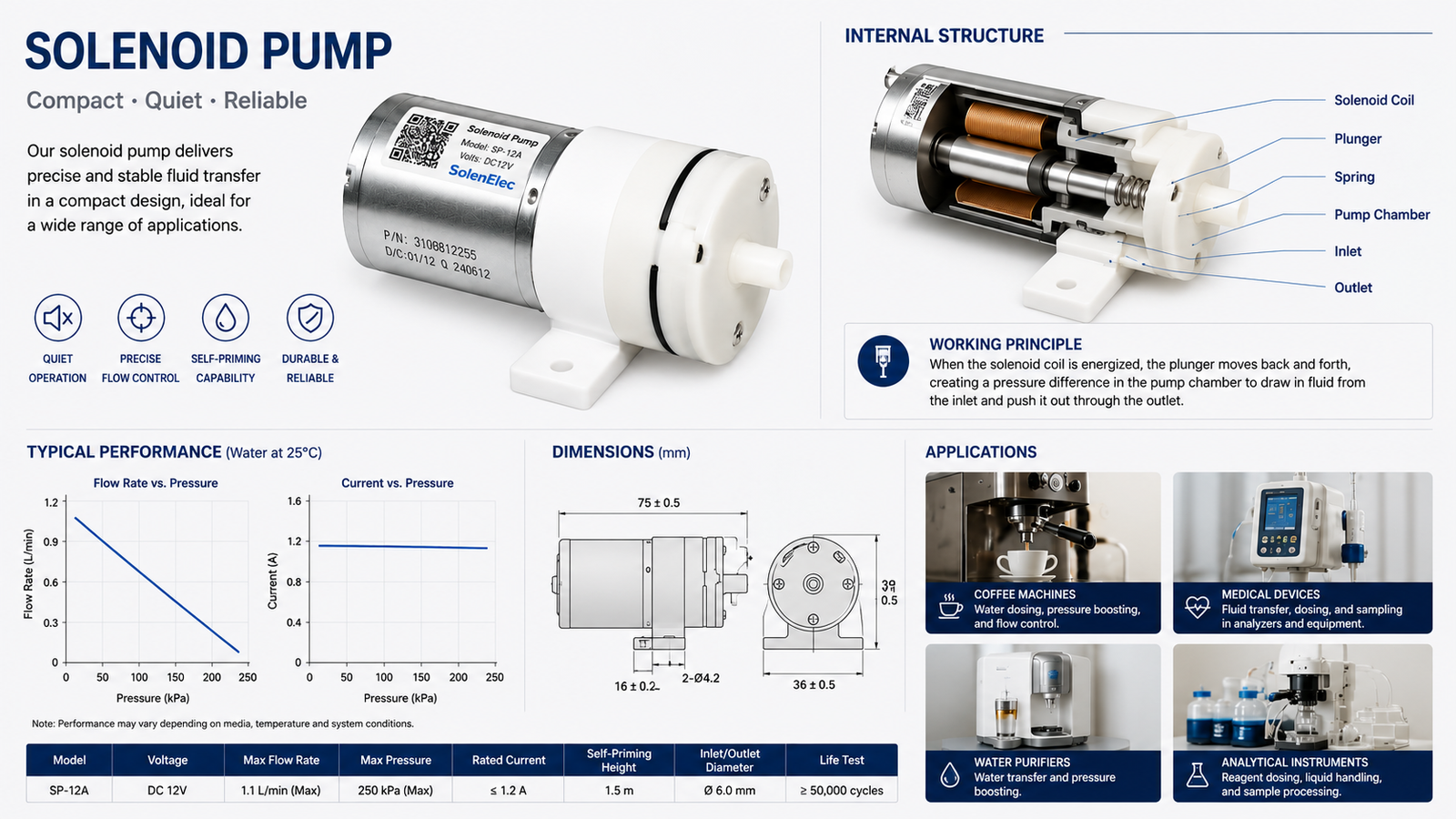
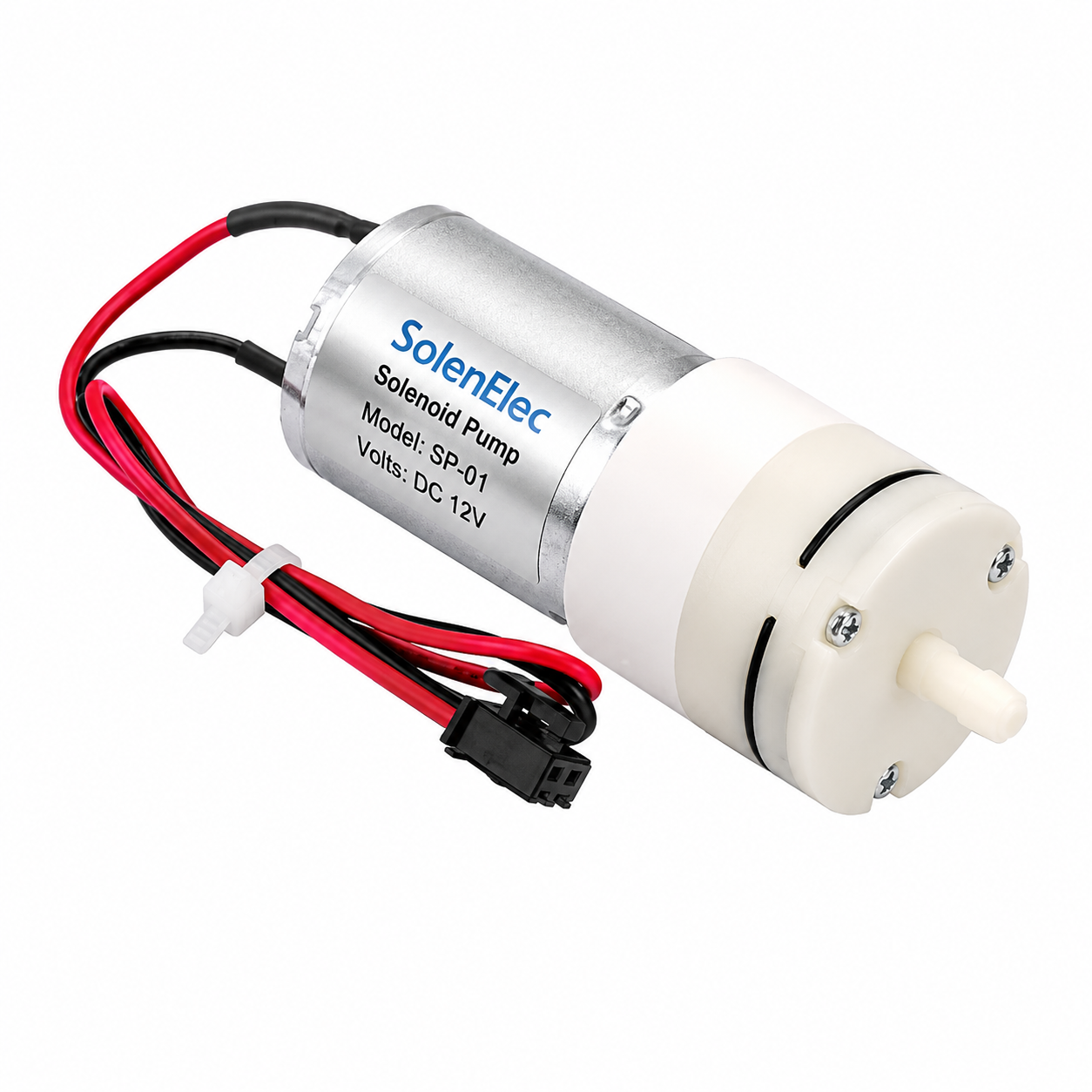
A solenoid pump is a compact device that uses an electromagnetic coil to move a piston, pushing small, precise amounts of fluid. This simple mechanism is ideal for applications needing controlled dosing, like coffee machines or medical equipment, where reliability and consistency are critical.
That’s the basic idea, but as a procurement manager, you're not just interested in a physics lesson. You need to know how this principle translates into real-world performance, costs, and risks for your product line. Over my 20 years of helping brands with OEM/ODM projects, I've learned that the real questions are about making the right choices. Let's break down what truly matters when you're selecting a supplier and a pump.
What Is the Difference Between a Solenoid Pump and a Solenoid Valve?
Confused by pumps and valves? Mixing them up can lead to the wrong component specification and project delays. Let's clarify the difference to keep your project on track.
A solenoid valve simply opens or closes a path to control fluid flow1, like a gate. A solenoid pump, however, actively moves fluid by creating pressure with a piston2. Think of it as a gatekeeper versus an engine; one directs traffic, the other drives it.
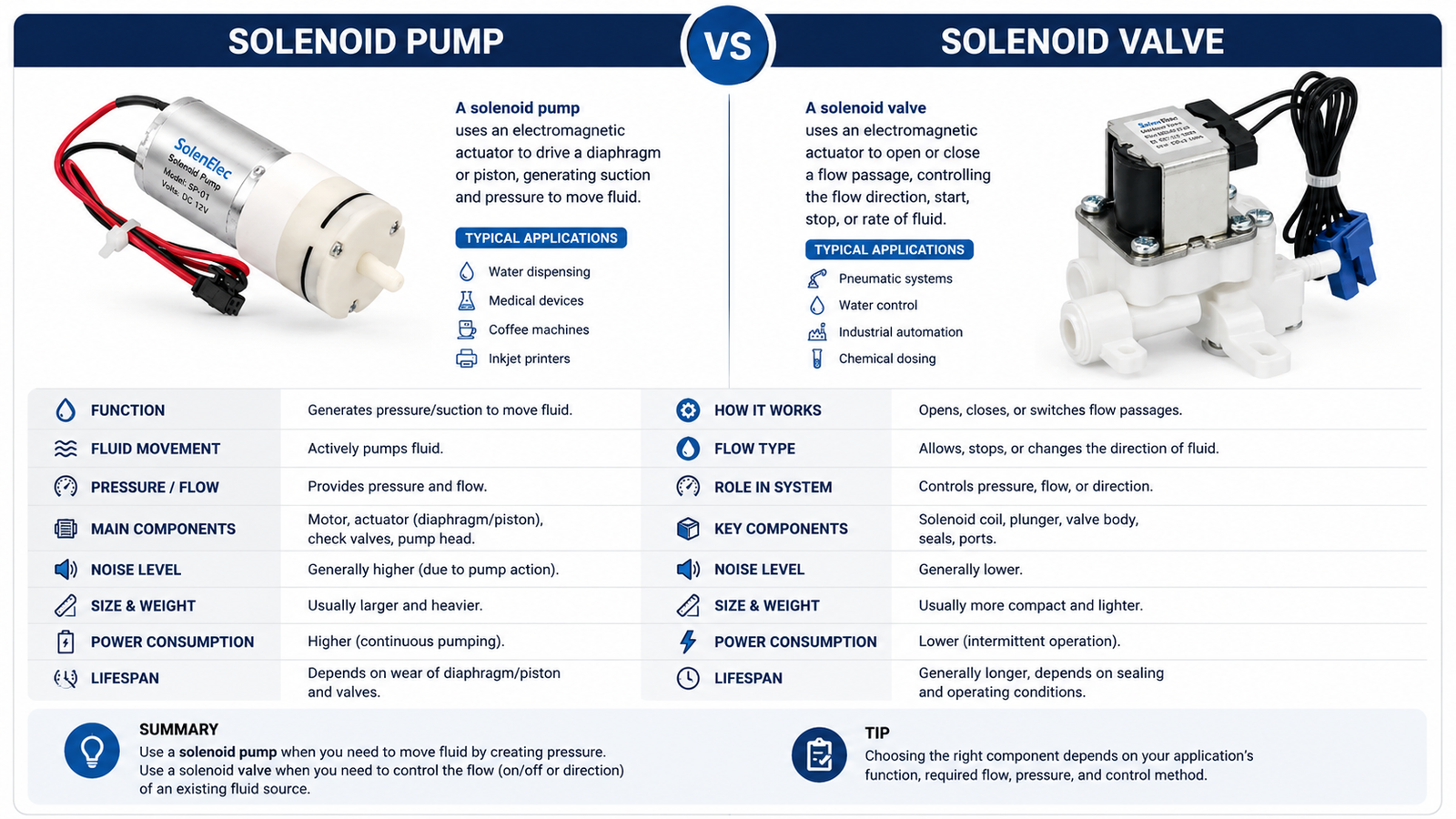
In my experience, many procurement managers first approach us asking for a "solenoid valve" when their application actually needs to move liquid from a tank to a nozzle. They need to generate pressure where there is none. This is the job of a pump. A valve can only control fluid that is already moving or under pressure. Understanding this distinction is the first step in sourcing the right component. Choosing the wrong one can lead to costly delays and redesigns. To make it clearer, here is a simple breakdown:
| Feature | Solenoid Pump | Solenoid Valve |
|---|---|---|
| Primary Function | Creates fluid flow and pressure | Controls existing fluid flow |
| Mechanism | Uses a piston to displace fluid | Uses a plunger to open/close an orifice |
| Energy Use | Pulses on and off to move the piston | Can be normally open or normally closed |
| Typical Application | Coffee machines, chemical dosing | Sprinkler systems, washing machine inlets |
Getting this right from the start ensures your engineering team gets the component they need, and your project stays on schedule.
What Are the Main Components of a Solenoid Pump?
Overwhelmed by technical specs? Focusing on the wrong parts can lead to buying a pump that fails prematurely. Learn the key components to make an informed decision.
The core components are the solenoid coil, the plunger (or piston), a spring, and the pump body with its inlet/outlet valves.3 The quality of these parts, especially the coil's copper wire and the body's plastic, directly determines the pump's lifespan, performance, and safety.
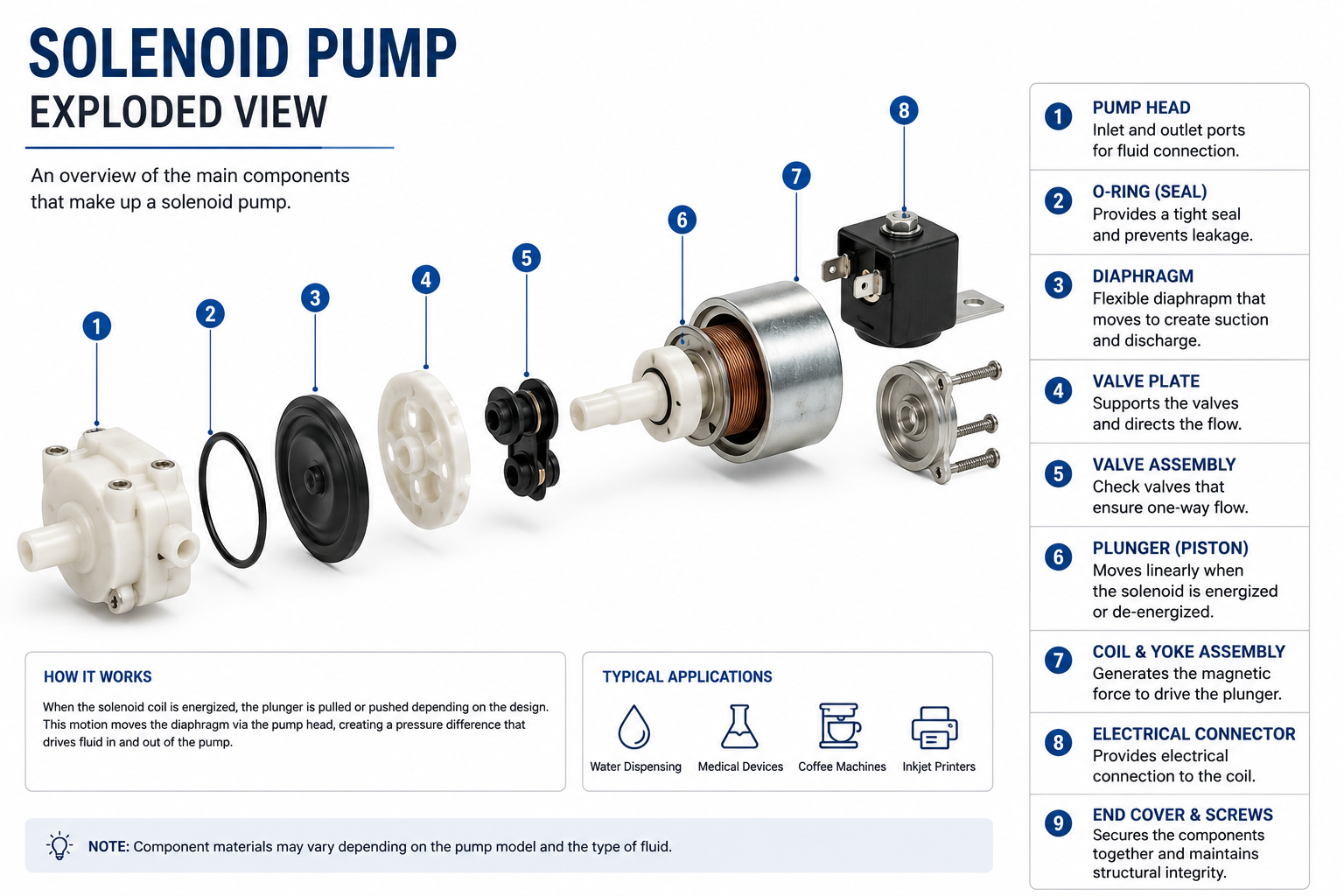
When we start a new OEM project with a client, we don't just talk about pressure and flow rate. We break down the pump into its essential parts, because the quality of each one has a direct impact on your final product's reliability.
The Solenoid Coil: The Engine
This is the heart of the pump. An electric current runs through the copper wire, creating a magnetic field that moves the piston. The quality of the copper wire, the precision of the winding, and the heat resistance of the insulation are critical. A poorly made coil will overheat, lose efficiency, and eventually burn out.4 This is where a manufacturer's experience in material sourcing and process control makes a huge difference.
The Piston and Spring: The Moving Parts
The piston is what pushes the fluid. Its material, often stainless steel, must be durable to withstand millions of cycles. The spring pushes the piston back to its starting position. The spring's resistance to fatigue is essential for a long service life. A weak spring will cause the pump's performance to degrade over time.
The Pump Body and Seals: The Container
The body houses everything and must be compatible with the fluid it's pumping. For a coffee machine, it needs to be made from food-grade, heat-resistant plastic. For an industrial cleaner, it might need to withstand corrosive chemicals. The seals are just as important; if they fail, the pump will leak. The choice of material (like NBR, EPDM, or FKM5) depends entirely on the fluid type and operating temperature.
Where Are Solenoid Pumps Used?
Think solenoid pumps are a niche product? This misconception might cause you to overlook a simple, cost-effective solution. Let's explore where they are used every day.
You'll find solenoid pumps in many common devices. They're in espresso machines pushing hot water, steam irons generating steam, and medical equipment delivering precise fluid doses. Their compact size and reliability make them ideal for applications where controlled, intermittent fluid movement is needed.
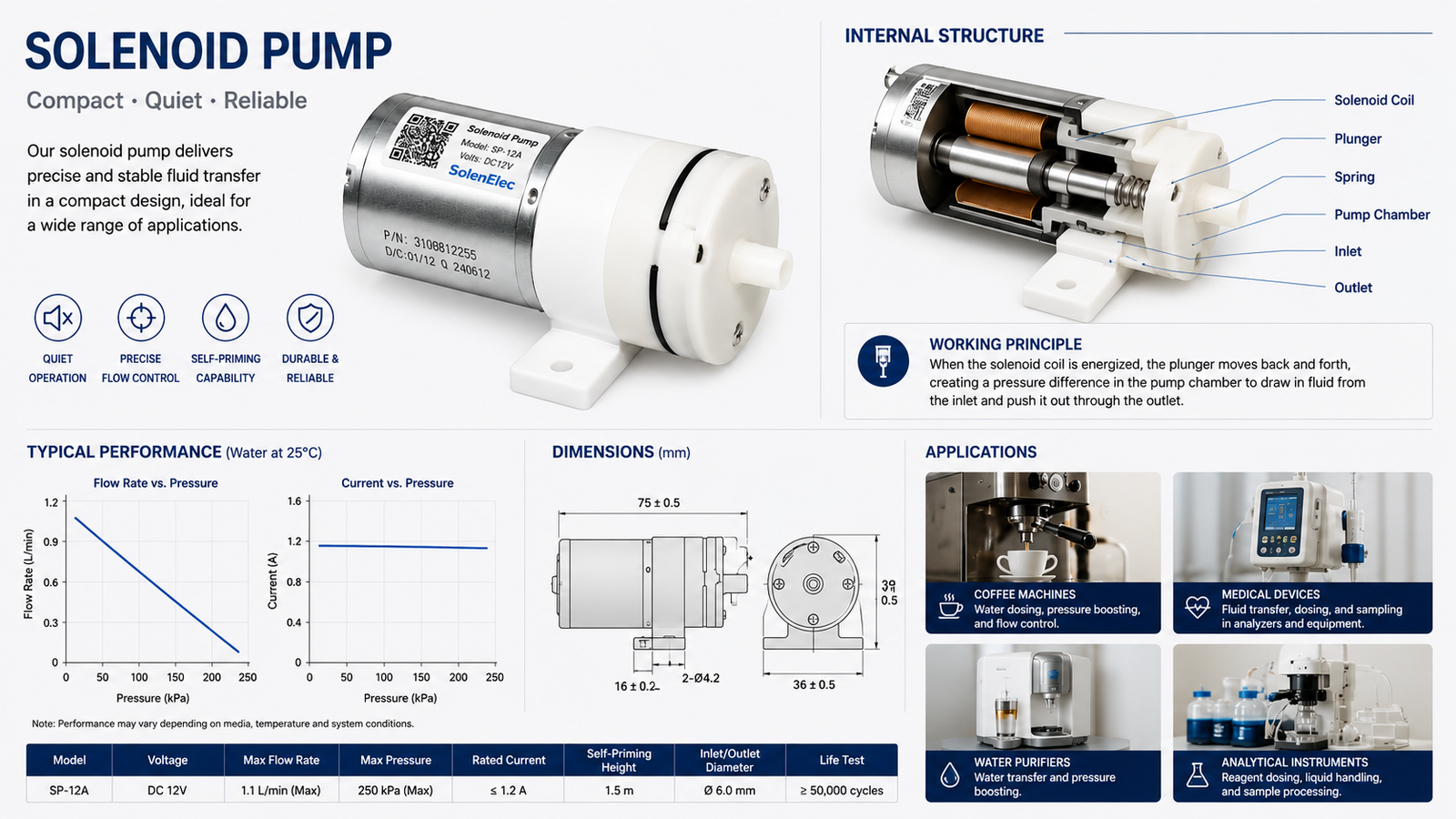
The reason a "one-size-fits-all" pump doesn't exist becomes clear when you look at their different applications. The requirements for each use case dictate a unique design, material choice, and quality standard. As a partner to many global brands, we see these variations firsthand.
Home Appliances
In a high-end espresso machine, the pump must generate consistent high pressure (around 15 bars) to extract flavor perfectly. It also needs to handle hot water and meet food-grade standards like NSF. For a steam iron or a carpet cleaner, the pressure requirements are lower, but the pump must reliably dose water into a heating element. The materials must withstand heat, but the performance demands are different from a coffee machine.
Medical and Lab Equipment
Here, precision and reliability are matters of health and safety. In dialysis machines or fluid analyzers, pumps deliver tiny, exact amounts of fluid. The materials must be biocompatible and sometimes sterilizable. The manufacturing process for these pumps requires extreme quality control and traceability, often with systems like MES to track every component from start to finish.
Industrial and Commercial Systems
In commercial cleaning equipment, pumps dose concentrated detergents, so they must be built with chemically resistant plastics and seals. In professional printing systems, they move precise amounts of ink. Each of these applications demands a different balance of performance, longevity, and cost, which is why a deep discussion about the end-use is always the first step in our OEM process.
What Are the Common Problems with Solenoid Pumps?
Worried about pump failure and angry customers? Ignoring common failure points during procurement is a recipe for disaster. Let's identify the risks so you can avoid them.
Common problems include coil burnout from overheating, leakage from worn seals, reduced pressure from internal wear, or failure to prime. These issues often stem from choosing a pump not suited for the application's temperature, fluid type, or duty cycle, or from inconsistent manufacturing quality.

Based on over two decades of experience, I can tell you that most product failures are not random. They can almost always be traced back to a specific mismatch between the component's design and its real-world use. As a procurement manager, your goal is to minimize risk, and that starts with understanding these potential failure points.
Coil Burnout
This is one of the most common failures. It happens when the pump is operated beyond its specified duty cycle cycle—for example, running a pump continuously when it was designed for short bursts. It can also be caused by poor-quality manufacturing, such as using low-purity copper wire or inadequate insulation that can't handle the heat.
Leaking Seals
Seals are the pump's first line of defense against leaks. If the wrong seal material is used, it will degrade when exposed to certain chemicals or high temperatures. A pump designed for water will fail quickly if used with an aggressive cleaning agent. This is why clearly defining the fluid and temperature is non-negotiable.
Loss of Pressure
A gradual drop in performance often points to internal wear on the piston or spring fatigue. This is a sign that the pump's materials were not durable enough for the required lifespan. A pump specified for 10,000 cycles will not survive in a product designed to last for 100,000 cycles.
How a Good Supplier Mitigates These Risks
A reliable OEM partner addresses these issues upfront. They will insist on knowing the duty cycle, fluid type, and required lifespan. They will also have robust quality control for their incoming materials and production processes, including 100% outgoing inspection to catch any potential defects before they reach you.
How to Choose the Right Solenoid Pump for Your Application?
Choosing a pump feels like a gamble? Making a decision based on price alone often leads to poor performance. Let's give you a clear framework for selection.
To choose the right pump, focus on four key areas: fluid characteristics (type, temperature), performance requirements (flow rate, pressure), operational conditions (duty cycle, lifespan), and compliance needs (certifications like NSF, UL). Matching the pump to these factors is crucial for reliability.
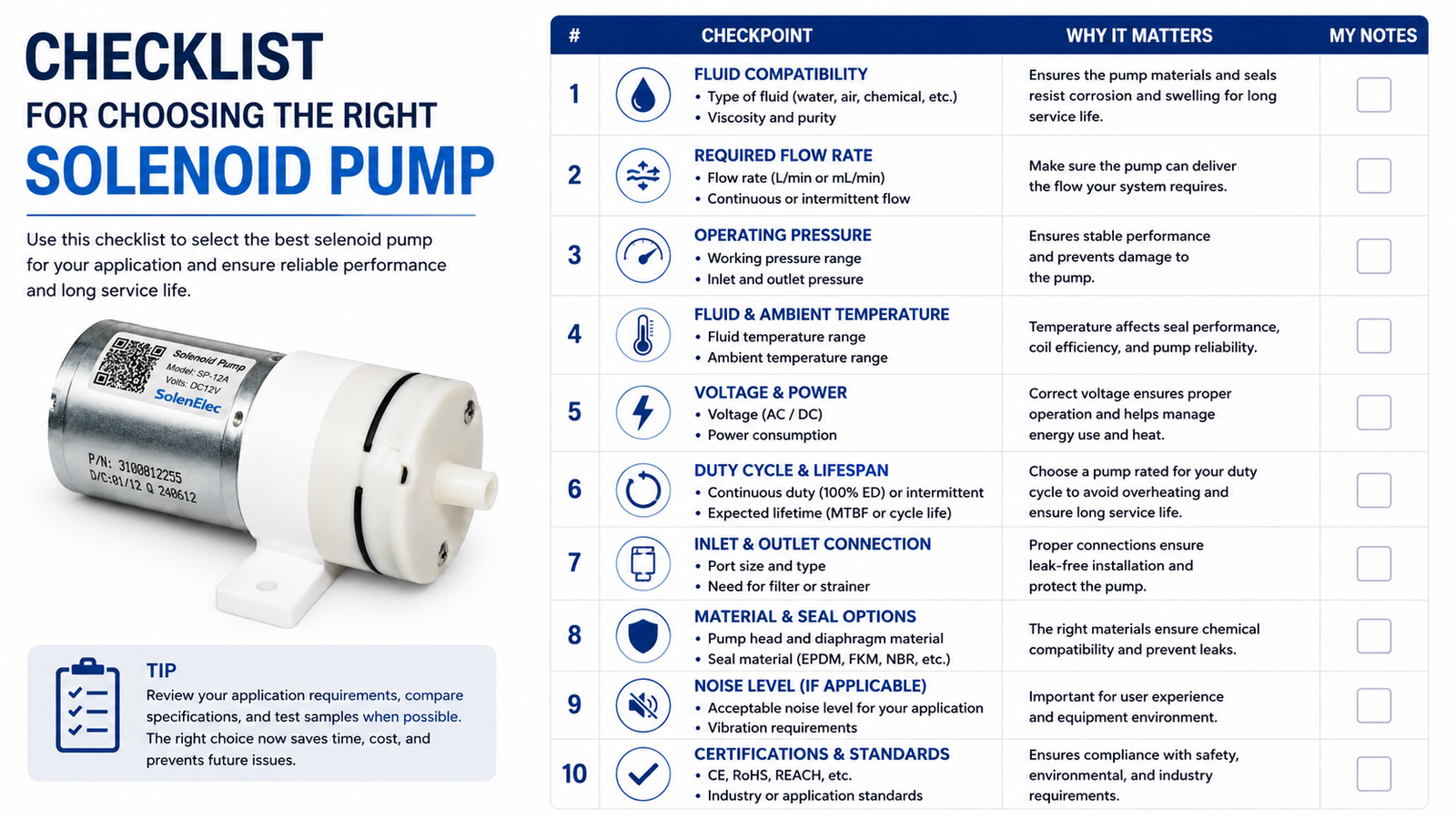
To avoid the problems we just discussed, the selection process must be systematic. When clients come to us for a custom solution, we guide them through a series of questions. This conversation is the most critical part of ensuring a successful product launch. You should ask your potential suppliers these same questions.
1. Fluid and Temperature
- What is the exact fluid you are pumping? (e.g., water, coffee, cleaning solution)
- What is the operating temperature range? This information determines the required materials for the pump body, seals, and internal components to prevent chemical degradation and heat-related failures.
2. Performance Needs
- What is the required flow rate (e.g., ml/min) and pressure (e.g., bar)? Be realistic. Over-specifying can add unnecessary cost, while under-specifying will lead to poor performance.
3. Operational Conditions
- What is the duty cycle? (How many seconds on vs. off)
- What is the expected lifespan of your final product, in either years or cycles? This determines the required durability of the moving parts and the thermal limits of the coil.
4. Quality and Compliance
- What certifications do you need? (e.g., CE, UL, RoHS, REACH, or food-grade like NSF)
- How does the supplier ensure quality? Ask about their production control (like ISO 9001), testing procedures, and if they use systems like MES for traceability. A good partner will be transparent about their quality systems.
Conclusion
Choosing the right solenoid pump isn't about specs alone. It's about matching the pump to the application and partnering with a supplier who understands quality and your specific needs.
Need Help Selecting the Right Solenoid Pump?
Choosing the right solenoid pump is about more than flow rate and pressure. Fluid compatibility, duty cycle, temperature, and long-term reliability all play a critical role in your product's performance.
Whether you're developing coffee machines, medical equipment, or industrial dosing systems, our engineering team can help you select or customize the right solution.
👉 Contact us to discuss your application requirements.
If you already know you need a solenoid pump, the next step is matching flow, pressure, and voltage to the machine.
"Solenoid valve", https://en.wikipedia.org/wiki/Solenoid_valve. An encyclopedia article defines a solenoid valve as an electromechanically actuated valve that opens or closes an orifice to regulate fluid flow through a passage. Evidence role: definition; source type: encyclopedia. Supports: That solenoid valves are electromechanically actuated devices that open or close an orifice to control fluid flow.. ↩
"Reciprocating pump - Wikipedia", https://en.wikipedia.org/wiki/Reciprocating_pump. Standard reference material explains that pumps are devices that add energy to fluids to move them; in reciprocating piston pumps, pressure is produced by cyclic displacement of the fluid. Evidence role: mechanism; source type: encyclopedia. Supports: That pumps add energy to a fluid to move it, and that reciprocating piston pumps generate pressure by cyclic displacement.. Scope note: Some solenoid‑actuated dosing pumps use diaphragms instead of pistons, but the pressure‑generating principle is the same. ↩
"Check valve", https://en.wikipedia.org/wiki/Check_valve. Technical summaries of vibratory (solenoid) pumps list the coil, a plunger with a return spring, and inlet/outlet check valves in the body as the principal components enabling reciprocating flow. Evidence role: mechanism; source type: encyclopedia. Supports: That vibratory/solenoid pumps use a coil-driven plunger with a return spring and check valves within the pump body.. Scope note: Exact component designs vary across manufacturers and applications. ↩
"Degradation Monitoring of Insulation Systems Used in Low-Voltage ...", https://pmc.ncbi.nlm.nih.gov/articles/PMC7374401/. Reference sources distinguish continuous‑duty from intermittent‑duty solenoid coils and note that excessive heat from prolonged energization can degrade insulation and result in coil failure. Evidence role: mechanism; source type: encyclopedia. Supports: That solenoid coils have duty-cycle and thermal constraints and that excessive heating can damage insulation and cause failure.. Scope note: Specific failure thresholds depend on coil design, materials, and operating conditions. ↩
"EPDM rubber - Wikipedia", https://en.wikipedia.org/wiki/EPDM_rubber. Materials references describe NBR, EPDM, and FKM as elastomers with differing resistance to oils, solvents, and heat, informing seal selection by fluid type and temperature. Evidence role: mechanism; source type: encyclopedia. Supports: That NBR, EPDM, and FKM have distinct chemical compatibilities and temperature capabilities relevant to seal selection.. Scope note: Compatibility depends on specific compound formulations and exact media; generalized charts may not cover all use cases. ↩