How Material Selection Affects Solenoid Valve Service Life in High-Temperature OEM Applications?
Struggling with premature component failure in your high-temperature OEM applications? The frequent breakdown of parts like solenoid valves can lead to costly warranty claims, damage your brand's reputation, and force last-minute redesigns. Understanding how material selection impacts solenoid valve service life is the first and most critical step to engineering a reliable, long-lasting product.
During a recent OEM dishwasher project, we noticed a clear trend. Standard applications typically specified PA valve bodies with EPDM diaphragms, while long-life, high-temperature projects increasingly required PPS valve bodies and FKM diaphragms.
The service life of a solenoid valve is directly determined by its materials, especially in high-temperature environments. The choice of valve body plastic (e.g., Polyamide vs. PPS) and elastomer for seals (e.g., EPDM vs. FKM) governs its ability to resist thermal degradation, chemical attack, and mechanical stress, which are the primary factors that dictate its operational lifespan and reliability.
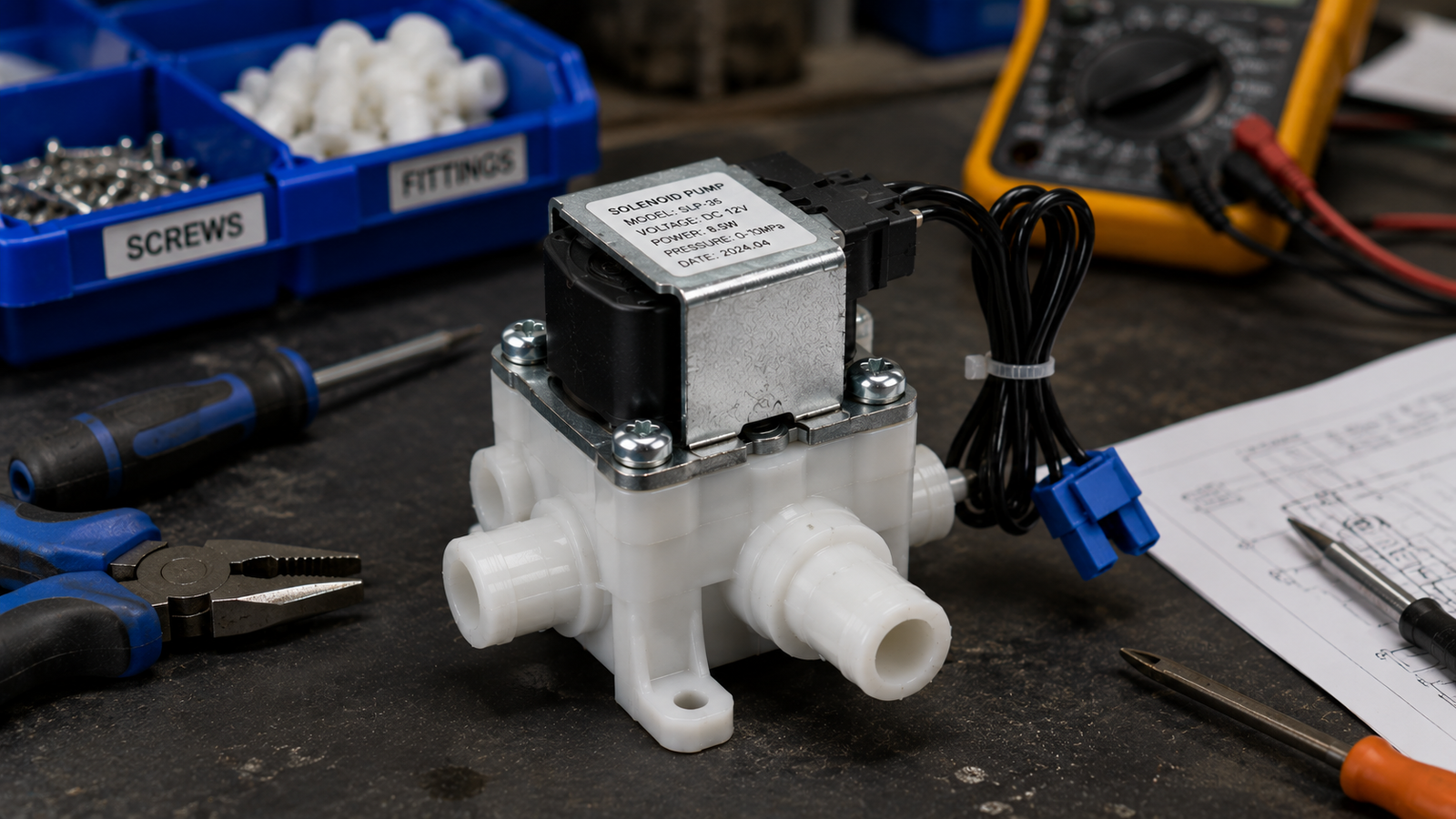
Now that we've established the direct link between materials and durability, let's move beyond theory. I want to walk you through a real-world case study from one of our OEM partners. This will illustrate precisely how these material choices play out under pressure and what it means for your own product design and procurement strategy.
A Real Automation Project Where the Solenoid Valve Failed Prematurely?
Have you ever had a client demand a component lifespan that seems almost impossible with standard parts? This happened to us recently. A major manufacturer of commercial dishwashers was experiencing failures with their water inlet valves, and it was becoming a serious issue for their brand.
They approached us with a clear but challenging goal: increase the inlet solenoid valve service life to a minimum of 1,000,000 cycles. The problem was that their existing valves, which used standard materials, were failing far short of this target under the machine's demanding operating conditions.

The project centered on a water inlet solenoid valve for a high-end commercial dishwasher. This isn't your typical home appliance. These machines run almost continuously in restaurants and hotels, creating an environment of extreme stress on every component. The client laid out the specific challenges for us.
The Application's Harsh Conditions
- High Temperature: The valve had to consistently manage water at 85°C (185°F). This temperature is at the upper limit for many standard plastics and elastomers, accelerating material aging.
- High Pressure & Continuous Use: Unlike a residential machine that runs once a day, these dishwashers operate for hours on end. The valve was subjected to constant water pressure and frequent cycling, introducing significant mechanical fatigue.
- Chemical Exposure: The water wasn't just hot; it was mixed with industrial-grade detergents and rinse aids, creating a chemically aggressive environment that attacks many common seal materials1.
Faced with these conditions, the client had already done some research. They came to us with a proposed solution: upgrade the valve's construction from a standard Polyamide (PA66) body with an EPDM seal to a high-performance Polyphenylene Sulfide (PPS) body with an FKM (Viton®) seal. On paper, it made perfect sense. But as engineers, we knew the real story was more complex than simply choosing the most expensive materials.
What Factors Compromised the Solenoid Valve Service Life?
When a component fails, it's tempting to blame the part as a whole. But a true engineering analysis requires digging deeper to find the root cause. Why, exactly, were the original valves failing? The client's proposed upgrade suggested they believed the materials were the sole problem.
The original solenoid valve failed because the combination of 85°C water, constant mechanical stress, and chemical exposure caused the standard materials to degrade. The Polyamide body began to soften and deform, while the EPDM seal lost its elasticity and ability to seal properly, drastically reducing the solenoid valve service life.
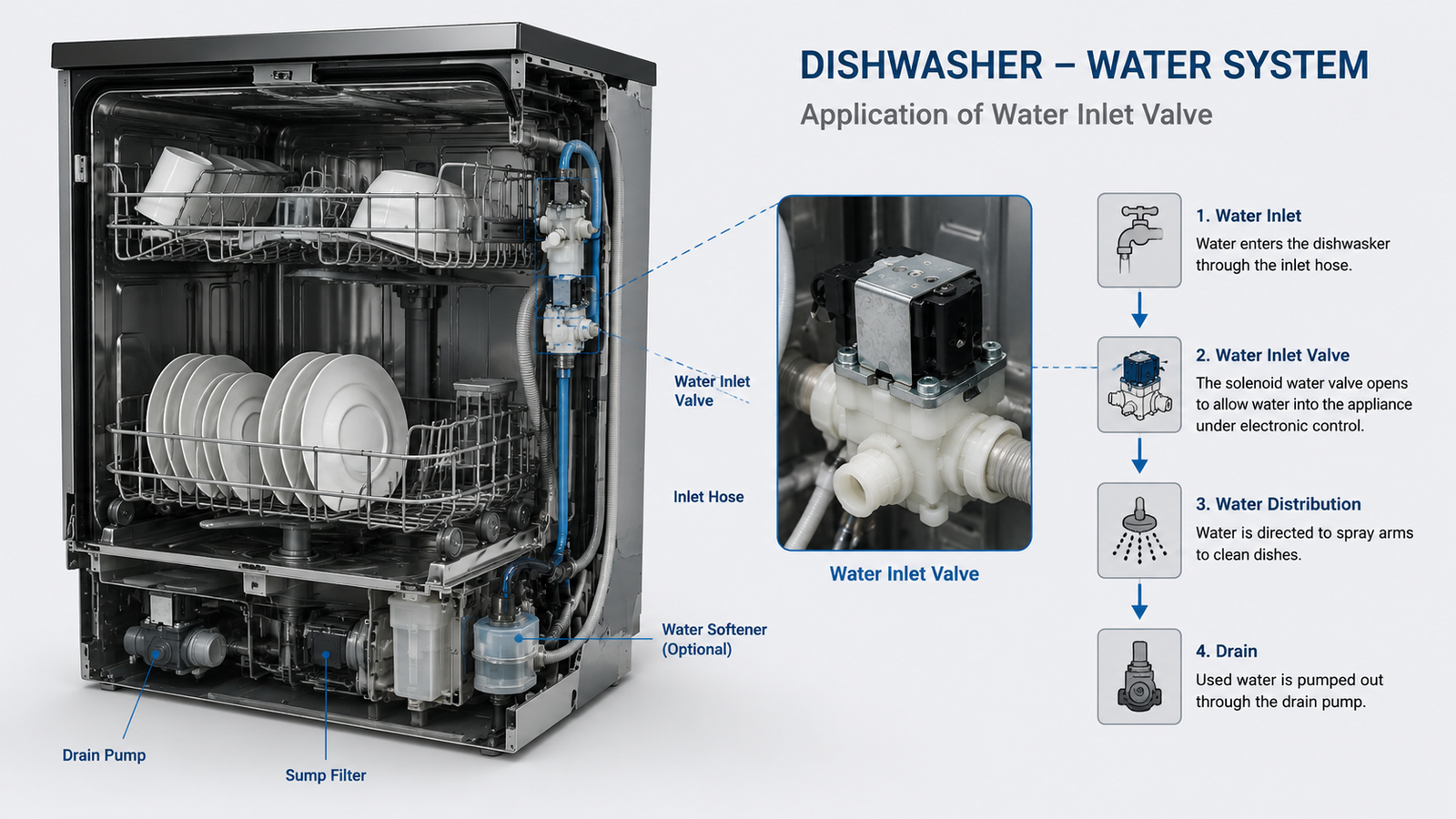
Let's break down the specific failure mechanisms we identified. It wasn't one single issue, but a cascade of problems originating from the material choices being mismatched for the application's intensity.
Thermal Degradation of the PA66 Valve Body
Polyamide (PA66), often reinforced with glass fiber, is an excellent, cost-effective material for many solenoid valve bodies. It has good mechanical strength and is perfectly suitable for standard home appliances where water temperatures rarely exceed 60°C.
However, at a constant 85°C, PA66 is operating at the very edge of its thermal limits, especially in the presence of hot water. This leads to a process called hydrolysis, where the water molecules begin to break down the polymer chains in the plastic. Over time, this makes the material brittle and weak. Furthermore, the constant heat and pressure cause thermal creep2—a slow, permanent deformation of the plastic body, which can eventually lead to leaks around the fittings or diaphragm.
Chemical and Thermal Attack on EPDM Seals
EPDM (Ethylene Propylene Diene Monomer) is the go-to material for seals in water applications. It has excellent resistance to water, steam, and weathering.3 For a residential washing machine, it's the perfect choice.
But in this commercial dishwasher, two factors worked against it:
- Sustained High Temperature: While EPDM can handle hot water, continuous exposure to 85°C causes it to harden and lose its flexibility4 over hundreds of thousands of cycles. A hardened seal can no longer conform perfectly to the valve seat, leading to micro-leaks.
- Chemicals: Industrial detergents contain surfactants and other chemicals that are more aggressive than residential products. These chemicals slowly attack the EPDM, causing it to swell or become brittle, accelerating the failure process initiated by the heat.
The combination of these factors meant the seal was the valve's weakest link, directly compromising the unit's ability to reach the 1-million-cycle target.
Which Design Changes Actually Improve Solenoid Valve Service Life?
After the client proposed a full upgrade to PPS and FKM, our job was to determine if this was the right path. Was it necessary to use a sledgehammer to crack a nut, or could a more targeted, cost-effective solution achieve the same goal?
The most critical design change required was upgrading the seal material from EPDM to FKM (Viton®) to withstand the combination of high heat and chemical exposure. While upgrading the valve body to PPS would also improve durability, it represented a significant cost increase that needed careful justification.
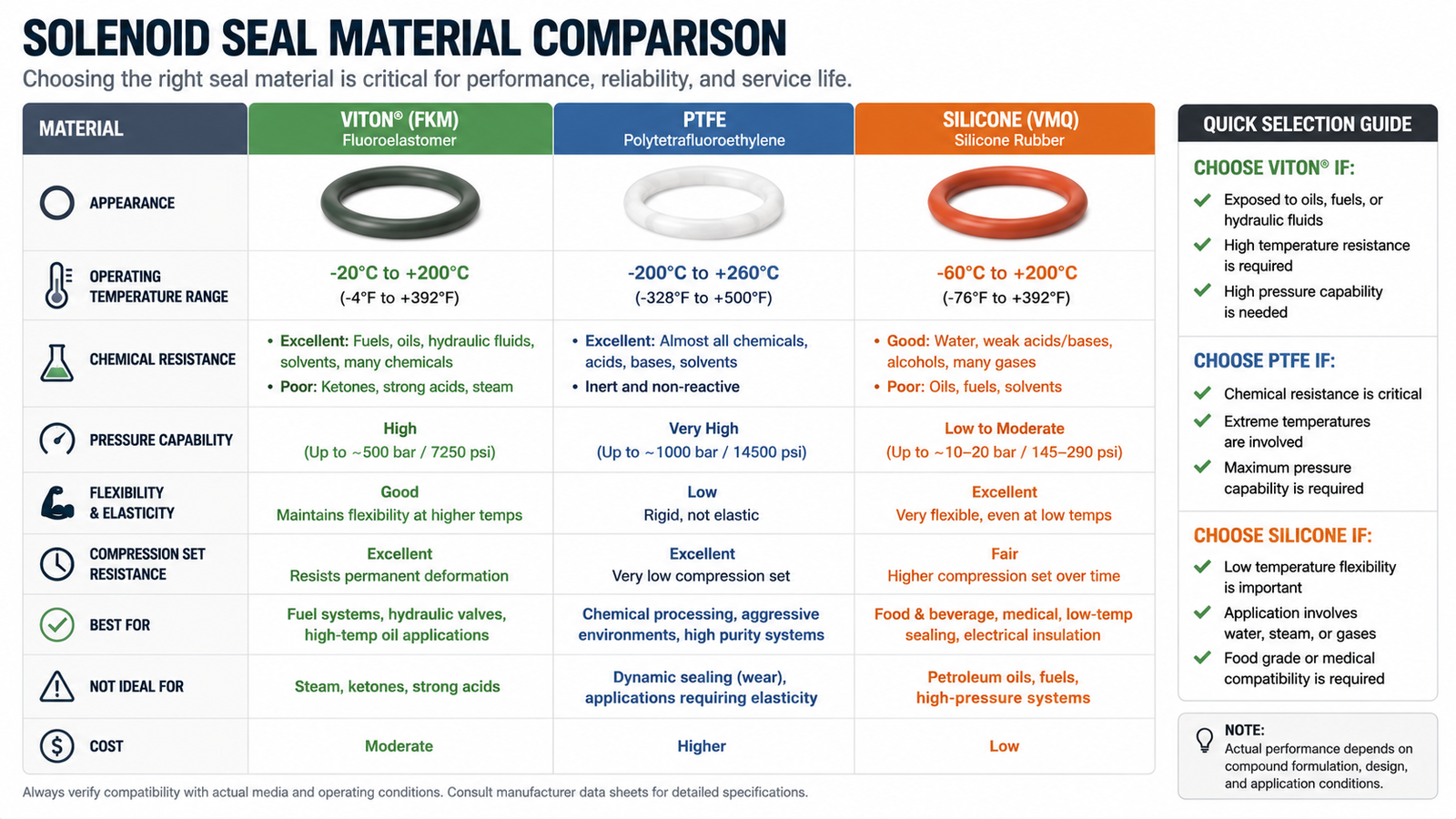
We approached this by analyzing each proposed material change independently, weighing the performance benefits against the cost implications. This is the kind of analysis that separates a parts supplier from a true OEM partner.
Material Comparison: Performance vs. Cost
To give our client a clear picture, we created a simple comparison table. This is a practice every procurement manager should demand from their suppliers.
| Material | Type | Max Temp (Water) | Chemical Resistance (Detergents) | Relative Cost | Key Benefit |
|---|---|---|---|---|---|
| PA66 (Standard) | Body | ~85°C (short-term) | Moderate | 1x | Cost-effective, good mechanical strength |
| PPS (High-Perf) | Body | ~200°C+ | Excellent | 4x - 6x | Extreme thermal & chemical stability |
| EPDM (Standard) | Seal | ~120°C | Good (water), Poor (oils, some chemicals) | 1x | Excellent for water/steam, low cost |
| FKM (Viton®) | Seal | ~200°C | Excellent | 5x - 8x | Resists heat, chemicals, and compression |
The Seal Upgrade: A Non-Negotiable Change
Our analysis quickly confirmed that the EPDM seal was the primary point of failure. It simply couldn't provide the long-term reliability needed at 85°C with detergents.
Upgrading to FKM (Viton®) was a non-negotiable solution. FKM is a fluoroelastomer renowned for its exceptional performance at high temperatures and resistance to a broad range of chemicals5, including those found in industrial detergents. While significantly more expensive than EPDM, its ability to maintain sealing force and resist degradation over a million cycles6 in this environment made the cost essential to achieving the target solenoid valve service life.
The Body Upgrade: A Cost-Benefit Analysis
The question of the valve body was more nuanced. PPS is, without a doubt, a superior material to PA66 in this context. It laughs at 85°C and is virtually immune to hydrolysis and chemical attack. Using a PPS body would build an almost indestructible valve.
However, it was also 4-6 times more expensive. We had to ask: was the PA66 body actually failing, or was it just the seal? Our investigation showed that while the PA66 was under stress, it wasn't the primary failure mode. A high-grade, 30% glass-filled PA66 could likely handle the pressure and temperature if the seal issue was resolved. The upgrade to PPS offered ultimate peace of mind, but it came at a steep price. This became the central point of discussion: balancing "good enough" engineering with "bulletproof" design.
How Can Material Choices Balance Solenoid Valve Service Life and Cost?
You need better performance, but the procurement department is watching the budget closely. This is the classic OEM dilemma. How do you deliver the required reliability and enhance solenoid valve service life without letting costs spiral out of control?
The key is to balance reliability and cost through targeted, strategic upgrades. Instead of a blanket, expensive overhaul, we focus on the weakest link. In this case, combining the essential FKM seal upgrade with a high-grade, reinforced PA body offered a significant performance boost without the full cost of a PPS body.
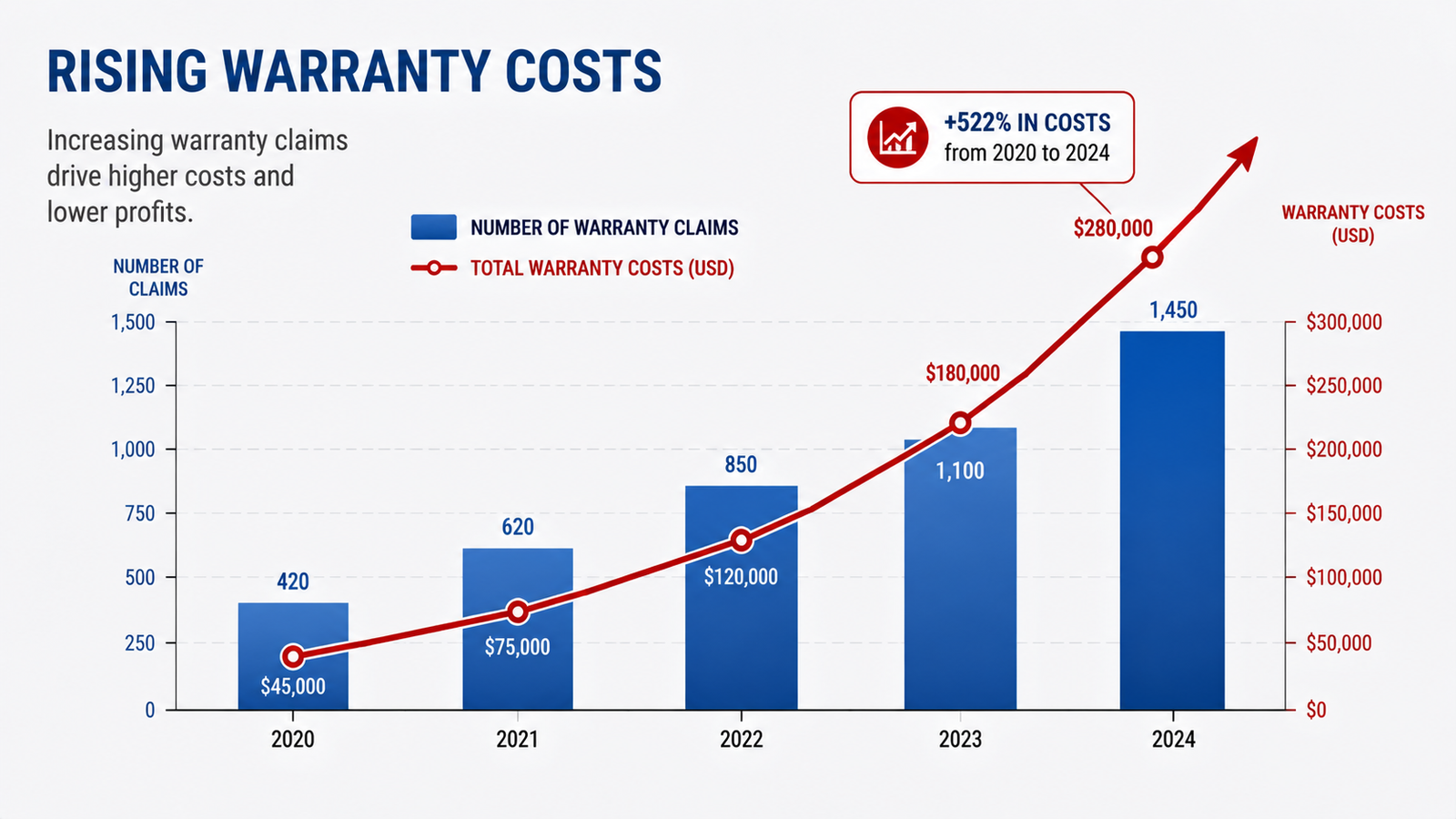
Our recommendation to the client wasn't a simple "yes" or "no" to their proposal. Instead, we presented a tiered approach that empowered them to make a business decision based on clear engineering data.
The "Good, Better, Best" Approach
- Good (Standard): The existing PA66 + EPDM valve. Unsuitable for this application due to a short service life.
- Better (Optimized): A reinforced, high-grade PA66 body + FKM seal. This was our primary recommendation. It addressed the critical failure point (the seal) and bolstered the body's resilience at a moderate cost increase. This solution was engineered to reliably meet the 1-million-cycle target.
- Best (Over-Engineered): The client's proposed PPS body + FKM seal. This solution would exceed the 1-million-cycle target by a wide margin. We presented this as the "premium" option for applications where failure is absolutely not an option and where the end-product's price could absorb the higher component cost.
This approach shifts the conversation from "what's the best material?" to "what's the right solution for your product, market, and budget?"
Don't Forget the Solenoid Coil
As a solenoid coil manufacturer, I have to point out that the valve body and seal are only part of the equation. The electromagnet itself—the coil—is also under immense thermal stress. The heat from the 85°C water is compounded by the heat generated by the coil itself when energized (I²R losses).
A complete reliability solution must include a properly specified coil:
- Wire Insulation Class: For this application, a standard Class B (130°C) or F (155°C) insulation7 is essential. Using a cheaper, lower-grade wire would lead to the coil's insulation breaking down, causing a short circuit and total valve failure.
- Encapsulation Material: The plastic that overmolds the coil must also be able to withstand the ambient heat and prevent moisture ingress.
- Duty Cycle: Ensuring the coil is rated for continuous duty prevents it from overheating during the dishwasher's long operating hours.
Focusing only on the valve's wetted parts while ignoring the coil is a common mistake that undermines the entire effort to improve solenoid valve service life.
When Should OEMs Upgrade Their Solenoid Valve Design?
Every OEM wants to build a more reliable product. But budgets are finite, and not every application requires military-grade components. So, when does an upgrade from standard materials make sound engineering and financial sense?
OEMs should upgrade their solenoid valve design when the operating conditions—specifically temperature, chemical exposure, or required cycle life—exceed the proven capabilities of standard materials like PA and EPDM. Upgrades are often justified for high-value commercial equipment but can represent unnecessary costs for standard consumer appliances.

Based on over 20 years of experience helping OEMs with these decisions, here is a practical guide.
You should strongly consider an upgrade when:
- Operating temperatures consistently exceed 80°C. This is the threshold where materials like PA66 begin to struggle with long-term hydrolysis and creep.
- The media is chemically aggressive. If you're controlling anything other than plain water—such as detergents, oils, or chemicals—standard EPDM or NBR seals may not be sufficient. FKM or FFKM might be necessary.
- The required cycle life is over 500,000 cycles in harsh conditions. Mechanical fatigue becomes a significant factor at high cycle counts, necessitating stronger bodies and more resilient seals.
- The application is "mission-critical." In medical devices, industrial safety systems, or high-end analytical equipment, the cost of failure is far greater than the cost of a component upgrade. In these cases, over-engineering for reliability is a wise investment.
- The valve is in a hard-to-service location. If replacing a failed valve requires significant labor or downtime, using a more durable component from the start lowers the total cost of ownership.
You can likely stick with standard materials when:
- The application is a typical consumer appliance. A residential washing machine or coffee maker with water temperatures below 60°C and a target life of 100,000-200,000 cycles is the ideal use case for standard PA + EPDM valves.
- Cost is the absolute primary driver. For high-volume, price-sensitive products, as long as the standard materials meet the minimum required performance and warranty targets, an upgrade is not justified.
- The operating environment is mild. Low pressure, room temperature, and non-aggressive media do not warrant the expense of high-performance polymers.
Frequently Asked Questions
What is the main cause of solenoid valve failure in high temperatures?
The primary cause is material degradation. High heat accelerates the aging of plastics and elastomers, causing them to become brittle, deform (creep), or lose their sealing properties. This is often compounded by chemical attack from the media being controlled, further reducing service life.
Is PPS always better than PA for solenoid valve bodies?
No. While PPS has far superior thermal and chemical resistance, it is also much more expensive. For a majority of applications (e.g., consumer appliances), a well-designed, glass-filled Polyamide (PA) body is perfectly adequate and more cost-effective. PPS is the better choice only when extreme conditions demand it.
How much longer does an FKM seal last than an EPDM seal in hot water?
In challenging conditions like 85°C water with detergents, an FKM seal can last 2 to 5 times longer, or even more, than an EPDM seal. FKM's superior resistance to heat, chemicals, and compression set allows it to maintain a reliable seal for a much higher number of cycles.
Can you upgrade just the solenoid coil for better heat resistance?
Yes, and it's a critical part of the system. Upgrading the coil's copper wire to a higher insulation class (e.g., Class F or H) and using a high-temperature bobbin and encapsulation material ensures the electromagnet can survive the heat generated by both the environment and its own operation.
Conclusion
The commercial dishwasher case study is a perfect example of a core engineering principle: there is no universally "best" material. The right choice is always dependent on the application. The client's initial impulse to upgrade everything to the highest specification was understandable, but it wasn't the most efficient path. By analyzing the precise failure modes, we determined that a targeted upgrade of the seal to FKM, combined with a robust coil design, was the most cost-effective strategy for improving solenoid valve service life. The decision to also upgrade the valve body to PPS became a strategic choice based on their desired level of reliability versus cost, not an absolute necessity.
As an OEM/ODM partner with over two decades of experience, we specialize in this application-specific engineering. If you're facing reliability challenges with solenoid valves or coils in your products, don't just guess at a solution. Contact our engineering team. We can help you diagnose the root cause and design the most cost-effective component solution to enhance your product's performance and protect your brand's reputation.
Need to Improve Solenoid Valve Service Life in High-Temperature Applications?
Material selection is only one part of the solution. Choosing the right valve body, seal, and solenoid coil together is the key to achieving long-term reliability while controlling costs.
👉 Contact us to discuss your OEM project with our engineering team.
"Dishwasher detergent - Wikipedia", https://en.wikipedia.org/wiki/Dishwasher_detergent. Authoritative reviews of machine dishwashing detergents note highly alkaline formulations often containing oxidizing agents and surfactants, which can be aggressive toward some polymeric materials and elastomers. Evidence role: general_support; source type: encyclopedia. Supports: That machine dishwashing detergents are typically highly alkaline and may include oxidants and surfactants, which can be aggressive toward certain polymers/elastomers.. Scope note: Compatibility depends on specific detergent chemistries and elastomer formulations; effects in a given system require application-specific testing. ↩
"Temperature/Stress-Dependent Fractional Creep Models of ... - PMC", https://pmc.ncbi.nlm.nih.gov/articles/PMC12298901/. Reference materials explain that polymers are susceptible to creep—time-dependent plastic deformation—especially at elevated temperatures under sustained stress, which can lead to dimensional change and functional loss in load-bearing components. Evidence role: mechanism; source type: encyclopedia. Supports: That polymers exhibit time-dependent deformation (creep) under stress, which increases with temperature and can cause permanent dimensional change.. Scope note: General principle; actual creep behavior depends on the specific polymer grade, reinforcement, stress state, and temperature profile. ↩
"EPDM rubber", https://en.wikipedia.org/wiki/EPDM_rubber. Materials references describe EPDM as having very good resistance to water, steam, and weathering, aligning with its common use in water-handling seals. Evidence role: general_support; source type: encyclopedia. Supports: That EPDM exhibits very good resistance to water, steam, and weathering and is widely used in aqueous sealing applications.. Scope note: Resistance to specific chemicals and hot aqueous environments depends on compound formulation and service conditions. ↩
"Performance of Thermal-Oxidative Aging on the Structure and ... - PMC", https://pmc.ncbi.nlm.nih.gov/articles/PMC10221044/. Experimental studies show that prolonged thermal aging of EPDM at elevated temperatures produces increases in hardness and decreases in elasticity and tensile properties, trends that would impair long-term sealing performance. Evidence role: mechanism; source type: paper. Supports: That prolonged thermal aging of EPDM at elevated temperatures leads to increased hardness and reduced elasticity/tensile properties.. Scope note: Aging kinetics depend on temperature, oxygen availability, media (air vs. hot water/detergent), and compound formulation; results are not a direct lifetime prediction for this application. ↩
"FKM - Wikipedia", https://en.wikipedia.org/wiki/FKM. Reference sources describe fluoroelastomers (FKM) as retaining properties at temperatures around 200°C and resisting a broad range of chemicals and oils, supporting their suitability in hot, chemically exposed sealing applications. Evidence role: general_support; source type: encyclopedia. Supports: That FKM (fluoroelastomer) materials retain properties at high temperatures and offer broad chemical resistance compared with general-purpose elastomers.. Scope note: Performance varies with FKM type, filler system, and specific media; not all FKMs are equivalent. ↩
"Peristaltic pump - Wikipedia", https://en.wikipedia.org/wiki/Peristaltic_pump. Comparative references indicate that FKM typically shows lower compression set and superior chemical resistance relative to EPDM at elevated temperatures, which supports the prospect of longer sealing life in demanding service; no single source provides a universal million-cycle endurance figure. Evidence role: general_support; source type: encyclopedia. Supports: That FKM generally exhibits lower compression set and better chemical resistance at elevated temperatures than EPDM, supporting longer potential sealing life under harsh conditions.. Scope note: Cycle life depends on seal design, loading, surface finish, media, and duty cycle; property comparisons do not translate to a fixed cycle count. ↩
"Insulation system - Wikipedia", https://en.wikipedia.org/wiki/Insulation_system. Standards-based references define electrical insulation thermal classes including Class B (130°C) and Class F (155°C), aligning with the coil insulation classes mentioned. Evidence role: definition; source type: encyclopedia. Supports: That thermal classes for electrical insulation systems include Class B (130°C) and Class F (155°C), as defined in standards and reference summaries.. ↩