
How Did We Solve a Coil Overheating Problem for a Coffee Machine Manufacturer?
Your coffee machine coils are burning out, causing customer complaints and high warranty costs. You've tried "better" coils, but the problem persists. The real issue is not the component itself.
The solution is often a system-level diagnosis, not a more expensive part. Overheating usually happens when the coil's design doesn't match its real-world use, especially regarding its duty cycle and the environment it's placed in. A collaborative review can quickly pinpoint and fix the root cause.
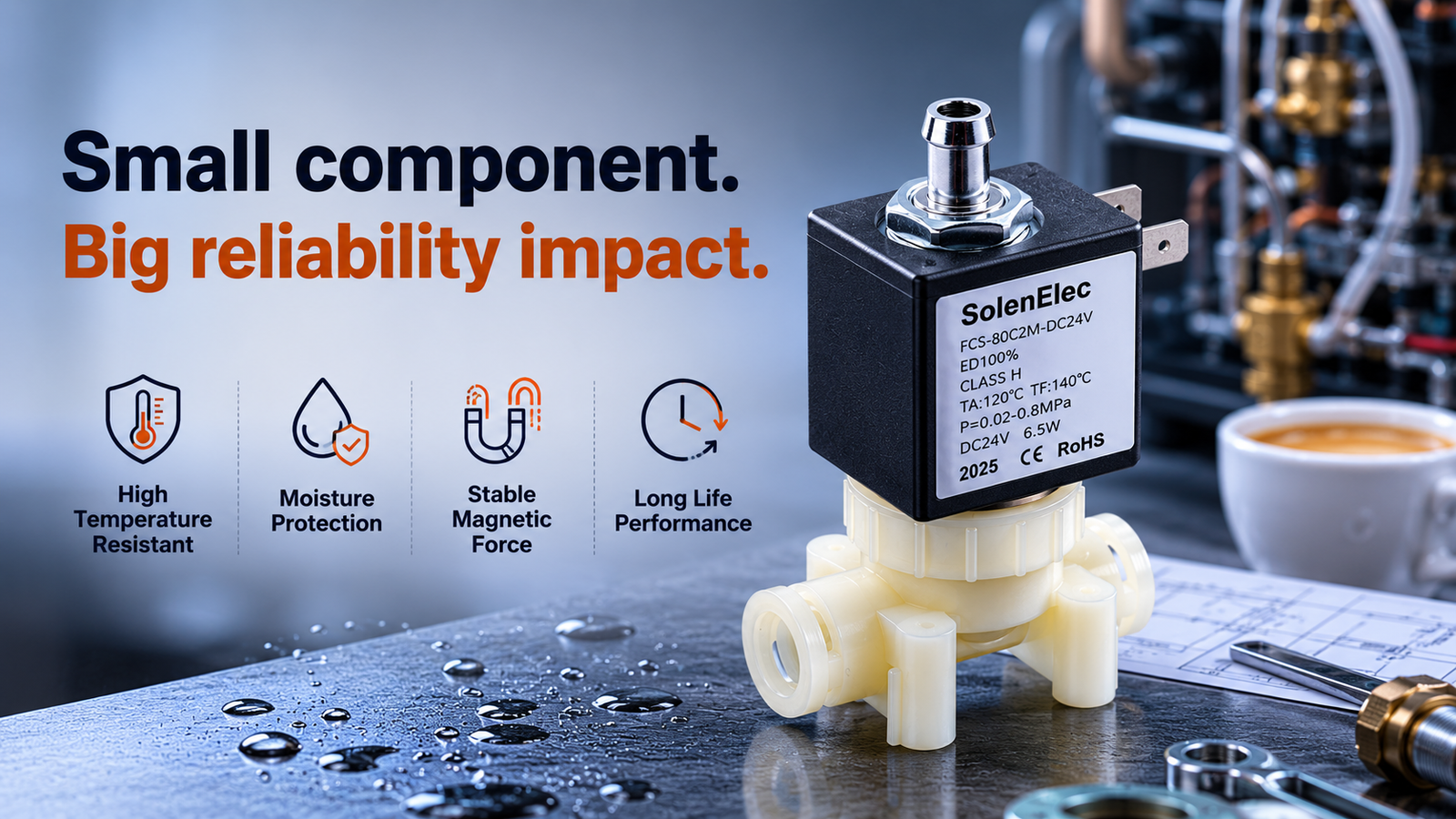
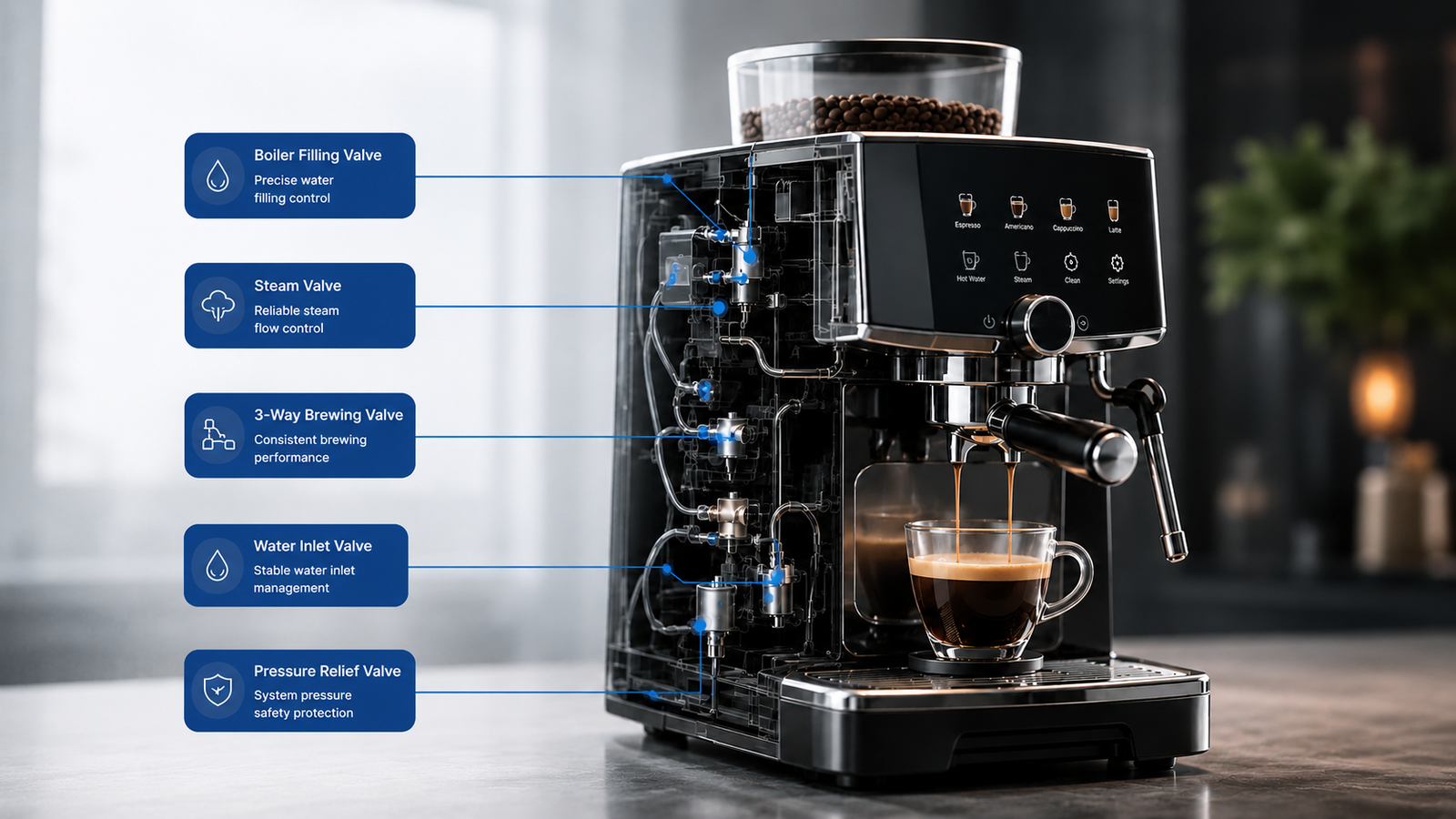
I remember getting a call from a well-known European coffee machine brand. They were in a tough spot. Their new machine was a success, but they were seeing a wave of failures from small cafes and offices. The solenoid coils were overheating and burning out. These were good coils that passed every lab test, so they couldn't figure out why it was happening. They were looking for a "high-temperature coil," but my experience told me the problem was likely somewhere else. We needed to look at the bigger picture, not just the part. So, we started asking questions to diagnose the problem together.
Why Do Solenoid Coils Overheat in Coffee Machines?
Your coils pass every test but fail in the field. This leads to costly returns and damages your brand's reputation. The problem isn't the coil; it's the hidden mismatch between design and reality.
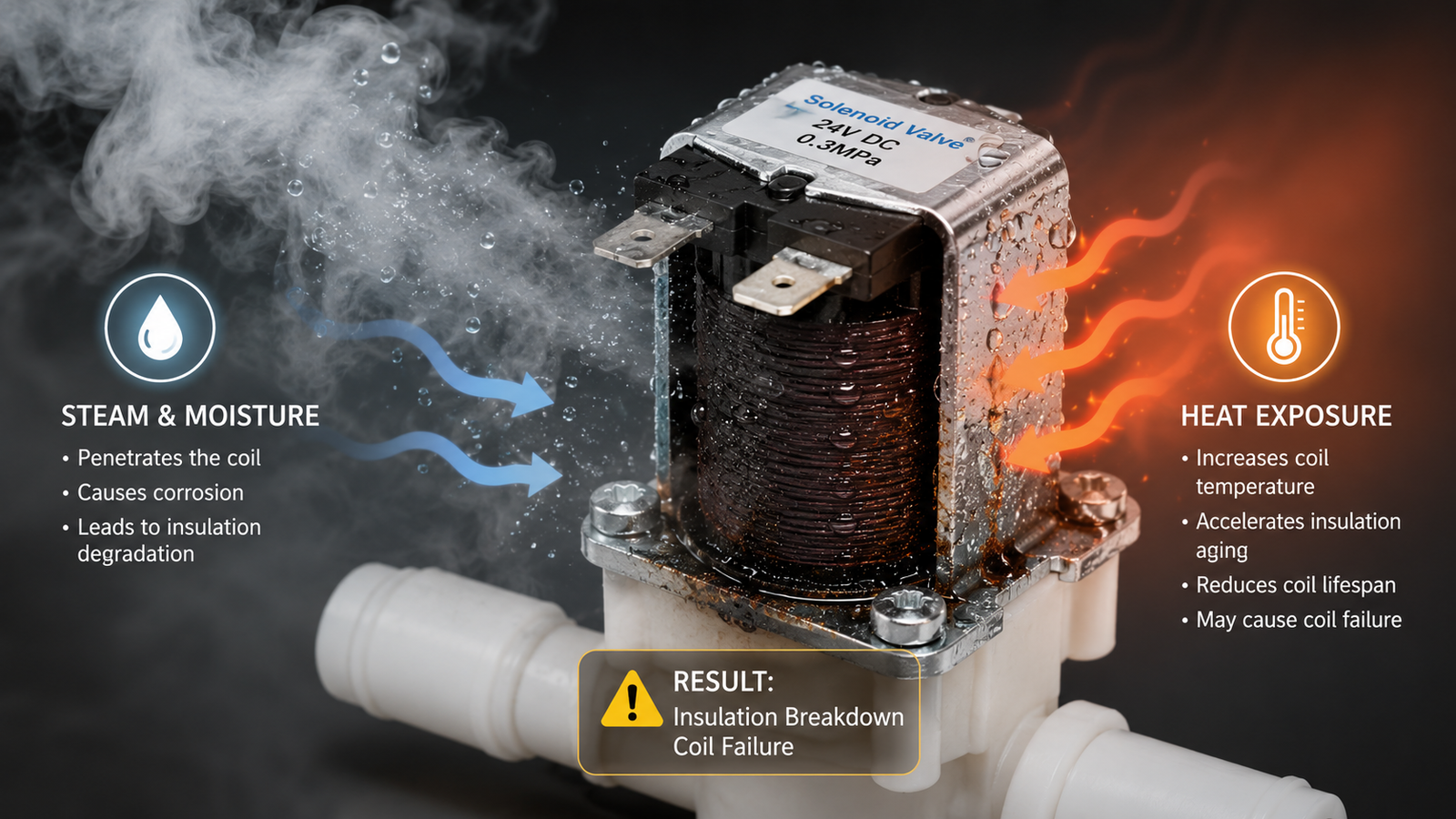
A primary reason coils overheat is a duty cycle mismatch.1 A coil designed for intermittent home use (a few minutes at a time) will overheat if used in a commercial setting (on all day) because it never gets a chance to cool down.2 The heat just keeps building up.
The first question I asked the client was, "How long is the machine on each day, and how long does it work without a break?" This question is simple but gets to the heart of many overheating issues. They had designed and tested the coffee machine for typical home use. That means making a few cups of coffee in the morning, and then the machine sits idle or is turned off. But the machines that were failing were in offices and small cafes. People there were leaving them on all day, making coffee back-to-back. The coil was designed for an intermittent duty cycle, meaning it needs rest periods to cool off. In these commercial settings, it was being forced into continuous duty. The heat had no time to escape, so it just accumulated until the coil's insulation failed and it burned out.3 It wasn't a faulty coil; it was a perfectly good coil used in a way it was never designed for.
Understanding Duty Cycle
The duty cycle is simply the ratio of a coil's "on" time to its total "on + off" time.4
| Duty Cycle Type | Typical Use Case | Heat Dissipation |
|---|---|---|
| Intermittent Duty | Home Appliances (e.g., coffee maker, washing machine) | Designed to cool down during "off" periods. |
| Continuous Duty | Industrial Controls, Office Equipment | Must be able to dissipate all heat it generates while "on". |
Our client's coil was rated for intermittent duty, but its real-world application demanded continuous duty. This mismatch was the first major clue.
What Causes a Solenoid Coil to Burn Out?
Even if the duty cycle seems right, coils can still burn out. You're left replacing parts that should have worked, wasting time and money. The cause is often a hidden environmental factor.
A coil will burn out if its surrounding environment is too hot.5 If a coil is placed in a tight, unventilated space next to a heat source like a boiler, the ambient temperature can exceed the coil's rating, causing it to fail even under a normal load.

After understanding the duty cycle mismatch, my next question was, "Can you show me where the coil is installed? What's next to it?" The client sent over their design schematics. The moment I saw them, the problem became crystal clear. To make the coffee machine compact and stylish, their engineers had packed the components very tightly. The solenoid coil was tucked into a small, enclosed corner with almost no airflow. To make matters worse, it was right next to the boiler's hot water inlet. The coil was essentially sitting in a sauna. The heat from the boiler raised the ambient temperature around the coil significantly. So, not only was the coil generating its own heat from being on all the time, but it was also absorbing heat from its surroundings. It had no way to cool down. This combination of self-heating and high ambient temperature was a guaranteed recipe for burnout.
The Impact of Ambient Temperature
A coil's temperature rating isn't just about the heat it generates itself. It's about the total temperature it can withstand.
- Self-Generated Heat: Heat produced by electrical current passing through the coil's wire.
- Ambient Heat: Heat from the surrounding environment.
Total Operating Temperature = Self-Generated Heat + Ambient Heat6
In this case, the high ambient heat from the boiler pushed the coil's total operating temperature far beyond its safe limit.
How Can You Reduce Solenoid Coil Temperature?
You've found the causes of overheating: duty cycle and environment. A complete redesign is too slow and expensive. You need a practical solution that can be implemented quickly and affordably.
You can effectively lower a coil's temperature with a combination of three strategies: upgrading the coil's materials to a higher temperature class, optimizing the coil's electrical design to generate less heat, and improving the machine's ventilation to help dissipate heat more effectively.
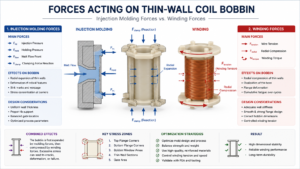
Simply suggesting a "better" coil wasn't the right answer. We worked with the client to develop a multi-part solution that addressed the root causes. We didn't want to force them into a costly redesign. Instead, we focused on smart, targeted changes. First, we upgraded the coil's bobbin from the standard PBT plastic to PPS, a material with a much higher temperature rating. This gave the coil more resilience against the heat. Second, we tweaked the coil's internal design. Without changing its physical size, we adjusted the copper wire's thickness (gauge) and the number of turns. This small change optimized its electrical resistance, causing it to generate less heat on its own during operation.7 Finally, we gave them simple recommendations for their machine's assembly. We suggested adding a few small ventilation holes in the casing near the coil or placing a thin, inexpensive heat shield between the coil and the boiler. These small changes made a huge difference in allowing heat to escape.
What Are Common Causes of Coil Overheating in Continuous Duty Applications?
Your product is designed to run all day. Standard coils keep failing, causing downtime and frustrating your customers. You need to understand that continuous duty creates unique thermal challenges.
In continuous duty applications, coils overheat because the constant flow of current generates a steady stream of heat. If this heat isn't actively removed through proper design and ventilation, the temperature will steadily rise until the coil fails.8 Over-voltage can also dramatically increase heat generation.9
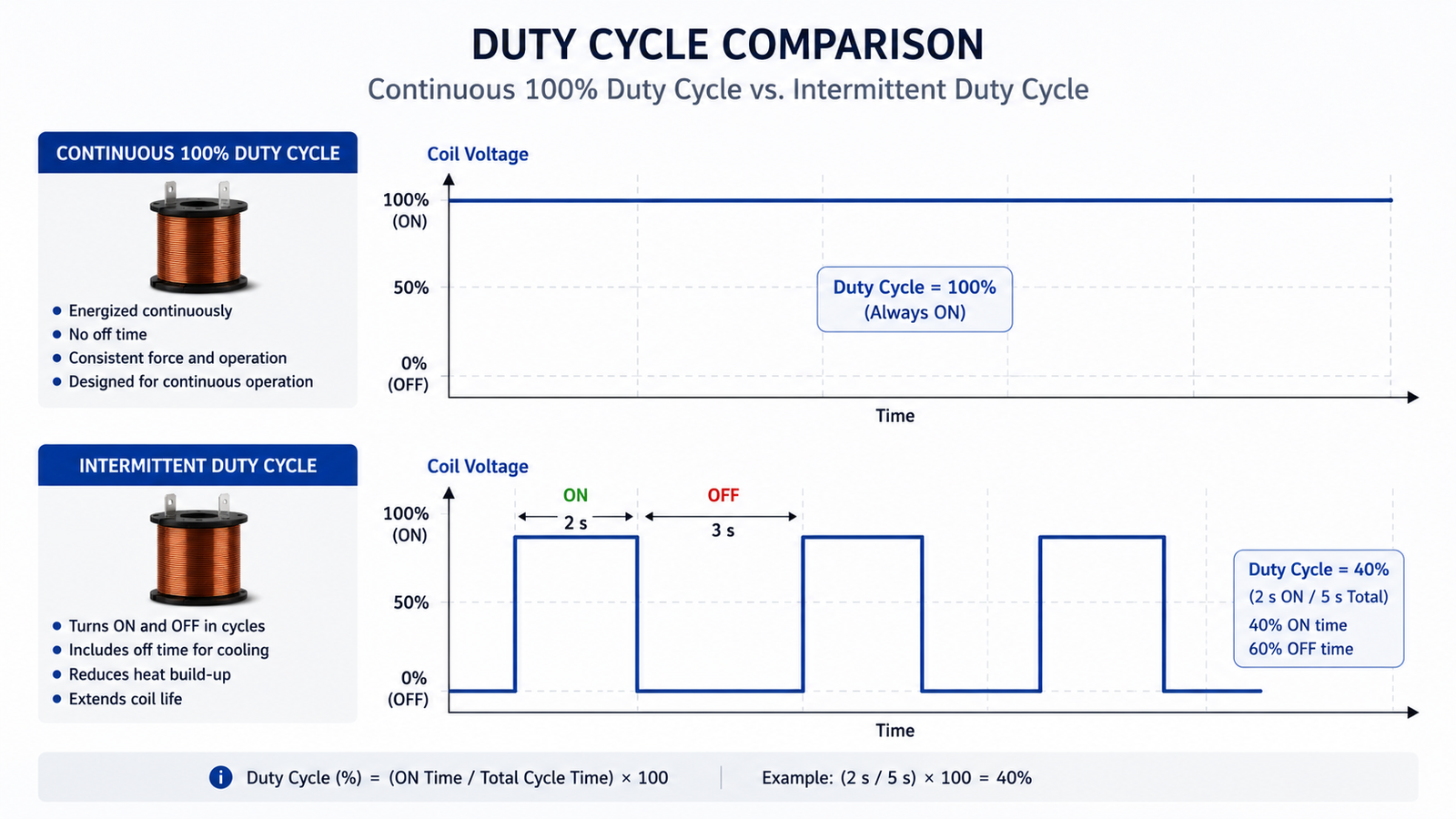
The coffee machine issue is a classic example of a problem we see in many continuous duty applications, from industrial automation to medical devices. When a coil is powered on 100% of the time, heat becomes the number one enemy. The electrical energy that isn't used to create the magnetic field is converted into heat.10 In an intermittent application, the coil has "off" time to cool down. In a continuous application, there is no off time. The heat production is constant. Therefore, the design must ensure that heat can be removed as fast as it is created. Any factor that hinders this balance can lead to overheating.
Key Factors in Continuous Duty Overheating
| Factor | How It Causes Overheating |
|---|---|
| Inadequate Heat Sinking | The coil is not mounted to a surface that can draw heat away from it.11 |
| Poor Ventilation | There is no airflow (natural or forced) to carry heat away from the coil. |
| High Ambient Temperature | The coil is located near other heat-producing components, reducing its ability to cool down. |
| Over-voltage | Supplying a voltage higher than the coil's rating significantly increases current and heat (Heat ∝ Voltage²). |
For any continuous duty product, you have to think like a thermal engineer. You must ask: where does the heat go? If you don't have a good answer, you will eventually have a problem.
What Design Changes Improved the Coil's Reliability?
You want to build reliable products and avoid field failures. Small design oversights can lead to big, expensive problems. A partnership with an experienced supplier helps you spot these issues early.
Improving reliability involves more than just a better component. It requires a collaborative review of the application. For the coffee machine, changing the bobbin material to PPS, optimizing the wire windings, and adding ventilation solved the problem by addressing the system, not just the part.

The solution we provided for our coffee machine client was a success because it was a partnership. We didn't just sell them a more expensive coil; we helped them diagnose the problem and implement a holistic solution. The changes were small but effective. The upgrade to a PPS bobbin provided a higher safety margin for temperature. The optimized windings reduced the amount of heat the coil produced in the first place. And the client's implementation of our ventilation suggestions ensured that what little heat was produced could now escape. This combination approach was powerful. It increased their component cost by only 15%, but it completely solved the overheating issue, which was responsible for over 30% of their customer complaints. Most importantly, it helped them avoid a massive product recall that would have cost millions and severely damaged their brand's reputation.
Our Diagnostic & Solution Process
| Problem Identified | Our Analysis | The Solution Implemented | The Result |
|---|---|---|---|
| Coil burned out in field | Duty cycle mismatch (intermittent design, continuous use) | Optimize coil windings for lower heat generation. | Coil runs cooler. |
| High failure rate | High ambient temperature from boiler; no ventilation. | Upgrade bobbin material from PBT to high-temp PPS. | Higher heat resistance. |
| Risk of product recall | System-level thermal management was needed. | Recommended adding ventilation holes/heat shield. | Heat dissipates effectively. |
This case shows that the greatest value a supplier can offer is not in their catalog, but in their experience.
Conclusion
Choosing the right supplier isn't just about the price of a part. It's about finding a partner who helps diagnose issues and prevent risks, saving you from costly failures later on.
"Electromagnet duty cycle - Electrical Engineering Stack Exchange", https://electronics.stackexchange.com/questions/71033/electromagnet-duty-cycle. Reference works on electromagnets note that many devices are rated for intermittent duty and may overheat if energized continuously without sufficient cooling, indicating that a duty cycle mismatch can be a primary cause of overheating. Evidence role: general_support; source type: encyclopedia. Supports: That electromagnets/solenoids rated for intermittent duty can overheat if operated continuously, making duty cycle mismatch a frequent overheating cause.. Scope note: The support is general to electromagnets/solenoids and not specific to coffee machines. ↩
"12V Solenoid valve gets hot @ 175 Farenheit, is that ok? : r/arduino", https://www.reddit.com/r/arduino/comments/tqgzwg/12v_solenoid_valve_gets_hot_175_farenheit_is_that/. Technical summaries of electromagnets describe how duty cycle ratings distinguish continuous- from intermittent-duty operation, and that intermittent-duty designs can overheat when kept energized continuously because they lack cooling intervals. Evidence role: mechanism; source type: encyclopedia. Supports: That intermittent-duty electromagnetic coils are not intended for continuous energization and can overheat without off-time to cool.. Scope note: The source explains the principle broadly rather than the specific home vs. commercial use case described. ↩
"[PDF] Extending Electric Motor Life - Oregon State University", https://ir.library.oregonstate.edu/xmlui/bitstream/handle/1957/16125/ExtendingElectricMotorLife.pdf?sequence=1. General references on electrical machines document that higher temperatures shorten insulation life and can lead to breakdown, providing a mechanism for heat‑induced coil failure. Evidence role: mechanism; source type: encyclopedia. Supports: That elevated operating temperatures accelerate degradation of electrical insulation, eventually causing failure.. Scope note: Actual failure modes depend on materials, temperature profiles, and environmental factors like moisture. ↩
"Duty cycle - Wikipedia", https://en.wikipedia.org/wiki/Duty_cycle. Encyclopedic entries define duty cycle as the ratio of a signal’s active (on) time to the total period (on plus off). Evidence role: definition; source type: encyclopedia. Supports: The standard definition of duty cycle as the fraction of time a system is active during a period.. ↩
"Degradation Monitoring of Insulation Systems Used in Low-Voltage ...", https://pmc.ncbi.nlm.nih.gov/articles/PMC7374401/. Overviews of electrical machines explain that permissible winding temperatures are specified as a temperature rise above ambient, and that high ambient temperatures can push windings beyond insulation class limits, accelerating insulation degradation and causing failure. Evidence role: mechanism; source type: encyclopedia. Supports: That allowable winding temperature depends on ambient conditions and exceeding insulation class limits leads to failure.. Scope note: The support is drawn from motor/transformer practice but the same thermal-insulation principles apply to coils. ↩
"Understanding motor temperature rise limits - Resource Library", https://easa.com/resources/resource-library/understanding-motor-temperature-rise-limits. Standard descriptions of electrical machines use the concept of temperature rise above ambient for windings, implying that total operating temperature is the sum of ambient temperature and self-induced temperature rise. Evidence role: mechanism; source type: encyclopedia. Supports: That electrical windings are rated by allowable temperature rise above ambient, so total operating temperature equals ambient plus rise.. Scope note: This is a simplified representation; actual hot-spot temperatures depend on geometry and thermal paths. ↩
"[PDF] Solenoids, electromagnets and electromagnetic windings", https://commons.princeton.edu/motorcycledesign/wp-content/uploads/sites/70/2018/07/1910-Solenoids_electromagnets_and_electromagn.pdf. Foundational explanations of electromagnets and Joule heating state that coil power loss is I²R; by trading turns against current to achieve the needed ampere‑turns, designers can reduce I and thereby reduce resistive heating. Evidence role: mechanism; source type: encyclopedia. Supports: That Joule losses (I²R) dominate coil heating and that changing winding resistance/current (via turns and wire size) affects power dissipation for a required magnetomotive force.. Scope note: The achievable reduction depends on the drive (voltage vs. current), space, and magnetic performance constraints. ↩
"Common Air Conditioner Problems | Department of Energy", https://www.energy.gov/energysaver/common-air-conditioner-problems. Summaries of electronic thermal management emphasize that insufficient convection/ventilation impedes heat removal, allowing temperatures to rise and increasing the risk of component failure. Evidence role: general_support; source type: encyclopedia. Supports: That thermal management practices rely on convection/ventilation to remove heat and prevent temperature rise that can lead to failure.. Scope note: The evidence is general to electronic/ electromechanical devices and not specific to this coil design. ↩
"Joule heating - Wikipedia", https://en.wikipedia.org/wiki/Joule_heating. Basic treatments of Joule heating show that the power dissipated by a resistive element is proportional to the square of the applied voltage divided by resistance (P = V^2/R), so over-voltage increases heating sharply. Evidence role: mechanism; source type: encyclopedia. Supports: That for a resistive coil at fixed supply voltage, power dissipation increases with the square of voltage (P ≈ V^2/R).. Scope note: Resistance itself varies with temperature, so the V^2 relationship is an approximation across operating conditions. ↩
"Magnetic Energy", https://farside.ph.utexas.edu/teaching/355/Surveyhtml/node106.html. Basic accounts of electromagnets and Joule heating explain that in steady energization the coil’s resistive losses dissipate electrical energy as heat, while only transiently storing energy in the magnetic field. Evidence role: mechanism; source type: encyclopedia. Supports: That resistive (Joule) losses convert electrical energy into heat in coils, with only a small portion stored in the magnetic field at steady state.. Scope note: During actuation some energy is converted to mechanical work; the statement applies most directly to steady hold conditions. ↩
"Heat sink - Wikipedia", https://en.wikipedia.org/wiki/Heat_sink. Encyclopedic explanations of heat sinks describe how conductive interfaces and mounting to thermally massive surfaces facilitate heat flow away from components, mitigating temperature rise. Evidence role: mechanism; source type: encyclopedia. Supports: That heat sinks or conductive mounting surfaces draw heat away from components, reducing operating temperature.. Scope note: Effectiveness depends on specific geometry, materials, and contact quality in the assembly. ↩