
Custom Stepper Motor Coil Case Study: Solving Thin-Wall Bobbin Manufacturing Challenges
During a recent OEM project, a customer asked us to develop an extremely compact custom stepper motor coil. While the electrical requirements were straightforward, the real manufacturing challenge lay elsewhere—the bobbin wall was exceptionally thin. This single detail made stable, high-yield production far more difficult than anyone initially expected.
The core problem was solved by focusing on manufacturability rather than changing the customer's design. We redesigned the injection mold with a multi-point hot runner system for balanced plastic flow, implemented precise injection molding parameters to prevent warping, and used a closed-loop dynamic tension system during winding to avoid cracking the fragile bobbin.
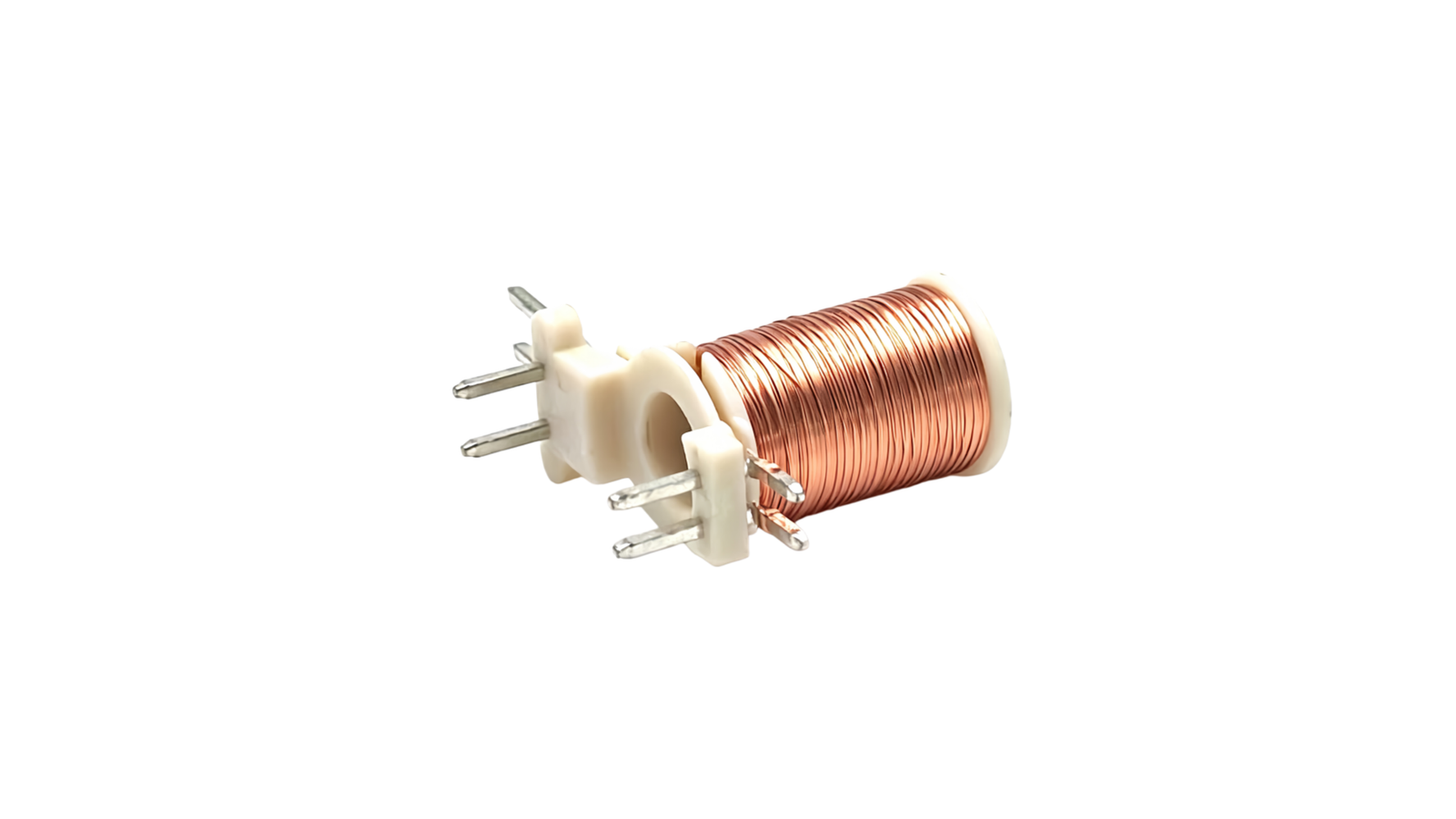
This case wasn't about reinventing the coil itself. Instead, it was a deep dive into process engineering. In this article, I'll walk you through the specific challenges we faced with this thin-walled bobbin and the step-by-step solutions our engineering team developed to move from a high-failure prototype to a stable, mass-produced component.
Why Are Thin-Wall Coil Bobbins So Difficult to Manufacture?
Trying to produce a coil bobbin with walls that are almost paper-thin? You are likely facing issues like warping, microscopic cracks, and inconsistent results. These problems can quickly lead to high scrap rates and crippling production delays.
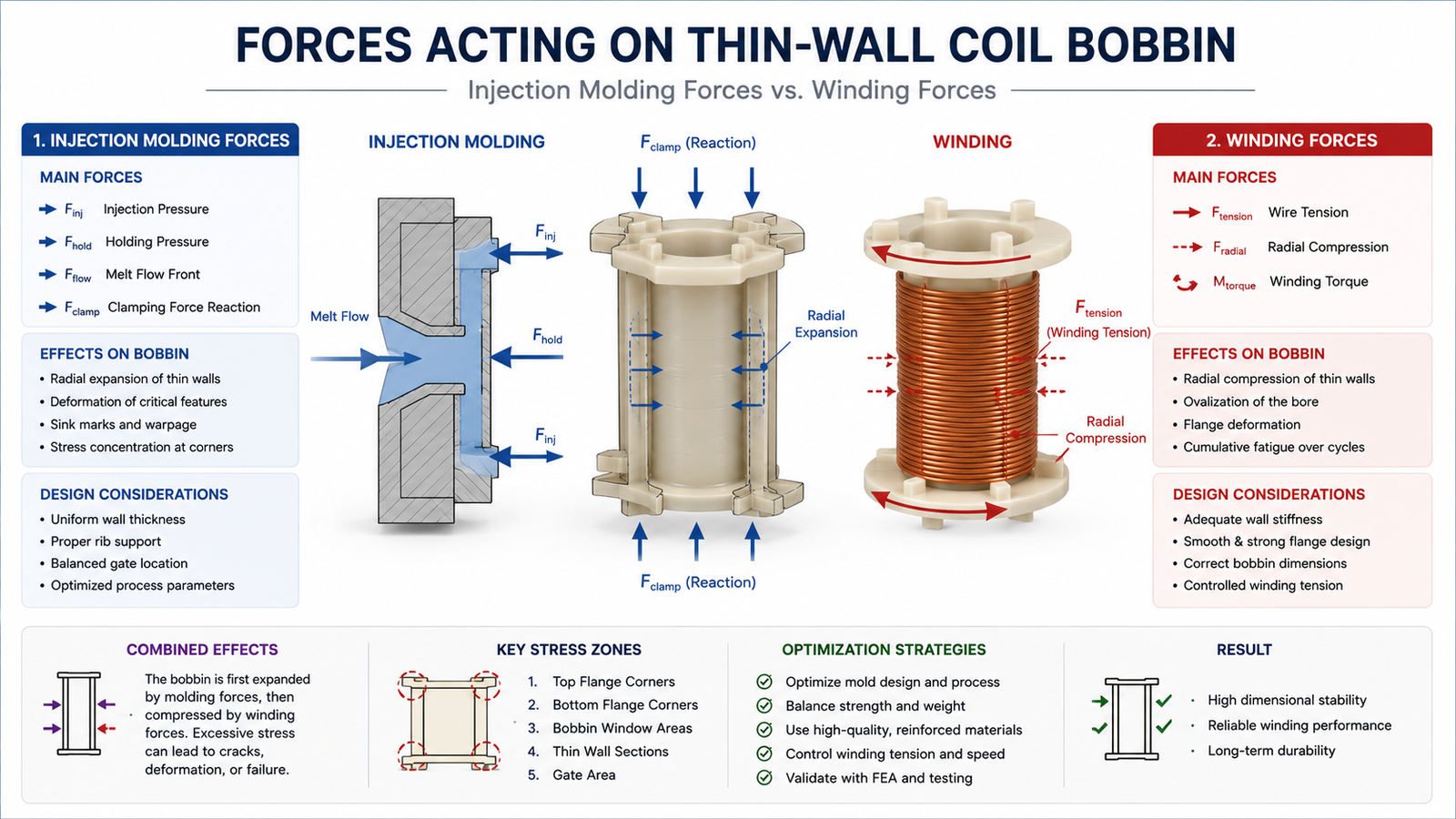
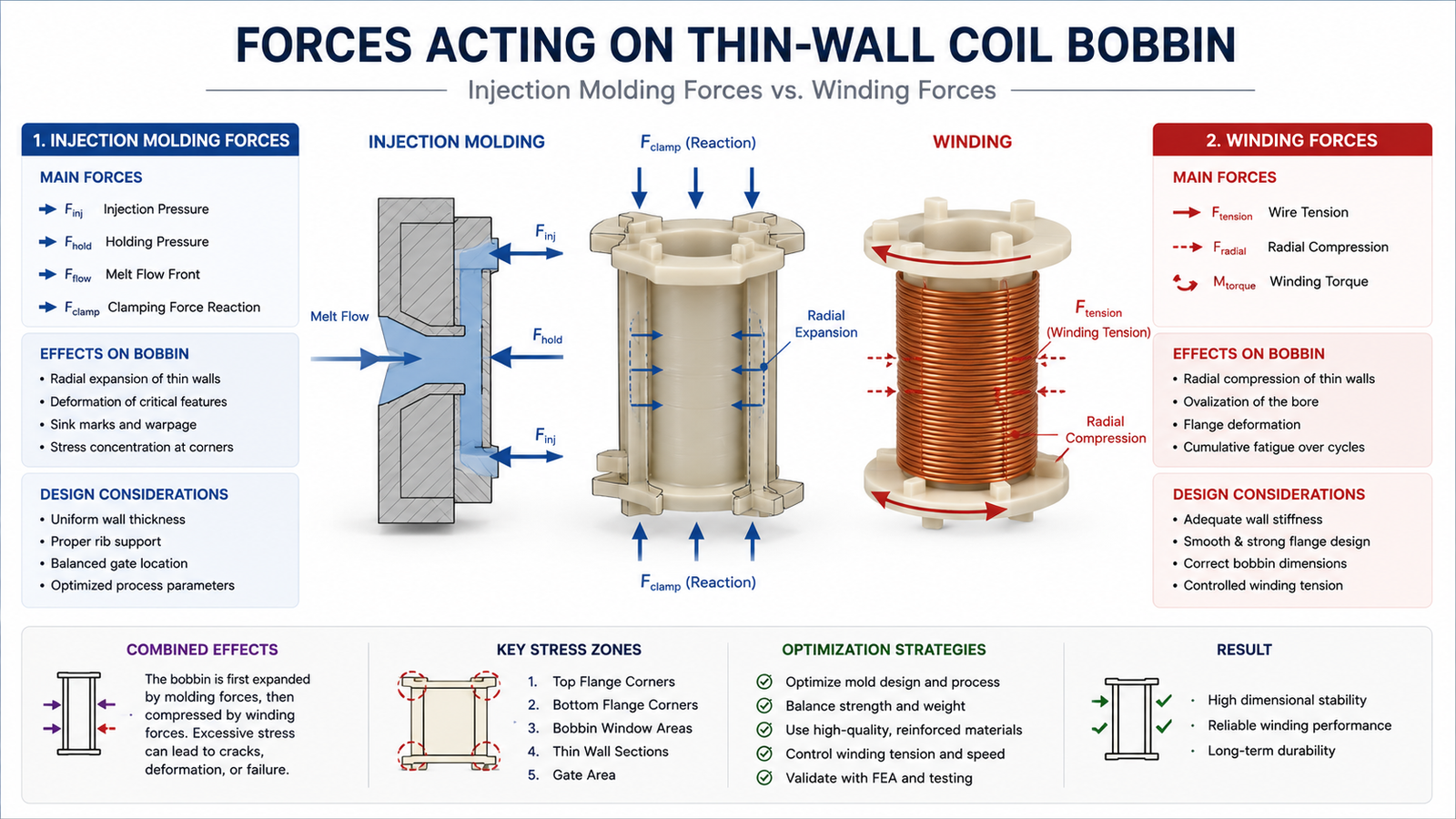
A thin-wall bobbin is difficult to manufacture because the minimal material thickness makes it extremely vulnerable at two key stages: it is prone to deformation during injection molding1, and it is susceptible to damage from the immense pressure exerted by the copper wire during the winding process.
The Physics of Failure
To understand the difficulty, we need to look at the two main manufacturing steps and the forces at play.
The Injection Molding Dilemma
Injection molding works by forcing molten plastic into a mold cavity. With a standard bobbin, where walls are typically 0.8mm or thicker, this is a routine process. The plastic flows evenly and has enough mass to cool at a relatively uniform rate.
With a wall thickness under 0.3mm, everything changes:
- Restricted Flow: The narrow channel creates immense resistance, requiring extremely high injection pressures to fill the cavity completely2. This can lead to "short shots," where the part is incomplete.
- Uneven Cooling: The thin walls cool almost instantly, while thicker sections (like the flanges) cool more slowly. This differential cooling creates internal stresses that cause the part to warp or twist3 as it's ejected from the mold.
- Gate Location Issues: The point where plastic enters the mold (the gate) becomes hyper-critical. A single, poorly placed gate can cause unbalanced flow, leading to visible defects and structural weakness.4
The Winding Tension Challenge
Once a bobbin is successfully molded, it must be wound with thousands of turns of fine copper wire. This wire is kept under constant tension to ensure a tight, uniform pack. A standard bobbin easily withstands this force.
A thin-wall bobbin, however, is under constant threat of collapse. The cumulative force of the tightly wound wire creates significant inward pressure on the central tube of the bobbin.5 If the bobbin wall has any microscopic weakness from the molding process, the winding tension will exploit it, causing the bobbin to crack, deform, or even shatter. This is especially true on modern, high-speed winding machines where tension can fluctuate6.
| Feature | Standard Coil Bobbin | Thin-Wall Project Bobbin |
|---|---|---|
| Wall Thickness | 0.8mm - 1.5mm | < 0.3mm |
| Molding Process | Stable, low pressure | High pressure, risk of warping |
| Winding Risk | Low risk of deformation | High risk of cracking/collapse |
| Typical Yield Rate | > 99% | < 70% (Initial trials) |
What Engineering Challenges Did We Encounter During Development of This Custom Stepper Motor Coil?
You have likely been in this situation: a customer provides a drawing with tight constraints that seem nearly impossible to manufacture reliably. Do you push back and ask for changes, or do you find a way to make it work? We chose to find a way, which meant facing several critical hurdles head-on.
The primary challenges in developing this custom stepper motor coil were achieving a stable injection molding process without warping the thin bobbin, preventing the bobbin from cracking under winding tension, and ultimately establishing a process with a low defect rate suitable for mass production.
Working Within Strict Constraints
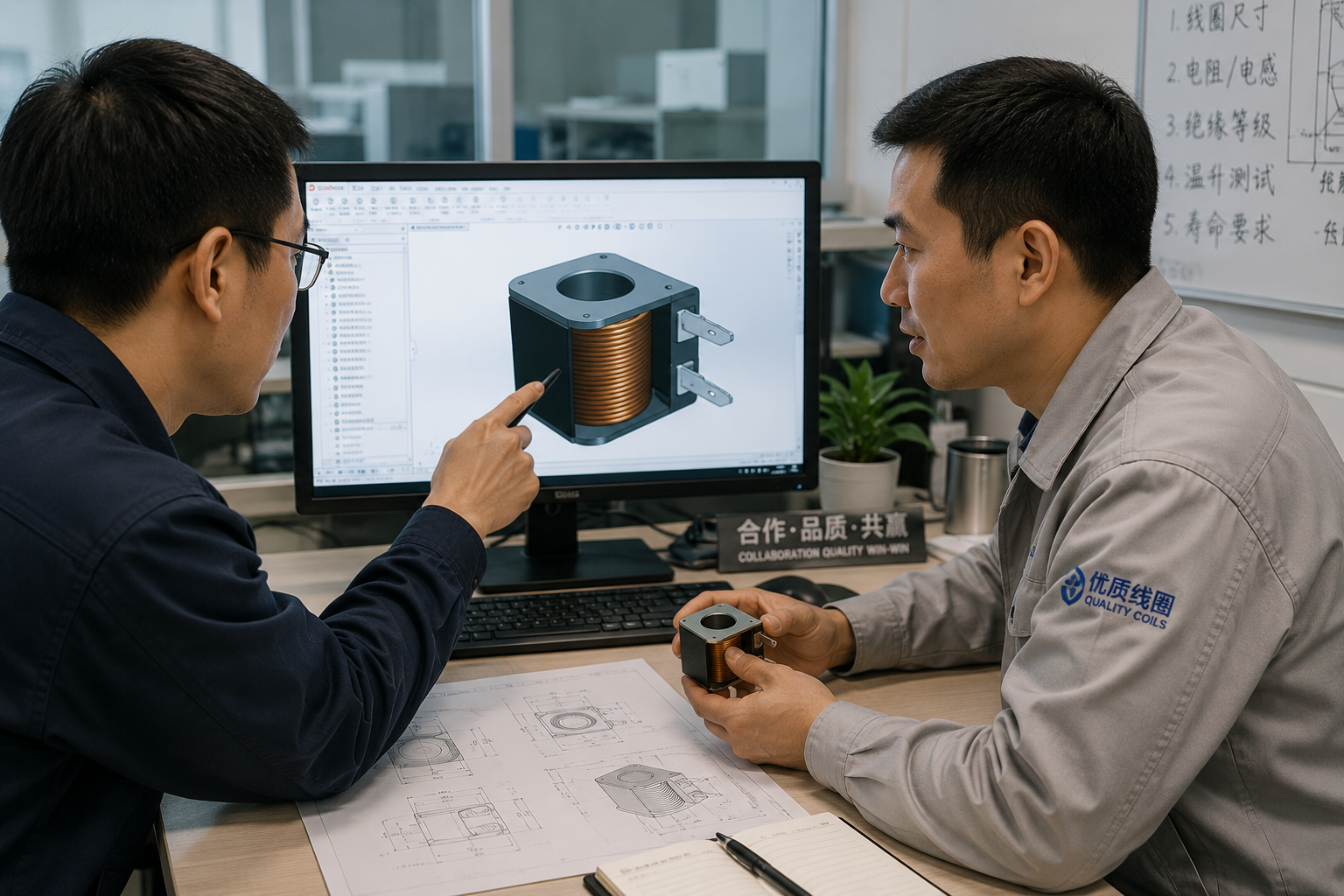
Our team’s initial assessment confirmed that the design was on the edge of manufacturability. The easy solutions were immediately taken off the table by the customer's strict application requirements.
Constraint 1: Fixed External Dimensions
The most obvious solution to a thin-wall problem is to make the wall thicker. However, this custom stepper motor coil was designed to fit into an extremely compact motor assembly. The customer's assembly space was non-negotiable, meaning the outer dimensions of the coil could not be increased by even a fraction of a millimeter. We had to work within the exact design envelope provided. This forced us to innovate on the process, not the product's core geometry.
Constraint 2: Unchangeable Electrical Parameters
The second-easiest solution would have been to modify the winding. Using a thinner copper wire or reducing the number of turns would decrease the total tension on the bobbin. Unfortunately, the motor’s performance characteristics—specifically its torque and step resolution—depended on the specified wire gauge and turn count. The electrical parameters were fixed. We had to find a way to wind the specified coil onto the fragile bobbin without destroying it.
The Unacceptable Yield Rate
Our initial trial runs confirmed our fears. Using standard molding and winding techniques, the yield rate was below 70%. This meant that nearly one in three parts failed. Some bobbins came out of the mold warped, while others passed the initial visual inspection only to crack during the winding stage. A yield rate this low is unsustainable for mass production; it leads to prohibitive costs, unpredictable lead times, and an unreliable supply chain. Our mission was clear: transform this delicate, lab-scale process into a robust, repeatable industrial one capable of producing millions of units.
How Our Engineering Team Optimized the Coil Design and Process?
When your initial prototypes have a high failure rate, it's easy to feel stuck. But for our team, this wasn't a failure; it was a crucial data point that guided us toward the right solution. The challenge wasn't the design itself, but the method of its creation.
Our engineering team optimized the manufacturing process by redesigning the injection mold with a multi-point hot runner system, meticulously fine-tuning the injection parameters, and implementing a closed-loop tension control system for the winding machines.
A Three-Pronged Process Solution
Since we couldn't change the part, we changed everything about how we made it. The solution involved a complete overhaul of the molding, winding, and quality control processes.
Mold Design and Gating Strategy
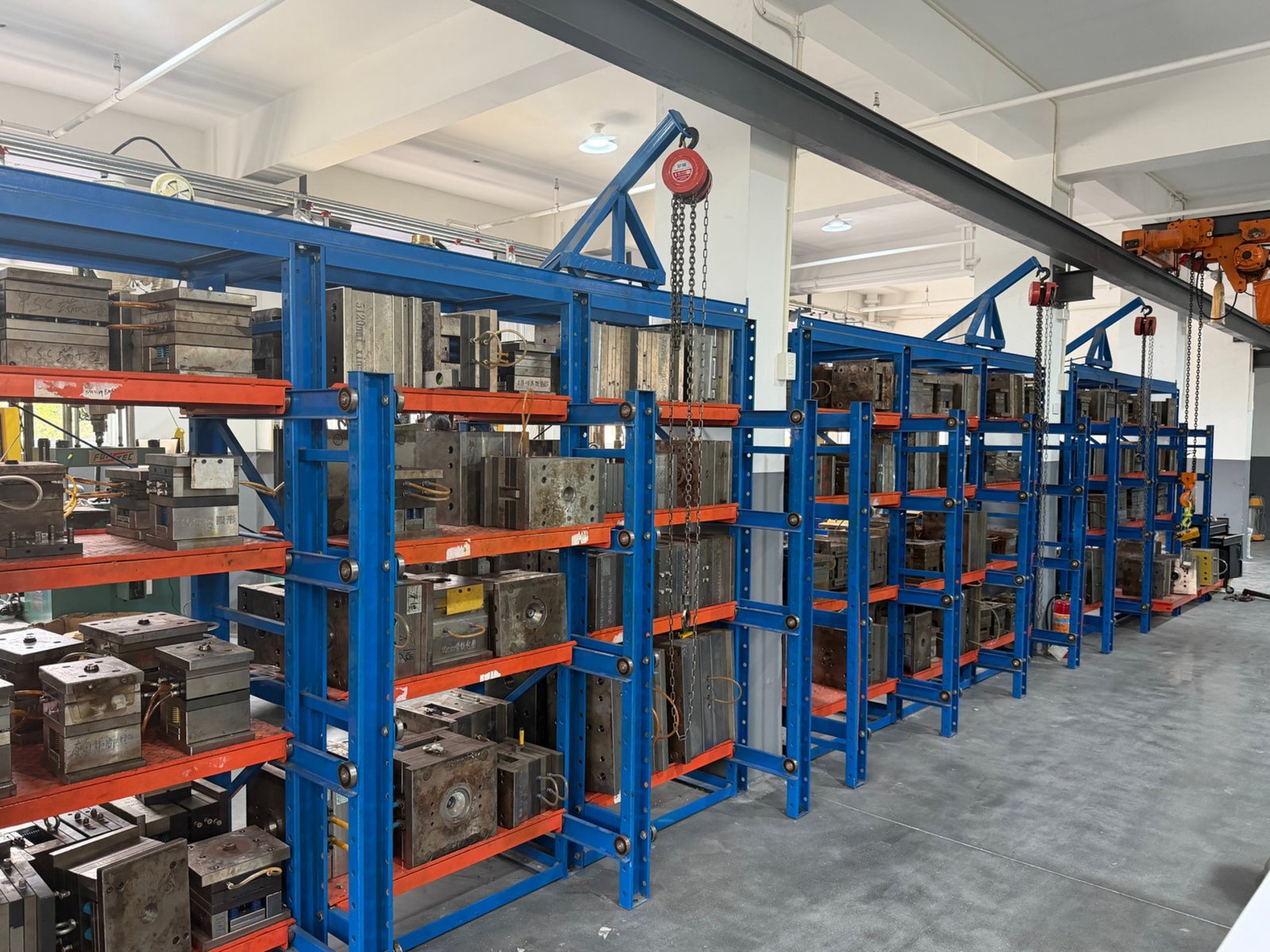
This was the most critical innovation. A standard mold for a part this small might use a single "gate" where the plastic enters. We knew this would cause unbalanced pressure. Instead, our tooling engineers designed a new mold incorporating a hot runner system with multiple valve gates7.
- What this does: A hot runner keeps the plastic in a molten state right up to the point of entry into the cavity. The multiple gates open simultaneously, allowing the cavity to be filled from several points at once.
- The result: This balanced filling dramatically reduced the required injection pressure. The plastic flowed a shorter distance, cooled more evenly, and resulted in a bobbin with minimal internal stress. The warping issue was virtually eliminated.
Precision Injection Molding Control
A new mold alone wasn't enough. We leveraged the capabilities of our automated production lines to dial in the process. The molding machine parameters were fine-tuned through dozens of iterations:
- Injection Speed: We adjusted the speed profile to be slower at the beginning and end of the fill to prevent turbulence.
- Holding Pressure & Time8: We optimized the pressure applied after the mold was filled to pack the part perfectly without creating stress.
- Cooling Time: We calculated the precise cooling time needed for the thin wall to solidify without distorting. These parameters were then locked into the machine's control system, ensuring every single part was produced under identical conditions.
Advanced Winding Tension Control
To solve the winding problem, we moved beyond our standard machines. We implemented a winding process with a dynamic, closed-loop tension control system9. Unlike a standard tensioner that provides a constant force, this system uses a sensor to measure the wire tension in real-time and adjusts it hundreds of times per second. This prevented the momentary spikes in tension that were cracking the bobbins, allowing us to wind the coil at high speed without causing damage.
From Prototype to Mass Production: What Changed for the Custom Stepper Motor Coil?
Creating a single perfect prototype is one thing. But can you manufacture 100,000 of them with the exact same quality? Scaling from prototype to mass production for this custom stepper motor coil introduced new variables that required a focus on process stability and rigorous control.
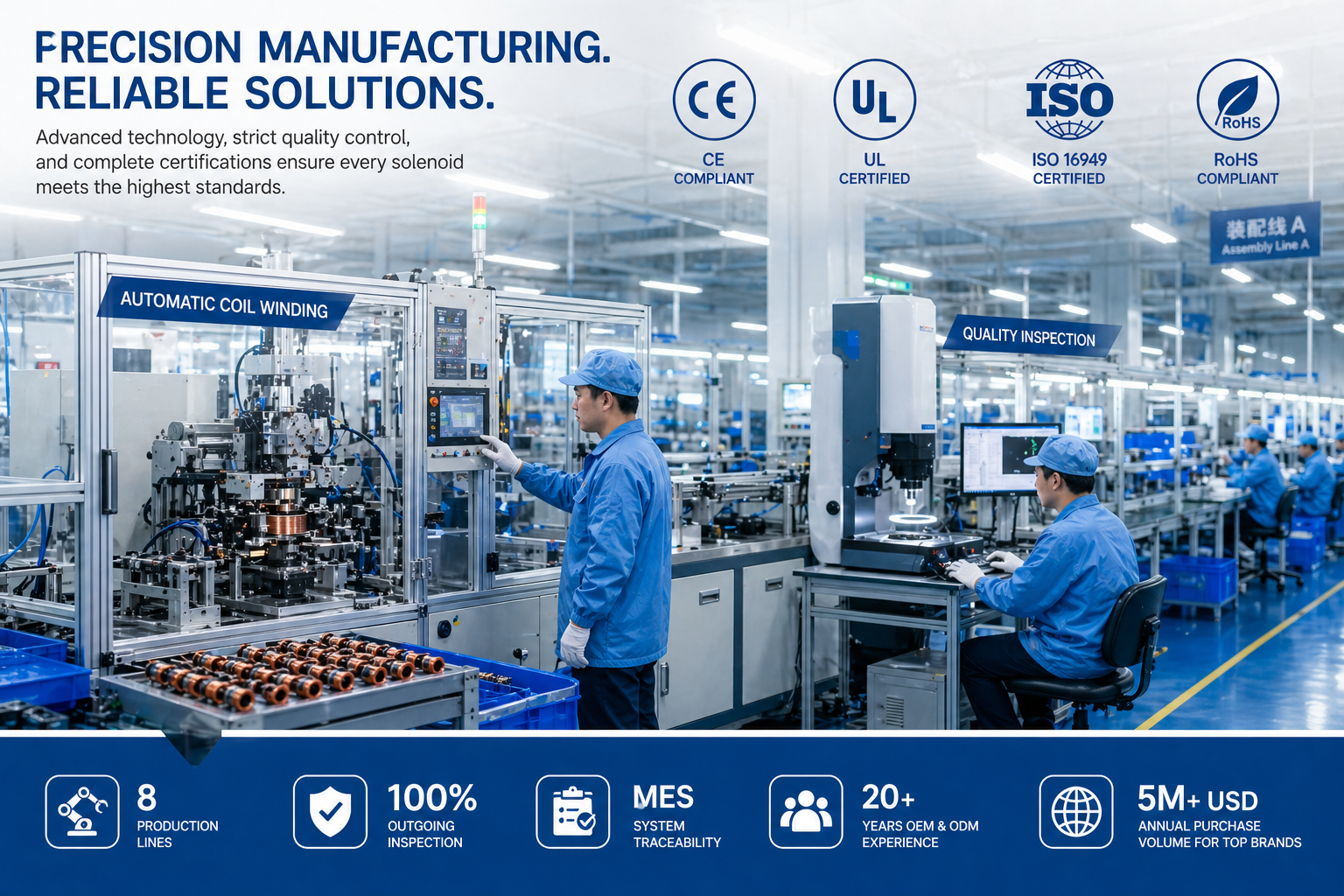
The transition to mass production required locking in the optimized mold design and injection parameters from the development phase. We then automated the winding process with the new dynamic tension controls and implemented a 100% automated optical inspection system to catch any potential micro-fractures invisible to the human eye.
Building a Robust and Repeatable Process
To guarantee stability for a purchasing volume exceeding $5 million annually, we couldn't leave anything to chance. The focus shifted from finding the solution to codifying it.
- Process Parameter Lockdown: Once the optimal settings for injection molding (temperature, pressure, cycle time) and winding (tension profile, speed) were finalized, they were saved as a unique recipe in the machine control systems. This ensures zero deviation between production shifts or operators, guaranteeing consistency.
- Automation and Integration: The specialized winding machines with dynamic tension control were fully integrated into our ISO 16949-certified production lines. The transfer of bobbins from molding to winding was automated to reduce manual handling, which itself could be a source of damage.
- Enhanced Quality Control and Traceability: We added a specific automated optical inspection (AOI) station10 after winding. This system scans each completed coil for micro-fractures in the bobbin flanges—defects that are nearly impossible to spot with the naked eye but could lead to field failures. I remember our QC manager showing me a screen where the system flagged a hairline crack less than 0.1mm long.
- Full Traceability with MES11: Crucially, our Manufacturing Execution System (MES) was configured for this project. Every tray of coils is barcoded, linking it to the specific production line, the time it was made, the operator on duty, and the exact batch of raw materials used. If a customer ever reports an issue years down the line, we can trace it back to its origin in minutes. This level of traceability is essential for risk management in the appliance and automotive industries.
Engineering Lessons for Designing Small Custom Coils?
Designing a custom coil that only works on paper is a common but costly pitfall. The real test of an engineering design is its manufacturability. This project was a powerful reminder that a successful product is one that can be produced reliably and cost-effectively at scale.
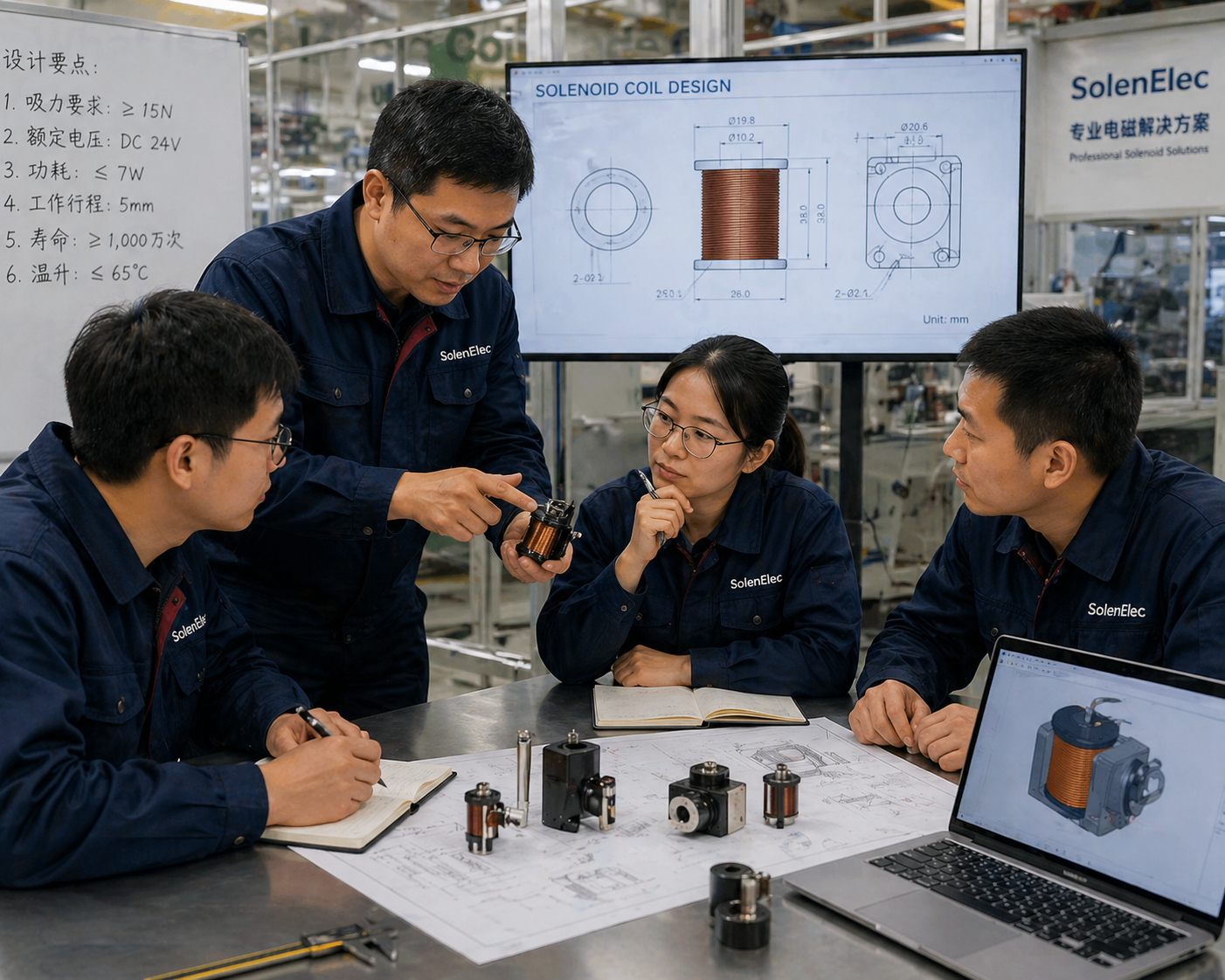
The most important lesson from this custom stepper motor coil project is to involve manufacturing engineers at the earliest possible stage of product design. Embracing a [Design for Manufacturability (DFM)](https://solenelec.com/who-provides-reliable-custom-solenoid-coil-manufacturing-services-for-industrial-applications/) mindset from the start avoids expensive tooling changes, prevents production delays12, and ultimately de-risks the entire supply chain.
Principles for Successful Custom Coil Development
This project reinforced several core principles that we apply to all our OEM/ODM partnerships. For any procurement or brand manager overseeing a custom component, these are the factors that separate a difficult project from a successful one.
Prioritize Design for Manufacturability (DFM)
A product designer is focused on function. A manufacturing engineer is focused on how to create that function a million times perfectly. When these two experts collaborate early, potential manufacturing nightmares (like a wall that's too thin) can be identified and mitigated before any tooling is even made. In this case, even though we couldn't change the wall thickness, this collaborative approach allowed us to engineer a process to overcome the challenge.
Material Selection is More Than a Spec Sheet
The choice of thermoplastic for the bobbin—whether it's PBT, LCP, PA66, or another polymer—has huge implications. For this project, we tested several grades of high-flow, high-temperature plastic. The material needed not only to withstand the motor's operating temperatures but also to possess flow characteristics suitable for filling the thin mold cavity without excessive pressure. A simple check-box for "temperature resistance" on a data sheet is not enough; a deep understanding of material behavior under specific molding conditions is essential.
The Value of Iterative Process Prototyping
It's rare for the first prototype of a complex part to be perfect for mass production. The key is to embrace an iterative approach. Our process looked like this:
- Evaluate: Analyze the customer's design and identify manufacturing risks.
- Prototype: Create initial tooling and parts to establish a baseline.
- Test & Analyze: Subject the parts to the manufacturing process (winding) and analyze the failures.
- Iterate on the Process: Instead of asking the customer to change the design, we modified our process—the mold, the machine parameters, the tension controls. This iterative loop continued until we achieved a stable process with a yield rate well above 98%.
Frequently Asked Questions
What is the thinnest wall you can manufacture for a coil bobbin?
This depends on the overall part geometry, material, and functional requirements. For this specific custom stepper motor coil, we successfully achieved stable mass production with a wall thickness under 0.3mm. We always evaluate thin-wall designs on a case-by-case basis to ensure manufacturability.
How does bobbin design affect the performance of a stepper motor coil?
The bobbin is the foundation of the coil. Its design directly impacts manufacturability, durability, and thermal performance. A well-designed bobbin ensures the coil can be wound precisely to meet electrical specifications and that it can withstand the heat and vibration of the motor during its operational life.
Why couldn't you just use a bobbin-less or air-core coil?
For many applications, an air-core coil is a viable option. However, for this miniature stepper motor, a bobbin was required to provide structural integrity, ensure the precise winding geometry needed for a consistent magnetic field, and aid in mounting and heat dissipation within the compact motor housing.
How does your MES system help with quality control for OEM projects?
Our Manufacturing Execution System (MES) provides complete product traceability. For every coil we produce, we can track it from the raw material batch to the final inspection data. This allows us to monitor process stability in real-time and, in the rare event of an issue, perform a rapid root cause analysis, which is critical for our global OEM partners.
Conclusion
This project reminded us that in custom coil manufacturing, the biggest challenge is not always achieving the specified electrical performance. In many cases, establishing a stable, repeatable, and high-yield mass production process requires a far deeper level of engineering. By focusing on process optimization—specifically through advanced mold design, precision injection control, and dynamic winding tension—we were able to meet our customer's difficult design constraints without compromise. This process-driven approach is what transforms a challenging concept into a reliable component.
If you are a procurement or brand manager facing similar manufacturing challenges with a complex custom coil or solenoid, our engineering team is ready to collaborate. Contact our engineering team to discuss your next OEM project and see how our two decades of experience can help you build a more resilient and stable supply chain.
"Recent progress in minimizing the warpage and shrinkage ... - PMC", https://pmc.ncbi.nlm.nih.gov/articles/PMC8831005/. A peer-reviewed polymer-processing study supports the general mechanism that thin-walled injection-molded parts are more susceptible to warpage and deformation because filling, cooling, and residual-stress effects become more severe as wall thickness decreases. Evidence role: mechanism; source type: paper. Supports: Thin-walled injection-molded plastic parts are prone to deformation or warpage due to filling difficulty, rapid cooling, and residual stresses.. Scope note: This would provide contextual support for the manufacturing mechanism, not direct evidence about the specific bobbin in the article. ↩
"Injection moulding", https://en.wikipedia.org/wiki/Injection_moulding. Research on thin-wall injection molding indicates that reduced cavity thickness increases melt-flow resistance and often requires elevated injection pressure to achieve complete filling. Evidence role: mechanism; source type: paper. Supports: Reduced wall thickness increases flow resistance and can require higher injection pressure to fill thin injection-molded cavities.. Scope note: This supports the general molding principle rather than the exact pressure values used in the described project. ↩
"Recent progress in minimizing the warpage and shrinkage ...", https://pmc.ncbi.nlm.nih.gov/articles/PMC8831005/. Polymer injection-molding literature supports that nonuniform cooling can generate residual stresses, which may later appear as warpage, twisting, or other dimensional distortion in molded parts. Evidence role: mechanism; source type: paper. Supports: Differential cooling in injection molding can produce residual stresses and dimensional distortion such as warpage.. Scope note: The source would substantiate the general cause-and-effect relationship, not the specific defect rate observed in this case. ↩
"Die casting", https://en.wikipedia.org/wiki/Die_casting. Studies of injection-molding gate design show that gate location affects melt-flow balance, pressure distribution, weld-line formation, and warpage, all of which can influence part quality. Evidence role: mechanism; source type: paper. Supports: Gate placement influences melt-flow patterns, pressure distribution, weld lines, warpage, and defect formation in injection-molded parts.. Scope note: This supports the general importance of gate placement but does not prove that a single gate would have failed for this exact bobbin geometry. ↩
"Knitting", https://en.wikipedia.org/wiki/Knitting. Winding-mechanics research describes how tensioned wire or filament layers can generate radial pressure and compressive stress on the underlying core or mandrel. Evidence role: mechanism; source type: paper. Supports: Tensioned winding processes can impose radial or compressive stresses on the core, bobbin, or mandrel being wound.. Scope note: The evidence is likely contextual from winding mechanics and may not directly quantify stresses in miniature stepper-motor bobbins. ↩
"Coil winding technology", https://en.wikipedia.org/wiki/Coil_winding_technology. Research on winding control identifies dynamic tension variation as a significant issue in high-speed winding processes because transient changes can affect winding quality and mechanical loading. Evidence role: mechanism; source type: paper. Supports: Wire or filament tension can vary dynamically during high-speed winding, and tension variation is a recognized control problem.. Scope note: This would support the general control problem, not directly document cracking in the article’s specific bobbin. ↩
"Glossary of rail transport terms", https://en.wikipedia.org/wiki/Glossary_of_rail_transport_terms. Injection-molding studies on hot-runner and multi-gate systems support that controlled melt delivery through multiple gates can improve filling balance and pressure distribution in molded parts. Evidence role: mechanism; source type: paper. Supports: Hot-runner and multi-gate injection-molding systems can improve melt-flow control and filling balance in complex or thin-walled parts.. Scope note: This supports the general tooling rationale, not the proprietary mold design or performance claims in the article. ↩
"Real-time monitoring and quantitative analysis of residual stress in thin ...", https://www.sciencedirect.com/science/article/abs/pii/S1526612525002828. Peer-reviewed injection-molding research shows that holding pressure and holding time influence packing behavior, shrinkage, residual stress, and dimensional accuracy in molded polymer parts. Evidence role: mechanism; source type: paper. Supports: Holding pressure and holding time are important injection-molding parameters affecting packing, shrinkage, residual stress, and warpage.. Scope note: This supports why the parameters matter generally, not the specific settings selected for the project. ↩
"Electric motor", https://en.wikipedia.org/wiki/Electric_motor. Control-system research on winding processes supports that closed-loop tension regulation uses sensor feedback to adjust actuator behavior and reduce deviations from target tension. Evidence role: mechanism; source type: paper. Supports: Closed-loop winding systems can use sensor feedback to regulate wire or web tension in real time.. Scope note: This supports the operating principle of closed-loop tension control, not the exact response rate or effectiveness claimed for the company’s machine. ↩
"Industrial computed tomography", https://en.wikipedia.org/wiki/Industrial_computed_tomography. Machine-vision and automated optical inspection literature supports that AOI systems can detect small surface defects and improve repeatability compared with manual visual inspection. Evidence role: general_support; source type: paper. Supports: AOI and machine-vision inspection are used in manufacturing to detect small defects and improve inspection consistency.. Scope note: This supports AOI as a general inspection method and may not directly validate detection of sub-0.1 mm cracks in this specific bobbin material. ↩
"Why Small Manufacturers Should Consider a ...", https://www.nist.gov/blogs/manufacturing-innovation-blog/why-small-manufacturers-should-consider-manufacturing-execution. Government and standards-oriented manufacturing sources describe Manufacturing Execution Systems as systems that collect and manage shop-floor production data, supporting traceability, quality monitoring, and root-cause analysis. Evidence role: general_support; source type: government. Supports: MES platforms are used to collect and manage production data that can support traceability and quality investigations.. Scope note: This supports the general role of MES and does not verify the article’s specific implementation or trace-back time. ↩
"Product lifecycle", https://en.wikipedia.org/wiki/Product_lifecycle. University-level design-for-manufacturing guidance supports that incorporating manufacturability considerations early in product design can reduce redesign, tooling changes, and downstream production cost or schedule risk. Evidence role: expert_consensus; source type: education. Supports: DFM emphasizes early manufacturing input to reduce redesign, tooling changes, cost growth, and production delays.. Scope note: This provides general expert consensus on DFM benefits, not a quantified savings estimate for the described coil project. ↩