How Do You Solve Common Solenoid Pump Problems?
Your products are failing, causing warranty claims and damaging your brand. You are tired of dealing with noisy, leaking, or weak pumps. But what if the problem is not the pump itself?
The best way to solve solenoid pump problems is to prevent them. Most issues like noise, leaks, or failure do not mean the pump is faulty. They mean the pump was a poor match for its specific job. The real solution lies in proper selection before you buy.
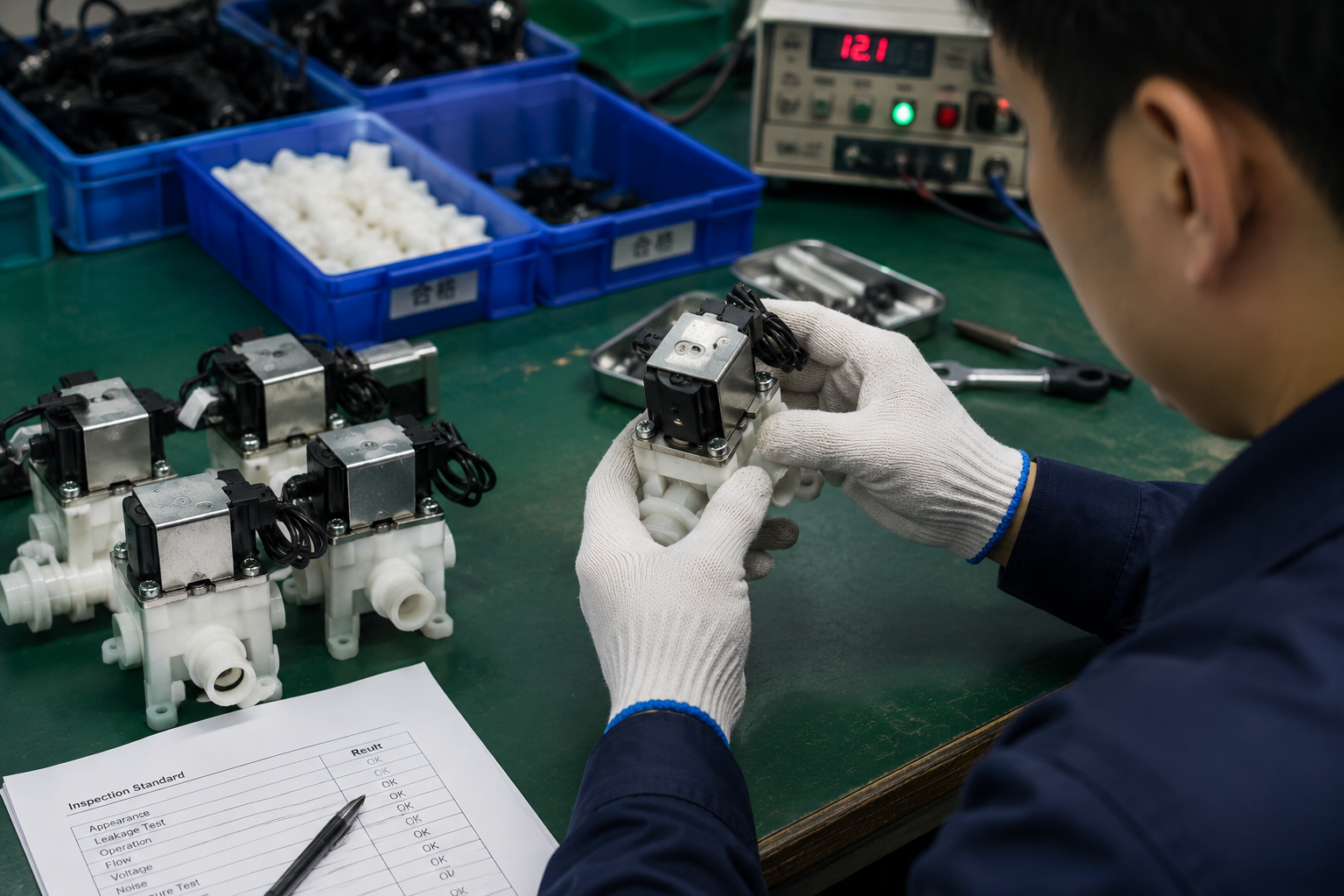
For over 20 years, I have seen companies spend fortunes on "solutions" for failing pumps. The truth is, the fix often begins long before the pump is even installed. It starts with asking the right questions and understanding that the component itself is only half the story. Let's break down the real issues that my clients, especially procurement managers from major appliance brands, face every day.
Why Is My Solenoid Pump Not Working?
A batch of products is failing in the field. Customers are complaining, and your team is scrambling for answers. Is it a bad batch of pumps? Probably not.
Your pump might not be "broken." More often, it's not working because its design specifications don't match the real-world demands of your application. Factors like temperature, fluid type, or duty cycle, which were overlooked during procurement, are the usual culprits.
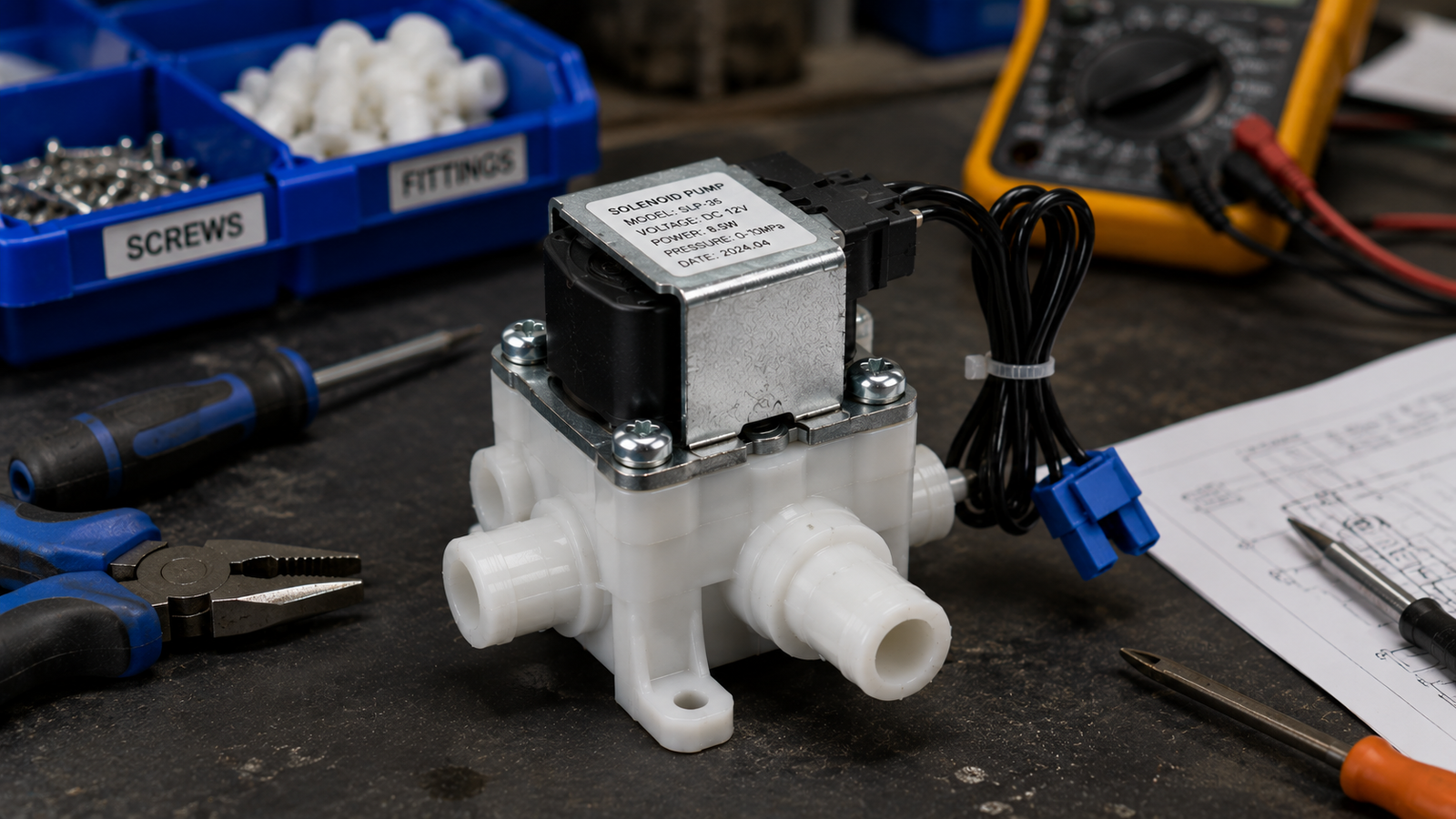
Procurement managers often ask me this first. The pump stops, makes a strange noise, or just does nothing. My first step is not to inspect the pump. It is to ask about the application. A pump is not a universal component. Its success or failure is almost always determined by its environment. A pump that is a star performer in a room-temperature water dispenser will fail catastrophically inside a high-temperature coffee machine. The problem was not the pump; it was the choice.
The "Right" Pump for the Wrong Job
Many issues arise because the selection was based solely on a datasheet. As an OEM partner to leading European brands, I can tell you that datasheets don't tell the whole story. You need to look beyond the basic numbers and ask questions that relate to your specific product.
Beyond the Datasheet
| Datasheet Spec | Real-World Question for Your Supplier |
|---|---|
| Max Pressure | What is the consistent operating pressure we can expect over a 5-year lifespan? |
| Temperature Range | Will the materials withstand sudden temperature shocks from hot water cycles? |
| Lifespan (Cycles) | What is the expected duty cycle? Is it 10 seconds on, 30 seconds off, or something else? |
| Fluid Type | Is it rated for just water, or can it handle our specific cleaning solution? |
When a client reports a failure, we find the answer in the application details 9 times out of 10.
What Causes a Solenoid Pump to Lose Pressure?
Your product promises a strong, steady flow. But customers are reporting weak performance. This inconsistency is a direct threat to your product's perceived quality and your brand's reputation.
Pressure loss is rarely about a single component failing. It is often a system issue. It could be due to material degradation from an incompatible fluid, wear from an excessive duty cycle, or even a small blockage. The root cause points back to incorrect material and design selection.
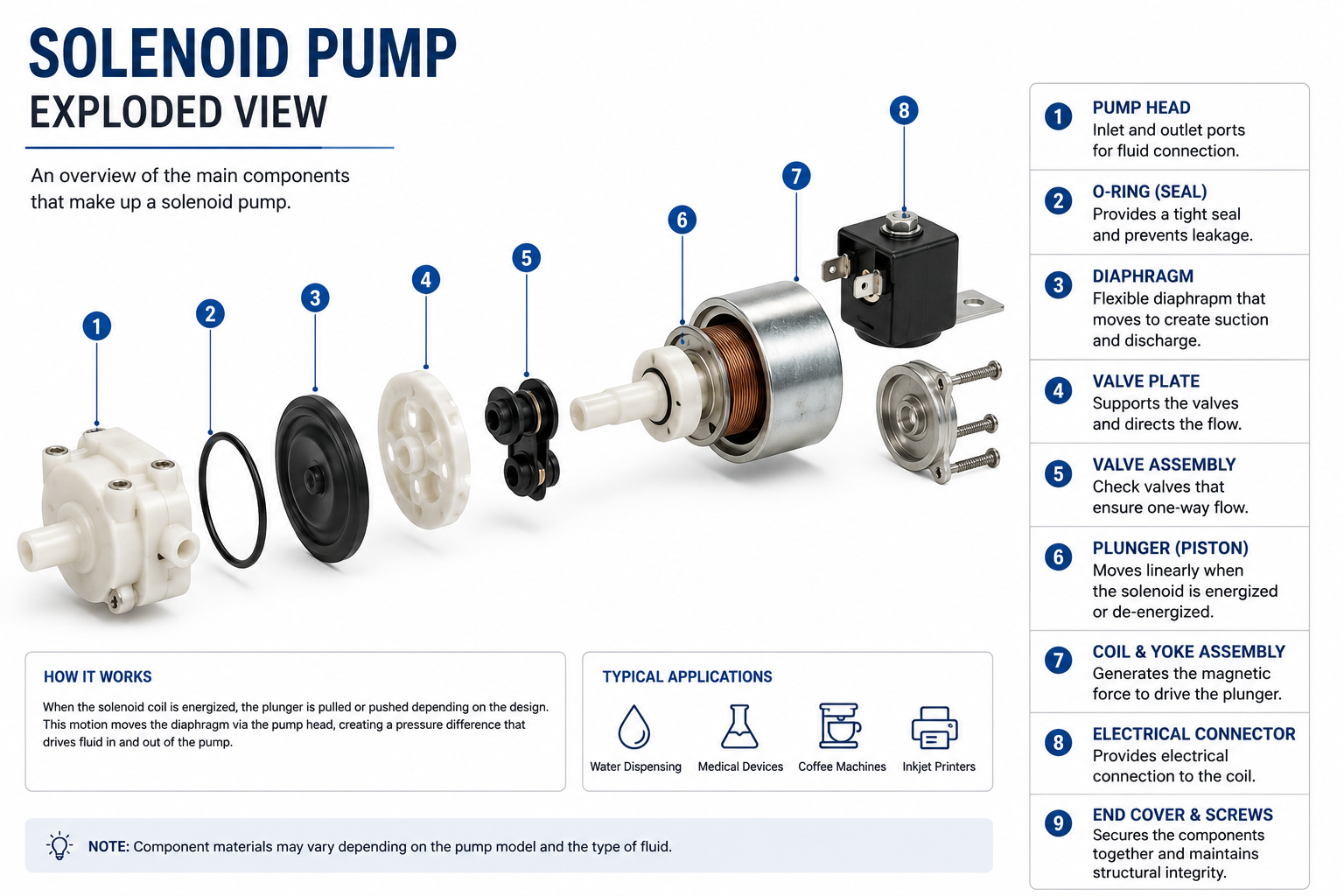
In my experience working with home appliance brands, inconsistent pressure is a silent killer of brand trust. A customer might not know why their coffee machine is weak, but they know it is not performing as promised. This is why we focus so heavily on material science and application testing.
Material Compatibility is Non-Negotiable
The fluid inside your product matters immensely. Hard water minerals, oils from coffee, or chemicals in cleaning agents can degrade the wrong type of seals and plastics over time. This causes small leaks or swelling that reduces internal pressure. Our in-house engineering team always starts a project by analyzing the fluid. It's a non-negotiable first step.
The Silent Killer: Duty Cycle
A pump rated for intermittent use will lose pressure and fail prematurely if run too frequently or for too long. The coil can overheat, weakening the magnetic force. This reduces the plunger's stroke, which directly impacts pressure output. Many product development teams overlook this, but it's a common point of failure we help our OEM partners define and design for. Understanding the rhythm of your machine is as important as understanding its chemistry.
How Do You Diagnose Common Solenoid Pump Problems?
You have a failing pump in front of you. Your instinct is to take it apart and find the broken piece. But this approach is slow and misses the bigger picture.
The best diagnosis does not start with a screwdriver; it starts with questions. Instead of just looking at the pump, analyze its environment and usage history. This "application audit" is far more effective at finding the root cause than a simple physical inspection.
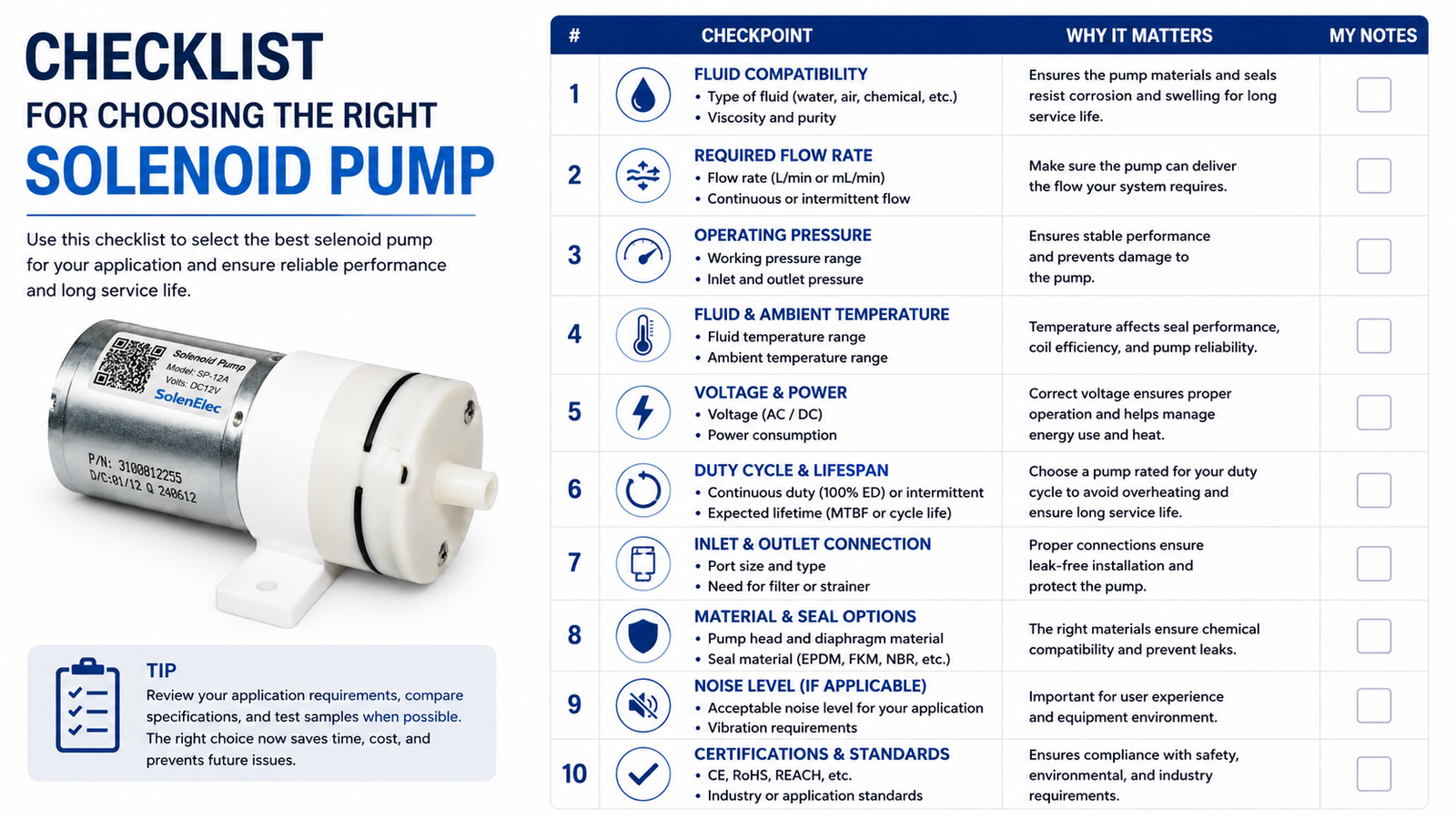
When a purchasing manager from a large brand contacts me about an issue, I don't ask for the pump back right away. Instead, I send them a list of questions. The answers they provide are far more valuable than the "failed" component itself. This process shifts the focus from blame to collaboration. It helps us work together to find a lasting solution, not just a temporary fix.
Your Diagnostic Checklist Before Calling a Supplier
Before you declare a pump is faulty, ask your team these questions:
- Where was it installed? (Product model, manufacturing date)
- What was the usage pattern? (How many times per day? For how long each time?)
- What fluid was being used? (Be specific. Tap water in Germany is different from tap water in Spain.)
- What were the environmental conditions? (Ambient temperature, humidity)
- Is this an isolated incident or a pattern? (Are all failures from one production batch?)
A good supplier with an MES traceability system can use this data to trace the pump back to its production day, checking material batches and QC records. This is how a professional partnership solves problems.
How to Fix a Solenoid Pump That Isn't Working Properly?
You are facing mounting warranty costs and returns. You need a fix, and you need it now. The pressure is on to find an immediate solution to stop the bleeding.
The "fix" is not about repairing or replacing individual failed pumps. The real, long-term fix is a strategic one: re-evaluating your supplier and your pump selection criteria. A reliable OEM/ODM partner is the most effective "fix" for chronic pump problems.

I have this conversation with brand managers all the time. They want to know how to "fix" the problem. I tell them that for someone managing a supply chain of millions of dollars, the fix is not about a single component. It's about the system that delivers that component. Repairing one pump is a distraction. The real fix is to make a better purchasing decision next time.
Stop Repairing, Start Partnering
You cannot fix a strategic sourcing problem with a screwdriver. When you buy thousands of pumps, the true cost is not the unit price. It is the total cost of ownership.
The True Cost of a "Cheap" Pump
| Component | Initial Cost | Long-Term Cost |
|---|---|---|
| The Pump Itself | $5.00 | $5.00 |
| Warranty Claims | $0 | $200,000 |
| Damaged Brand Reputation | $0 | Priceless |
| After-Sales Support | $0 | $50,000 |
| Total Cost of Failure | $5.00 | $250,005+ |
The most powerful "fix" is to partner with a manufacturer who has the engineering depth to help you customize, the quality systems (like ISO 9001 and MES) to ensure consistency, and the experience to foresee problems. That is what we have been doing for over 20 years.
How to Prevent Solenoid Pump Failure?
Wouldn't it be better to avoid pump failures altogether? Imagine launching a product with the confidence that your components are robust, reliable, and perfectly suited for the job.
Prevention starts with asking your potential supplier the right questions. Go beyond the price and basic specs. A thorough vetting process that examines their design capability, material sourcing, and quality control systems is the single best way to prevent future failures.

This is the most important part of my job. As a consultant to my clients, my goal is to make sure failure never happens. Prevention is about due diligence. It's about treating your supplier as a partner in your product's success, not just a line item on a purchase order. A good supplier will welcome tough questions because it shows you are a serious partner.
The Procurement Manager's Pre-Purchase Checklist
Here are the questions you should be asking a potential OEM supplier:
- Customization: Can you adjust the coil winding, plunger material, or seal compounds for our specific application and fluid?
- Materials: Where do you source your high-purity copper wire and heat-resistant plastics? Can you provide material compliance certifications like RoHS and REACH?
- Life Testing: How do you validate the pump's lifespan for our required duty cycle? Can you simulate our use case in your lab?
- Quality Control: What is your outgoing inspection rate? Do you use a 100% check or sampling? Do you have an MES system for quality traceability?
- Experience: Can you share anonymous case studies of how you solved a similar challenge for another client in the home appliance industry?
These questions build the foundation for a strong partnership. They are the conversations we have every day with the world's leading brands.
Conclusion
Ultimately, solving pump problems is not about fixing what is broken. It is about making the right choice from the start by partnering with a supplier who understands your real-world needs.
Need Help Choosing the Right Solenoid Pump?
Most pump failures are not caused by poor manufacturing—they happen because the pump isn't matched to the application's operating conditions.
If you're developing coffee machines, water treatment equipment, medical devices, or other OEM products, our engineering team can help you select or customize the right solenoid pump for long-term reliability.
👉 Contact us to discuss your application.