How to Choose the Right Solenoid Coils for Industrial Valves? A Guide to Reliability and Performance
Choosing the wrong solenoid coil for your valve can cause costly failures. This leads to production downtime and damages your brand. Matching the coil to your application ensures reliability and performance.
To choose the right solenoid coil, you must match its specifications (voltage, power, duty cycle), materials, and certifications to your valve's specific operational risks. This includes the working environment, media, and required lifespan. This approach minimizes long-term costs and ensures reliable performance over time.
Choosing a coil goes far beyond just looking at a data sheet. The numbers are a starting point, but the real decision involves understanding the trade-offs that are not listed on paper. A low unit price can often hide future expenses from failures, warranty claims, and damage to your brand’s reputation. Let's break down the critical questions you should be asking any supplier to protect your investment and ensure your product delivers on its promise.
Solenoid Coil Specifications: Matching Voltage, Power, and Connection Types for Valves?
Mismatched specifications can seem like a small detail. However, this mistake can cause immediate failure or poor performance, leading to customer returns and service calls. Let's clarify how to match these core specs.
Match the coil's voltage and power rating to your system’s power supply and the valve’s force requirement. Then, choose a connection type (e.g., DIN, lead wires) that fits your assembly process and environment. Getting these basics right prevents overheating and ensures proper valve function.
In my 20 years of experience, simple spec mismatches are a frequent source of problems that are easily avoided. These details are not just numbers; they directly impact the coil's ability to do its job reliably over millions of cycles. The goal is to create a stable system where the coil, power supply, and valve work together seamlessly. A procurement manager who understands these fundamentals can ask smarter questions and prevent costly issues before production even begins. It's about shifting the focus from just the component price to the stability of the entire system.
Here’s a breakdown of what to look for:
Voltage, Power, and Connections
| Specification | Why It Matters for Valves | Common Mistake to Avoid |
|---|---|---|
| Voltage (V) | The coil's voltage must exactly match your system's power supply. A mismatch causes either weak valve actuation (under-voltage) or rapid overheating and burnout (over-voltage).1 | Assuming a "close enough" voltage is acceptable. For example, using a 22V DC coil in a 24V DC system to save a few cents will drastically shorten its life. |
| Power (W) | Power, or wattage, determines the strength of the magnetic field. This force must be strong enough to actuate the valve plunger. However, higher power also generates more heat.2 | Choosing a high-wattage coil for extra force without considering how the heat will dissipate. This is a common cause of failure in enclosed or high-ambient-temperature applications. |
| Connection Type | The connector (e.g., DIN 43650, lead wires, Deutsch) affects assembly speed, cost, and sealing effectiveness. The right choice depends on your production line and the end-use environment. | Selecting a connection type that isn't robust enough for the environment. For example, simple lead wires may not be suitable for an application with high vibration or moisture. |
Common Causes of Solenoid Coil Failure in Industrial Valve Systems?
Your valve coils are failing unexpectedly in the field. This can halt your customer's production, spike your warranty claims, and quickly erode the trust you've built in your brand. Identifying the root cause is critical.
The most common causes of coil failure are overheating from a mismatched duty cycle or incorrect voltage, moisture entry from inadequate sealing (IP rating), and mechanical stress from vibration or power surges. Each of these points to a mismatch between the coil's design and its real-world operating conditions.
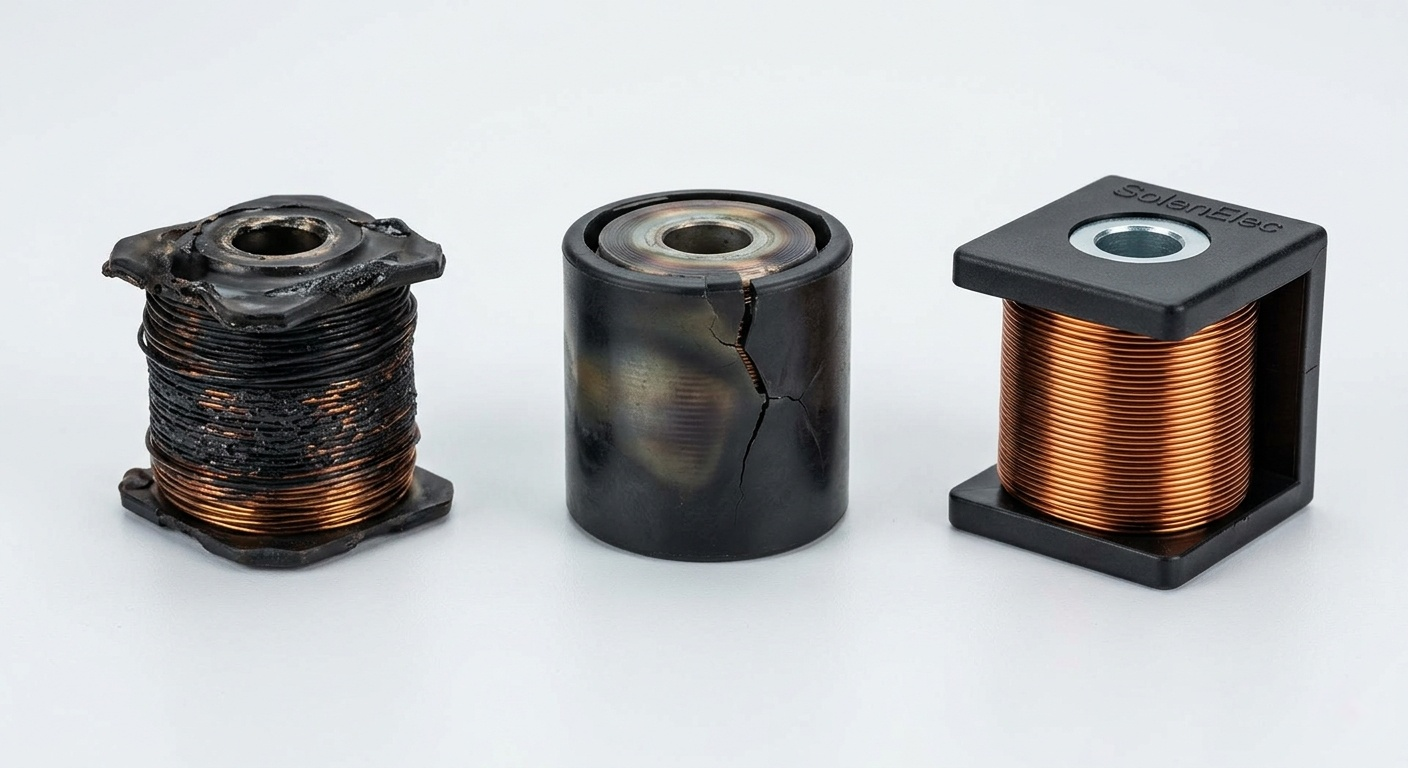
When a customer comes to us with a failure problem, we don't just look at the failed coil. We ask about the application. Where was it installed? How was it being used? The answers almost always reveal a gap between what the coil was designed for and the job it was asked to do. The key to reliability is closing that gap. From our experience analyzing thousands of field returns for major brands, we've seen a clear pattern. The failures are rarely due to a "bad batch" but rather a design that wasn't robust enough for the application's hidden stresses.
Here are the top three culprits we see every day:
1. Overheating from Duty Cycle Mismatch
This is the number one killer of solenoid coils. The duty cycle is the ratio of "on" time to total time. A coil rated for intermittent use (e.g., 25% duty cycle) will quickly burn out if operated continuously (100% duty cycle).3 A common mistake is assuming a valve will only be used occasionally. But in a real-world factory, it might be left on for hours. You must confirm the actual operating cycle with your engineers and choose a coil rated for 100% duty cycle if there's any doubt.
2. Moisture and Contaminant Ingress
An IP rating (Ingress Protection) on a spec sheet tells you how well a coil is sealed against dust and water.4 But not all IP65-rated coils are equal. The long-term reliability depends on the encapsulation material (the plastic body) and the sealing method. In environments with high humidity or frequent temperature swings, moisture can still find its way in over time, causing corrosion and short circuits. We've seen cases where a coil passes a short-term water spray test but fails after six months in a humid factory.
3. Electrical and Mechanical Stress
Industrial environments are harsh. Voltage spikes from other equipment on the same power line can damage a coil's internal insulation. Constant vibration from nearby machinery can eventually break the fine copper wire windings inside the coil. A well-designed coil uses high-quality insulation and secures its windings to withstand these stresses. This is where a supplier's manufacturing quality and material choices make a huge difference in long-term reliability.
High-Temperature and Waterproof Solenoid Coils: Solutions for Harsh Industrial Environments?
Standard coils are failing in your equipment that operates in extreme heat or wet conditions. This can shut down critical systems in food processing plants, chemical facilities, or outdoor machinery, leading to significant problems.
For high temperatures, choose coils with a higher insulation class, like Class H (180°C)5, and heat-resistant encapsulation materials like PPS. For wet areas, demand high IP ratings (IP67 or IP68) with robust sealing methods like connector over-molding to ensure a truly waterproof product.
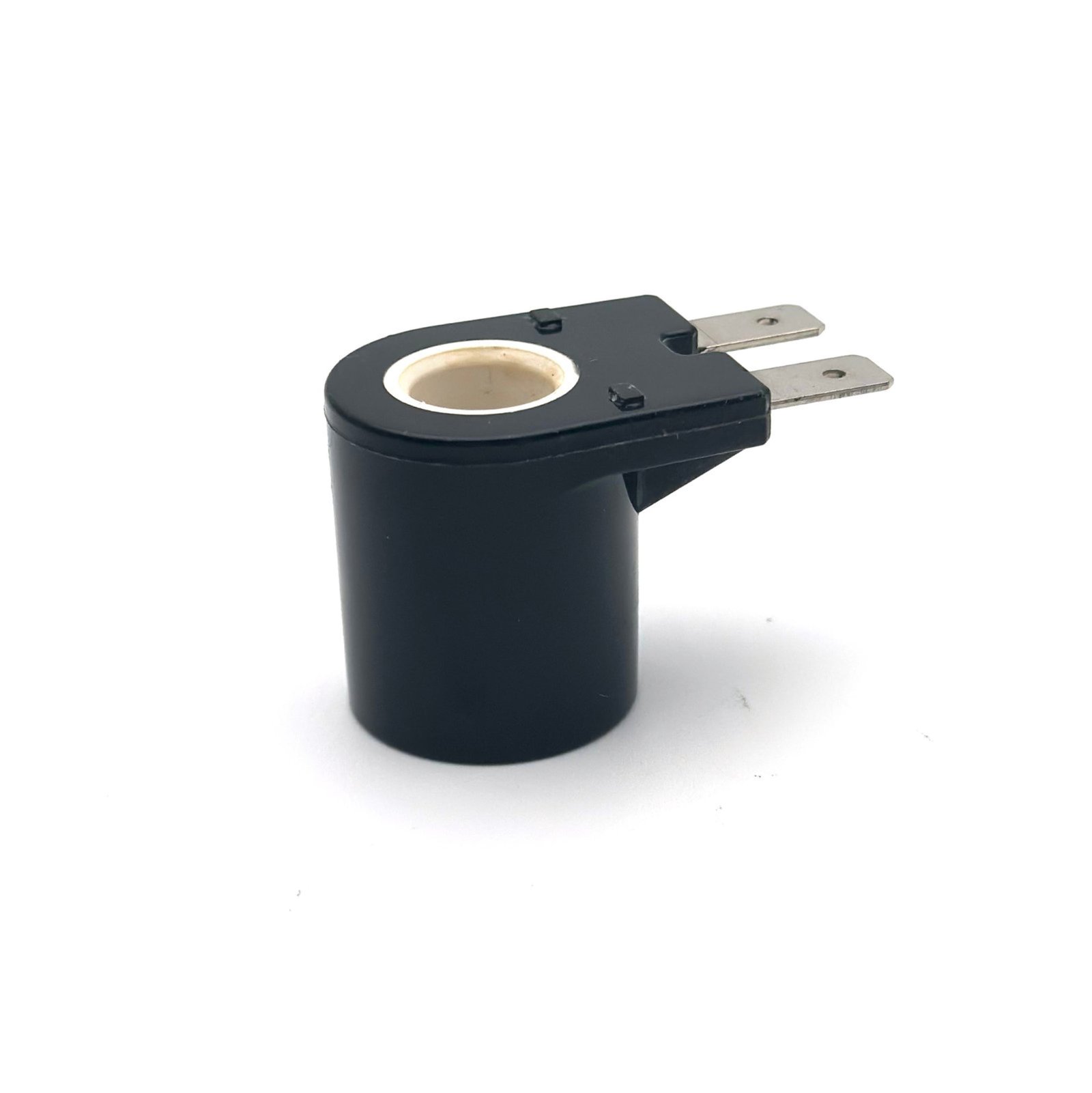
When a procurement manager tells me they need a coil for a "harsh environment," my first question is, "What does harsh mean in your application?" High heat and constant moisture require completely different engineering solutions. A spec sheet might list a high-temperature class or an IP rating, but the real solution lies in the material science and manufacturing process. In my experience, paying a little more for the right materials upfront is the best way to prevent very expensive field failures down the line. It's a classic total cost of ownership decision.
Solutions for High Temperatures
A coil's temperature rating is determined by its insulation class. Class F (155°C) is a common standard, but it's not enough for applications near an engine or a furnace. For those, you need a Class H (180°C) coil. But the wire insulation is only half the story. The plastic encapsulation must also withstand the heat without becoming brittle or deforming. Standard plastics like PA66 or PBT will degrade at high temperatures. We often recommend a material like PPS (Polyphenylene Sulfide)6 for these demanding jobs. It costs more, but it ensures the coil maintains its structural integrity and protective properties.
Solutions for Wet Environments
For waterproof performance, an IP rating is just the start. An IP67 rating means the coil can be submerged in water.7 But the real question is, for how long? The difference between a coil that survives a lab test and one that survives years in a wet environment is the sealing method. A simple gasket between the coil and connector can degrade over time, especially with exposure to UV light or chemicals. For maximum reliability, we recommend an over-molded connector design. This process molds the connector cable directly onto the coil body, creating a single, seamless part with no path for water to enter. We developed this solution for a client in the marine industry, and it eliminated their water-related failures.
Comparing AC vs. DC Solenoid Coils: Which One Is More Efficient for Your Valve?
You need to decide between an AC or DC coil for your new valve design. Making the wrong choice can lead to buzzing noises, excess heat, or compatibility problems with your modern control systems.
DC coils are more energy-efficient, run cooler, and provide quiet, smooth operation, making them ideal for modern electronic controls.8 AC coils offer a strong initial pull but generate more heat and can buzz.9 For most industrial valve applications today, DC coils are the superior choice.
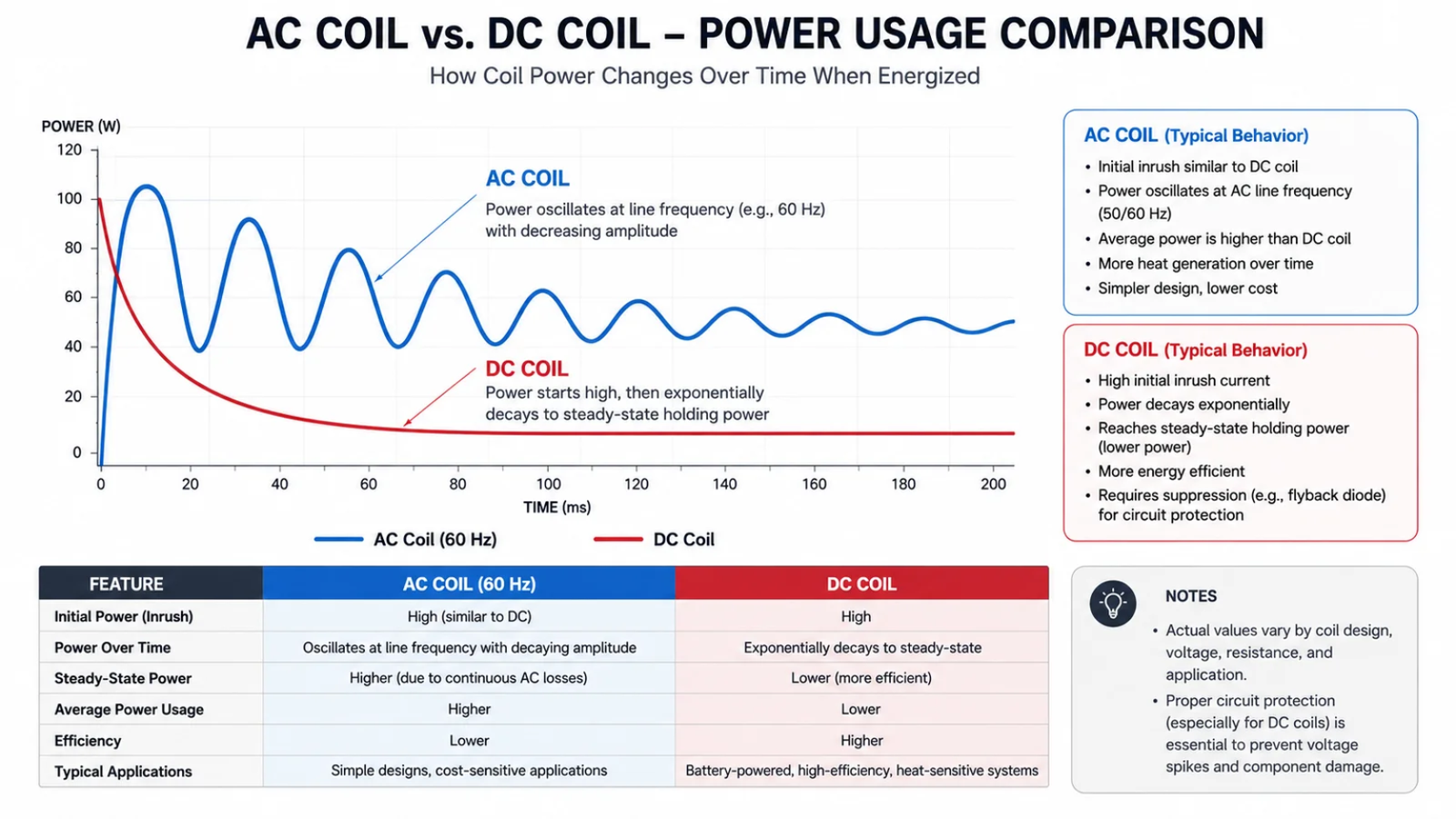
For decades, AC coils were the standard for many simple industrial applications. They are straightforward and get the job done. However, as control systems have become more sophisticated with PLCs and digital controls, the advantages of DC coils have become much more apparent. We've seen a huge shift in demand from our European customers, who are very focused on energy efficiency and system reliability. The conversation is no longer about which is cheaper, but which is better for the total system's performance and operating cost.
Here’s a direct comparison to help you decide:
| Feature | AC Solenoid Coil | DC Solenoid Coil | Procurement Consideration |
|---|---|---|---|
| Actuation | Strong initial "inrush" current provides a powerful kick to open a valve. | Applies a smooth, consistent force throughout the operation. | DC offers more precise control, which is better for modulating or sensitive valves. |
| Efficiency & Heat | Has a high inrush current and a lower "holding" current. This cycle is less efficient and generates significant heat. | Draws a constant, low current. This is highly energy-efficient and results in much less heat. | DC coils are better for 100% duty cycle applications, as they run cooler and have a longer lifespan. Lower heat also protects the valve's seals. |
| Noise | The alternating current can cause the coil's internal components to vibrate, creating an audible "hum" or "buzz."10 | Operates silently because the magnetic field is constant. | DC is essential for applications in quiet environments like medical facilities or residential appliances. |
| Control | Works with simple on/off switches but is difficult to control with modern electronics. Susceptible to burnout if the valve plunger gets stuck. | Easily and precisely controlled by PLCs (Programmable Logic Controllers) using PWM (Pulse Width Modulation). | DC coils integrate seamlessly with modern, smart control systems, offering greater flexibility and reliability. |
Certification Requirements for Valve Coils: Understanding CE, UL, and ATEX Standards?
Navigating the web of certifications like CE, UL, and ATEX can be very confusing. But choosing a coil without the right compliance can block access to key markets or create serious safety liabilities for your brand.
CE is a mandatory safety mark for the European market.11 UL is a key safety and fire-risk certification for North America. ATEX is a specialized European directive required for any equipment used in potentially explosive atmospheres.12 Each one is a non-negotiable requirement for its respective market or application.
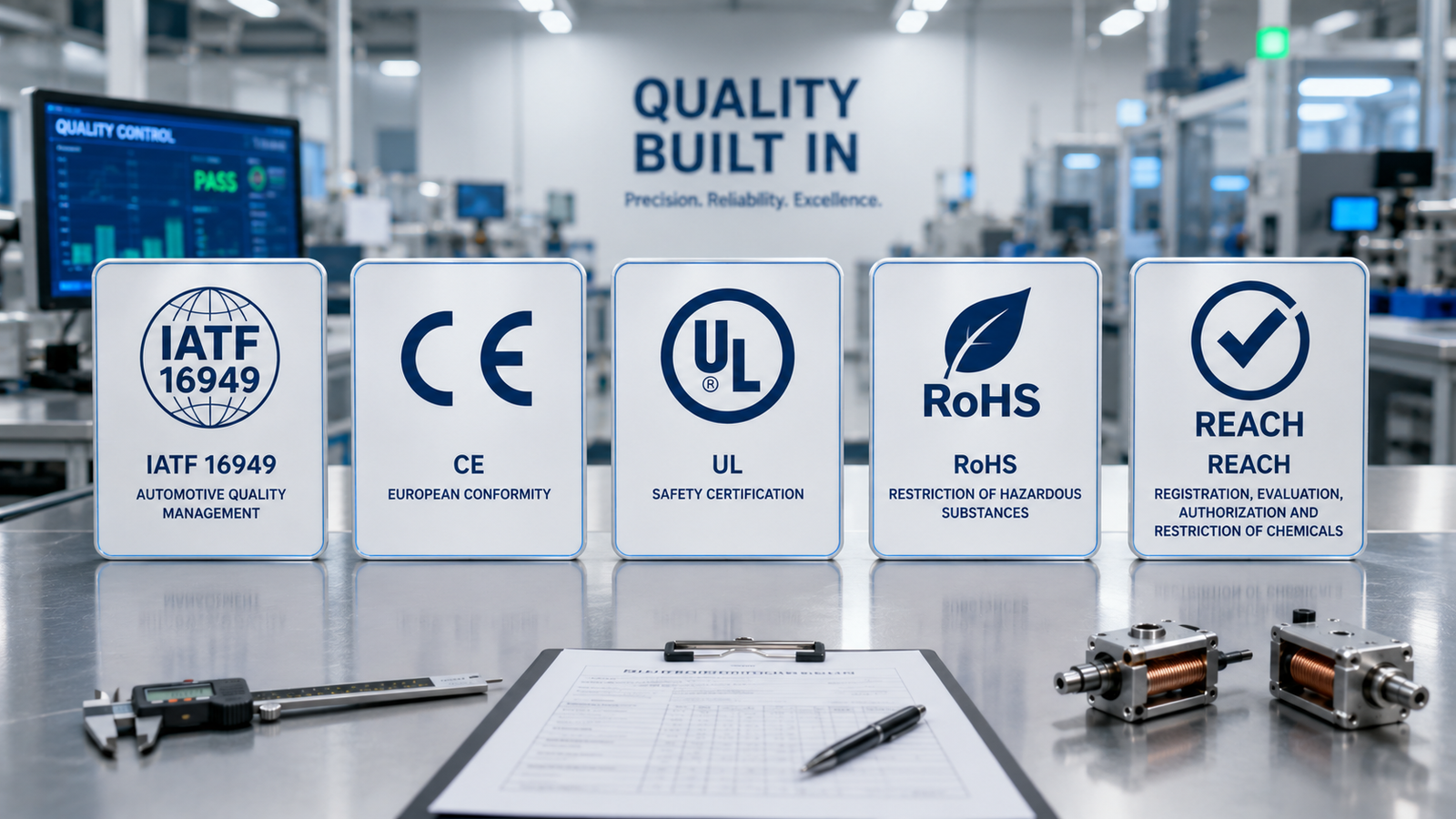
As a manufacturer who has supplied OEM coils to top global brands for over 20 years, I see certifications as more than just a sticker on a product. They are a critical part of risk management. For a procurement manager, ensuring your supplier provides fully compliant components is one of your most important responsibilities. It protects your company from legal issues, simplifies market access, and reinforces your brand's commitment to safety and quality. When you source a coil, you are also sourcing the proof of its compliance.
Here is what these certifications mean in practical terms for your business:
CE Marking (Conformité Européenne)
This is your passport to sell products in the European Economic Area. It signifies that the manufacturer has declared the product complies with all relevant EU health, safety, and environmental directives. While it is often a self-declaration, it must be backed by a comprehensive technical file and a formal Declaration of Conformity. When you buy a coil, you should request this document from your supplier to ensure your own final product's compliance process is smooth.
UL Certification (Underwriters Laboratories)
UL is the gold standard for product safety in the United States and Canada. It is an independent, third-party certification that tests products for fire, electric shock, and other safety risks. Using a "UL Recognized" coil in your valve assembly makes it much easier and faster to get your final product "UL Listed." For a brand manager, this is a huge advantage. It de-risks your product launch and shortens your time to market.
ATEX Directive
This is a specialized and legally required certification for any equipment intended for use in potentially explosive atmospheres, such as in oil and gas refineries, chemical plants, or dusty agricultural environments. ATEX-certified coils are specifically designed and rigorously tested to ensure they cannot become an ignition source. They feature robust encapsulation, controlled surface temperatures, and specific connection methods to prevent any possibility of a spark. Choosing a non-ATEX coil for these applications is not an option; it is a serious safety violation with severe legal and financial consequences.
Conclusion
Choosing the right solenoid coil is about managing risk. By matching the coil's specifications, materials, and certifications to your specific application, you ensure reliability and protect your brand's reputation for quality.
"Ampere-turn - Wikipedia", https://en.wikipedia.org/wiki/Ampere-turn. Standard treatments of electromagnets explain that force depends on ampere‑turns (current through the coil), while Joule heating increases with current (P = I²R); thus undervoltage can weaken actuation and overvoltage increases heating, accelerating insulation breakdown. Evidence role: mechanism; source type: encyclopedia. Supports: That magnetic attraction in electromagnets depends on coil current (ampere-turns) so reduced voltage lowers force, and that resistive heating rises with current, so over-voltage increases heating and can damage insulation.. Scope note: Exact outcomes depend on coil design, thermal management, and supply characteristics. ↩
"Joule heating - Wikipedia", https://en.wikipedia.org/wiki/Joule_heating. Joule heating in conductors converts electrical power to thermal energy according to P = I²R (or P = VI), explaining why higher power in a coil results in greater heat generation. Evidence role: mechanism; source type: encyclopedia. Supports: That electrical power dissipated in a resistive coil is converted to heat via Joule heating, increasing with current and resistance.. Scope note: Resulting temperature rise also depends on heat dissipation and ambient conditions. ↩
"Is a Solenoid Valve Not for Continuous Duty Opearaton? - U.S. Solid", https://ussolid.com/blogs/solenoid-valve/is-a-solenoid-valve-not-for-continuous-duty-opearaton?srsltid=AfmBOoru9xQ6dHordHEMZRPtX16S9vjyET3bR72j4eN9nr9o7spgYlFj. Reference materials on solenoids note that many coils are specified for intermittent duty because steady energization raises temperature toward insulation limits; operating such coils continuously can exceed their thermal class and cause failure. Evidence role: expert_consensus; source type: encyclopedia. Supports: That solenoids are rated for intermittent vs. continuous duty due to heating, and exceeding the duty cycle causes excessive temperature rise and potential burnout.. Scope note: Failure onset depends on specific coil design, insulation class, and ambient cooling. ↩
"IP code - Wikipedia", https://en.wikipedia.org/wiki/IP_code. IEC 60529 defines the IP (Ingress Protection) Code as specifying degrees of protection against ingress of solid foreign objects and water provided by enclosures. Evidence role: definition; source type: institution. Supports: The official meaning of the IP (Ingress Protection) Code as a classification for protection against solid objects and water.. ↩
"Thermal insulation - Wikipedia", https://en.wikipedia.org/wiki/Thermal_insulation. Summaries of IEC thermal insulation classes list Class F at 155°C and Class H at 180°C as the reference maximum temperatures for insulation systems. Evidence role: definition; source type: encyclopedia. Supports: That electrical insulation Class H is defined with a thermal rating around 180°C (and Class F around 155°C).. Scope note: Thermal class refers to insulation system capability; whole‑coil performance also depends on design and heat dissipation. ↩
"Polyphenylene sulfide - Wikipedia", https://en.wikipedia.org/wiki/Polyphenylene_sulfide. Materials references describe polyphenylene sulfide (PPS) as a thermoplastic with high thermal stability and chemical resistance, often used for components requiring continuous service at elevated temperatures (~200°C). Evidence role: general_support; source type: encyclopedia. Supports: That PPS is a high‑temperature, chemically resistant thermoplastic with continuous‑use temperatures around 200°C, suitable for components exposed to heat.. Scope note: Performance varies with formulation, fillers, and processing; application limits depend on the specific grade and design. ↩
"IP code - Wikipedia", https://en.wikipedia.org/wiki/IP_code. In the IP Code system, a second digit of 7 indicates protection against water ingress during temporary immersion under standardized conditions (commonly up to 1 m depth for 30 minutes). Evidence role: definition; source type: encyclopedia. Supports: That IP67 indicates protection against temporary immersion in water under defined conditions (typically up to 1 m for 30 minutes).. Scope note: The rating reflects laboratory test conditions; long‑term field waterproofing depends on sealing durability and installation. ↩
"Solenoid valve - Wikipedia", https://en.wikipedia.org/wiki/Solenoid_valve. Technical overviews of solenoid valves and contactors explain that DC excitation provides a steady magnetic field (no 50/60 Hz cycling), avoiding the acoustic hum associated with AC coils and often resulting in lower losses and heat for a given holding force when properly matched. Evidence role: general_support; source type: encyclopedia. Supports: That DC excitation provides steady magnetic force without line-frequency magnetization cycles, avoiding AC hum and often yielding cooler, quieter operation when appropriately driven.. Scope note: Relative efficiency and temperature rise depend on coil resistance, driver design (e.g., PWM hold), and duty cycle; not all DC coils will run cooler in every case. ↩
"Shading coil - Wikipedia", https://en.wikipedia.org/wiki/Shading_coil. Descriptions of AC-operated contactors and solenoids note high inrush currents and the use of shading rings to maintain pull at zero crossings, with line-frequency magnetization producing audible hum and added losses relative to steady DC operation. Evidence role: mechanism; source type: encyclopedia. Supports: That AC coils exhibit high inrush and require measures like shading rings to maintain force, and that line-frequency magnetization can produce audible buzz and additional heating.. Scope note: Modern designs can mitigate buzz and heating through mechanical damping and optimized materials; behavior varies by product. ↩
"Electromagnetically induced acoustic noise - Wikipedia", https://en.wikipedia.org/wiki/Electromagnetically_induced_acoustic_noise. Engineering references attribute audible hum in AC magnetic devices to magnetostriction and periodic forces at line frequency (and its harmonics), which can cause vibration of coil and core components. Evidence role: mechanism; source type: encyclopedia. Supports: That periodic magnetization in AC devices induces forces and magnetostriction, leading to vibration and audible hum.. Scope note: Noise amplitude depends on construction, materials, and the presence of shading rings or damping features. ↩
"CE marking", https://en.wikipedia.org/wiki/CE_marking. The European Commission states that CE marking is required for many products before they can be placed on the EU/EEA market, indicating conformity with the applicable EU health, safety, and environmental legislation. Evidence role: definition; source type: institution. Supports: That CE marking is a legal requirement for placing many categories of products on the EU/EEA market as a declaration of conformity with relevant legislation.. Scope note: CE marking applies only to products within the scope of specific EU directives/regulations and may involve self‑declaration or notified body involvement depending on the product category. ↩
"ATEX directives - Wikipedia", https://en.wikipedia.org/wiki/ATEX_directives. European Union guidance on ATEX (Directive 2014/34/EU) specifies that equipment intended for use in potentially explosive atmospheres must meet essential health and safety requirements and be appropriately certified before placement on the EU market. Evidence role: definition; source type: institution. Supports: That EU ATEX Directive 2014/34/EU sets mandatory requirements for equipment intended for potentially explosive atmospheres prior to being placed on the EU market.. Scope note: Scope, conformity assessment routes, and marking depend on the equipment category, zone, and protection method. ↩