What Are Solenoid Coil Connectors and How Do They Affect Performance and Reliability?
Your equipment keeps failing, and you blame the solenoid coil. You replace it again and again, but the problem never truly goes away. The real issue might be the connector. For industrial coils, start by matching DIN 43650 Form A, B or C to the valve interface.
A solenoid coil connector1 is the electrical interface that delivers power to the coil. It is critical to performance and reliability because a poor connection creates unstable resistance2, heat, and signal loss. This can lead to intermittent failures, reduced force, and a shorter lifespan for the entire assembly.
I've been in the solenoid coil business for over 20 years, and I've seen a common pattern. A customer believes they have a bad batch of coils, but the real culprit is hiding in plain sight: the connector. Think of the connector as the gateway for electricity. If that gateway is faulty, it doesn't matter how well-made the coil is. This small part can secretly cause big problems. Understanding how connectors work, and how they fail, is the first step to building a truly reliable product.
What Types of Solenoid Coil Connectors Are Common in Industrial Applications?
Your machine needs a reliable connection, but you're not sure which connector type is standard. This uncertainty can lead to compatibility issues and poor performance down the line.
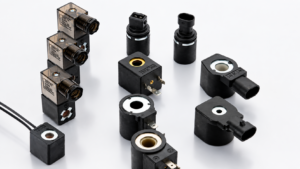
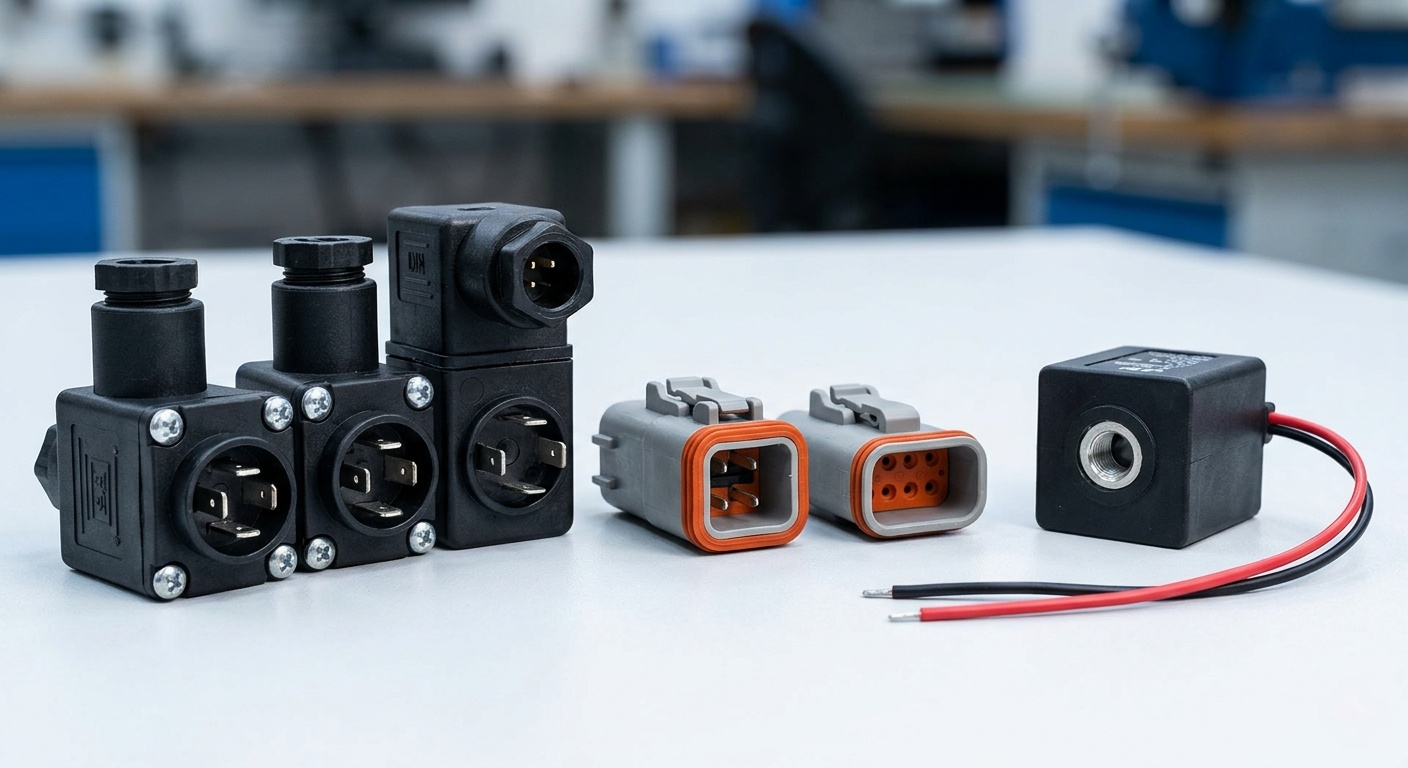
The most common industrial solenoid coil connector1s include DIN 436503 (Forms A, B, and C), Deutsch connectors4, and simple flying leads. Each type is designed for different environmental conditions, voltage requirements, and physical space constraints, making the choice application-specific.

Choosing the right connector isn't just about what fits. It's about ensuring a stable, long-lasting electrical connection. In my experience, a mismatch between the application and the connector is a primary source of failure. Let's break down the most common types I see in the field.
DIN 436503 Connectors
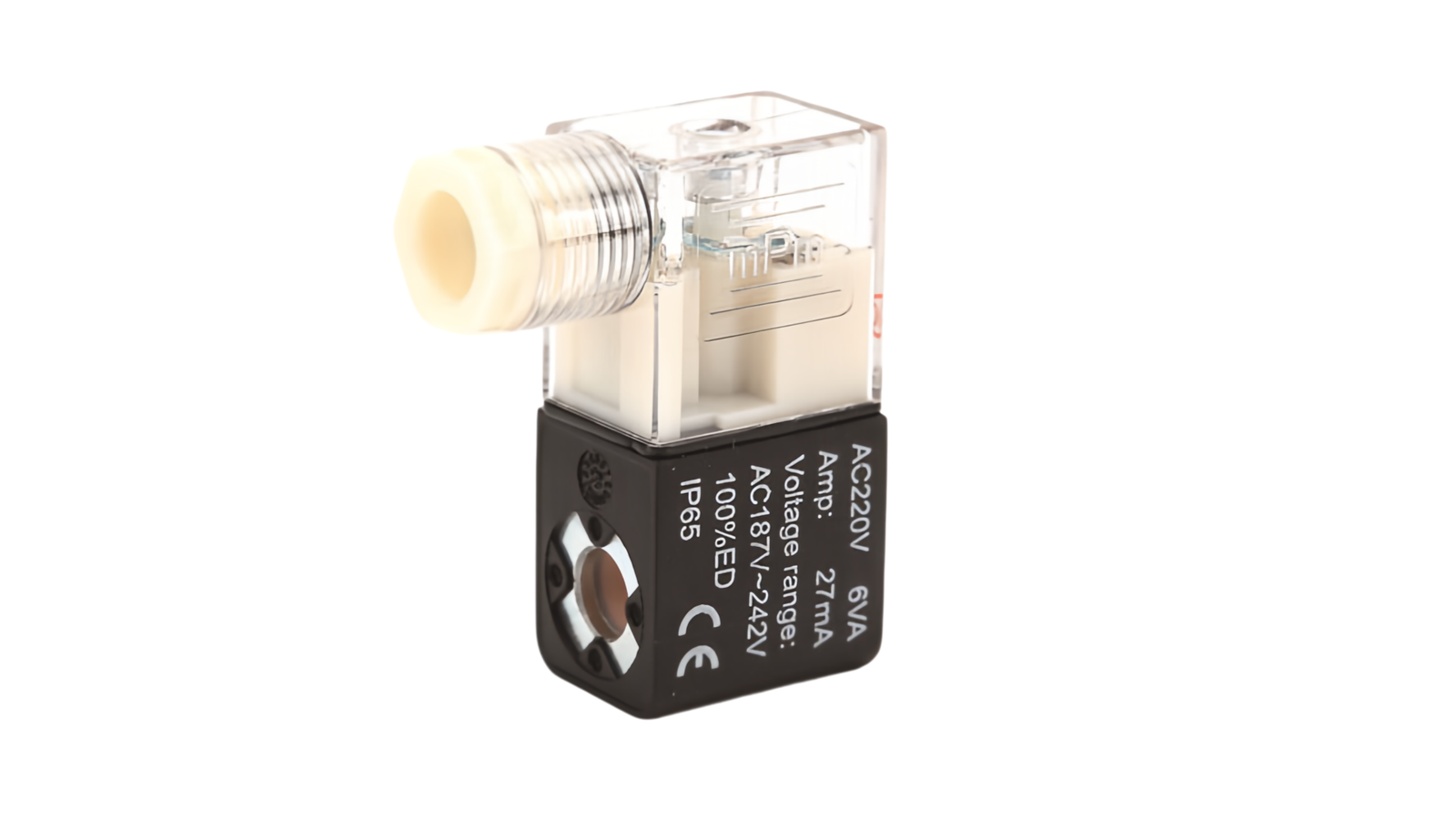
These are the workhorses of the industrial world. They are standardized, widely available, and easy to install. They usually come with a screw to secure them to the coil, providing a solid mechanical connection.
- Form A: The largest size, often used in hydraulics and pneumatics where space isn't a major concern.
- Form B: A more compact version for smaller valves.
- Form C: The smallest of the three, ideal for applications with tight space constraints.
Deutsch Connectors
When you need a more rugged and environmentally sealed connection, Deutsch connectors4 are a top choice. They are common in mobile equipment, agriculture, and automotive applications where dust, water, and vibration are constant threats. Their robust locking mechanism and individual wire seals provide superior protection.
Flying Leads
This is the simplest option: two or more wires coming directly from the coil body. This gives you the flexibility to use any connector you want on the other end. However, it also means the final connection point is exposed unless you properly seal it with heat shrink or another method.
Here's a simple comparison:
| Connector Type | Common Application | Sealing Level | Vibration Resistance |
|---|---|---|---|
| DIN 436503 A | Industrial Hydraulics | Good (IP65 with gasket) | Moderate |
| DIN 436503 B/C | Pneumatics, Small Valves | Good (IP65 with gasket) | Moderate |
| Deutsch DT Series | Mobile Equipment, Marine | Excellent (IP67/IP69K) | High |
| Flying Leads | General Purpose OEM | Varies (Depends on user) | Low to High |
How to Choose the Right Connector for a Solenoid Coil?
You need to select a connector for your solenoid coil. A wrong choice could lead to connection failures, causing equipment downtime and costly warranty claims. How do you pick the right one?
To choose the right connector, you must evaluate four key factors: the operating environment (IP rating), the electrical requirements (voltage/current), mechanical stress5 (vibration), and the mating cycle frequency6. Matching the connector's specifications to these application demands ensures long-term reliability.
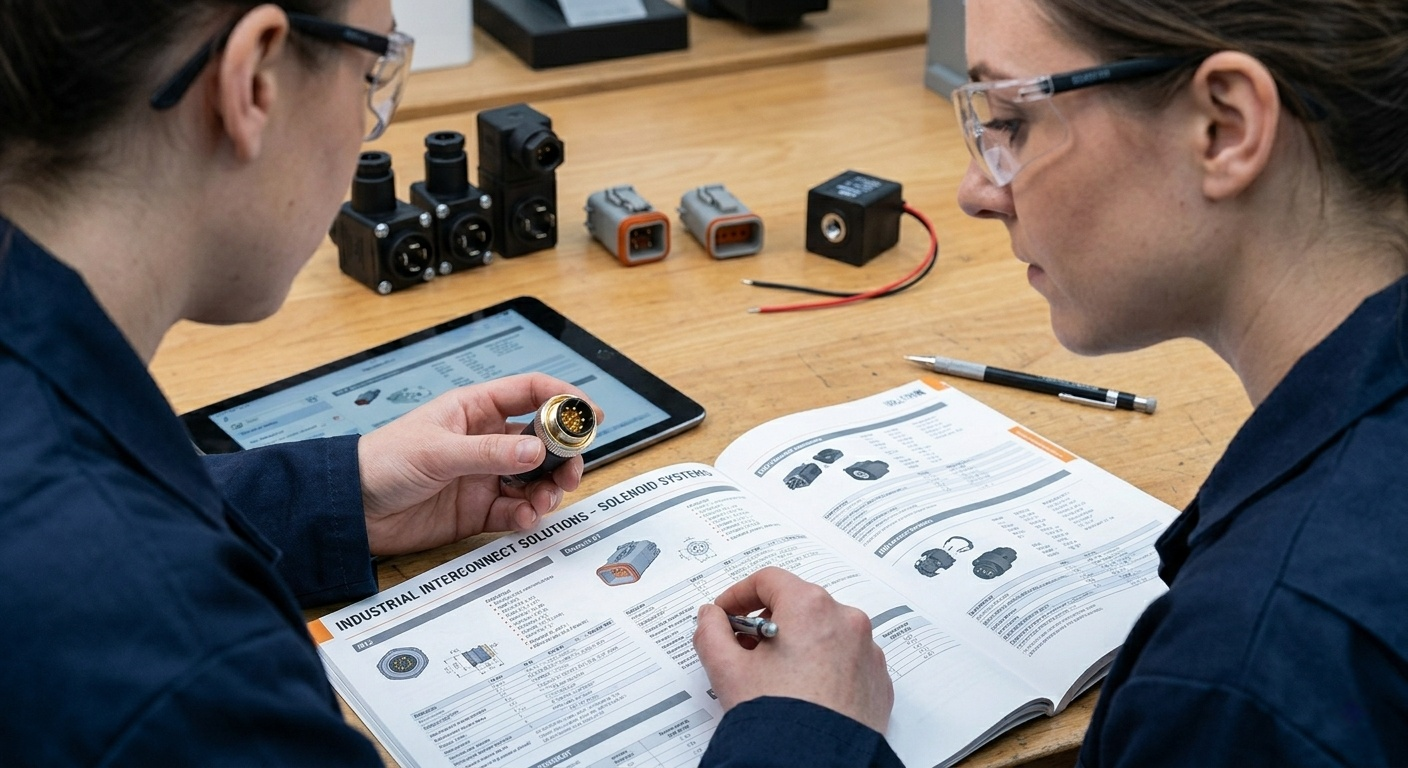
At our factory, we don't just sell coils; we provide a complete solution. That means helping our clients select the perfect connector. We treat the coil and connector as a single, integrated system. This process always starts with asking the right questions about the application.
Factor 1: The Operating Environment
Where will the coil be used? Will it be exposed to water, dust, oil, or chemicals? The answer determines the required Ingress Protection (IP) rating.
- IP65: Protected against dust and low-pressure water jets. Suitable for general factory environments. Most DIN connectors achieve this with a proper gasket.
- IP67: Dust-tight and can be submerged in 1 meter of water for 30 minutes. This is necessary for mobile equipment or outdoor applications. Connectors like the Deutsch series are designed for this.
Factor 2: Electrical Load
You must match the connector's current and voltage rating to your system's needs. An undersized connector can overheat, melt, and become a fire hazard. Always check the manufacturer's datasheet for the maximum amperage and voltage specifications. Higher current applications often require larger terminals and thicker wires to handle the load safely.
Factor 3: Mechanical Stress
Will the connector be subject to constant vibration or shock? For example, on a piece of construction equipment, vibration is a given. In these cases, a simple screw-on DIN connector might loosen over time. A locking connector, like a Deutsch or an M12 style, is a much safer choice because its positive locking mechanism7 prevents it from disconnecting under stress.
Here’s a quick checklist to guide your decision:
| Consideration | Question to Ask | Good Choice Example | Poor Choice Example |
|---|---|---|---|
| Environment | Will it get wet or dirty? | Deutsch DT (IP67) | Ungasketed DIN |
| Electrical | What is the max current? | Properly gauged wires | Undersized terminals |
| Vibration | Is the machine shaking? | M12 Circular Connector | Flying leads with butt splice |
| Installation | Is field service easy? | DIN 436503 | Potted flying leads |
What Causes Connector Failure in Solenoid Coil Systems?
You have a solenoid system that fails intermittently. You suspect the coil, but the root cause could be a failing connector, a problem that is often difficult to diagnose.
The primary causes of connector failure are poor electrical contact from vibration or improper crimping, environmental corrosion from moisture and chemicals, and mechanical damage from physical stress. These issues create high resistance, leading to heat, voltage drop8s, and eventual system failure.
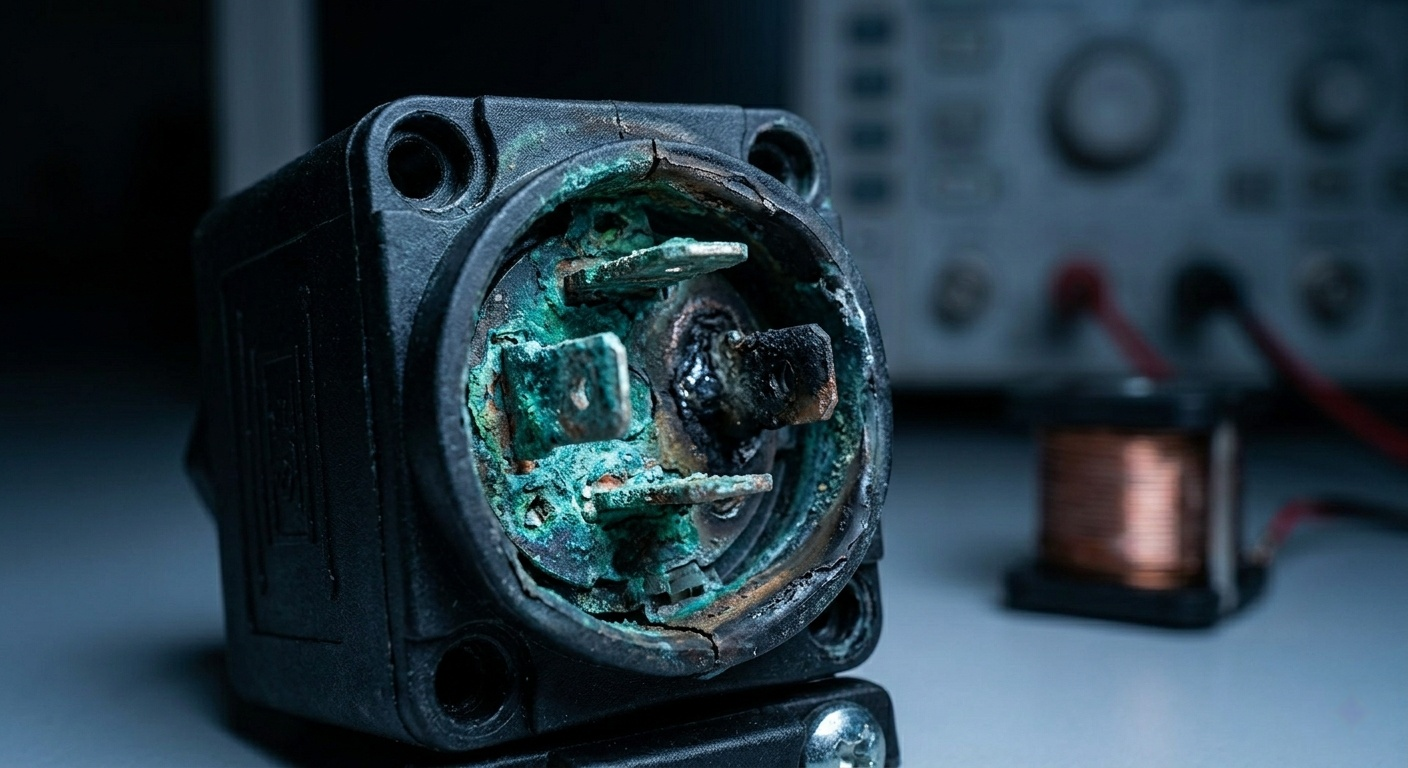
I remember a case with a U.S. client who manufactured heavy equipment. Their machines were experiencing random shutdowns, and they were convinced our coils were faulty. They had replaced several batches, but the problem persisted. I flew out to their site to investigate. After hours of testing, we found the issue. The machine's intense vibration was causing the connector pins to momentarily lose contact. The system's controller would register this as a coil failure and shut down. The coils were perfectly fine. The problem was a connector that wasn't designed for high-vibration environments.
Manufacturing and Installation Defects
This is where many problems begin. A terminal that isn't crimped onto the wire with enough force will have a weak connection. This high-resistance spot will generate heat every time current flows through it. Over time, this heat can degrade the wire's insulation and the connector housing itself. At our facility, we use automated crimping processes and pull-tests to ensure every connection is mechanically and electrically sound before it leaves the factory.
Environmental Attack
Moisture is the enemy of electrical connections. Even a small amount of humidity can lead to oxidation or corrosion on the metal contact surfaces. This corrosive layer acts as an insulator, increasing resistance and blocking the flow of current. This is why sealed connectors with proper gaskets are so important in any application that isn't in a perfectly dry, clean room.
Mechanical Stress
Beyond vibration, simple physical stress can cause failure. A wire pulled too tightly can strain the crimp joint. A connector that is repeatedly mated and unmated can wear out. Or, a technician might accidentally damage the connector during installation or maintenance. Proper strain relief9 and selecting connectors rated for the expected number of mating cycles are crucial design considerations.
Waterproof vs Standard Solenoid Coil Connectors: What’s the Difference?
You see options for standard and waterproof connectors10. You wonder if the extra cost for a waterproof version is worth it, or if a standard one is good enough for your application.
The main difference is sealing. Waterproof connectors use rubber gaskets, O-rings, and sealed wire entry points to achieve a high IP rating11 (like IP67), protecting contacts from dust and water. Standard connectors (like an ungasketed DIN) may only offer basic protection.
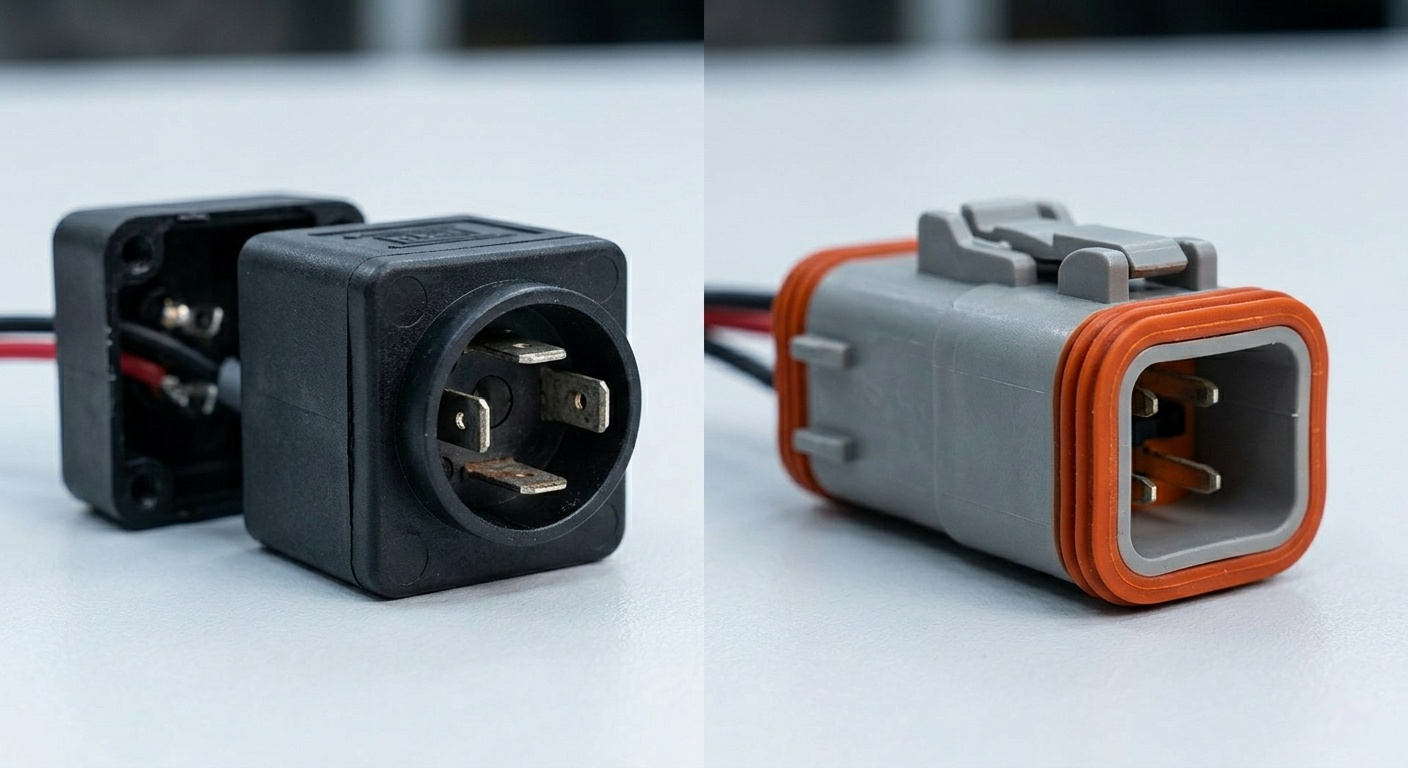
The difference between a machine that runs for years and one that fails after a rainy season often comes down to this choice. A "standard" connector is fine for a clean, indoor environment. But as soon as you introduce moisture, dust, or cleaning chemicals, you need something more robust. Let me explain the key structural differences.
Sealing Mechanisms
This is the most critical distinction. A waterproof connector is a system of seals.
- Interface Seal: This is a gasket or O-ring that sits between the two halves of the connector when they are mated. It prevents water from getting in through the main connection point.
- Wire Seal: Each wire entering the back of the connector has its own individual rubber seal. This stops moisture from wicking down the wire and into the contact area.
- Peripheral Seal: On panel-mount connectors, there's often a larger seal that prevents water from getting between the connector and the equipment housing.
Materials and Construction
Standard connectors often use basic plastics like nylon for their housings. Waterproof connectors frequently use more resilient materials like PBT or specialized composites that can better withstand harsh chemicals and UV exposure. The locking mechanisms are also typically more robust on waterproof connectors10 to ensure the seals remain compressed and engaged, even under vibration.
Here is a breakdown of the key differences:
| Feature | Standard Connector (e.g., DIN 436503) | Waterproof Connector (e.g., Deutsch) |
|---|---|---|
| Primary Seal | Single flat gasket (if used) | Mating interface seal |
| Wire Entry | Open backshell or simple grommet | Individual wire seals |
| IP Rating | Typically IP65 (with gasket) | IP67, IP68, or IP69K |
| Locking System | Center screw or simple clip | Positive locking latch |
| Best Use Case | Indoor, controlled environments | Outdoor, washdown, mobile equipment |
Choosing a waterproof connector is an investment in reliability. For any equipment that operates outdoors or in a factory that gets washed down, it's not a luxury—it's a necessity.
How Do Poor Connectors Affect Solenoid Coil Performance and Lifespan?
You might think a connector is just a simple part. But a poor one can degrade your coil's performance and cause it to fail prematurely. Why does this happen?
A poor connector increases electrical resistance. This causes a voltage drop8, so the coil receives less power and may not actuate reliably. The resistance also generates heat, which accelerates the breakdown of the coil's wire insulation, leading to a short circuit and complete failure.
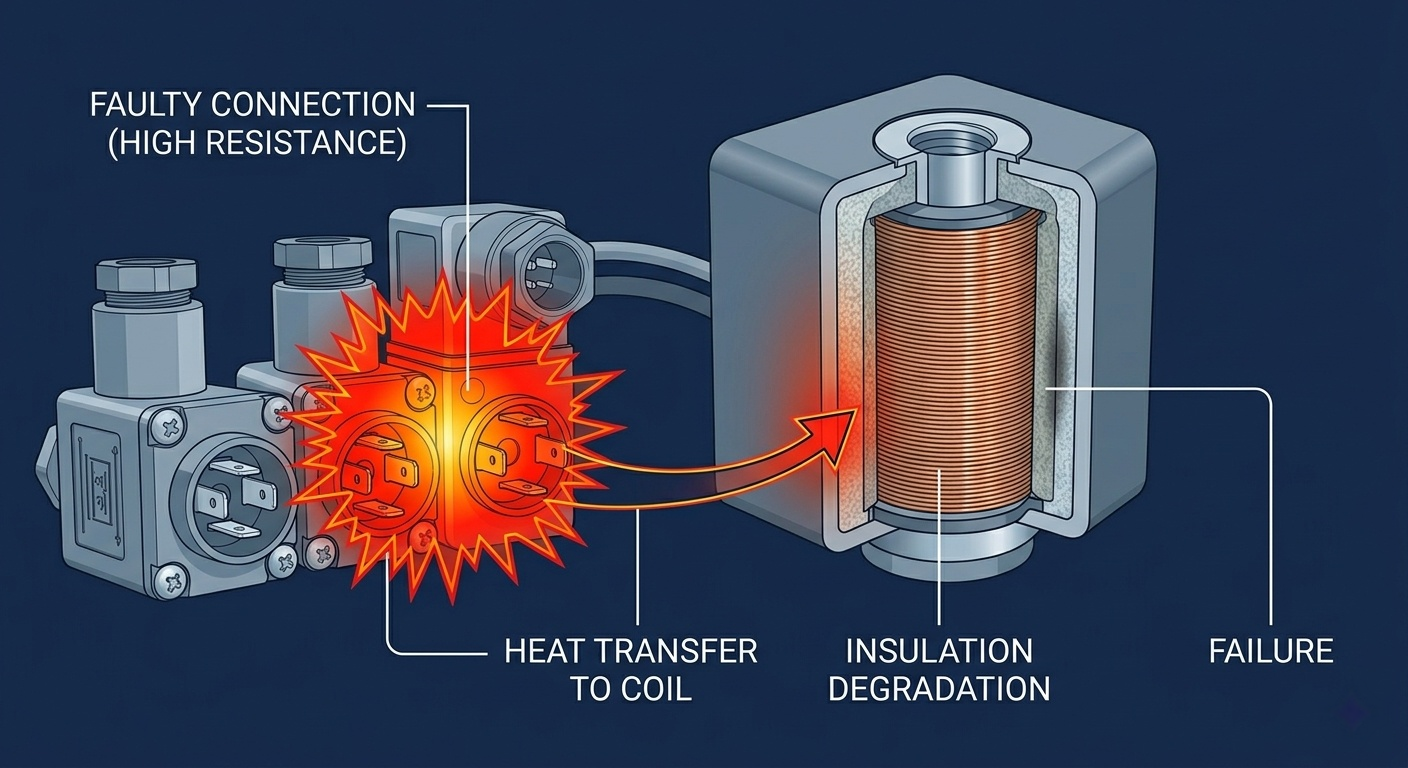
I've said it before: the connector is the gateway for electricity. If that gateway is clogged or unstable, the coil will suffer. Many of the "failed" coils we receive back for analysis are perfectly fine; they were simply starved of proper power because of a faulty connector. This is why we insist on designing the connector and coil as an integrated system.
Performance Degradation: Voltage Drop
Ohm's Law (V=IR) tells us that when resistance (R) goes up, the voltage (V) must drop if the current (I) is to be maintained. A corroded or loose connection adds unwanted resistance to the circuit. This means that by the time the power reaches the coil, the voltage is lower than what the system intended. For a solenoid, lower voltage means a weaker magnetic field. This can result in:
- Slow or incomplete actuation: The valve or plunger doesn't move with the required speed or force.
- Chattering or buzzing: The coil struggles to hold the plunger in place.
- Intermittent operation: The coil works sometimes but not others, depending on temperature and vibration.
Lifespan Reduction: The Damage from Heat
That same extra resistance also generates heat (P = I²R). The power lost at the bad connection turns directly into thermal energy. This localized heat does two terrible things:
- It accelerates corrosion: Heat can speed up the chemical reaction of oxidation, making the bad connection get even worse over time in a vicious cycle.
- It destroys the coil: The heat travels down the wire and into the coil body. Solenoid coils are coated with a thin layer of enamel insulation. This insulation has a specific temperature class. If it's exposed to excessive heat from the connector, the enamel will become brittle, crack, and eventually fail. This leads to a short circuit between the windings, and the coil is permanently destroyed.
In short, a bad connector slowly kills the coil. It first strangles its performance by starving it of voltage, then it cooks it to death with excess heat. If the connector isn't stable, even the best coil is useless.
Conclusion
The connector is not an afterthought; it is a critical component that dictates the performance and reliability of your entire solenoid system. A stable connector ensures a dependable coil.
Understanding the role of solenoid coil connectors can help you troubleshoot equipment failures and improve system reliability. ↩
Learning about unstable resistance can help you identify and prevent issues like heat buildup and signal loss in your equipment. ↩
Learn about the widely-used DIN 43650 connectors, their types, and how they ensure reliable connections in industrial solenoid systems. ↩
Deutsch connectors are ideal for rugged environments; understanding their features can improve your equipment's durability and performance. ↩
Learning about mechanical stress can help you select connectors that resist vibration and physical damage, improving system reliability. ↩
Considering mating cycle frequency helps you choose connectors that withstand repeated use without failure. ↩
Positive locking mechanisms ensure connectors stay secure under vibration, improving reliability in mobile equipment. ↩
Understanding voltage drop can help you diagnose issues like weak actuation and intermittent operation in solenoid systems. ↩
Strain relief prevents physical stress on wires and connectors, reducing the risk of mechanical failure. ↩
Waterproof connectors protect against moisture and dust, making them essential for outdoor or harsh environments. ↩
Knowing about IP ratings can help you select connectors that withstand environmental challenges like water and dust. ↩