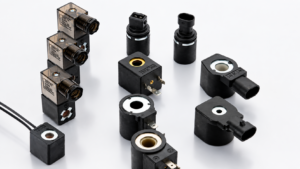

Solenoid Valve Coil Manufacturer: What OEM Buyers Should Know
Finding a reliable solenoid coil supplier is a major headache. A poor choice leads to product failures, warranty claims, and damage to your brand’s reputation.
To select the right solenoid valve coil manufacturer, OEM buyers must look beyond specifications and evaluate the supplier as a risk management partner. Focus on their quality systems (like IATF 16949), custom engineering process, material expertise, verifiable production capacity, and in-house testing capabilities.
The spec sheet only tells you half the story. As a procurement or brand manager, your real job is to protect your brand from the risks of inconsistent quality and supply chain disruptions. After more than 20 years of manufacturing coils for major European brands, I've seen what separates a simple supplier from a true OEM partner. Understanding how to evaluate a reliable custom solenoid coil manufacturing partner is often the first step in reducing sourcing risks. Let's break down the key areas you need to investigate to protect your investment and your brand.
What Technical Certifications (like ISO 9001 or IATF 16949) Should You Demand from a Coil Vendor?
You see certifications listed on every supplier website, but it's hard to know which ones truly matter. Relying on a supplier with only basic certs can hide poor quality control, leading to inconsistent batches.
You should demand ISO 9001 as a baseline for any vendor. For high-volume or critical applications like automotive and appliances, IATF 16949 is far more important.1 Also, verify product-specific certifications like UL, CE, and RoHS to ensure market access and compliance.
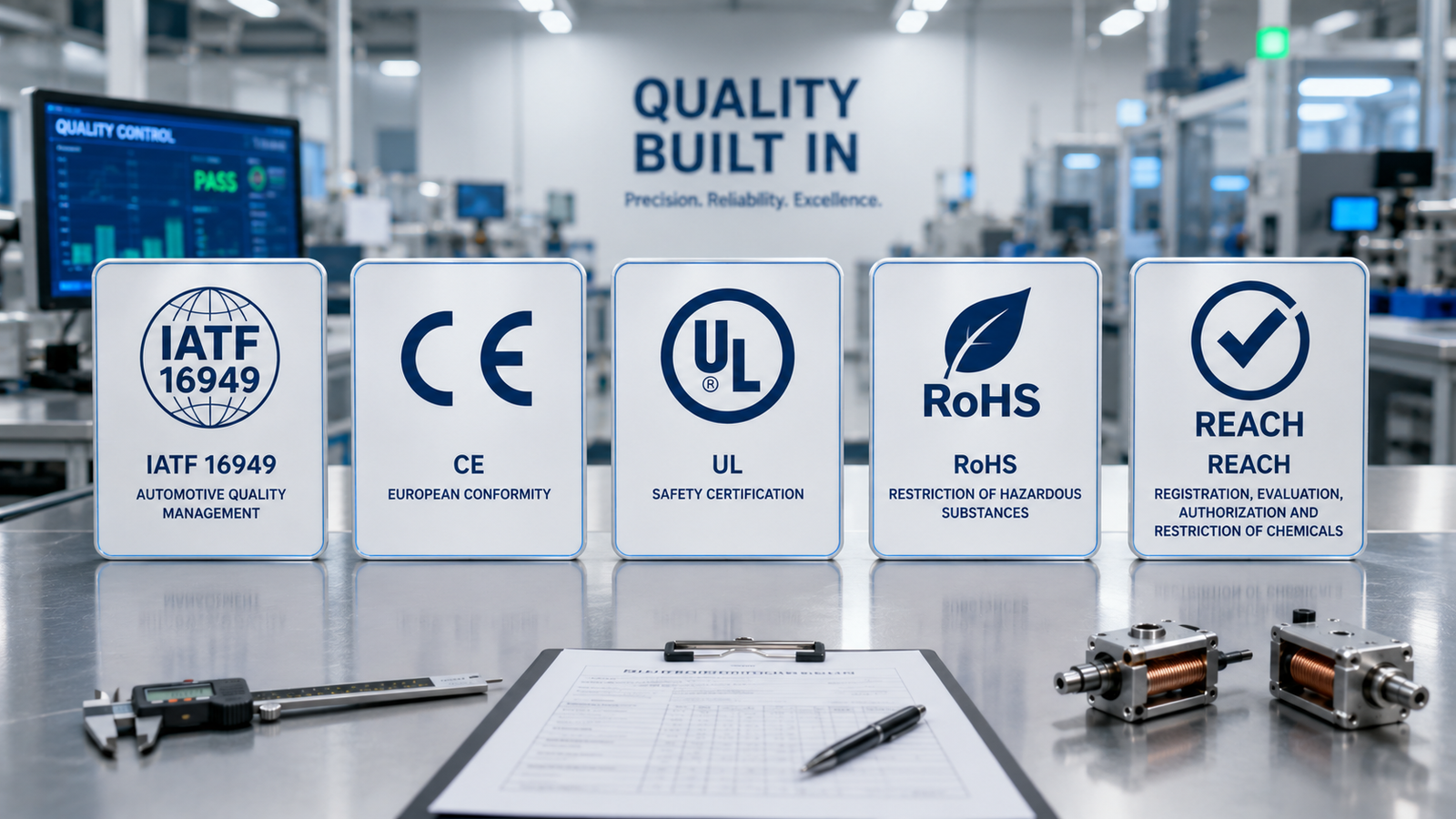
From my experience working with large OEM clients, standard certifications are just the entry ticket. They don’t guarantee quality. The real value lies in the systems behind those certifications. ISO 9001 means a supplier has a documented process.2 That’s good, but it’s not enough. IATF 16949, on the other hand, is a much higher standard developed for the automotive industry. It forces a manufacturer to focus on defect prevention and continuous risk analysis, not just fixing problems after they happen. This is crucial for your brand's reputation.
A key system we use, and one you should ask about, is a Manufacturing Execution System (MES). An MES provides real-time production tracking and traceability.3 If a problem occurs six months from now, a supplier with an MES can trace that faulty coil back to the exact production line, operator, and batch of raw material. This level of control is essential for managing quality at scale.
| Certification | What It Means for You (The Buyer) | Why It Matters for Your Business |
|---|---|---|
| ISO 9001 | The supplier has a documented quality management system. | It's a basic requirement. It shows organization but doesn't guarantee a low defect rate. |
| IATF 16949 | The supplier has an automotive-grade system focused on defect prevention and risk reduction. | This drastically lowers your risk of receiving faulty parts and is a strong indicator of a reliable partner for high-volume production. |
| CE / UL / RoHS | The product itself meets specific safety, performance, and environmental standards. | This is non-negotiable for market access in Europe and North America4 and protects you from compliance liability. |
How Do You Evaluate a Manufacturer's Custom Engineering and Prototyping Capabilities?
Your project has unique requirements, but many suppliers just try to sell you their standard parts. A poorly designed custom solution can fail under real-world stress, forcing you into costly redesigns and delays.
Evaluate a manufacturer’s process, not just their tools. A strong partner asks deep questions about your application's operating environment, duty cycle, and lifespan. Experienced OEM manufacturing partners focus on solving engineering challenges rather than simply supplying standard components. They should suggest material options and provide prototypes for functional testing, acting as a consultant, not just an order-taker.
A key sign of an experienced manufacturer is their willingness to challenge your initial specs. I've had many procurement managers come to us with a request for a specific coil. But after we discuss the application—where the product will be used, how often it will run, and what temperatures it will face—we often realize a different material or winding design would be far more reliable and cost-effective. A simple order-taker would just build what you asked for, leaving you to deal with the risk of failure. A true partner helps you prevent it.
A good OEM/ODM process should follow these steps:
- Discovery: The supplier asks you questions you may not have considered, digging into the "why" behind your specs.
- Design & Simulation: They use their expertise to design a coil optimized for your specific needs, potentially using software to model performance.
- Prototyping: They create physical samples for you to install and test in your actual product. This is where theory meets reality.
- Feedback & Iteration: They work with you to analyze the test results and make adjustments.
This consultative approach is about reducing your risk. Investing time in engineering upfront prevents expensive product recalls and warranty claims down the line.
What Materials and Insulation Classes (Class H vs. Class N) Does the Factory Support?
You're trying to choose between different materials and insulation classes, but the trade-offs aren't always clear. Picking the wrong material can lead to overheating, short circuits, and premature coil failure in the field.
The right choice depends on your product's operating temperature and budget. Class H (180°C)5 is for high-heat environments, while Class F (155°C)6 is a common, cost-effective standard. Discuss your application's specifics with the supplier to find the correct balance of performance and cost.
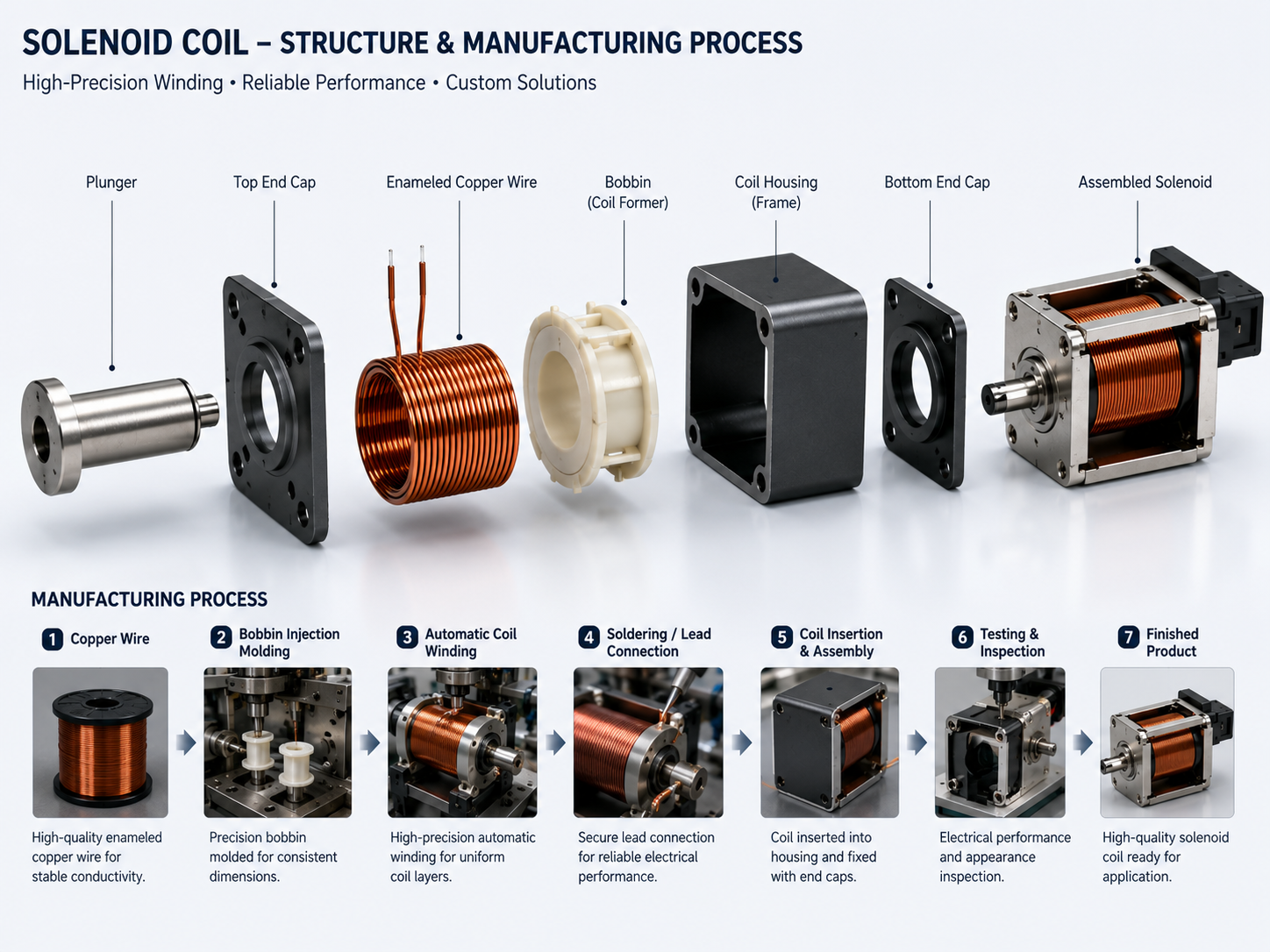
One of the most common mistakes I see from buyers is over-specifying materials to be "safe." For example, a buyer might request a Class H coil for a standard coffee machine. While it sounds safer, the internal temperature of that machine may never exceed 120°C. In this case, a Class F coil would perform perfectly well for a lower cost. A good manufacturer won't just sell you the most expensive option. They will ask about the duty cycle, ambient temperature, and power conditions to recommend the most cost-effective solution. Understanding how a coil's duty cycle impacts its lifespan is critical when evaluating long-term reliability. It's not about the "best" material; it's about the "right" material for your application.
Here is a simple breakdown to guide your discussion with a supplier:
| Insulation Class | Max. Temperature | Common Application | Buyer Consideration |
|---|---|---|---|
| Class F | 155°C (311°F) | General industrial valves, most home appliances. | A reliable and cost-effective standard for a wide range of products. |
| Class H | 180°C (356°F) | Automotive components, heavy-duty industrial machinery. | Higher cost, but necessary for high-heat environments to prevent failure and ensure long product life. |
| Class N | 200°C (392°F) | Specialty industrial or aerospace applications. | Highest performance and cost. Only needed for extreme and demanding temperature conditions. |
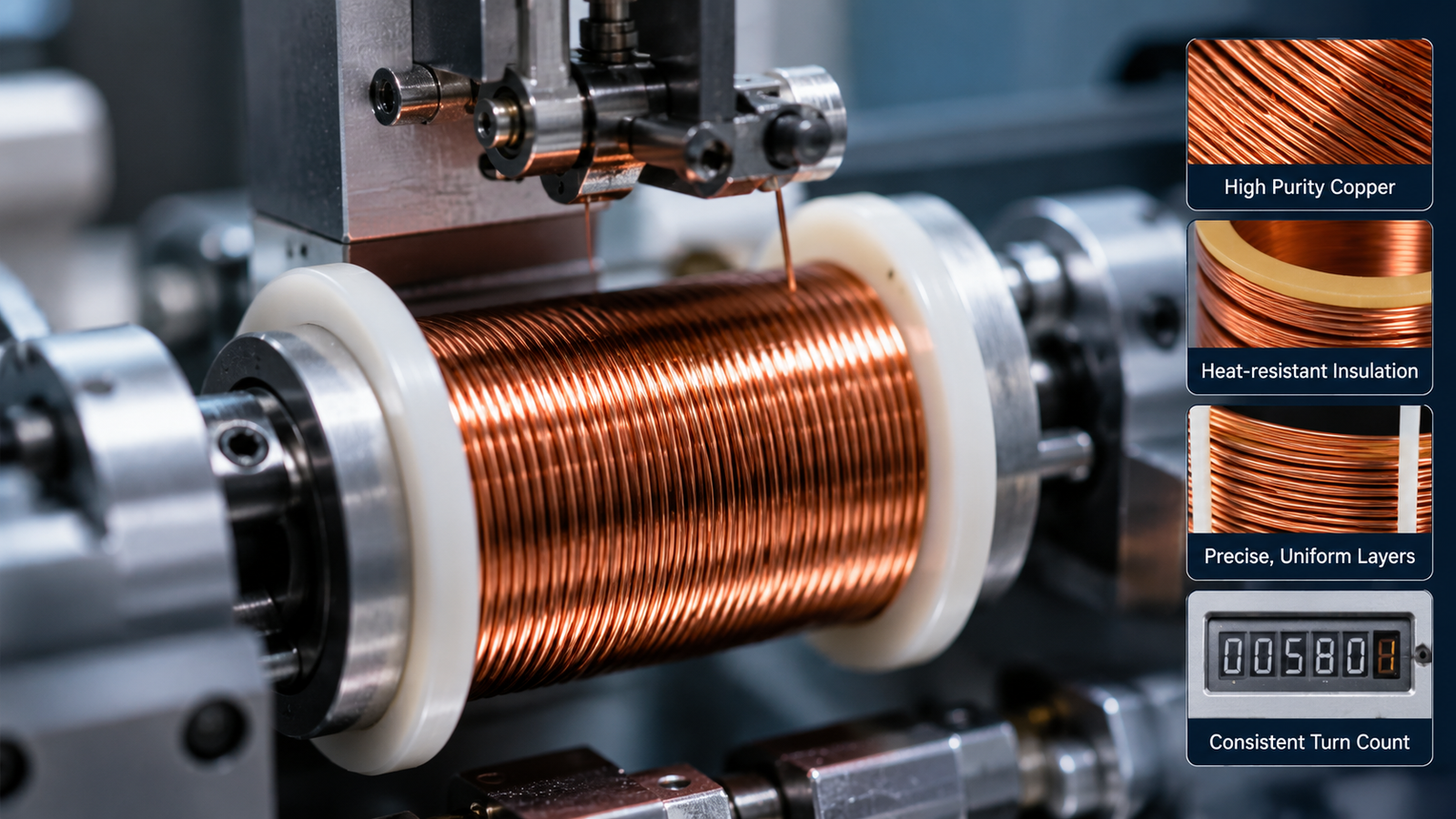
Beyond insulation, ask about the quality of their copper wire and bobbin plastics. High-purity copper and heat-resistant polymers are foundational to a durable coil.
How Can You Verify Mass-Production Capacity, Lead Times, and Minimum Order Quantities (MOQs)?
A supplier promises you fast production and huge capacity, but you have doubts about their ability to scale. If a supplier overpromises and under-delivers, it can halt your entire production line and cause massive shipment delays.
Look beyond the supplier's stated numbers. Ask about the number of production lines, their level of automation, and how many quality control staff they have. For MOQs and lead times, negotiate based on your annual volume and forecast, not just a single purchase order.
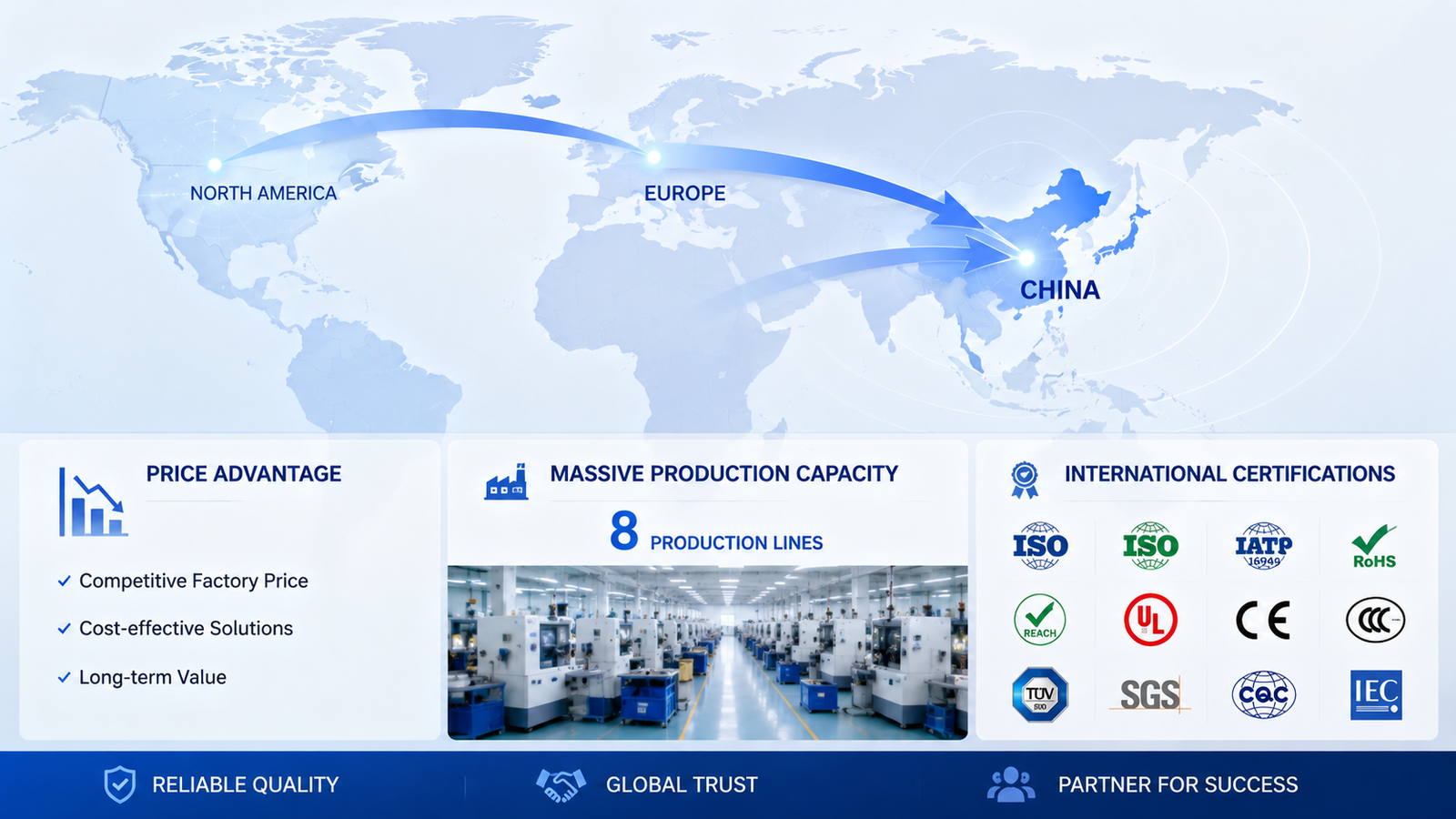
From my experience handling orders for global brands with purchasing volumes over $5 million, production stability is everything. A factory tour, whether virtual or in-person, is essential. You can learn a lot by observing their organization and investment in automation. For example, at our facility, our 8 dedicated production lines are a clear indicator of capacity. But the real assurance for our clients comes from our management systems.
Don't just accept the standard MOQ or lead time. A true partner will be flexible, especially for high-volume buyers. We often work with clients on blanket purchase orders or forecast-based agreements. This allows us to plan our raw material procurement, secure better pricing for you, and guarantee a stable supply chain. A good supplier will have experienced staff who understand international procurement strategies and can work with you as a partner. Finally, ask them about their raw material sourcing. Do they have multiple qualified suppliers for key materials like copper wire? This is a critical part of managing your supply chain risk.
Why Is In-House Testing (like Thermal Cycling and Impulse Voltage Test7s) Essential for a Supplier?
Your supplier says their coils meet all the specifications on paper, but how can you be truly sure they will last? Without rigorous life-cycle testing, hidden defects can cause failures months or years later, creating a nightmare of warranty claims.
In-house testing is critical because it simulates real-world stress and identifies weaknesses before your product ever reaches the customer. This is particularly important for custom solenoid coil products used in demanding industrial, automotive, and appliance applications.Essential tests include thermal cycling, impulse voltage, and salt spray. A supplier who invests in their own lab is seriously committed to quality.
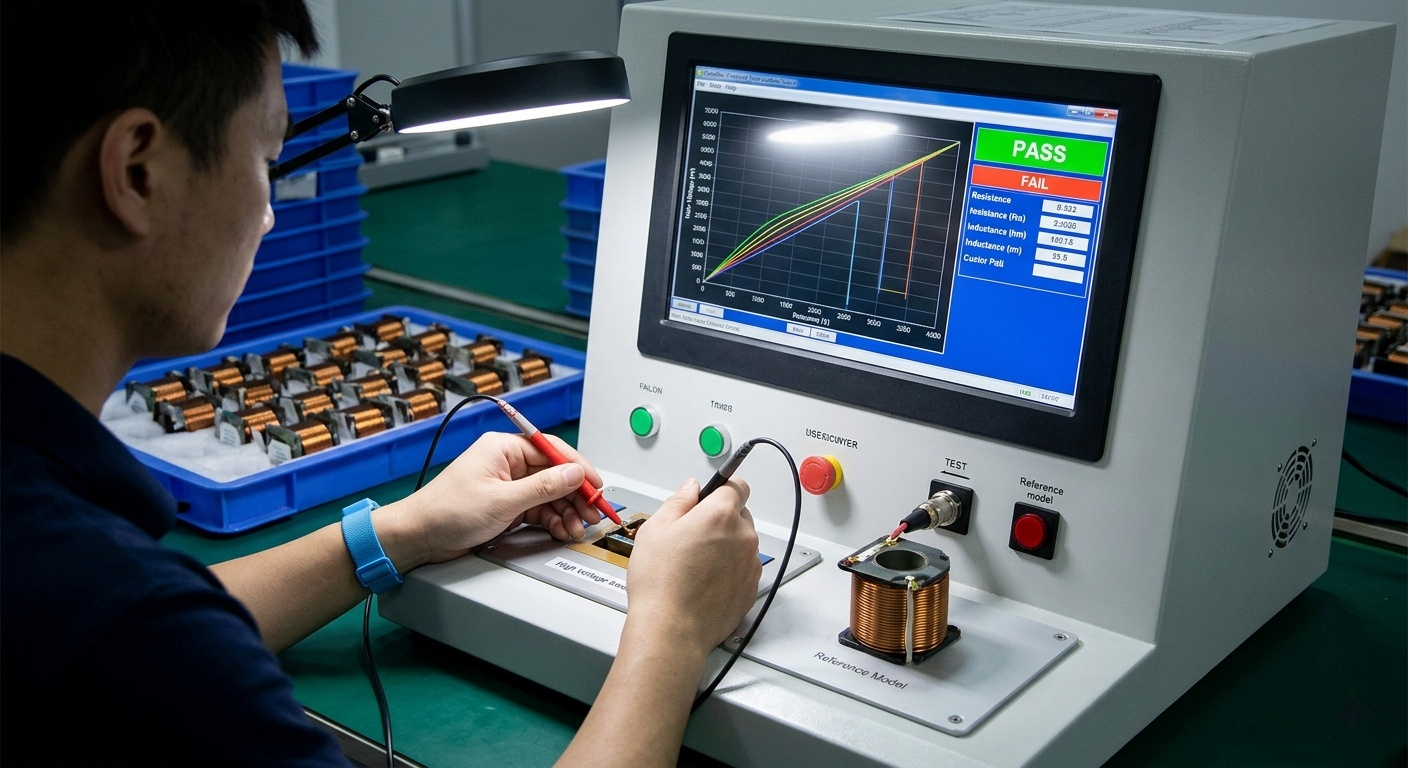
I always tell our OEM clients that quality must be built into a product, not just inspected at the end. A simple 100% outgoing electrical test only catches immediate, obvious failures. It won't find the latent defects8 that cause a coil to fail after 1,000 cycles in a hot engine compartment. That is where in-house reliability testing becomes your best insurance policy. When a supplier has their own lab, they can quickly diagnose and fix issues during the design phase. If they have to send parts to an external lab, it adds weeks to the development timeline and creates a disconnect between testing and engineering.
Here are some key tests a serious manufacturer should be performing in-house:
| Test Type | What It Simulates | Why It's Critical for Your Product's Reliability |
|---|---|---|
| Thermal Cycling Test9 | Rapid temperature swings from the product turning on and off. | Prevents cracks in the coil's plastic housing or winding failures caused by thermal stress. |
| Impulse Voltage Test | Electrical surges and spikes common in real-world power grids. | Ensures the coil's insulation is robust enough to prevent short circuits over its lifespan. |
| Salt Spray Test10 | Exposure to corrosive environments like coastal air or road salt. | Verifies the coil's resistance to corrosion, which is vital for outdoor or automotive applications. |
| Vibration Test11 | Mechanical stress from machine operation or product transport. | Confirms the structural integrity of the coil and its connections. |
Conclusion
Choosing the right manufacturer is about finding a partner in risk management. Look beyond price and focus on their quality systems, engineering process, and in-house testing to ensure long-term reliability.
For pneumatic valve-island and 4V-series coil programs, use the more specific pneumatic solenoid coil manufacturer checklist.
For pneumatic valve-island and 4V-series coil programs, use the more specific pneumatic solenoid coil manufacturer checklist.
Need a Reliable Solenoid Coil Manufacturing Partner?
Whether you need a standard valve coil or a fully customized electromagnetic solution, our engineering team can help evaluate your application requirements, manufacturing goals, and quality expectations.
👉 Explore our solenoid products or contact us to discuss your project.
"IATF 16949 - Wikipedia", https://en.wikipedia.org/wiki/IATF_16949. According to the International Automotive Task Force (IATF), IATF 16949:2016 is the automotive sector’s quality management system standard and emphasizes defect prevention and reduction of variation and waste; this substantiates its relevance in automotive contexts but does not, by itself, establish that it is universally “more important” than other certifications or that it applies to non-automotive sectors such as household appliances. Evidence role: definition; source type: institution. Supports: That IATF 16949:2016 is the automotive sector’s quality management system standard and emphasizes defect prevention and reduction of variation.. ↩
"ISO 9001:2015 - Quality management systems — Requirements", https://www.iso.org/standard/62085.html. ISO describes ISO 9001 as the international standard specifying requirements for a quality management system, including documented processes and documented information necessary for effective operation; this corroborates the claim that ISO 9001 entails a documented QMS, while not guaranteeing any specific defect rate or performance outcome. Evidence role: definition; source type: institution. Supports: That ISO 9001 is a standard specifying requirements for a quality management system, including documented information and processes.. ↩
"Manufacturing execution system - Wikipedia", https://en.wikipedia.org/wiki/Manufacturing_execution_system. Reference descriptions of Manufacturing Execution Systems characterize MES as software that manages and monitors shop-floor operations with real-time data, including traceability and genealogy of production batches; while taxonomy varies by implementation, this substantiates the stated capabilities in general terms. Evidence role: definition; source type: encyclopedia. Supports: That MES systems commonly provide real-time production visibility and traceability/genealogy functionality.. ↩
"Types of products requiring NRTL approval - OSHA", http://www.osha.gov/nationally-recognized-testing-laboratory-program/products-requiring-approval. The European Commission explains that CE marking is mandatory for certain product categories to be placed on the EU market, and the EU RoHS Directive restricts hazardous substances in electrical and electronic equipment as a condition of EU market compliance; by contrast, in the United States, UL is a Nationally Recognized Testing Laboratory (NRTL) whose certifications are widely required by codes and workplace regulations but are not a singular federal legal prerequisite for all products, so the “non‑negotiable” characterization applies strictly to CE/RoHS in the EU and only contextually to UL/NRTL in North America. Evidence role: historical_context; source type: government. Supports: That CE marking and RoHS compliance are legal requirements for applicable products placed on the EU market, contrasted with the more conditional status of UL/NRTL certification in North America.. ↩
"Insulation system - Wikipedia", https://en.wikipedia.org/wiki/Insulation_system. Standard references on insulation thermal classes list Class H at 180°C, consistent with the designations used in IEC 60085; while encyclopedia summaries are secondary, they reflect the prevailing classification values used across industry and standards. Evidence role: definition; source type: encyclopedia. Supports: That thermal Insulation Class H is defined with a 180°C temperature class in widely recognized references.. ↩
"Insulation system - Wikipedia", https://en.wikipedia.org/wiki/Insulation_system. Widely used references on electrical insulation systems show Class F at 155°C, aligning with IEC/NEMA thermal class conventions; although these summaries are secondary sources, they accurately reflect the temperature classes defined in the primary standards. Evidence role: definition; source type: encyclopedia. Supports: That thermal Insulation Class F is associated with a 155°C rating in standard classifications.. ↩
"EN IEC 60034-15:2025 - Impulse Voltage Withstand Levels for Stator", https://standards.iteh.ai/catalog/standards/clc/69d2f9f4-d3cd-43e7-9376-db4406810959/en-iec-60034-15-2025?srsltid=AfmBOoon5LaoV0ZgSRjSn8FAQT8Ge2wfFe6yoND6AYKMBv21WZHeyJ6P. IEC 60034-15 specifies impulse voltage withstand levels for rotating electrical machines to evaluate winding insulation against transient overvoltages, illustrating the role of impulse testing in assessing insulation robustness; while this standard targets motors, the underlying principle applies to coil windings more generally. Evidence role: mechanism; source type: institution. Supports: That impulse/ surge voltage tests are used to assess winding insulation’s ability to withstand transient overvoltages.. ↩
"https://web.fnal.gov/organization/TDNotes/Shared%2...", https://web.fnal.gov/organization/TDNotes/Shared%20Documents/2004%20Tech%20Notes/TD-04-039.pdf. U.S. Department of Defense reliability guidance (e.g., MIL‑HDBK‑344/344A and earlier NAVMAT ESS documents) states that environmental stress screening is intended to precipitate and detect latent defects not revealed by normal inspection or functional tests, supporting the distinction between simple outgoing checks and deeper reliability screening. Evidence role: expert_consensus; source type: government. Supports: That environmental stress screening is used to precipitate latent defects that may not be detected by routine electrical tests.. ↩
"Thermal Cycling - S3VI - NASA", https://s3vi.ndc.nasa.gov/ssri-kb/topics/45/. IEC 60068-2-14 defines change-of-temperature (thermal cycling/thermal shock) tests intended to subject items to temperature transitions that can induce thermal stresses and reveal defects such as cracking or loss of integrity; this supports the stated purpose while not proving outcomes for any specific coil. Evidence role: mechanism; source type: institution. Supports: That standardized temperature change tests are designed to stress products via thermal cycling to reveal weaknesses.. ↩
"Salt spray test - Wikipedia", https://en.wikipedia.org/wiki/Salt_spray_test. References on the salt spray (fog) test explain it is a standardized accelerated method (e.g., per ASTM B117) used to comparatively assess corrosion resistance of materials and coatings, which supports its relevance to environments like coastal exposure; however, results are comparative and do not directly predict field life across all service conditions. Evidence role: mechanism; source type: encyclopedia. Supports: That salt spray (fog) testing is a standardized method to compare corrosion resistance of materials/coatings.. ↩
"IEC 60068 - Wikipedia", https://en.wikipedia.org/wiki/IEC_60068. IEC 60068-2-6 defines standardized vibration tests for evaluating a product’s ability to withstand sinusoidal vibration, supporting the use of vibration testing to assess mechanical robustness; this confirms the test’s role but does not specify performance outcomes for any particular coil design. Evidence role: definition; source type: institution. Supports: That standardized vibration tests (e.g., IEC 60068-2-6) exist to evaluate product resistance to vibration.. ↩