How to Choose a Pneumatic Solenoid Coil Manufacturer?
Choosing the wrong coil partner leads to product failures and high warranty costs. This puts your brand's reputation at risk and creates problems you don't need.
The best pneumatic solenoid coil manufacturer is the one that best fits your specific application, quality systems, and production volume. You should evaluate their engineering support, process controls, and material expertise, not just their price or a basic technical data sheet. It is about de-risking your supply chain. For OEM programs that need more than a catalog coil, see our guide to custom solenoid coil manufacturing services.
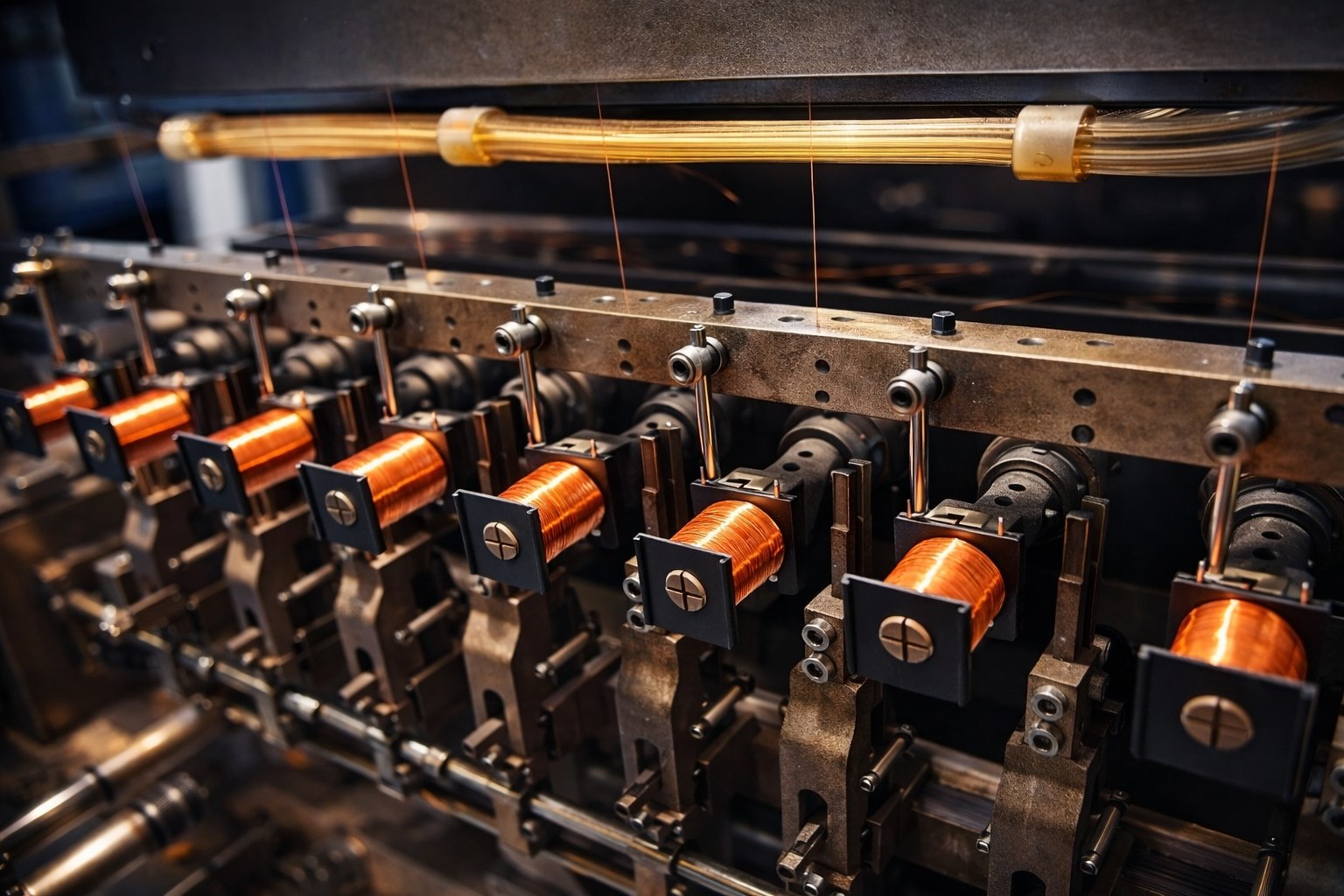
I have been in the solenoid coil manufacturing business for over 20 years. In that time, I have seen many procurement managers make the same mistake. They focus too much on the unit price. They think a cheaper coil saves them money. But they often learn that a cheap component leads to high long-term costs from product failures and warranty claims. Choosing a supplier is not about finding the lowest price. It is about finding a partner who protects your brand and reduces your risks. Let's look at how you can do that.
What Certifications and Quality Standards (like ISO or IATF) Should You Verify?
Your product just failed compliance tests, halting production. The supplier showed you a certificate, but it was not enough. You need a better way to verify their quality claims.
Look beyond basic product certifications like CE or UL. You must verify their process quality certifications, such as ISO 9001 or IATF 169491. These standards show a commitment to consistent manufacturing, not just a one-time product test.
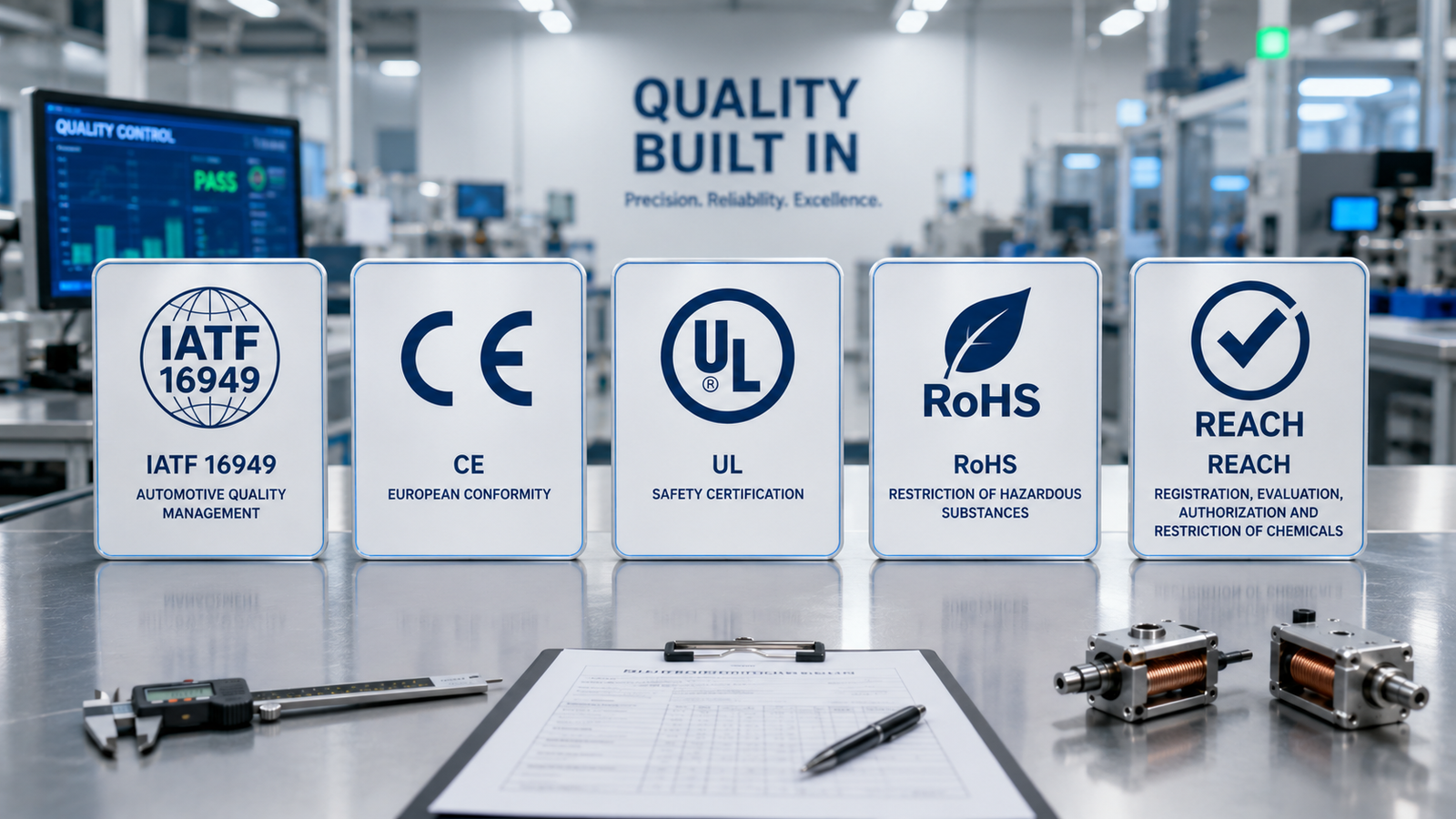
Procurement managers often ask me if our products are UL or RoHS compliant. Of course, they are. These product-level certifications are the ticket to entry for any serious manufacturer. But they don't tell the whole story. They prove a product sample passed a test once. They do not guarantee that the ten-thousandth coil will have the same quality as the first.
This is where you need to dig deeper. Ask about their quality management systems.
Product vs. Process Certifications
A good partner has certifications for both their products and their processes. Process standards like ISO 9001 show that the manufacturer has a robust system for maintaining quality over time. For industries like home appliances, IATF 16949 is even better. It is a more demanding standard from the automotive industry that focuses heavily on risk reduction and process control.
The Importance of Traceability
You should also ask about traceability. Do they use a Manufacturing Execution System (MES)2? An MES tracks every component and process step for every single coil they produce. If a problem ever occurs, they can trace it back to the exact batch of raw material or the specific machine operator. This is not just a nice feature. It is a powerful risk management tool that saves you time and money when troubleshooting field failures.
| Standard Type | Examples | What It Tells You |
|---|---|---|
| Product Certification | CE, UL, RoHS, REACH | The product sample meets specific safety and material standards. |
| Process Certification | ISO 9001, IATF 16949 | The manufacturer has a system to produce consistent quality. |
| Internal System | MES (Traceability) | The manufacturer can track and control every step of production. |
A certificate is a starting point, not the finish line. Evidence of strong process control is what separates a simple vendor from a true quality partner.
How Do You Evaluate a Manufacturer’s Prototyping and Custom Winding Capabilities?
You have a unique product design, but off-the-shelf coils do not fit or perform correctly. This limitation is delaying your market launch. You need a partner who can build to your exact needs.
Assess their in-house engineering team and their experience. A true OEM/ODM partner collaborates with you on the design to prevent future failures. They do not just build to the print you provide.
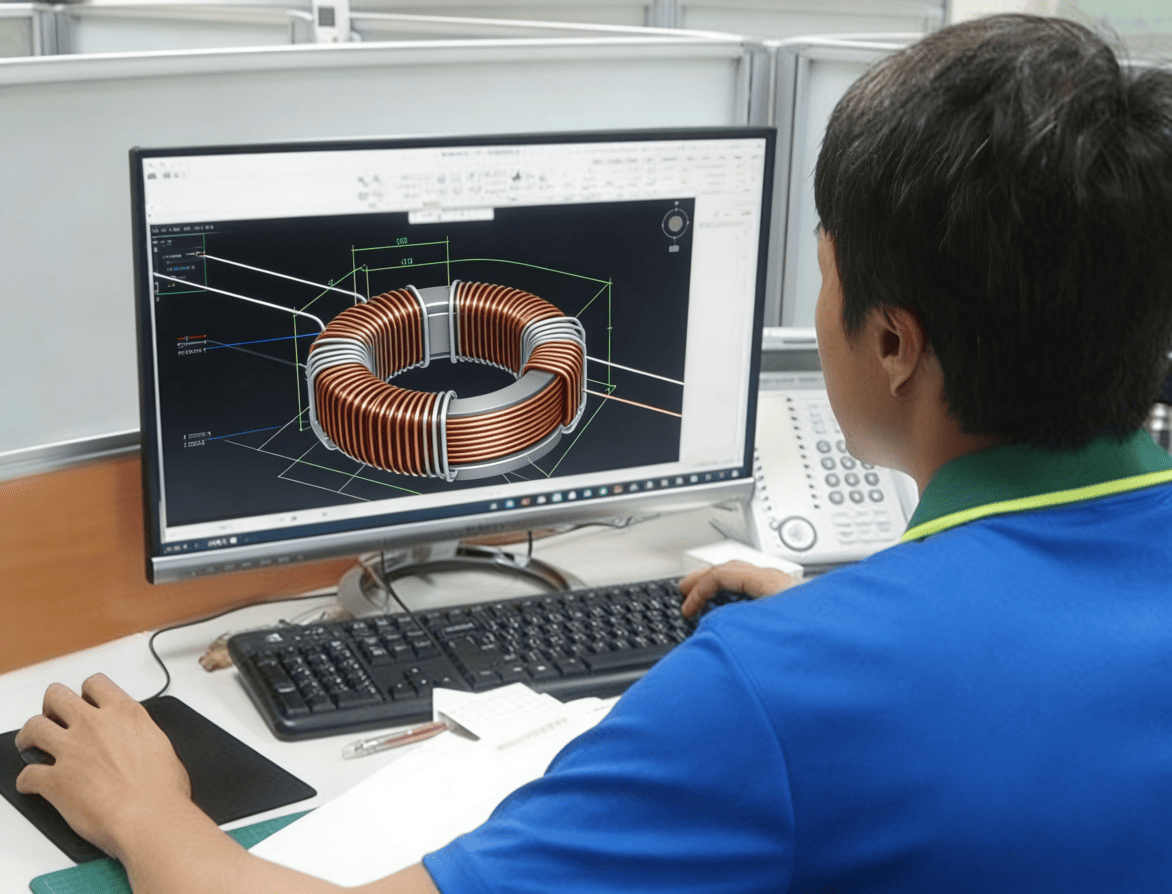
Many manufacturers say they offer OEM or ODM services. But often, this just means they can change the coil's dimensions or wire length. That is not enough. True customization capability goes much deeper. It is about a partnership with the manufacturer's engineering team.
I always tell new clients, "Don't just send us a drawing. Tell us where this coil will live." The most important questions are about the application. Will the coil be in a hot and humid coffee machine? Will it experience high vibration in a washing machine? The answers change everything about the design, from the material of the bobbin to the type of insulation on the wire.
Beyond the Blueprint
A good engineering team will not just accept your specs. They will challenge them. They will ask questions to understand the functional requirements and potential failure points. This collaborative process is where real value is created. It is how we prevent problems before they happen.
Key Questions for an OEM/ODM Partner:
- What is your team's experience with applications like mine?
- Can you advise on material selection to improve performance or reduce cost?
- How do you validate your custom designs against environmental stress (e.g., heat, moisture, vibration)?
- What is your process for creating and testing prototypes?
Evaluating a manufacturer's engineering support is a way to reduce risk. They should act as an extension of your own R&D team. This partnership ensures the final product is not just built to spec, but built for long-term success in the market.
What Materials and Insulation Classes Does the Manufacturer Offer for Harsh Environments?
Your solenoid coils are failing prematurely in the field. The cause is heat or moisture, something the spec sheet said the coil could handle. Now you are facing the high cost of recalls.
Ask about specific material grades and insulation classes, like Class F or H. The materials must be proven to work in your product's real-world environment, not just in a sterile lab test.
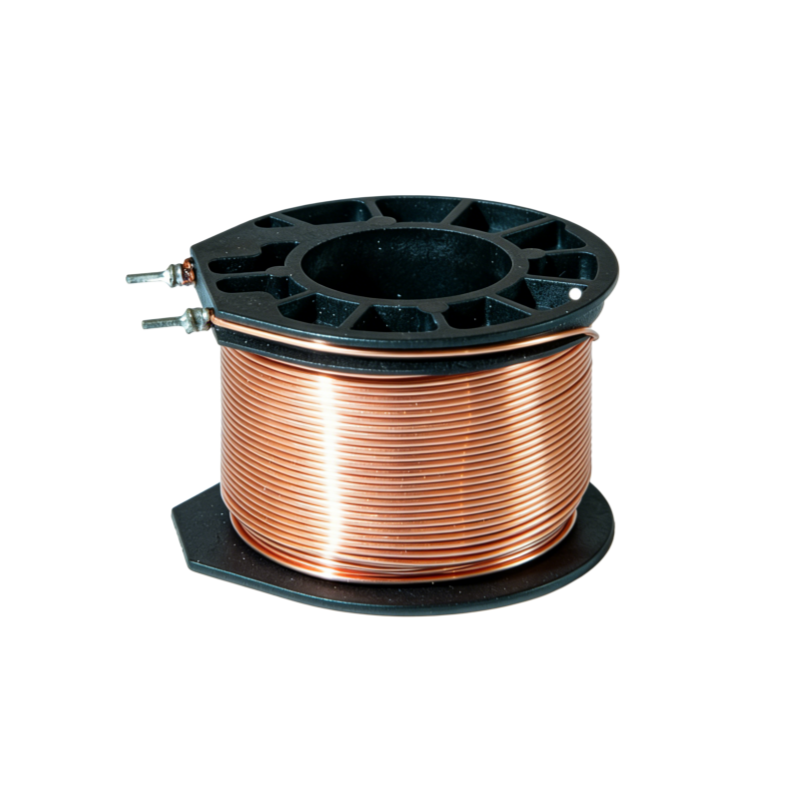
A common mistake I see is buyers comparing coils based only on a spec sheet. A spec sheet might say a coil has a Class F temperature rating of 155°C3. But that number means very little without context. The real test is how that coil performs inside your product, surrounded by other components, running for thousands of cycles.
The materials used are critical. For example, we only use high-purity copper wire. It costs more than lower-grade wire, but it has better conductivity. This means it generates less heat, which directly translates to a longer life and better energy efficiency for your appliance. The plastic bobbin is also important. In a coffee machine that produces a lot of steam, a standard plastic will degrade over time. We would recommend a specific polymer that is resistant to both heat and moisture.
Matching Insulation to the Application
The insulation class tells you the maximum temperature the coil can safely withstand. You need to choose a class that provides a safe margin for your application's operating temperature.
| Insulation Class | Max Temperature | Common Home Appliance Applications |
|---|---|---|
| Class B | 130°C | General use, low-heat appliances |
| Class F | 155°C | Washing machines, dishwashers, coffee makers |
| Class H | 180°C | Ovens, dryers, high-duty cycle equipment |
A good manufacturer will not just sell you a coil. They will help you select the right combination of copper, plastic, and insulation to ensure your product survives in its intended environment. This focus on application-specific materials is key to lowering your warranty costs.
How Can You Assess Production Capacity, Lead Times, and Minimum Order Quantities (MOQs)?
Your current supplier cannot keep up with your demand, causing production line stoppages. Their large MOQs also tie up your cash in inventory. You need a more flexible and scalable partner.
Tour the factory, either in person or through detailed videos. Verify the number of production lines and ask about their scalability. Discuss their typical lead times and how they manage supply chain disruptions4.
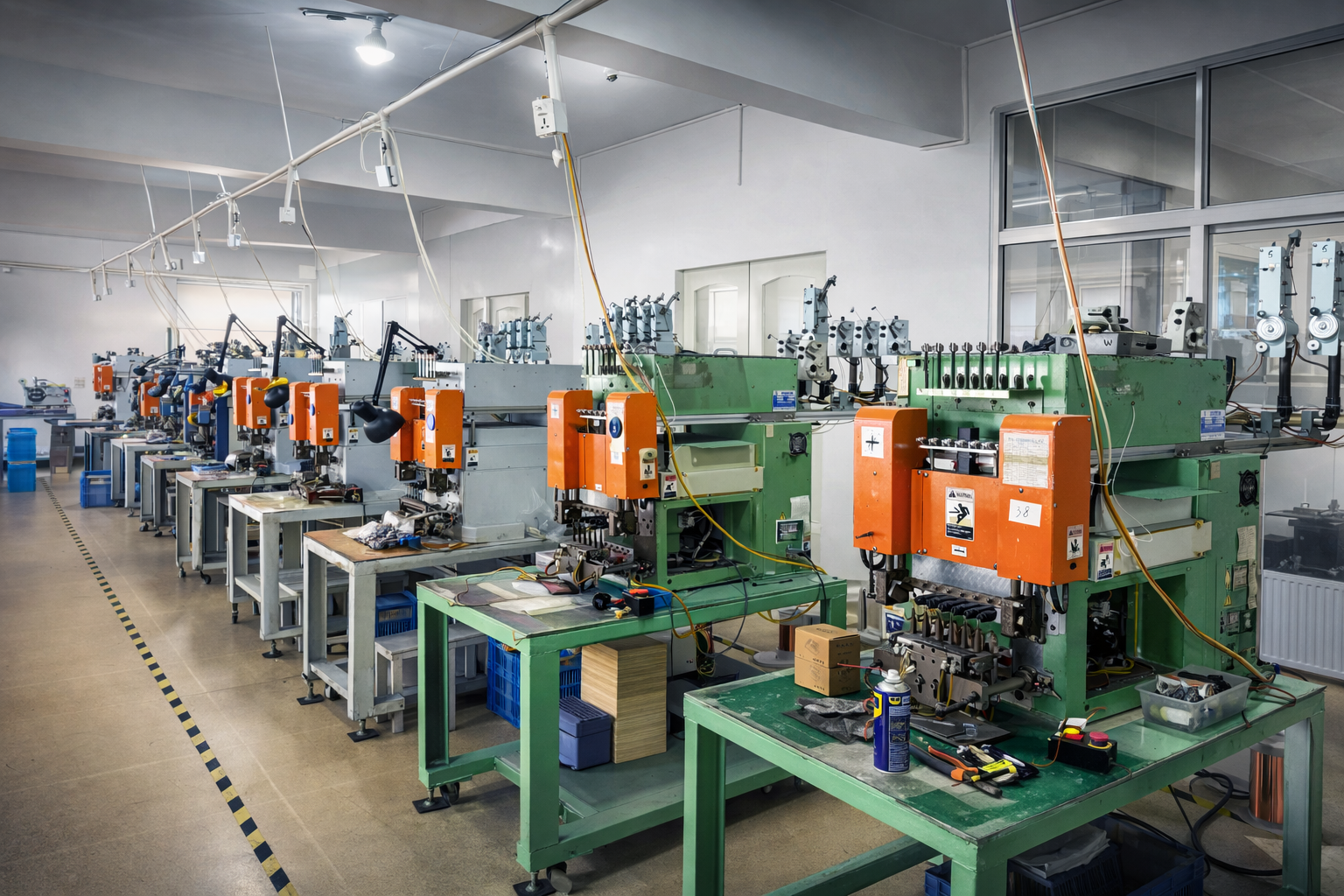
For a brand or procurement manager with millions in annual purchasing, supply chain stability is everything. A buyer for a major appliance brand once told me his biggest fear was not a price increase, but a line-down situation because of a component shortage. That is why assessing a manufacturer's operational capabilities is just as important as evaluating their product quality.
When you evaluate a potential partner, look for signs of a robust production system. How many production lines do they operate? Are they automated? Do they have dedicated quality control staff for each line? At our factory, we run 8 production lines to ensure we can handle high-volume orders and still have the flexibility for custom projects.
Look for Systems, Not Just Machines
The best manufacturers have systems in place to manage their capacity and supply chain.
- Production Capacity: Ask about their output per day or week. More importantly, ask how they would scale up to meet a sudden increase in your demand.
- Lead Times: Get clear commitments on lead times for both standard and custom orders. Ask how they mitigate risks like raw material shortages or shipping delays.
- MOQs: A good partner should be flexible. They should be able to support large-scale production while also accommodating smaller runs for new product introductions or specialized models.
Do not be afraid to ask for details. A confident and capable manufacturer will be transparent about their operations. This transparency is the foundation of a reliable, long-term supply chain partnership.
Why Is Technical Support and Failure Analysis Critical When Selecting a Coil Partner?
A batch of your products is failing in the market. The coil is the suspected cause. Your supplier is unresponsive or just says the part is "within spec." You are left to solve a costly problem alone.
A true partner provides expert post-sales support. They should have an engineering team ready to help diagnose issues, even if the problem is in your system. This collaboration reduces long-term costs and improves future designs.
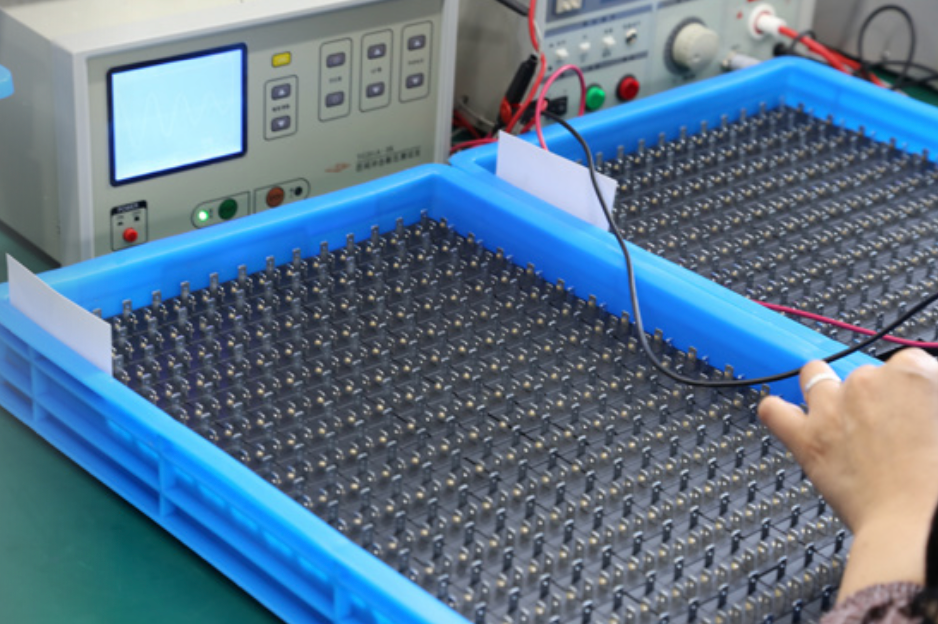
No component is perfect, and sometimes failures happen. The real test of a supplier is what they do when things go wrong. A cheap vendor will disappear or blame your design. A strategic partner will roll up their sleeves and help you find the root cause.
Over my career, I've learned that most coil "failures" are actually system-level problems. The coil is just the symptom. The root cause might be an unexpected voltage spike5 from another component, or higher-than-expected ambient heat inside the product enclosure. A good manufacturer understands this. Their technical support team should be able to perform a thorough failure analysis. This means they will ask for the failed unit and test it within the context of your entire product.
Turning Failures into Improvements
This kind of support is not about assigning blame. It is about collaborative problem-solving.
- Identify the Problem: Is the coil truly faulty, or is it an issue with the system's design or operating environment?
- Find the Root Cause: The engineering teams work together to understand why the failure occurred.
- Implement a Solution: This could involve modifying the coil design, changing materials, or suggesting an adjustment to your product's design.
This process does more than just fix the immediate issue. It provides valuable data that can be used to make all your future products more reliable. When you select a manufacturer, you are not just buying a part. You are choosing a partner. Make sure you choose one who will be there to support you long after the sale is complete.
Conclusion
Choosing the right coil manufacturer means finding a strategic partner. This partner will help you reduce risk, ensure consistent quality, and support your brand's reputation in the market.
"IATF 16949 - Wikipedia", https://en.wikipedia.org/wiki/IATF_16949. The International Automotive Task Force (IATF) describes IATF 16949:2016 as the automotive quality management system standard aligned with ISO 9001 that promotes risk-based thinking, defect prevention, and reduction of variation and waste via process control. Evidence role: definition; source type: institution. Supports: That IATF 16949:2016 is the automotive QMS standard aligned with ISO 9001, stressing defect prevention and reduction of variation and waste through process control.. ↩
"What is an manufacturing execution system (MES)? - SAP", https://www.sap.com/resources/what-is-mes. Reference descriptions of manufacturing execution systems define MES as software that controls and monitors production on the shop floor, including tracking of materials and process steps to provide traceability. Evidence role: definition; source type: encyclopedia. Supports: That an MES monitors and controls shop-floor production, including tracking materials and process steps for traceability.. Scope note: Specific MES features vary by implementation and industry. ↩
"Insulation system - Wikipedia", https://en.wikipedia.org/wiki/Insulation_system. Thermal classification tables for electrical insulation systems list Class F as having a maximum temperature of 155°C. Evidence role: definition; source type: encyclopedia. Supports: That Class F is commonly defined as 155°C in thermal classifications of electrical insulation systems.. Scope note: Application of thermal classes depends on the complete insulation system and relevant product standards. ↩
"Reducing the Risk of Supply Chain Disruptions", https://sloanreview.mit.edu/article/reducing-the-risk-of-supply-chain-disruptions/. Academic analyses in supply chain management report that disruptions in inbound components can halt production lines and create substantial operational costs, highlighting the need for resilience and continuity planning. Evidence role: general_support; source type: education. Supports: That disruptions in component supply can halt production and impose high operational costs, motivating resilience planning.. Scope note: The severity and cost of line stoppages are highly context-dependent across industries and firms. ↩
"Inductor kickback - Spinning Numbers", https://spinningnumbers.org/a/inductor-kickback.html. Engineering references describe inductive kickback: when current through an inductor is suddenly reduced or interrupted, the collapsing magnetic field induces a high-voltage spike that can stress insulation and components unless suppression is used. Evidence role: mechanism; source type: encyclopedia. Supports: That interrupting current in an inductor can cause a high-voltage spike due to the collapsing magnetic field.. Scope note: Spike magnitude and effects depend on the specific circuit and protective measures. ↩