
Why Doesn’t My Solenoid Valve Release? Common Causes of Residual Magnetism
Your solenoid valve is stuck, causing production delays or product failures. This frustrating issue can damage your brand's reputation and lead to costly warranty claims. Understanding the root cause is key.
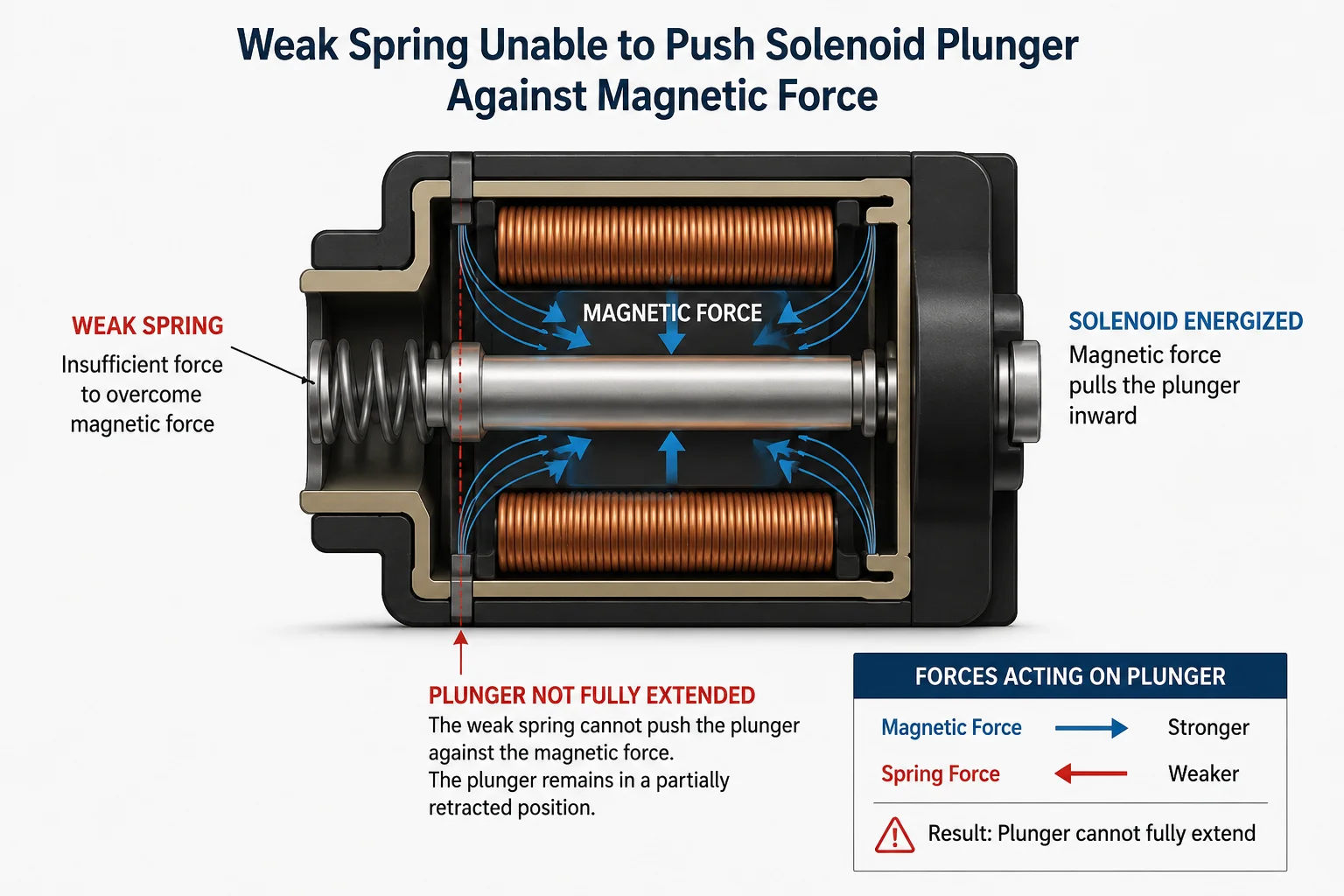
A solenoid valve fails to release due to residual magnetism, where the plunger stays magnetized after the power is off. This leftover magnetic force is stronger than the return spring, causing it to stick. This is often a symptom of a mismatch between the valve and its application.
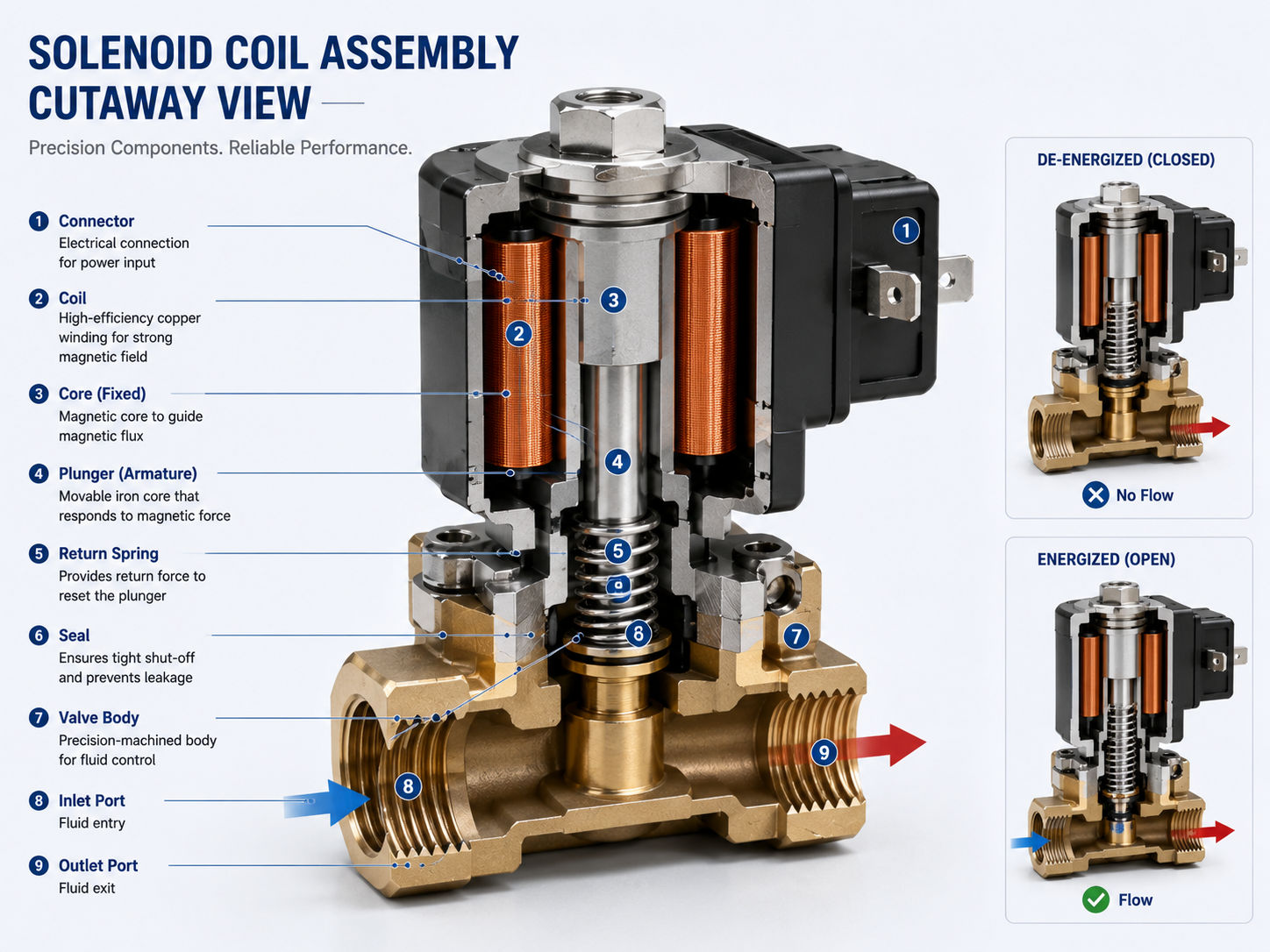
This is a common question we hear from procurement managers. The simple answer is "residual magnetism," but that is not the whole story. The problem is usually not in the component itself, but in the selection process. To truly reduce procurement risk for your brand, you need to ask why the residual magnetism is happening in your specific case. A reliable supplier should help you diagnose the application, not just sell you a standard part. Let's break down the factors you should consider to ensure you select the right component from the start.
What Is Residual Magnetism and Why Does It Cause a Solenoid Valve to Stick?
You're told "residual magnetism" is the problem, but the term is vague. Without understanding it, you can't properly evaluate a supplier's solution or prevent future failures.
Residual magnetism, or remanence, is the magnetic field left in a material after you turn off the power.1 If this leftover magnetic force is stronger than the valve's return spring, the plunger won't retract.2 This causes the valve to stick in place.
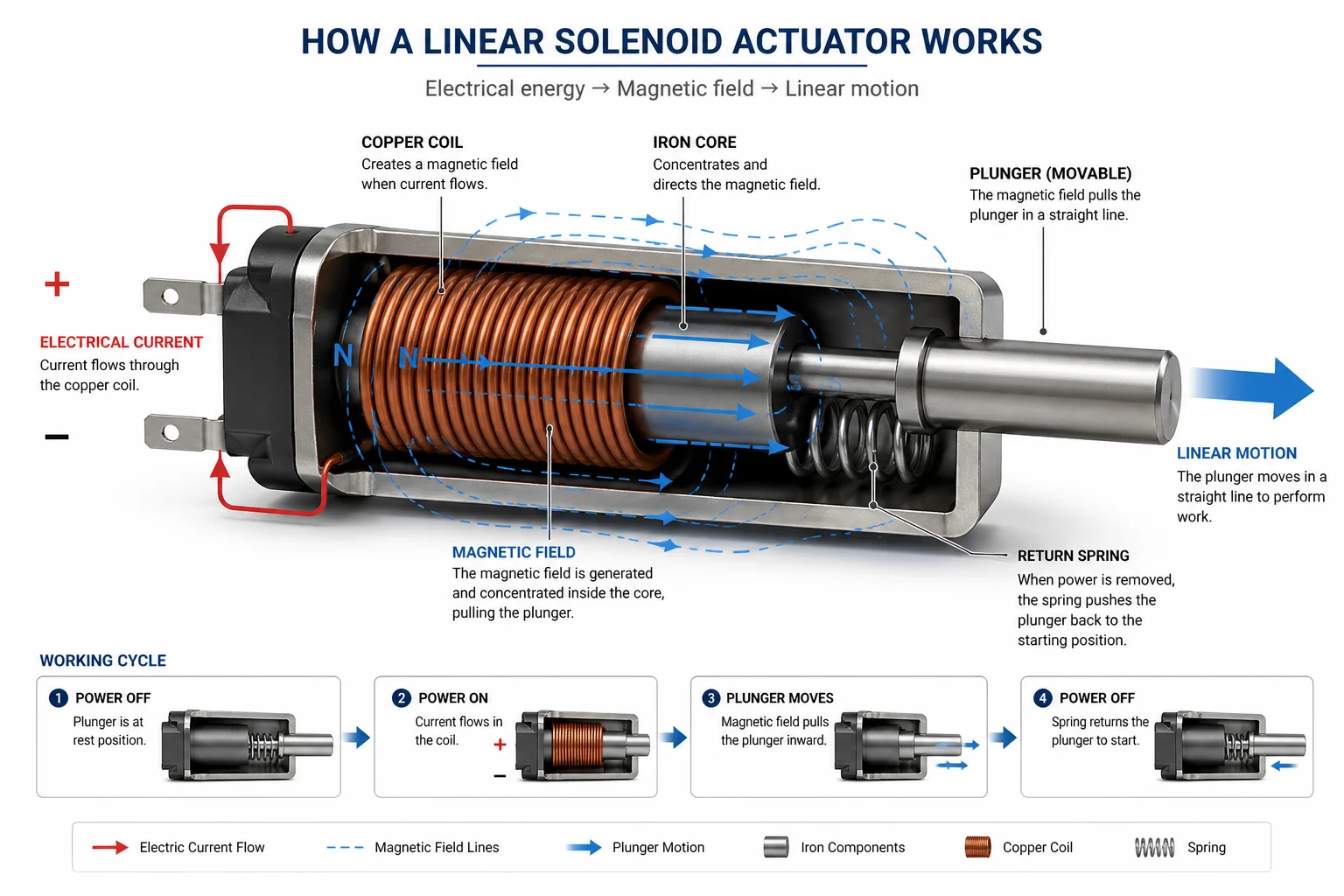
From our experience with OEM projects for European appliance brands, the conversation about residual magnetism often gets too technical, too fast. For a procurement manager, it’s not about becoming an expert in magnetic fields. It’s about understanding risk. Think of it this way: certain iron-based materials are used for the plunger because they need to be magnetic to make the valve work. But this property also means they tend to hold onto a little bit of that magnetism. This leftover magnetism is called remanence.
The Balancing Act of Material Selection
The key is managing this effect. A material's resistance to being demagnetized is called coercivity.3
| Material Property | Implication for Solenoid Valve | Procurement Risk |
|---|---|---|
| Low Remanence | Plunger releases quickly and reliably. | Lower risk of sticking. |
| High Durability | Withstands mechanical wear and tear. | Longer product life, fewer warranty claims. |
| Low Cost | Reduces overall bill of materials. | Improves unit margin. |
A supplier’s job is to balance these factors for your specific application. A material perfect for a low-cycle medical device will fail in a high-frequency industrial machine. Choosing the right solenoid coil for the operating environment is just as important as selecting the right valve material. The right question for a supplier is not "what is your best material?" but "what material do you recommend for my specific duty cycle and environment, and why?"
How Does Mechanical Stress from Machining Increase the Coercivity of Stainless Steel Parts?
You chose a high-quality material, but your solenoid valves are still failing. You suspect a manufacturing defect, but the supplier claims the part is within spec. This erodes trust.
Machining, stamping, or forming stainless steel parts for a solenoid introduces mechanical stress. This stress distorts the material's crystal structure, making it harder to demagnetize (increasing its coercivity).4 This results in higher residual magnetism and a greater chance of sticking.
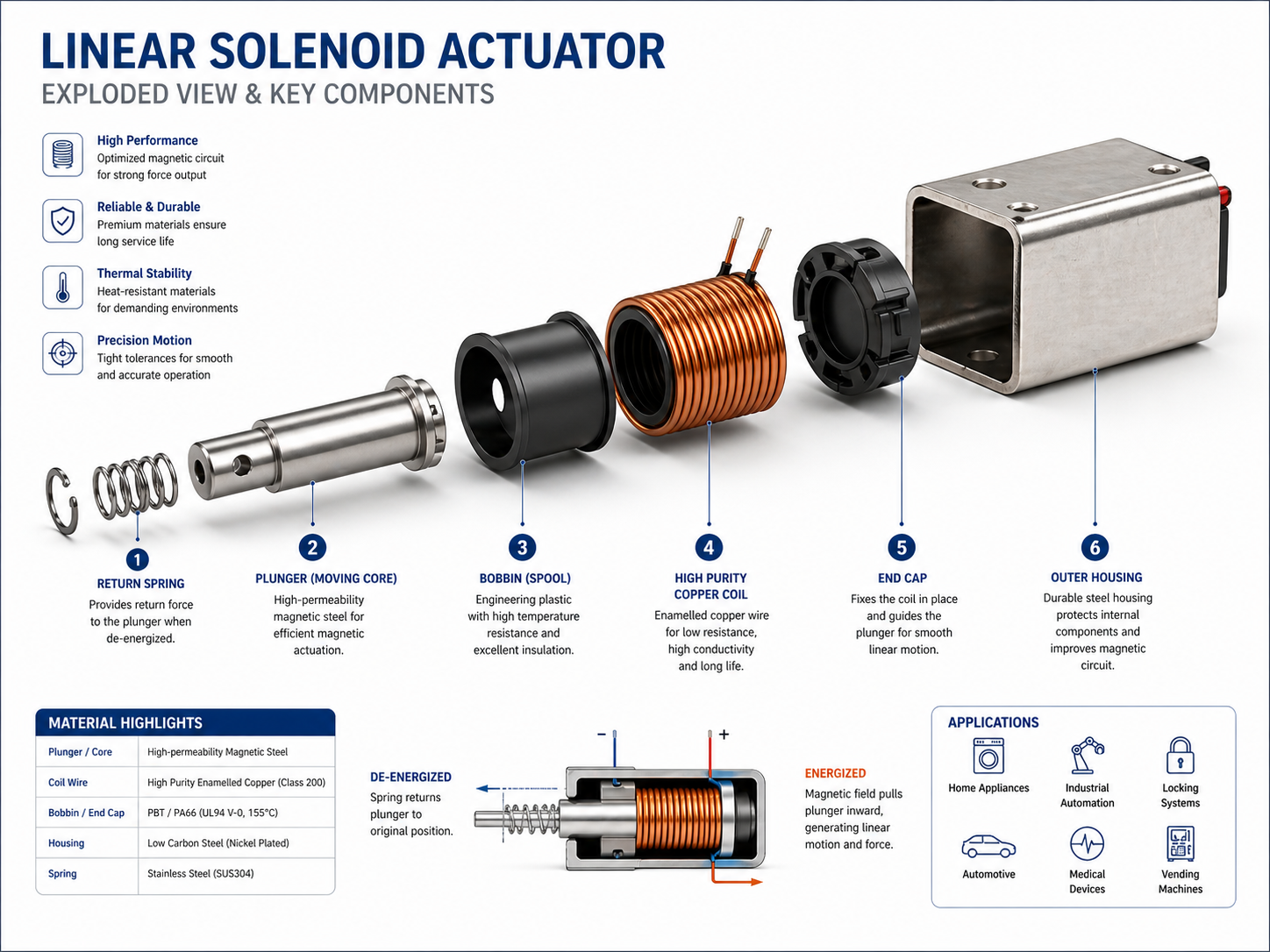
This is a detail that separates experienced manufacturers from simple assemblers. The raw material, like 430FR stainless steel, might have excellent magnetic properties on paper. But the moment you start cutting, bending, or shaping it, you change those properties. This is called work hardening. It introduces stress into the material’s structure. These stress points make it much more difficult for the part to lose its magnetic charge when the power is turned off.
Manufacturing Process vs. Material Spec
As a procurement manager, you are responsible for the final product's quality. You can’t just rely on the material datasheet. The manufacturing process itself is a critical quality checkpoint. A low-cost supplier might save money by using aggressive machining techniques or skipping stress-relief steps. This delivers a part that technically matches the drawing but is far more likely to fail in the field due to high residual magnetism. This is why we always emphasize process control. A reliable partner should be able to explain how their manufacturing process minimizes mechanical stress to ensure consistent magnetic performance from batch to batch.
Why Is Your Return Spring Failing to Overcome the Solenoid's Remanent Force?
The simple fix seems to be a stronger spring, but it's not working. Or worse, a stronger spring requires a more powerful coil, increasing the valve's cost, size, and heat output.
A return spring is designed to overcome a specific, calculated remanent force.5 If residual magnetism is higher than expected—due to material choice, stress, or operating conditions—the pre-selected spring will not be strong enough. Simply increasing spring force is often the wrong solution.
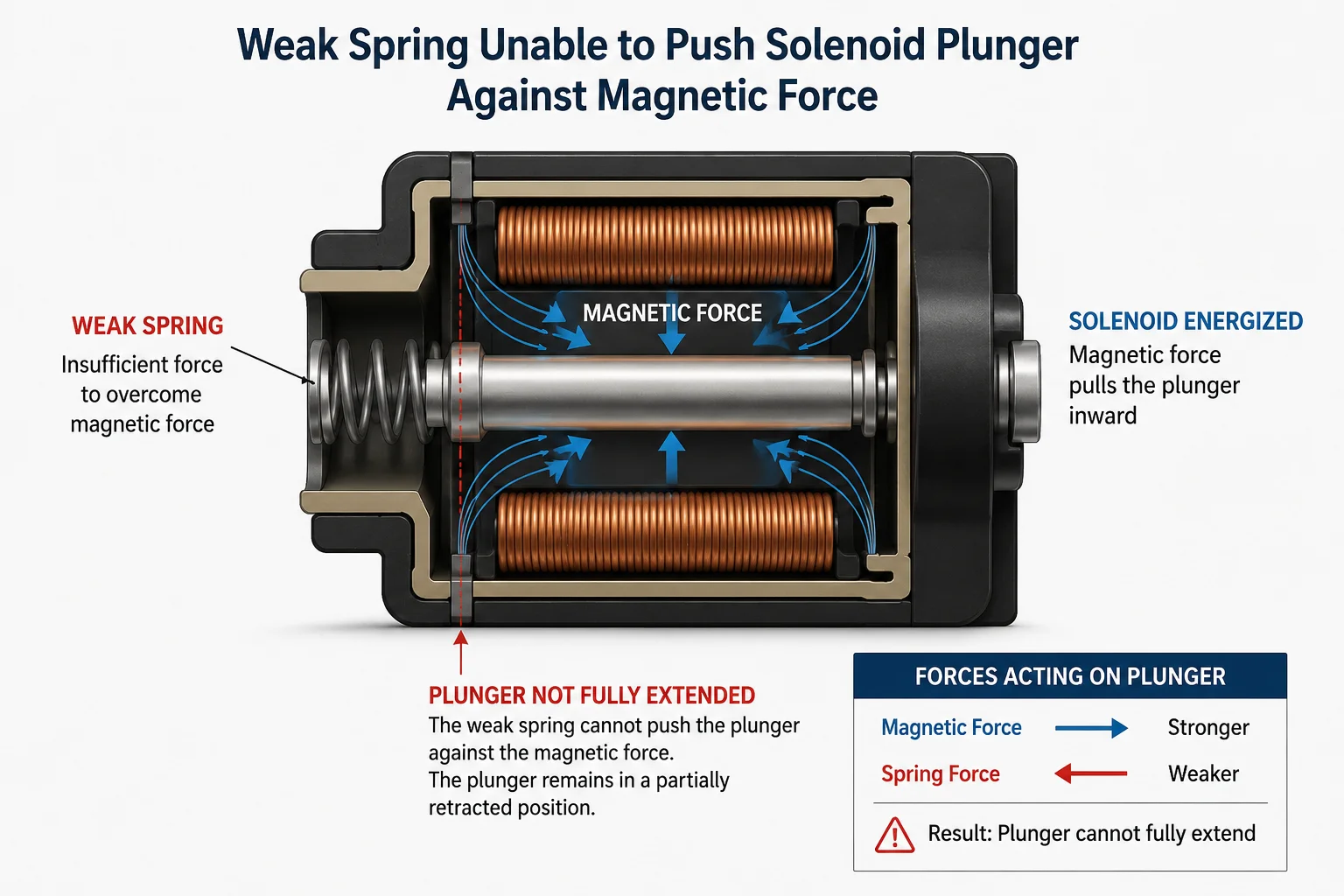
When we get a call about a sticking valve, one of the first things we ask about is the system itself. A solenoid valve is a balanced system. The coil's force pulls the plunger in, and the spring's force pushes it out. They are designed to work together against a known amount of residual magnetism. If the remanence is higher than planned, the spring will fail.
The Spring Is Only Half of the Equation
Trying to fix this by just demanding a stronger spring creates a domino effect of problems.In many OEM projects, redesigning the custom solenoid coil is often a more effective solution than simply increasing spring force.
| Action | Consequence | Impact on Your Product |
|---|---|---|
| Increase Spring Force | Needs more power to overcome the new spring.6 | Requires a larger, more powerful coil. |
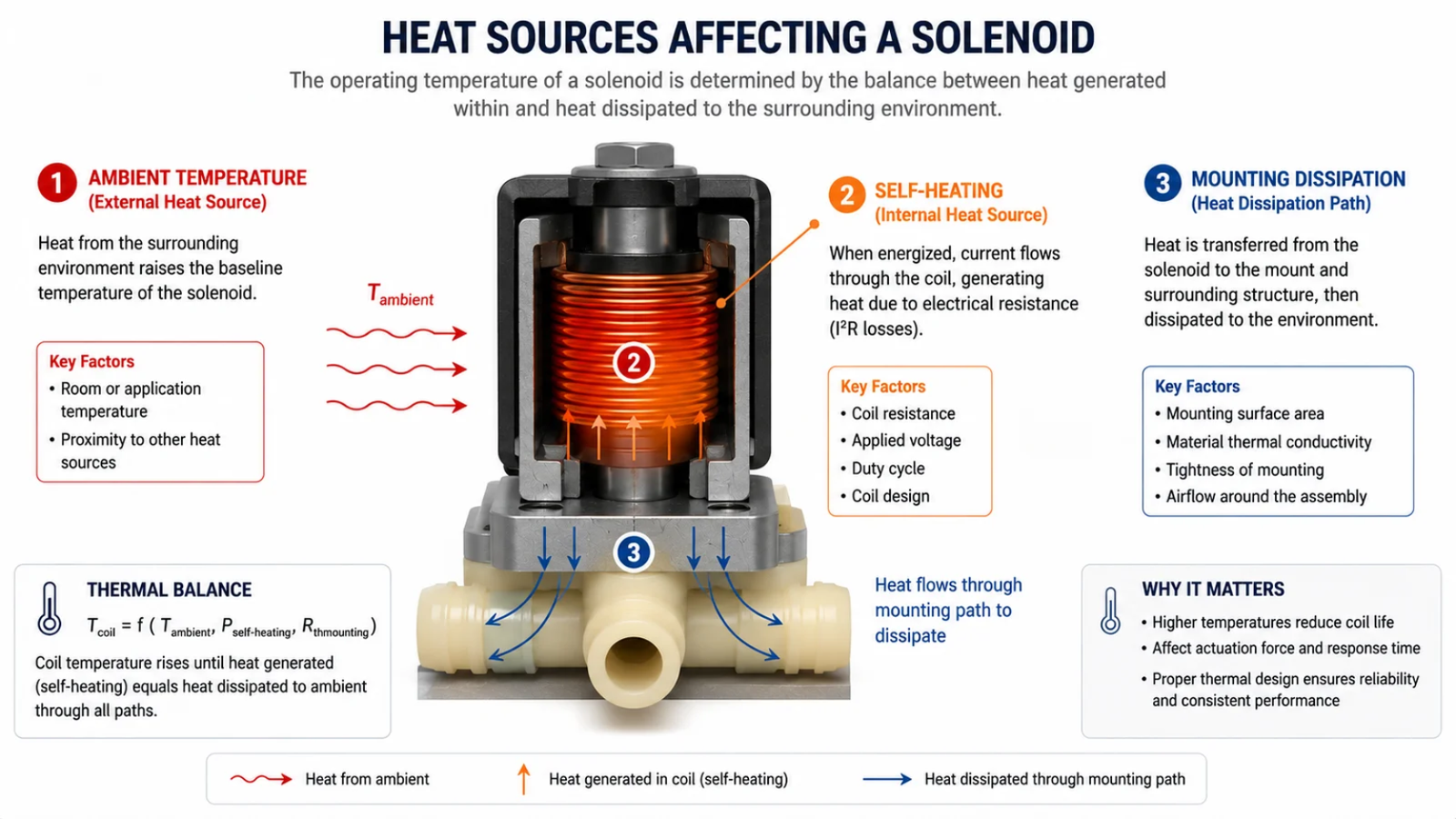
| Increase Coil Power | Generates more heat during operation.7 | Can damage the valve, surrounding parts, or require heat sinks. |
| Increase Coil Size | The entire valve becomes larger and heavier. | May not fit in the original design space. |
| All of the Above | The unit cost and complexity increase. | Lowers your margin and introduces new potential failure points. |
From our work on OEM projects, we find that a request to "just use a stronger spring" is a red flag. It often means the wrong valve was chosen for the application in the first place. A better approach is to work with your supplier to identify why the residual magnetism is too high and address that root cause.
How Do You Choose and Install Non-Magnetic Shims to Prevent Plunger Sticking?
You have heard of "shading rings" or "shims" but are not sure what they do. Choosing the wrong solution or supplier could lead to more complex failure modes or unnecessary costs.
A non-magnetic shim creates a tiny, precise air gap between the plunger and the stop.8 This gap dramatically weakens the magnetic holding force (remanence) when the power is off, allowing the spring to release the plunger easily.
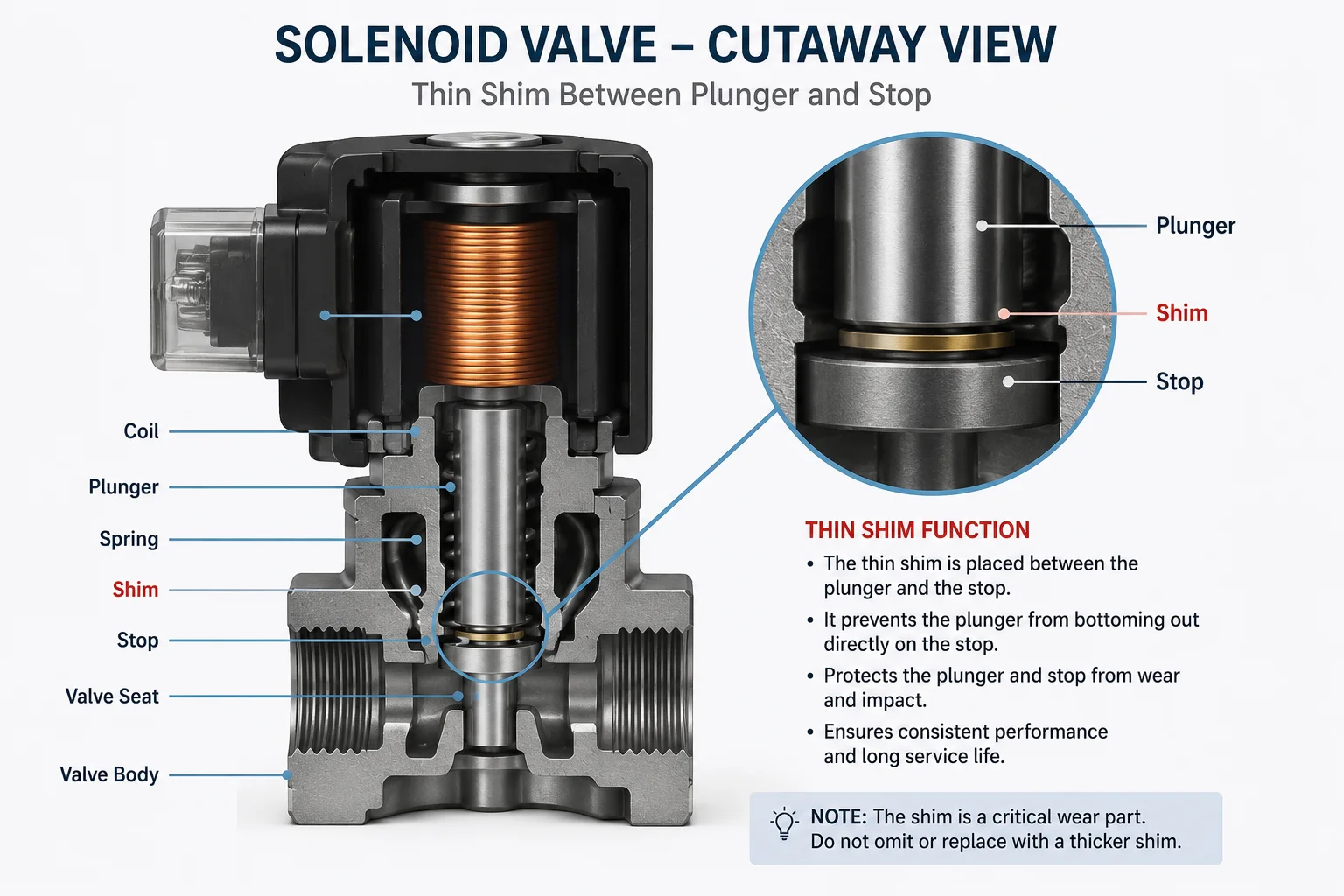
It seems counterintuitive, but one of the most effective ways to manage sticking is to ensure the plunger never makes perfect metal-to-metal contact with the valve body or stop. Magnetic force decreases very quickly with distance.9 Even a gap as thin as a few thousandths of an inch can be enough to break the magnetic hold of the remanent field.10 This allows a reasonably sized spring to do its job effectively.
The Air Gap is a Feature, Not a Flaw
In DC solenoids, this is often achieved with a tiny, solid non-magnetic shim pressed into the plunger face. In AC solenoids, a "shading ring" serves a similar purpose in addition to preventing hum.11 When evaluating a supplier's design, the presence of a shim is not a patch or a fix; it is a deliberate engineering choice. The material of the shim is also important. It must be non-magnetic, durable enough to withstand millions of cycles, and not deform over time. This is a detail you should discuss with a potential supplier. Ask them how they determined the right shim thickness and material for an OEM application like yours. Their answer will tell you a lot about their experience level.
Why Does Eliminating Residual Magnetism Require Precision Hydrogen Annealing?
Your supplier mentions "annealing" as a quality step. You wonder if this is a standard process or an expensive add-on you are paying extra for. It is a critical manufacturing step.
Hydrogen annealing is a controlled heating and cooling process that relieves the mechanical stresses introduced during machining.12 This restores the material's ideal magnetic properties, significantly reducing its coercivity and, therefore, its residual magnetism. It is a crucial step for high-performance solenoids.
Remember how machining adds stress and makes the material hold a magnetic charge? Annealing is the process that reverses this damage. By heating the component to a very high temperature in a controlled environment and then cooling it slowly, we allow the metal's internal crystal structure to relax and reform. This "resets" the material back to its optimal, low-stress state. As a result, its ability to hold residual magnetism (remanence) is drastically reduced.
Not All Heat Treatments Are Equal
Why is the "hydrogen" part important? Heating metal in the presence of oxygen causes scale and oxidation, which would ruin the part's precise dimensions and magnetic properties. Annealing in a pure hydrogen atmosphere prevents this, resulting in a clean, bright part that performs exactly as designed. For a procurement manager, this is a key differentiator. It's an expensive, precision process that low-cost suppliers often skip. When you are sourcing a critical component like a solenoid, ask potential suppliers about their annealing process. Don't just ask if they do it; ask about their process controls, temperature accuracy, and atmosphere. This separates the quality manufacturers from the rest.
Conclusion
Solving solenoid sticking isn't about a single fix. It’s about partnering with a supplier who diagnoses your application to prevent the problem from the start and delivers a reliable product. If you're evaluating a new project, explore our Solenoid Coil Series or contact our engineering team for technical support.
If the valve is holding after power-off, it is usually residual magnetism, contamination, or a mismatched coil—not just a “sticky valve.”
Share the valve type, voltage, and media. SolenElec can review whether a different coil, shading ring, or valve body is required.
"Magnetism - Wikipedia", https://en.wikipedia.org/wiki/Magnetism. Authoritative references in magnetism define remanence (residual magnetization) as the magnetic field that remains in a ferromagnetic material after the external magnetizing field is removed. Evidence role: definition; source type: encyclopedia. Supports: A standard definition of remanence/residual magnetization in ferromagnetic materials.. ↩
"Residual magnetism holds solenoid armature in desired ...", https://ntrs.nasa.gov/citations/19670000038. General descriptions of electromagnets note that residual magnetism can keep a soft‑iron armature attracted after power is removed unless a restoring force or separating air gap overcomes the attraction. Evidence role: mechanism; source type: encyclopedia. Supports: That residual magnetic attraction can prevent release unless a spring or separation overcomes it.. Scope note: This explains the mechanism in general; the exact release force depends on the particular solenoid geometry and materials. ↩
"Coercivity - Wikipedia", https://en.wikipedia.org/wiki/Coercivity. Standard materials science sources define coercivity (coercive field) as the intensity of applied magnetic field required to reduce the magnetization of a material to zero after it has been driven to saturation. Evidence role: definition; source type: encyclopedia. Supports: The standard definition of coercivity/coercive field.. ↩
"(PDF) Effect of plastic deformation on the magnetic properties of ...", https://www.academia.edu/115507138/Effect_of_plastic_deformation_on_the_magnetic_properties_of_selected_austenitic_stainless_steels. Experimental studies on ferromagnetic steels report that plastic deformation and work hardening increase coercivity because defects and strain fields impede domain wall motion. Evidence role: mechanism; source type: research. Supports: That work hardening and residual strain impede domain wall motion and increase coercivity in ferromagnetic steels.. Scope note: Quantitative changes depend on alloy composition and processing history. ↩
"[PDF] THE DESIGN OF MOVING MAGNET ACTUATORS FOR LARGE ...", https://psdl.engin.umich.edu/pdf/D.Hiemstra-MasterThesis.pdf. Actuator design guides specify that the return spring must provide sufficient release force to overcome residual magnetic attraction and friction after coil current is removed. Evidence role: mechanism; source type: education. Supports: That actuator design practice requires spring force to exceed residual magnetic and frictional forces for reliable release.. Scope note: Engineering texts present this as a design principle; calculations are application‑specific. ↩
"Magnetic field of a solenoid", https://web.pa.msu.edu/people/pratts/phy232/lectures/ampereslaw/solenoid.html. Electromagnetic actuator models show that required ampere‑turns (and thus electrical power for a given coil resistance) increase with the opposing spring force needed to reach the working stroke. Evidence role: mechanism; source type: education. Supports: That required ampere‑turns and electrical input increase with higher opposing spring force.. Scope note: Actual power depends on coil resistance, drive method, and duty cycle. ↩
"Joule heating - Wikipedia", https://en.wikipedia.org/wiki/Joule_heating. Joule heating dictates that electrical power dissipated as heat in a resistive coil scales with I²R, so raising coil power increases thermal generation. Evidence role: mechanism; source type: encyclopedia. Supports: That heat generation in a resistive coil scales with electrical power (I²R).. ↩
"[PDF] ElectroMagnetic Actuator Basics Chapter 4", http://commons.princeton.edu/motorcycledesign/wp-content/uploads/sites/70/2018/07/solenoid.pdf. Design notes for electromagnets describe using a non‑magnetic spacer to maintain a small air gap at closure, thereby reducing residual magnetic holding force on the armature when current is removed. Evidence role: general_support; source type: education. Supports: That introducing a non‑magnetic spacer to maintain an air gap is used to mitigate residual magnetic sticking.. Scope note: Implementation details (materials, thickness) vary by actuator design. ↩
"[PDF] Electrical Tech Note — 317 - Michigan State University", https://www.maec.msu.edu/download_file/view/156. Magnetic circuit analyses show that attractive force across an air gap scales with the square of flux density and diminishes rapidly as the gap length increases, because the gap dominates magnetic reluctance. Evidence role: mechanism; source type: education. Supports: That the magnetic force transmitted across an air gap declines rapidly with increasing gap due to rising reluctance.. ↩
"Analysis on the Air-Gap Magnetic Field and Force of ... - PMC", https://pmc.ncbi.nlm.nih.gov/articles/PMC12735322/. Application notes on electromagnets report that introducing a small non‑magnetic gap at closure is often sufficient to prevent armature sticking from residual magnetism. Evidence role: general_support; source type: education. Supports: That small non‑magnetic gaps are commonly used to mitigate residual sticking in magnetic actuators.. Scope note: The minimum effective gap is highly dependent on geometry, materials, and spring preload. ↩
"Shading coil - Wikipedia", https://en.wikipedia.org/wiki/Shading_coil. Reference works explain that a shading ring on an AC solenoid or contactor produces a phase‑shifted magnetic flux that prevents armature chatter and audible hum near current zero crossings. Evidence role: mechanism; source type: encyclopedia. Supports: That shading rings mitigate AC solenoid chatter and hum by creating a phase‑shifted magnetic flux component.. Scope note: A shading ring mitigates AC‑related chatter; unlike a shim, it does not create a physical air gap. ↩
"What is bright annealing process? | Industrial furnace manufacturer ...", https://sunfa.co.jp/en/resources/column/column-2648/. Metallurgical guidance on bright annealing states that heating stainless steels in a controlled hydrogen atmosphere followed by appropriate cooling relieves cold‑work residual stresses without surface oxidation. Evidence role: mechanism; source type: institution. Supports: That hydrogen bright annealing is applied to relieve residual stresses while protecting surface condition.. Scope note: Specific parameters (temperature, time, atmosphere purity) vary with alloy and section size. ↩