How to Improve Solenoid Valve Reliability in Water Treatment Systems?
Your solenoid valves keep failing, causing warranty claims and damaging your brand. The solution isn't just a better valve; it's about understanding the specific risks in your water treatment system.
True reliability comes from matching the valve's design and materials to your specific water conditions, like chemicals, sediment, and pressure. It's not about a single high-spec feature. A reliable valve is a system of correct choices for your unique application, not just a single component.
As someone who has been manufacturing solenoid coils and valves for over 20 years, I've seen countless procurement managers focus on the wrong details. They chase a single feature, like a stainless steel body, thinking it guarantees reliability. But the real path to de-risking your supply chain is to understand the most common points of failure first. Let's break down the biggest challenges we see and how you can proactively solve them before they become expensive problems.
How Does Water Hardness and Limescale Buildup Cause Solenoid Valves to Stick?
Your valves are getting stuck open or closed, leading to frustrating leaks or complete system shutdowns. The cause is often invisible limescale, but you can prevent it by choosing designs that resist it.
Limescale, or calcium carbonate, builds up on internal moving parts like the plunger and guide tube.1 This increases friction and creates mechanical resistance, eventually causing the valve to stick. Using materials with smoother surfaces and designs with proper clearances can significantly reduce this risk.
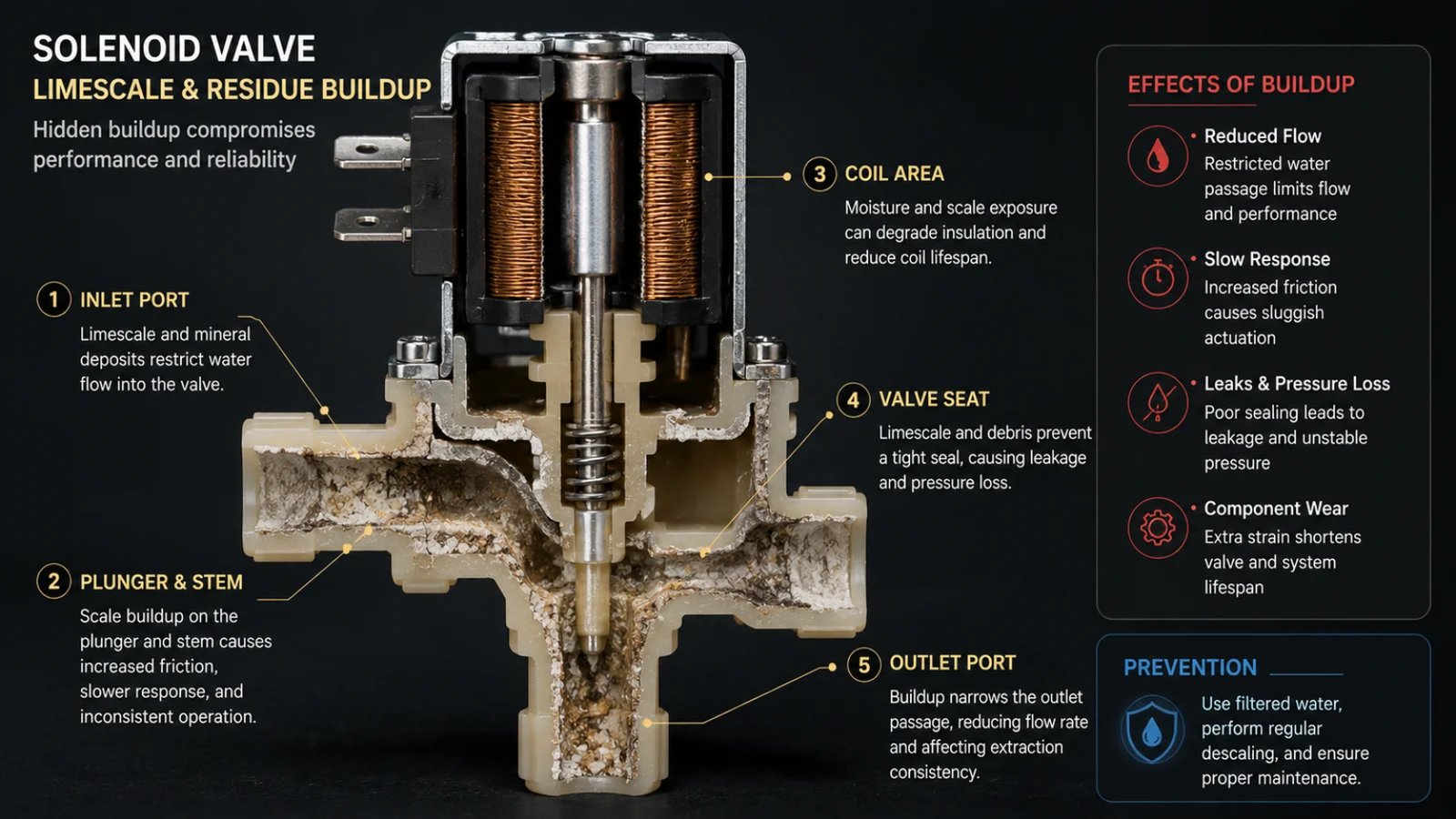
When I talk to clients who have had valves fail from a competitor, sticking is one of the most common complaints. The root cause is almost always a mismatch between the valve's internal design and the water hardness of the application. Limescale forms when hard water, rich in calcium and magnesium ions, is heated.2 These minerals precipitate out of the water and stick to surfaces, especially metal ones.
A common mistake is to assume a stainless steel body solves the problem. The issue isn't usually corrosion on the body; it's the buildup on the critical moving parts inside. The plunger must move freely within its guide tube for the valve to operate. Even a microscopic layer of scale can close this gap, increasing the friction until the magnetic force of the coil is no longer strong enough to move it. This is why a valve might work perfectly for a few months and then start to fail intermittently. To prevent this, our engineering team always asks about the water source. We then focus on two areas:
- Material Finish: The smoother the surface, the harder it is for scale to get a foothold.3 A polished stainless steel plunger is far superior to a rougher, unpolished one.
- Internal Design: Some designs have wider internal passages or features that create a "self-cleaning" effect as water flows, minimizing areas where scale can accumulate.
Here is a simple breakdown of what to look for:
| Feature | Poor for Hard Water | Better for Hard Water |
|---|---|---|
| Plunger Finish | Rough, unpolished metals | Smooth, polished stainless steel |
| Internal Design | Tight clearances, many corners | Wider passages, self-cleaning action |
| Maintenance Plan | None considered | Scheduled descaling cycles in the end product |
What Is the Best Solenoid Valve Seal Material for Resisting Chlorine and Chemical Attack?
Your valve seals are failing, causing leaks that can damage your product and your brand's reputation for quality. The key is to stop guessing and perfectly match the seal material to your water's specific chemistry.
For most water, EPDM is excellent. But if your system uses chlorine, chloramines, or other disinfectants, these chemicals can degrade EPDM over time. FKM (Viton®) offers superior chemical resistance but has different temperature and cost profiles.4 The "best" material depends entirely on your water chemistry.
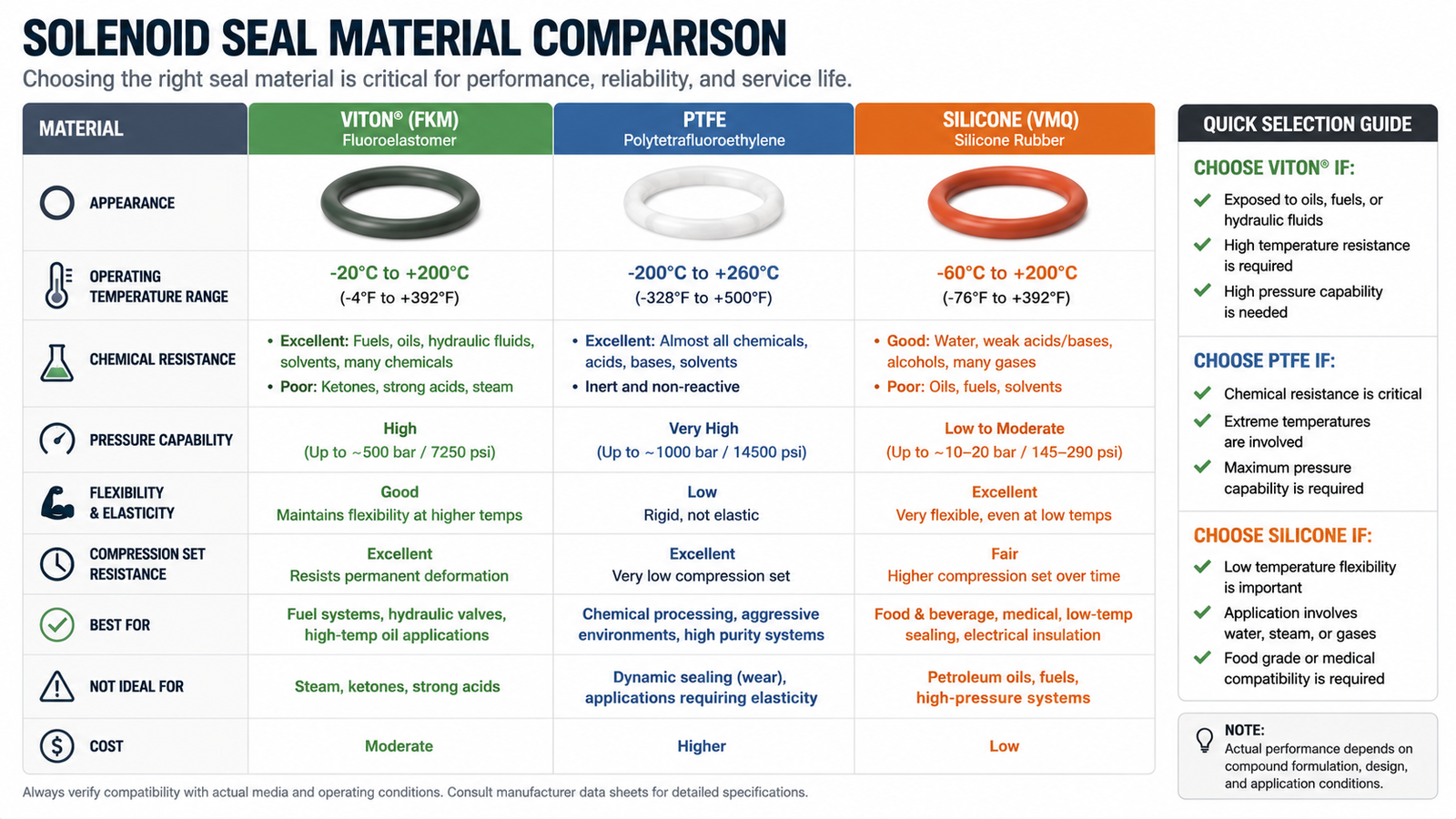
When a client comes to us after a competitor's valve failed, the root cause is often a mismatch in the seal material. Procurement managers are great at specifying pressure and temperature, but they often overlook the chemical composition of the water itself. They might specify "potable water safe," but that doesn't tell the whole story.
A valve that worked perfectly for years in one region might suddenly start failing when the product is sold in a new market. Why? Because the new region's municipality uses chloramine instead of chlorine to treat its water. Chloramine is more stable and lasts longer in the water supply,5 but it is also much more aggressive toward certain elastomers, especially EPDM.6 Over time, it can cause the seal to harden, crack, and lose its sealing ability.
A reliable supplier doesn't just sell you a valve; they ask diagnostic questions. We always ask, "What is the precise chemical makeup of your fluid?" This question helps us prevent future failures. An incorrect seal material can swell, shrink, or become brittle, leading to either a leak or a valve that gets stuck.
Here’s how common materials stack up for water treatment:
| Material | Best For | Weak Against | Common Failure Mode |
|---|---|---|---|
| EPDM | General potable water, steam, hot water | Oils, petroleum, chloramines | Hardening and cracking over time |
| FKM (Viton®) | Chemicals, ozone, oils, high temperatures | Ketones, some organic acids | Can be less flexible in low temps |
| NBR (Buna-N) | Oils, fuels, general purpose | Ozone, UV, hot water, steam | Becomes brittle and loses flexibility |
Choosing FKM over EPDM might increase the component cost slightly, but it prevents costly warranty claims and protects your brand's reputation for durability. It's a smart investment in risk management.
Why Are Pilot-Operated Solenoid Valves Prone to Clogging in High-Sediment Water Systems?
Your valves work perfectly during testing but then start to fail intermittently in the field. This frustrating issue is often caused by tiny particles in the water clogging a critical internal channel.
Pilot-operated valves use a tiny internal orifice, or pilot hole, to function.7 In water with any amount of sediment, sand, or rust, this small hole can easily get clogged. This blockage prevents the main valve from opening or closing correctly. Direct-acting valves are a more reliable choice here.
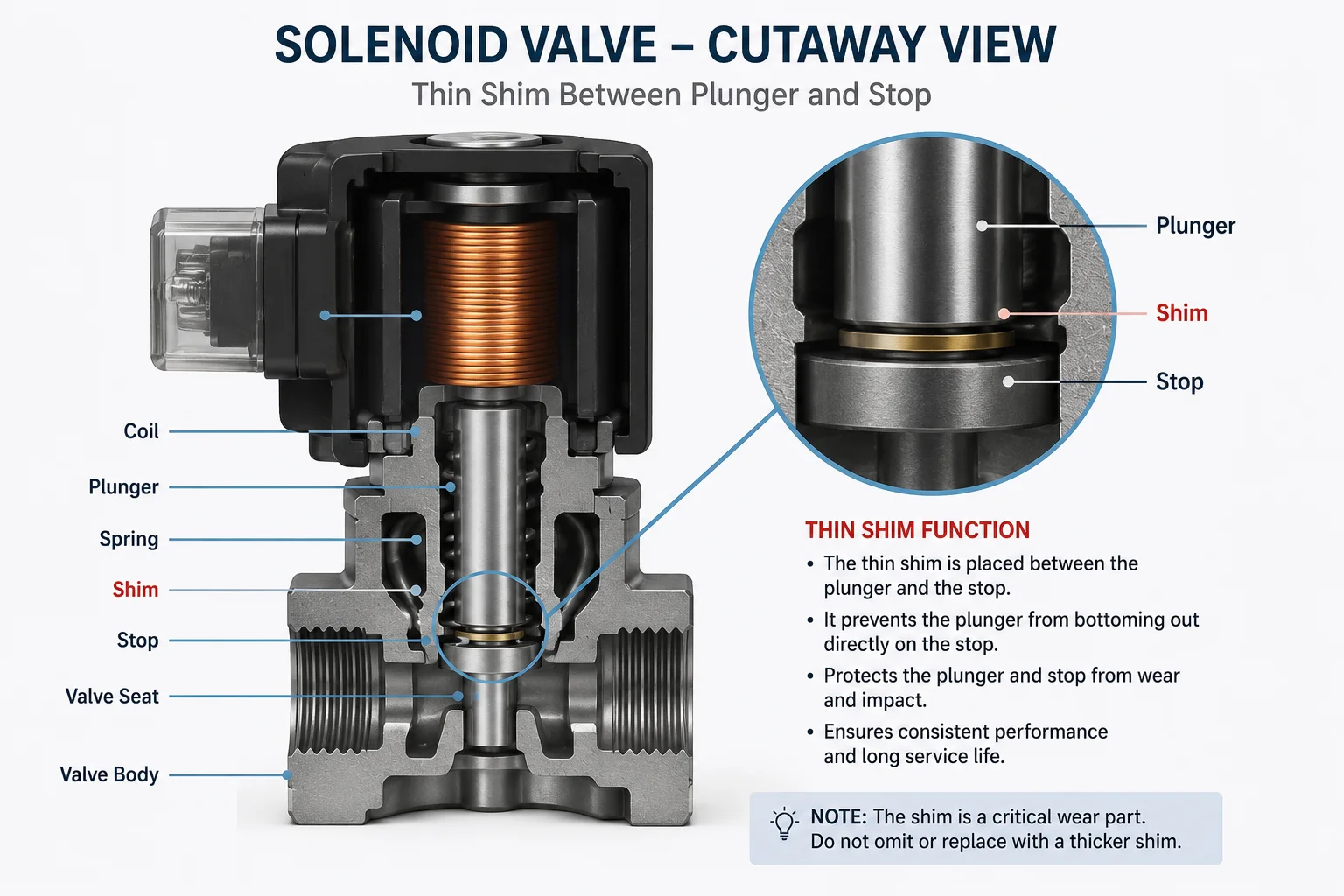
I see this problem all the time, especially with equipment that connects directly to municipal water lines. A procurement manager will choose a pilot-operated (or servo-assisted) valve because it offers a high flow rate for a relatively low cost and power consumption. On a data sheet, it looks like the perfect choice. They test it in the lab with clean, filtered water, and it works flawlessly.
But out in the real world, water isn't perfectly clean. It contains small amounts of sediment, rust flakes from old pipes, or mineral deposits. A pilot-operated valve relies on a very small hole, often less than a millimeter wide, to equalize pressure and allow the main diaphragm to lift. It only takes one tiny particle to block this pilot orifice. If it gets blocked, the valve will fail to open or, in some cases, fail to close completely.
A good supplier's engineering team will immediately ask about your water source and filtration. "Is there a filter installed upstream of the valve?" is one of our first questions. If the water quality can't be guaranteed, we almost always recommend a different design. A direct-acting solenoid valve is a much more robust solution in these scenarios. It doesn't rely on line pressure or a pilot orifice. Instead, the coil's magnetic force directly lifts the main seal. While they may be larger or require more power for the same flow rate, their simplicity makes them incredibly reliable in less-than-ideal conditions.
Here's how the two designs compare for water treatment applications:
| Valve Type | How it Works | Pros | Cons in Water Treatment Systems |
|---|---|---|---|
| Pilot-Operated | Uses line pressure via a small pilot orifice | High flow, lower power/cost for size | Very prone to clogging from sediment or debris |
| Direct-Acting | Coil power directly lifts the seal | Extremely robust, reliable with debris | Higher power use, larger/costlier for high flow |
Choosing the right valve type for your water quality is a fundamental step in ensuring long-term reliability.
How Do You Prevent Water Hammer and Pressure Spikes from Damaging Your Solenoid Valves?
Your valves are failing catastrophically, or the system is making loud banging noises upon shutoff. This is water hammer, a pressure spike that can damage the entire system, not just the valve itself.
Water hammer happens when a fast-closing valve abruptly stops water flow, creating a high-pressure shockwave.8 This can damage seals, crack valve bodies, and harm other components. Use slow-closing valves, pressure snubbers, or ensure the valve is rated for potential pressure spikes.
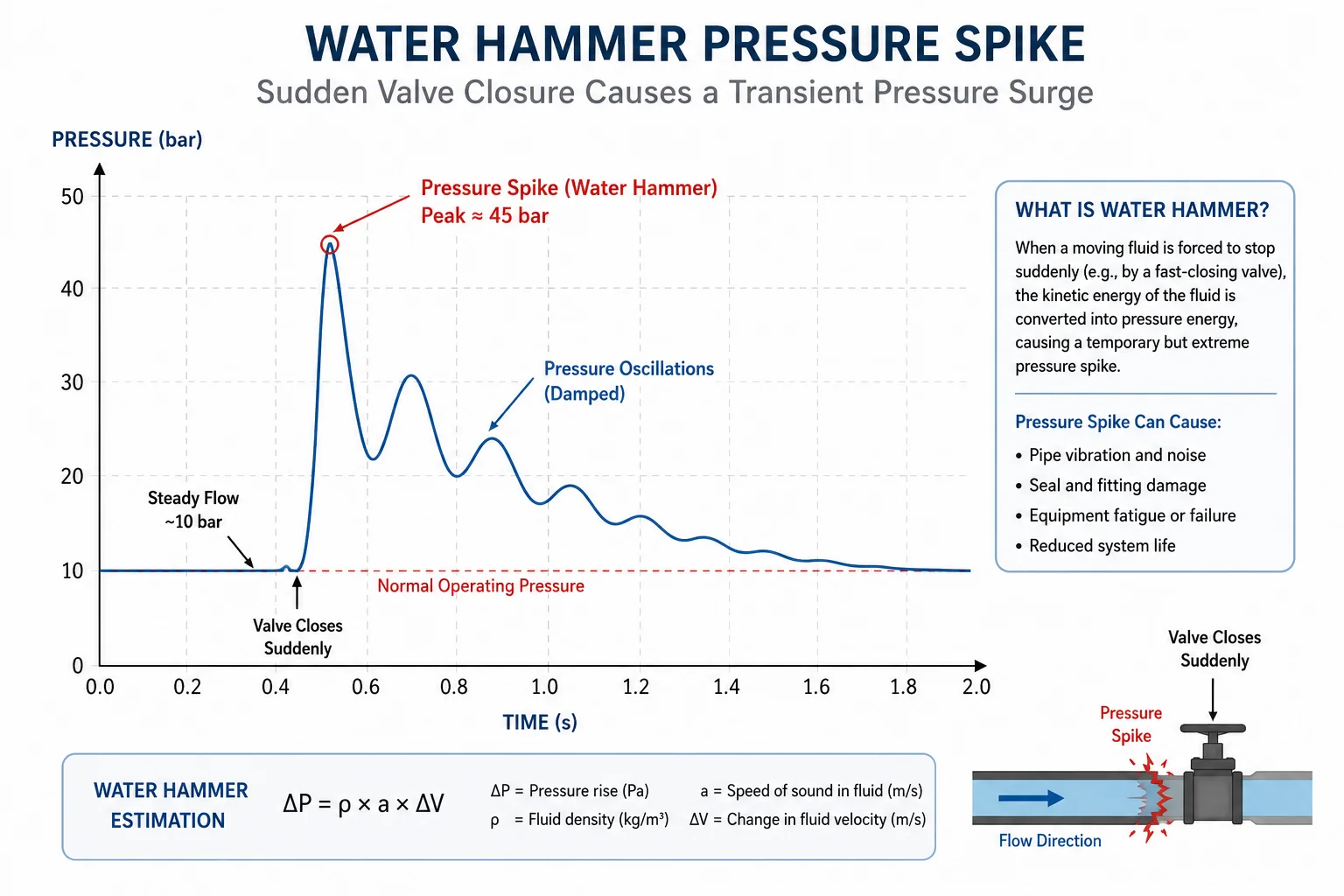
Water hammer is one of the most destructive forces in a fluid system, and it's a topic I discuss frequently with our clients' engineering teams. Imagine a long freight train moving at high speed. If you instantly stop the engine, the inertia of all the cars behind it will cause a massive pile-up. Water flowing in a pipe has the same kind of inertia. A standard solenoid valve can close in just a few milliseconds. This sudden stop converts the water's kinetic energy into a massive pressure spike that travels back through the pipe.
A common mistake we see is selecting a valve based only on the system's static pressure. A brand manager might tell me their system runs at 5 bar, so they chose a valve rated for 10 bar, thinking they have a safe margin. However, the water hammer spike can easily exceed 20 or 30 bar9 for a fraction of a second. This intense, momentary pressure is what cracks plastic valve bodies, blows out seals, and damages pressure sensors elsewhere in the system.
A smart buyer or engineer will discuss this risk with their supplier. Instead of just giving us a static pressure spec, they'll ask, "Do you offer slow-closing options?" or "What is the maximum shock pressure rating of this valve?" This shows they are thinking about the system dynamics, not just the component specs. There are several ways to mitigate this risk:
| Prevention Strategy | How it Works | Best For |
|---|---|---|
| Slow-Closing Valve Design | A built-in dampening mechanism slows the last portion of the valve's travel. | High-flow applications or systems with long pipe runs. |
| Water Hammer Arrestor | A separate component with a piston or diaphragm absorbs the pressure wave. | Retrofitting existing systems where changing the valve is not an option. |
| Higher Pressure Rating | The valve is physically built to withstand the expected spikes. | A simple but less elegant solution; it doesn't solve the root cause. |
Controlling the closing speed is the most effective way to prevent water hammer at the source. This is a design conversation that is critical for ensuring the long-term health of your entire water treatment system.
What IP Ratings and Coil Insulation Classes Are Required for Humid Water Treatment Plants?
Your solenoid coils are shorting out and failing prematurely, causing unexpected downtime. The problem is likely the environment. You must match the coil's electrical protection to the ambient humidity and temperature.
The IP (Ingress Protection) rating indicates resistance to dust and water. For humid or washdown areas, IP65 is the minimum. The coil's insulation class (e.g., Class F or H) determines its maximum operating temperature, which is crucial for reliability in warm environments or high duty cycles.
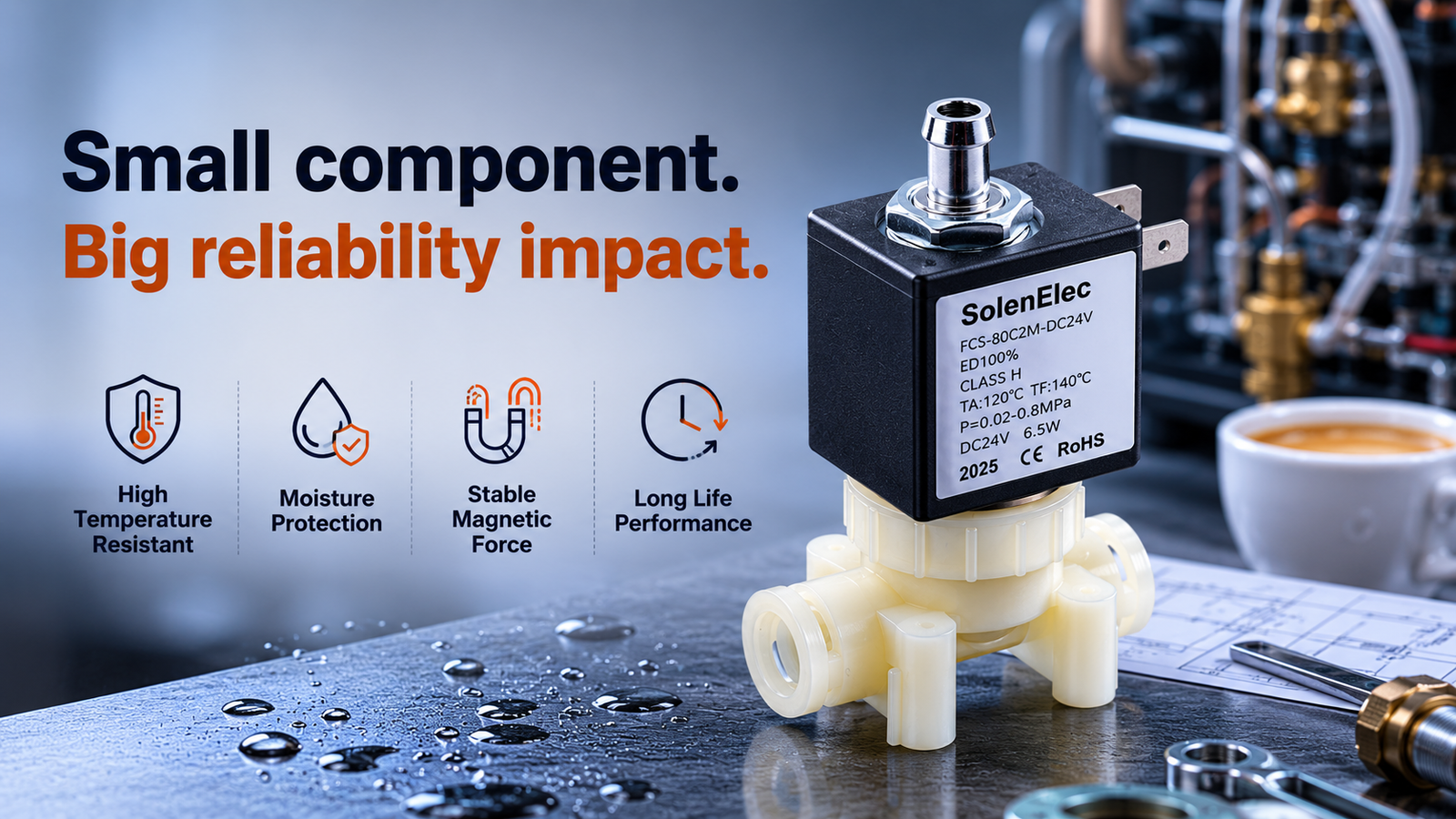
This is an area where trying to save a small amount of money on the initial purchase can lead to major reliability issues down the line. I've seen purchasing managers select a standard, lower-cost coil because its electrical and mechanical specs fit, but they failed to consider the environment where the final product would be used. A water treatment plant, a commercial kitchen, or even a high-end coffee machine can be a harsh environment for electronics. It's often hot, humid, and subject to splashes or cleaning cycles.
There are two separate but equally important ratings to consider for the solenoid coil:
- IP Rating: This is about external protection. The first digit rates protection against solids (like dust), and the second rates protection against liquids. An IP65-rated coil is dust-tight and can withstand water jets from any direction.10 This is essential to prevent moisture from getting inside the coil housing and causing a short circuit. For equipment that might be submerged or subject to intense washdowns, IP67 is even better.
- Insulation Class: This is about internal heat resistance. The coil generates heat as it operates. The insulation class tells you the maximum temperature the wire's enamel coating can withstand before it breaks down. Class F (155°C) is a robust standard, while Class H (180°C) is for very demanding, high-temperature applications.11 In a warm plant, the ambient temperature reduces the coil's ability to cool itself, so a higher insulation class is vital to prevent burnout.
When we build a custom solution, our engineers always ask about the ambient temperature, duty cycle, and potential for water exposure. An inexpensive IP54, Class B coil is a recipe for failure in a humid plant. A proper IP65, Class F coil might cost a little more, but its reliability in the correct environment is exponentially higher.
| Protection Type | What it Measures | Recommended Choice | Why it Matters in Water Treatment |
|---|---|---|---|
| IP Rating | Protection from Dust & Water Ingress | IP65 or IP67 | Protects the coil from humidity, splashes, and washdowns, preventing short circuits. |
| Insulation Class | Max. Coil Winding Temperature | Class F (155°C) or Class H (180°C) | Prevents coil burnout in warm environments or when the valve is energized for long periods. |
Conclusion
True solenoid valve reliability is not found in a single spec, but in a systematic approach. It is about matching materials and design to your specific risks, from water chemistry to pressure spikes.
Need Help Selecting the Right Solenoid Valve for Water Treatment?
Every water treatment system presents different challenges—from water hardness and chemical compatibility to sediment and pressure fluctuations. Choosing the right valve starts with understanding your application.
👉 Contact our engineering team to discuss your project requirements.
"[PDF] Calcium Carbonate Scale Deposition Kinetics on Stainless Steel ...", https://etheses.whiterose.ac.uk/id/eprint/17647/1/Thesis_final_version.pdf. Public-health and water-industry references describe limescale (CaCO3) deposition on plumbing fixtures and equipment in heated hard‑water systems, noting functional impairment; this supports the risk that deposition on moving valve components can contribute to sticking. Evidence role: general_support; source type: institution. Supports: That limescale deposits on plumbing components and equipment can impair function, consistent with fouling of moving parts.. Scope note: Does not specifically test solenoid plungers; it extrapolates from the general behavior of scaling in plumbing systems. ↩
"Hard water - Wikipedia", https://en.wikipedia.org/wiki/Hard_water. An encyclopedic overview of limescale explains that heating hard water decomposes bicarbonate hardness and precipitates calcium carbonate (CaCO3), which deposits as scale, supporting the stated mechanism. Evidence role: mechanism; source type: encyclopedia. Supports: That heating hard water precipitates calcium carbonate (limescale) from bicarbonate hardness.. ↩
"[PDF] Impact of Vapor Polishing on Surface Quality and Mechanical ...", https://scholarsarchive.byu.edu/cgi/viewcontent.cgi?params=/context/facpub/article/6250/&path_info=Impact_of_Vappor_Polishing.pdf. Peer‑reviewed studies on calcium carbonate fouling report that increased surface roughness promotes nucleation and adhesion, while smoother polished surfaces reduce initial attachment, supporting the design guidance about surface finish. Evidence role: mechanism; source type: paper. Supports: That rougher surfaces promote greater CaCO3 nucleation/adhesion than smoother, polished surfaces.. Scope note: Findings are based on specific materials and laboratory conditions; real‑world scaling rates depend on water chemistry and flow. ↩
"FKM - Wikipedia", https://en.wikipedia.org/wiki/FKM. Encyclopedic summaries of fluoroelastomers (FKM) describe broad chemical resistance and high‑temperature capability compared with many general‑purpose elastomers, supporting the general property comparison in the text. Evidence role: general_support; source type: encyclopedia. Supports: That FKM fluoroelastomers are known for broad chemical resistance and high-temperature capability relative to many other elastomers.. Scope note: Such overviews do not address specific water disinfectants or cost; compatibility must be verified for the exact chemistry and service conditions. ↩
"National Primary Drinking Water Regulations | US EPA", https://www.epa.gov/ground-water-and-drinking-water/national-primary-drinking-water-regulations. Government guidance on drinking‑water disinfectants notes that chloramines provide a longer‑lasting residual than free chlorine in distribution systems, supporting the statement about stability and persistence. Evidence role: mechanism; source type: government. Supports: That monochloramine has a longer-lasting residual in distribution systems than free chlorine.. ↩
"Kinetics of sulfur and peroxide cured EPDM rubber aging ... - ThinkIR", https://ir.library.louisville.edu/etd/1481/. Industry research reports document degradation of elastomeric materials, including EPDM, after exposure to chloraminated water, supporting the caution that chloramines can be aggressive toward certain seal materials. Evidence role: general_support; source type: research. Supports: That exposure to chloraminated water has been associated with degradation (hardening, cracking, loss of elasticity) of EPDM and other elastomers.. Scope note: Degradation depends on elastomer formulation, temperature, and disinfectant concentration; results may not generalize to all EPDM compounds. ↩
"Solenoid valve - Wikipedia", https://en.wikipedia.org/wiki/Solenoid_valve. Authoritative descriptions of solenoid valves explain that pilot‑operated designs employ a small pilot orifice to control pressure across a diaphragm or piston, enabling actuation by line pressure. Evidence role: mechanism; source type: encyclopedia. Supports: That pilot‑operated solenoid valves use a small pilot orifice to modulate pressure and move the main sealing element.. ↩
"Hydraulic shock - Wikipedia", https://en.wikipedia.org/wiki/Hydraulic_shock. Government technical manuals on water‑hammer describe how rapid valve closure produces transient pressure surges that propagate as shock waves in pipelines, aligning with the mechanism stated. Evidence role: mechanism; source type: government. Supports: That rapid closure of a valve creates a transient pressure surge (water‑hammer) that propagates as a shock wave in the pipeline.. ↩
"Water Hammer Calculator - Irrigation in the Pacific Northwest", https://irrigation.wsu.edu/Content/Calculators/General/Water-Hammer.php. Engineering texts present the Joukowsky equation (ΔP = ρ a ΔV); with common values for water density and acoustic wave speed in pipes, even small velocity changes can yield transient pressure rises on the order of tens of bar, supporting the plausibility of 20–30 bar spikes. Evidence role: mechanism; source type: education. Supports: That the Joukowsky equation predicts pressure surges of tens of bar for modest velocity changes in water lines with typical wave speeds.. Scope note: Actual surge magnitude depends on pipe material, wave speed, valve closure time, and system configuration; calculations provide order‑of‑magnitude context rather than a site‑specific value. ↩
"IP code - Wikipedia", https://en.wikipedia.org/wiki/IP_code. Independent summaries of IEC 60529 define IP65 as dust‑tight with protection against water jets and IP67 as protection against temporary immersion, supporting the suitability statements for humid or washdown environments. Evidence role: definition; source type: encyclopedia. Supports: The formal definitions of IP65 (dust‑tight and water jets) and IP67 (temporary immersion) per IEC 60529.. Scope note: Suitability depends on actual exposure; standard tests specify jet pressure/duration and immersion depth/time. ↩
"Insulation system - Wikipedia", https://en.wikipedia.org/wiki/Insulation_system. Standards-based overviews of electrical insulation systems list Class F with a 155°C and Class H with a 180°C maximum temperature rating, supporting the temperature values cited for coil insulation classes. Evidence role: definition; source type: encyclopedia. Supports: That standard thermal classes list Class F = 155°C and Class H = 180°C for electrical insulation systems.. Scope note: These are insulation system ratings; actual coil life depends on thermal rise, ventilation, and duty cycle. ↩