
Why do espresso machines need a 3-way solenoid valve?
Struggling with messy, watery espresso pucks in your machines? These issues frustrate customers, leading to negative reviews and costly service calls. A specific valve is the solution.
A 3-way solenoid valve instantly relieves water pressure from the group head after brewing.1 This dries the coffee puck, prevents messy drips, and allows for immediate back-to-back shots.2 It ensures a clean user experience and protects your brand's reputation for quality.

As a manufacturer, I talk to procurement managers all the time. They are focused on delivering a reliable product that strengthens their brand. A small component like a solenoid valve might seem minor, but it has a huge impact on the customer experience and your bottom line. An espresso machine that leaves a soupy mess feels cheap and broken, even if it's brand new. This is why understanding the role of a 3-way valve is not just a technical exercise; it's a core business decision. It's about preventing problems before they lead to warranty claims and damage your brand's standing in a competitive market.
The "Soggy Puck" Mess: Why do espresso extractions end with sputtering and drips?
Your customers complain about a wet, soupy mess after pulling a shot. This "soggy puck" problem makes cleanup difficult and feels unprofessional, hurting your brand's quality perception.
Sputtering and drips happen when pressurized water remains in the group head after brewing. Without a 3-way valve to divert this pressure, the water slowly seeps through the coffee puck, creating a sludgy, wet mess instead of a firm, dry one.
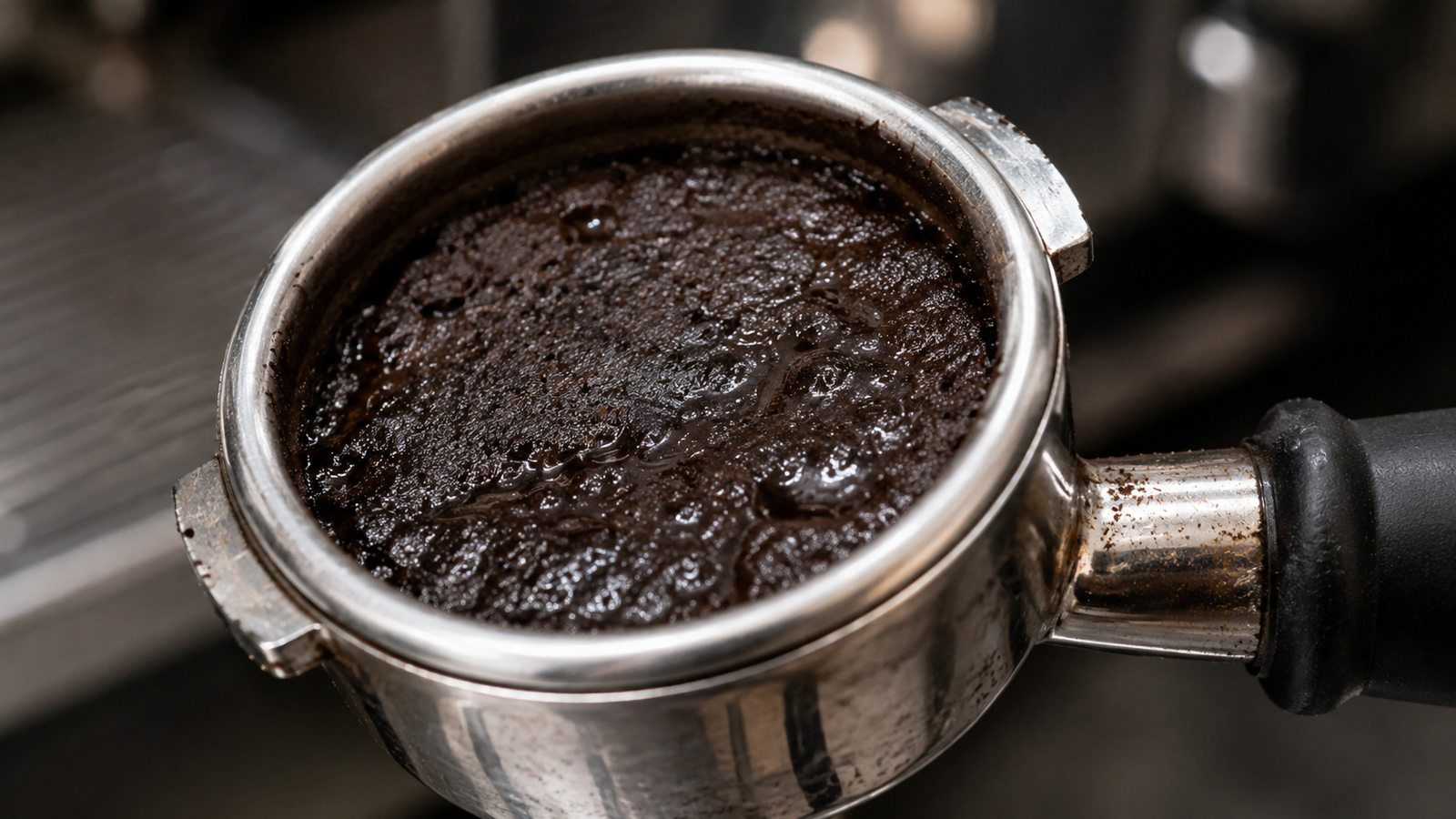
When we discuss OEM projects with brand managers, the "soggy puck" is a frequent topic. It's a classic sign that pressure isn't being managed correctly after the extraction. During brewing, your machine's pump forces water through the coffee at around 9 bars of pressure.3 When the pump stops, that pressure doesn't just disappear.4 It remains trapped between the pump and the coffee puck. This residual pressure continues to push water slowly and unevenly through the coffee, resulting in the dreaded drips and a saturated, messy puck. For the end-user, this is frustrating. For a brand manager, it's a sign of a compromised user experience. A dry puck is a mark of a well-designed machine. It signals to the user that they have a quality product. A soggy one suggests the opposite, regardless of how much the machine costs.
Trapped High Pressure: What causes the post-brew sludge?
High-pressure water is trapped in the group head after brewing. This leads to inconsistent shots, messy cleanups, and can even damage the machine over time.
Post-brew sludge is caused by the 9 bars of pressurized water having no escape route after the pump shuts off. A 3-way solenoid valve provides this escape, instantly venting the pressure and stopping the flow of water, which keeps the puck dry.
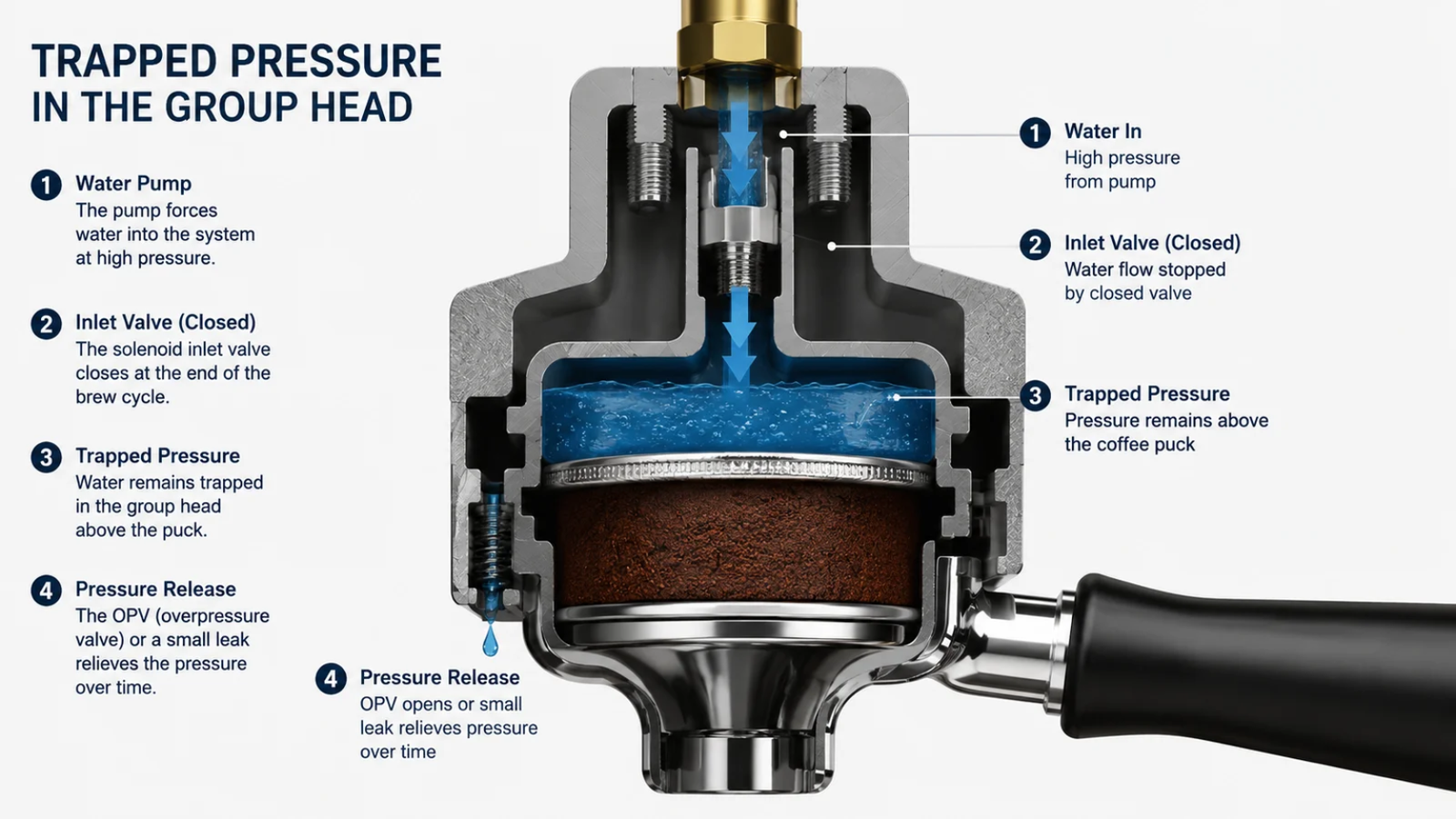
From my experience working on OEM solutions, the physics are simple but the business implications are huge. Imagine the system as a sealed pipe full of pressurized water. Once you turn off the tap (the pump), the pressure is still there. Without a release point, it will find the path of least resistance, which is slowly dripping through the coffee grounds.5 This turns what should be a firm, dry puck into a muddy mess.
How Pressure Creates Sludge
- Brewing Phase: The pump is on, pushing water through the coffee at high pressure (e.g., 9 bars).
- Pump Off: The pump stops. Now, there are 9 bars of static pressure trapped in the group head.
- No 3-Way Valve: The pressure slowly bleeds off through the coffee, creating extra drips and turning the puck to sludge.
- With 3-Way Valve: The moment the pump stops, the valve opens a third port, venting the trapped water and pressure to the drip tray.6 The flow stops instantly.
The result is a clean break, a dry puck, and a happy customer. For a procurement manager, this means fewer complaints about "messy machines" and a better overall brand perception.
How It Works: The 3-Way Valve Mechanism Explained?
You need a reliable way to control pressure in your machines. Not understanding the mechanism can lead to choosing a component that fails, causing customer frustration and warranty claims.
A 3-way valve directs water flow. In the "on" state, it connects the pump to the group head. In the "off" state, it disconnects the pump and connects the group head to an exhaust port, instantly relieving pressure.

I often explain this to procurement teams by breaking the valve's function into two simple states. It’s like a railway switch for water. The solenoid is an electromagnet.7 When you energize it, it pulls a plunger, opening one path and closing another.8
The Two States of a 3-Way Valve
-
Energized (Brewing):
- The electromagnet is activated.
- The plunger moves, opening the path from the boiler/pump to the group head.
- The exhaust port to the drip tray is sealed shut.
- Outcome: Pressurized water flows to the coffee grounds for extraction.
-
De-energized (Brewing Finished):
- The power is cut to the electromagnet.
- A spring pushes the plunger back to its resting position.
- The path from the pump is sealed.
- The path from the group head to the exhaust port is opened.
- Outcome: Trapped pressure and water from the group head are instantly vented into the drip tray.
This immediate pressure release is what creates the signature "whoosh" sound at the end of a shot on a commercial-quality machine. It's the sound of a dry puck in the making and a core feature that protects the user experience.
Clogged Valves: How do scale and poor backflushing cause failures?
You select a valve that passes initial tests, but it fails in the field after six months. This leads to costly repairs, replacements, and damage to your brand's reputation for durability.
Scale (mineral buildup) and coffee oils can clog the valve's small internal pathways.9 This prevents the plunger from seating correctly, causing leaks, pressure loss, or complete failure to switch between ports, leading to machine malfunction.
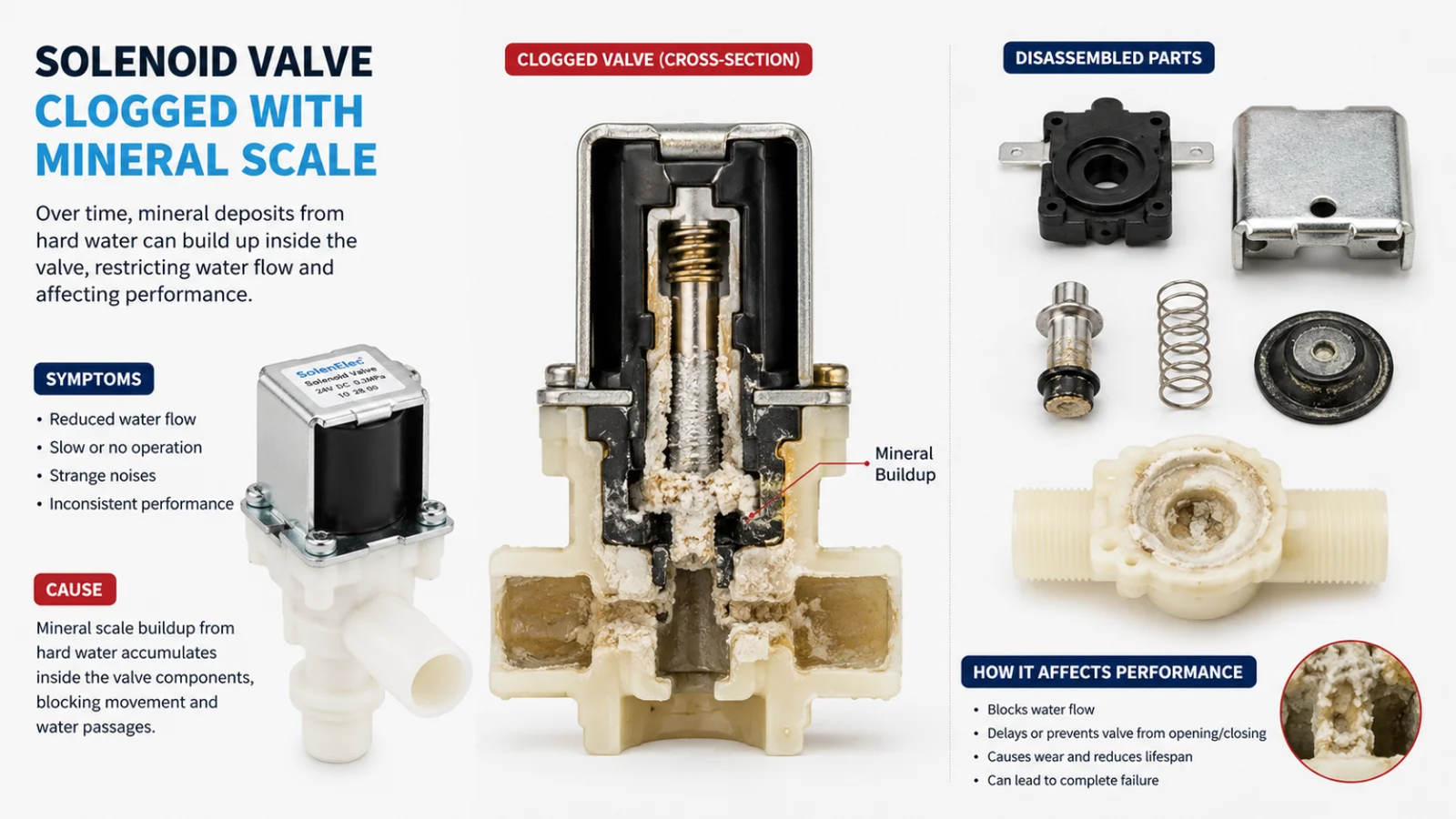
From feedback on thousands of project deliveries, we've seen that most field failures are not due to an initial manufacturing defect. They are the result of real-world usage conditions that weren't accounted for in the selection process. Hard water is the number one enemy. Over time, mineral deposits from the water (limescale) build up inside the valve body and on the plunger.10 This buildup acts like sand in a machine, restricting movement and preventing seals from closing properly. Coffee oils are the second culprit. During backflushing, these oils can be forced back into the exhaust port of the valve. If the valve's materials are not resistant to these oils, the seals can swell or degrade, leading to failure. This is why just asking "Does it work?" is the wrong question. The right question is, "How does it withstand scale and coffee oils over 10,000 cycles?"
OEM Sourcing Guide: How do you choose the right materials, voltage, and duty cycles?
Choosing a valve based on price alone is a huge risk. A cheap component can lead to high warranty claim rates, hurting profitability and brand loyalty.
For a reliable machine, you must match the valve's specifications to its real-world use. This means selecting the right seal material for temperature, coil insulation for heat, and duty cycle for your machine's expected workflow.

A common question from procurement managers is, "What makes this valve better than a cheaper alternative?" The answer is always in the details that prevent long-term failure. The initial cost of the valve is tiny compared to the cost of a warranty claim or a lost customer. As a manufacturing partner, we guide our clients to think about the total cost of ownership. This means scrutinizing the materials and design in relation to the specific environment inside their appliance.
Here are the key questions we encourage our partners to ask:
| Specification | Why It Matters for Business | Key Questions for Supplier |
|---|---|---|
| Seal Material | Determines lifespan under heat and chemical exposure. FKM (Viton) offers better heat/oil resistance than EPDM, reducing failures.11 | What are the seal temperature ratings? Can you provide data on longevity with exposure to coffee oils? |
| Coil Insulation | A higher insulation class (e.g., Class F or H) prevents overheating and failure in a hot, enclosed machine.12 This boosts reliability. | What is the coil insulation class? What is the maximum continuous operating temperature? |
| Duty Cycle | Defines how long the valve can be energized. A 100% duty cycle rating is critical for machines in a café or office setting. | Is the valve rated for 100% continuous duty? Can you provide testing data for our target cycle times? |
| Orifice Size | Affects the flow rate and speed of pressure relief. A well-designed orifice ensures a fast, clean pressure dump without causing system shock. | What is the orifice diameter and how does it impact pressure release time? |
Choosing the right valve is not about finding the cheapest part. It’s about risk mitigation. By investing in the right specifications, you are protecting your brand, reducing future costs, and delivering the quality experience your customers expect.
Conclusion
Choosing the right 3-way solenoid valve is a critical business decision. It directly impacts user experience, brand perception, and long-term costs far more than its small price tag suggests.
"Solenoid valve - Wikipedia", https://en.wikipedia.org/wiki/Solenoid_valve. A technical reference on solenoid valves describes three-way valves as devices that switch a flow path between an inlet, outlet, and exhaust or alternate port, supporting the article’s explanation that the component can relieve brew-group pressure after extraction. Evidence role: mechanism; source type: encyclopedia. Supports: A 3-way solenoid valve can switch flow between ports and can be used to vent or relieve pressure from a line or chamber.. Scope note: The source may explain the valve mechanism generally rather than documenting this exact espresso-machine configuration. ↩
"Parts Of Espresso Machine - Face Surgery", https://face.meei.harvard.edu/parts-of-espresso-machine. An espresso-machine technical source notes that a three-way valve discharges residual brew pressure after extraction, which is consistent with reduced dripping and easier removal of the spent coffee puck. Evidence role: general_support; source type: institution. Supports: Pressure relief after extraction is associated with reduced post-brew dripping and easier puck removal in espresso machines.. Scope note: The source is likely to support the mechanism and typical outcome, but puck dryness can also depend on grind, dose, basket design, and extraction variables. ↩
"[PDF] Capstone Project Poster Template 36x48 - Engineering & Design", https://engineeringdesign.wwu.edu/files/2023-06/SeniorProjectPosterNickCoyle.pdf. Espresso standards and technical references commonly define espresso as coffee brewed by forcing hot water through compacted grounds at approximately 9 bar pressure, supporting the pressure value cited in the article. Evidence role: definition; source type: institution. Supports: Espresso brewing is conventionally described as forcing hot water through ground coffee at about 9 bars of pressure.. Scope note: Actual machine pressure profiles may vary by design, calibration, and brewing method. ↩
"[PDF] Notes on Thermodynamics, Fluid Mechanics, and Gas Dynamics ...", https://engineering.purdue.edu/~wassgren/teaching/ME30800/NotesAndReading/Pumps_OperatingPoint_Reading.pdf. Fluid-mechanics and hydraulics references explain that pressure in an isolated liquid-filled volume can persist after pumping ceases unless a relief path is provided, supporting the article’s description of residual brew pressure. Evidence role: mechanism; source type: education. Supports: In a closed or isolated fluid system, pressure can remain stored until it is relieved through flow, leakage, expansion, or a relief path.. Scope note: The source would support the general physical mechanism rather than measuring pressure decay in a specific espresso machine. ↩
"Under pressure: poroelastic regulation of flow in espresso brewing", https://arxiv.org/html/2512.21528v2. Porous-media flow theory, commonly expressed through Darcy’s law, shows that liquid flow through a packed bed is driven by pressure differences, supporting the article’s explanation that unvented pressure can continue to push water through the coffee puck. Evidence role: mechanism; source type: education. Supports: A pressure gradient drives liquid through permeable porous media, such as a packed bed of coffee grounds, until pressure is dissipated.. Scope note: This provides a physical basis for the claim but does not directly quantify post-brew dripping in a particular appliance. ↩
"[PDF] Appendix W ASCO 4-Way Solenoid Valve.pdf", https://irtfweb.ifa.hawaii.edu/~tcs3/tcs3/Misc/CFHT/Dome_drive_upgrade/Appendix%20W%20ASCO%204-Way%20Solenoid%20Valve.pdf. Engineering descriptions of three-way solenoid valves identify an exhaust or alternate port that can be opened to discharge pressure from a controlled line, supporting the article’s description of venting brew pressure to a drain path. Evidence role: mechanism; source type: education. Supports: A three-way solenoid valve can connect a pressurized outlet to an exhaust port when de-energized, allowing pressure to be discharged.. Scope note: The source may describe generic valve porting rather than the drip-tray layout of a specific espresso machine. ↩
"Solenoid - Wikipedia", https://en.wikipedia.org/wiki/Solenoid. An encyclopedia entry defines a solenoid as a coil that produces a magnetic field when energized, supporting the article’s statement that the solenoid element functions as an electromagnet. Evidence role: definition; source type: encyclopedia. Supports: A solenoid is a coil that produces a magnetic field when current passes through it and is commonly used as an electromagnet.. ↩
"[PDF] ElectroMagnetic Actuator Basics Chapter 4", http://commons.princeton.edu/motorcycledesign/wp-content/uploads/sites/70/2018/07/solenoid.pdf. Educational engineering sources on solenoid valves explain that energizing the coil moves an armature or plunger to open or close valve passages, supporting the article’s mechanism description. Evidence role: mechanism; source type: education. Supports: Electrical energization of a solenoid creates magnetic force that moves an armature or plunger, changing the open and closed state of valve passages.. Scope note: Specific port sequencing depends on the valve’s normally open, normally closed, or universal configuration. ↩
"5druck Stop Bitter Coffee—Clean Your Machine with White Vinegar ...", https://dev-dining.rice.edu/info/5druck-stop-bitter-coffeeclean-your-machine-with-white-vinegar-now-4309463. Institutional maintenance and water-quality sources describe limescale and coffee residues as deposits that can accumulate in hot-water beverage equipment, supporting the article’s claim that such deposits may obstruct small valve pathways. Evidence role: mechanism; source type: institution. Supports: Mineral scale from water and organic coffee residues can accumulate in espresso equipment and obstruct small flow paths.. Scope note: The evidence is contextual unless it specifically tests clogging in the same 3-way solenoid valve model. ↩
"Purchasing and Maintaining A Water Softener | Department of Energy", https://www.energy.gov/energysaver/purchasing-and-maintaining-water-softener. Government and university water-quality references explain that hard water can form calcium carbonate scale on plumbing and appliance components, supporting the article’s explanation of mineral buildup in valve interiors. Evidence role: mechanism; source type: government. Supports: Hard water can precipitate calcium carbonate and related mineral deposits as limescale on plumbing and appliance surfaces.. Scope note: The source may document scale formation generally, not specifically on espresso-machine valve plungers. ↩
"[PDF] Material Compatibility of Seal Materials with Low GWP Refrigerants ...", https://docs.lib.purdue.edu/cgi/viewcontent.cgi?article=3885&context=icec. Materials references describe FKM fluoroelastomers as having strong resistance to heat and oils and EPDM as less suitable for oil exposure, supporting the article’s comparison of seal materials for coffee-equipment service. Evidence role: expert_consensus; source type: education. Supports: FKM fluoroelastomers are generally known for high temperature and oil resistance, while EPDM has weaker compatibility with oils and hydrocarbons.. Scope note: The source supports material compatibility, but actual failure reduction depends on seal formulation, temperature, cleaning chemistry, and valve design. ↩
"Stiff Resistance THE FACTS ABOUT CLASS H INSULATION", https://historicalnewspapers.lib.purdue.edu/?a=d&d=EGR19550401-01.2.24. Electrical standards and engineering references define insulation classes by maximum permissible operating temperature, with Class F and Class H rated for higher temperatures, supporting the article’s statement that higher insulation class is relevant in hot enclosed equipment. Evidence role: definition; source type: institution. Supports: Insulation classes such as F and H correspond to higher maximum allowable winding temperatures than lower classes.. Scope note: The rating indicates thermal capability, but it does not alone prove that overheating will be prevented in every machine design. ↩