
What Are Common Applications for Solenoid Valves?
Confused by the hidden components that make modern life work? You use them every day without realizing it. Let’s uncover the secrets of these essential little devices.
A solenoid valve1 is an electromechanical valve used to control the flow of liquid or gas. Key applications include industrial automation2 for process control, automotive systems3 for fuel and transmission management, home appliances4 like washing machine5s, and medical equipment6 for precise fluid handling.
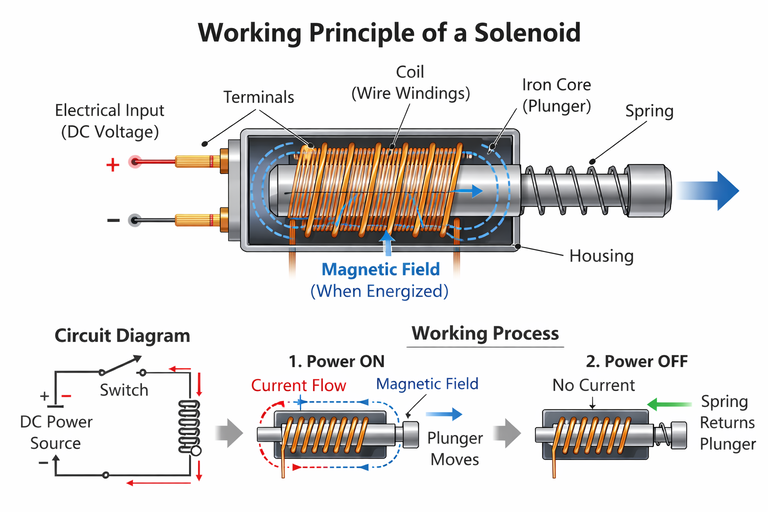
These small but powerful devices are the unsung heroes in countless machines you interact with daily. They work silently in everything from a massive factory assembly line to the coffee machine on your kitchen counter. To really understand their importance, we need to look at each area one by one. Let’s start with the world of industrial manufacturing.
How Are Solenoid Valves Used in Industrial Automation?
Factories need perfect, repeatable control over their processes. A single small failure can bring an entire production line to a halt. Solenoid valves provide that reliable, automated control.
In industrial automation, solenoid valves are essential for directing the flow of compressed air, water, and hydraulic fluids. They operate actuators, control assembly processes, and ensure safety, which greatly boosts production efficiency and reduces the need for manual work.

In my 20 years of manufacturing solenoid components, I’ve seen firsthand how vital they are on the factory floor. They are the muscles of modern automation. Think about a pneumatic system7 that uses compressed air to power tools or move parts. Solenoid valves act as the electrical switches that tell the air where to go and when. This allows a central computer to control a whole series of complex actions, like clamping a part, drilling a hole, and then releasing it, all in perfect sequence.
Key Roles in Industrial Settings
In hydraulic systems8, which use liquids like oil to generate immense force, solenoid valves control the flow to heavy-duty cylinders. This is how industrial presses shape metal and robotic arms lift heavy loads with precision. The valve must be incredibly robust to handle the high pressures.
Here’s a simple breakdown of where you'll find them:
| Industrial System | Solenoid Valve Function | Primary Benefit |
|---|---|---|
| Pneumatic Control | Directs compressed air to actuators | Fast, repeatable motion |
| Hydraulic Machinery | Manages high-pressure fluid for force | Precise control of heavy equipment |
| Process Control | Opens/closes pipes for mixing chemicals | Automated and safe batching |
| Dust Collector Systems | Delivers short blasts of air to clean filters | Maintains system efficiency |
As an OEM supplier, we know that reliability is everything. A valve failure can cost thousands in downtime. That’s why material selection and quality control, from the purity of the copper wire in the coil to the durability of the valve body, are things we never compromise on.
How Are Solenoid Valves Used in Automotive Systems?
Modern cars are incredibly complex machines. Dozens of systems must work together perfectly for a safe and smooth ride. Solenoid valves are the tiny controllers managing critical fluid flows.
In cars, solenoid valves are vital for engine performance, safety, and comfort. They manage fuel injection9, control gear shifts in automatic transmissions10, regulate emissions systems (EGR), and operate components in the braking and suspension systems.

A car is a very harsh environment for any component. It has constant vibrations, extreme temperature swings, and exposure to dirt and fluids. The solenoid valves used here must be exceptionally durable. When we design and manufacture coils for automotive clients, we focus on robust construction that can withstand these conditions for years. These valves aren't just for convenience; they are critical for the core functions of the vehicle.
Critical Functions in a Vehicle
The most well-known example is the fuel injector, which is a highly specialized solenoid valve that sprays a precise amount of fuel into the engine's cylinder at the perfect moment. But their role goes much further.
- Automatic Transmissions: A set of shift solenoids controls the flow of transmission fluid. When you feel your car shift gears smoothly, it's these valves opening and closing in a precise sequence dictated by the car's computer.
- Engine Performance: Variable Valve Timing (VVT) solenoids adjust the timing of the engine's valves to improve performance and fuel economy.
- Safety and Emissions: The anti-lock braking system (ABS) uses solenoid valves to rapidly pulse the brakes, preventing the wheels from locking up. Exhaust Gas Recirculation (EGR) valves, another type of solenoid, help reduce harmful emissions.
| Automotive System | Solenoid Valve's Role | Impact on Driving |
|---|---|---|
| Fuel Injection | Sprays fuel into the engine | Engine power and fuel efficiency |
| Automatic Transmission | Directs fluid to change gears | Smooth gear shifting |
| ABS Brakes | Modulates brake fluid pressure | Prevents skidding during hard braking |
| EGR System | Recirculates exhaust gas | Reduces NOx emissions |
Each of these valves is a small piece of a very large puzzle, but without them, the modern car simply wouldn't work as we know it.
Where Are Solenoid Valves Used in Home Appliances?
You expect your home appliances to work flawlessly at the push of a button. But how do they magically fill with water or brew your coffee? It's often a simple solenoid valve.
Solenoid valves are common in home appliances to control water flow. You can find them in washing machines, dishwashers, refrigerators with ice makers, smart faucets, and automatic coffee machines11, enabling automated and precise operation.

This is where my work feels closest to home. We supply solenoid coils to some of the largest European home appliance brands, so I know exactly what goes into these machines. The automatic faucet in a public restroom is a great example. When you place your hand under it, a sensor triggers a solenoid valve to open and let water flow. The same principle applies in your house.
The Hidden Workhorse in Your Home
Your washing machine is a perfect case study. It has at least one solenoid inlet valve, often two (one for hot, one for cold). When you start a cycle, the machine sends an electrical signal to the valve, which opens to let the tub fill. A pressure switch then tells the valve to close when the water reaches the right level.
Here are a few more examples from your daily life:
- Dishwashers: Just like washing machines, they use solenoid valves to control water intake for different wash and rinse cycles.
- Coffee Machines: High-end coffee makers and espresso machines use solenoid valves to control the flow of hot, high-pressure water through the coffee grounds. This ensures consistent extraction for a perfect cup.
- Refrigerators: If your fridge has a water dispenser or an automatic ice maker, a solenoid valve is what opens to fill your glass or the ice tray.
| Appliance | Solenoid Valve Function | Everyday Impact |
|---|---|---|
| Washing Machine | Fills the drum with water | Automated laundry cycles |
| Dishwasher | Controls water for washing and rinsing | Clean dishes with no manual filling |
| Coffee Maker | Manages hot water flow for brewing | Consistent and strong coffee |
| Refrigerator | Fills ice maker and water dispenser | On-demand ice and chilled water |
For these applications, material safety is critical. The plastics and metals must comply with food-grade standards like CE, RoHS, and REACH. This ensures that the water passing through is safe to drink or use.
How Are Solenoid Valves Used in Medical and Laboratory Equipment?
Medical devices demand the highest level of precision and reliability. A tiny, microscopic error in fluid delivery can have serious consequences. Miniature solenoid valves provide that critical control.
In the medical field, solenoid valves manage the precise flow of gases and sterile liquids. They are crucial components in ventilators12, dialysis machines13, anesthesia equipment, and diagnostic analyzers, where accuracy and cleanliness are non-negotiable.

The world of medical devices is one of the most challenging for any component manufacturer. The requirements go far beyond simple function. The valves must be incredibly small, consume very little power to avoid heat buildup, and be made from inert materials that won't react with the fluids or gases they control. Often, a standard off-the-shelf part won't work, which is where our custom design and OEM capabilities become so important. We work with clients to build a solenoid coil that fits their exact specifications.
Precision for Patient Care
Think about a patient on a ventilator. The machine must deliver a precise mixture of oxygen and air with perfect timing. Solenoid valves control this gas blending, opening and closing hundreds of times per minute with flawless reliability.
Here are some other critical medical applications:
- Dialysis Machines: These machines act as an artificial kidney, cleaning a patient's blood. Solenoid valves control the flow of blood, dialysate, and cleaning solutions throughout the complex system.
- Anesthesia Delivery: Solenoid valves precisely control the mix of anesthetic gases delivered to a patient during surgery.
- Diagnostic Instruments: Laboratory analyzers use solenoid valves to handle tiny, measured samples of blood or reagents for testing. Any inaccuracy in volume could lead to a wrong diagnosis.
| Medical Equipment | Solenoid Valve Role | Critical Requirement |
|---|---|---|
| Ventilators | Controls mixing and flow of O2/air | Extreme reliability and speed |
| Dialysis Machines | Manages flow of blood and dialysate | Inert materials, no contamination |
| Diagnostic Analyzers | Dispenses precise micro-liters of fluid | High accuracy and repeatability |
In this field, there is no room for error. Every single component must be manufactured and tested to the highest standards, which is why a robust quality control system like ISO 16949 and 100% outgoing inspection are so important.
How Are Solenoid Valves Used in Water, Gas, and Fluid Control Systems?
Managing the large-scale flow of water, gas, and other fluids is a massive challenge. A leak in a municipal water main or a failure in a gas pipeline can be dangerous. Solenoid valves provide a dependable way to control these systems remotely.
Solenoid valves are fundamental in large-scale fluid control. They are used in agricultural irrigation to automate watering, in municipal water treatment plants14 for process control, and in natural gas distribution for emergency safety shutoffs.

When you move beyond small devices and look at infrastructure, solenoid valves take on a different form. They become larger, more rugged, and built to handle much higher pressures and flow rates. For example, in an agricultural setting, a farmer can use a network of solenoid valves connected to a central timer to automate the irrigation of huge fields. This saves water, time, and labor.
The Gatekeepers of Our Infrastructure
These valves act as automated gatekeepers. They can be programmed to open and close on a schedule, or they can be triggered by a sensor or a remote command. This is especially important for safety. A natural gas line leading into a building will almost always have an emergency shutoff solenoid valve. If a gas detector senses a leak, it immediately cuts power to the valve, causing it to close and stop the flow of gas.
Here are a few more large-scale examples:
- Water Treatment Plants: Used to dose chemicals like chlorine into the water supply in precise amounts.
- Fire Sprinkler Systems: In some "deluge" type systems, a solenoid valve holds back the water until a fire alarm is triggered, at which point it opens to flood the area.
- HVAC Systems: Large commercial air conditioning systems use solenoid valves to control the flow of refrigerant.
| System | Fluid Type | Solenoid Valve's Purpose |
|---|---|---|
| Automated Irrigation | Water | Scheduled watering of crops |
| Natural Gas Lines | Flammable Gas | Emergency safety shutoff |
| Swimming Pools | Chlorinated Water | Automated chemical dosing and filtration |
| Car Washes | Water, Soap, Wax | Sequencing different spray cycles |
The material of the valve body is crucial here. Brass is common for water and air, while stainless steel is often required for corrosive fluids or high-purity applications. The right choice ensures a long and reliable service life.
What Are Some Frequently Asked Questions About Solenoid Valves?
Even after seeing all these applications, you might still have some specific questions. The technical terms can sometimes be confusing. Let’s clear up a few of the most common ones.
People often ask about the difference between normally open and normally closed valves, or what makes a valve direct-acting. The right choice always depends on your specific needs for safety, pressure, and flow rate.

As a manufacturer, we get these questions all the time from procurement managers and engineers. Choosing the wrong type of valve can cause a system to fail or behave unexpectedly. Understanding the basic terminology is the first step to selecting the right component for your project. Here are answers to a few questions I hear most often.
What is the difference between Normally Open (NO) and Normally Closed (NC)?
This is the most fundamental question. It describes the state of the valve when no electrical power is applied.
- Normally Closed (NC): This is the most common type. The valve is closed and blocks flow when it is not energized. When you apply power to the coil, it opens. This is ideal for safety-critical applications, like a gas shutoff valve.
Understanding solenoid valves is crucial as they control fluid flow in various applications, enhancing automation and efficiency. ↩
Exploring solenoid valves in industrial automation reveals their role in enhancing production efficiency and safety. ↩
Solenoid valves are essential in cars for managing fuel injection, gear shifts, and emissions, ensuring performance and safety. ↩
Solenoid valves automate water flow in home appliances, ensuring convenience and efficiency in daily tasks like laundry and dishwashing. ↩
Solenoid valves control water intake in washing machines, enabling automated laundry cycles and efficient operation. ↩
Solenoid valves manage precise fluid flow in medical devices, crucial for patient care and diagnostic accuracy. ↩
Solenoid valves are key in pneumatic systems, directing compressed air for fast, repeatable motion in industrial settings. ↩
Solenoid valves manage high-pressure fluid flow in hydraulic systems, crucial for precise control of heavy equipment. ↩
Solenoid valves in fuel injection systems enhance engine power and fuel efficiency, crucial for modern automotive performance. ↩
Solenoid valves control fluid flow in automatic transmissions, enabling smooth gear shifting and improved driving experience. ↩
Solenoid valves control hot water flow in coffee machines, ensuring consistent extraction for a perfect cup of coffee. ↩
Solenoid valves control gas mixing in ventilators, ensuring reliable and precise delivery of oxygen and air to patients. ↩
Solenoid valves manage fluid flow in dialysis machines, ensuring safe and effective blood cleaning for patients. ↩
Solenoid valves dose chemicals in water treatment plants, ensuring safe and precise water supply management. ↩