Struggling to balance solenoid cost with long-term reliability? You worry that a premature failure could trigger a wave of warranty claims, damaging your brand's reputation and your bottom line.
A solenoid's duty cycle directly impacts its lifespan by controlling heat generation. A higher duty cycle creates more heat, which can degrade internal insulation and lead to failure. The key is to see duty cycle not as a simple timer, but as a critical factor in heat management and overall application risk.
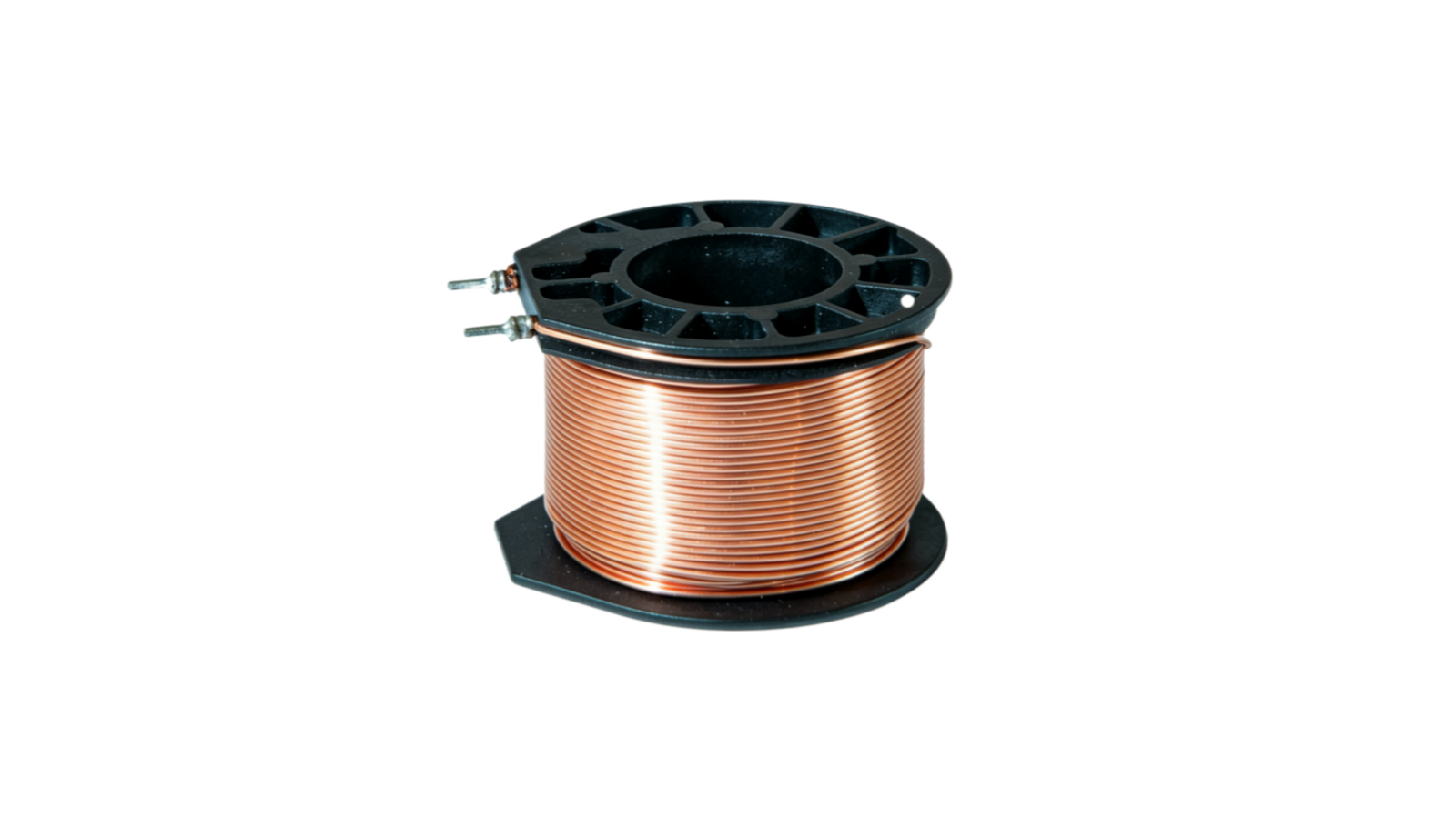
I've spent over 20 years manufacturing solenoids for major brands, and I've seen this scenario play out countless times. A procurement manager asks for a solenoid with a "one-million-cycle lifespan," hoping for a guarantee. But that number is meaningless without context. The real conversation shouldn't be about a single spec; it should be about understanding the risks in your specific application. Let's break down what really matters so you can protect your product and your brand.
What Is Solenoid Duty Cycle and How Do You Calculate It?
Confused by duty cycle percentages on a spec sheet? You might pick a solenoid that seems right on paper, only to find it fails in the field because the rating was misunderstood.
Duty cycle is the percentage of time a solenoid is energized ("On Time") within a single full cycle ("Total Time"). To calculate it, you divide the On Time by the Total Time and multiply by 100. It's a measure of thermal load, not just operating time.
When procurement managers ask me about duty cycle, they often think of it as a simple timer. But its real purpose is to define the heat management requirements of the coil. A 100% duty cycle rating doesn't promise infinite life; it means the solenoid is designed to dissipate heat continuously without immediate failure under specific test conditions. A 25% rating means it needs a 3:1 cool-down ratio to avoid overheating. Thinking about duty cycle as a heat problem, rather than a time problem, is the first step in de-risking your component selection.
The Real Meaning of Duty Cycle Ratings
When you look at a spec sheet, the duty cycle rating is telling you a story about heat. Here’s how to translate it:
- Intermittent Duty (<100%): Designed for short bursts of power. They are often smaller and more cost-effective but will overheat and fail if left on too long.
- Continuous Duty (100%): Designed to be left on indefinitely without exceeding its temperature limit. They are larger and use materials built to handle constant heat.
The critical mistake is using an intermittent-duty solenoid in an application that unexpectedly requires it to stay on longer. This is a common cause of field failures that I see all too often.
Why Does Exceeding an Intermittent Duty Cycle Cause Coil Burnout?
You specified an intermittent-duty solenoid to save costs, but now you're facing reports of field failures. The pressure is on as warranty claims rise and your brand's reputation is at stake.
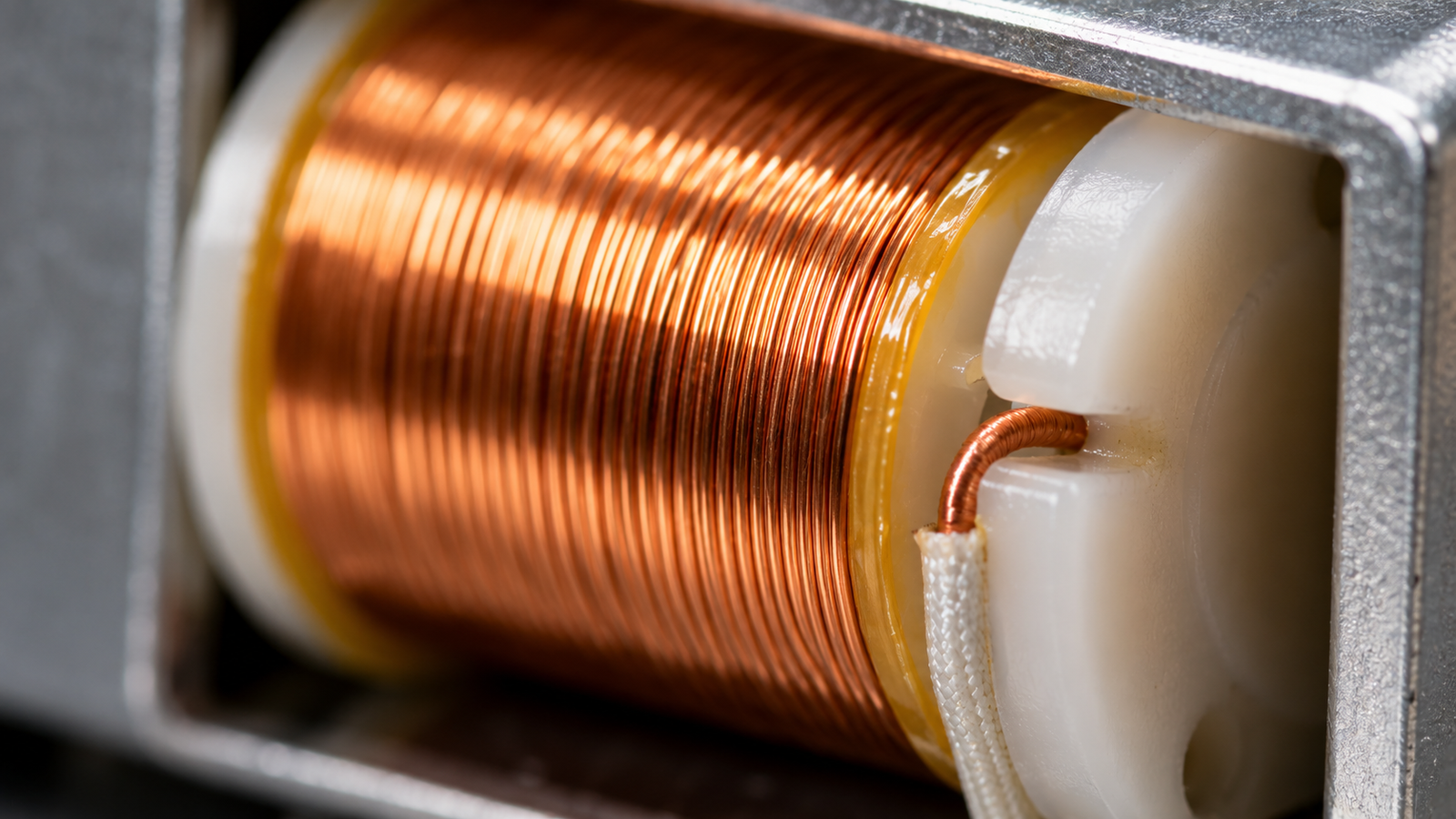
Exceeding an intermittent duty cycle causes the coil to generate heat faster than it can dissipate it. This extreme temperature rise melts the wire's enamel insulation, causing a short circuit. The result is a permanently failed, or "burned out," solenoid.
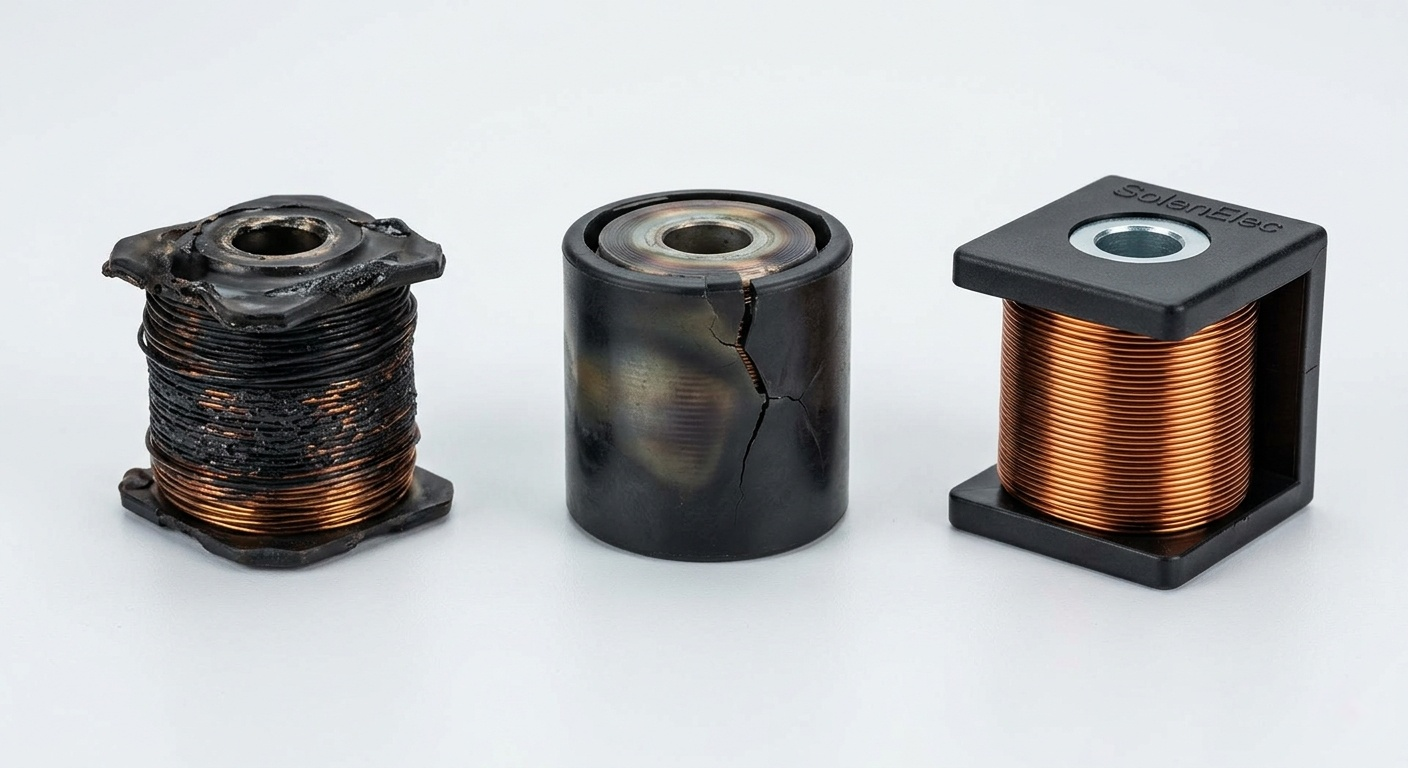
I once worked with a home appliance brand that switched to a cheaper, intermittent-duty solenoid for a locking mechanism. They calculated the "On Time" based on normal use. What they didn't account for was a failure mode elsewhere in the machine that caused the solenoid to stay energized continuously. The coils began burning out in the field. The issue wasn't the solenoid's quality; it was a mismatch between the duty cycle rating and the application's worst-case scenario. This is a classic example of how a simple component choice can create significant business risk.
The Physics of Failure
The process of burnout is straightforward but destructive:
- Heat Buildup: Current flowing through the copper wire generates heat (I²R losses).
- Insulation Degradation: The coil's magnet wire is coated with a thin layer of enamel insulation, often rated to a specific temperature class (e.g., Class F at 155°C). Exceeding this temperature causes the enamel to break down.
- Short Circuit: Once the insulation fails, the copper wires touch, creating a short circuit. This causes a current surge, which rapidly generates more heat and melts the coil, leading to complete failure.
Understanding this failure mechanism is key to mitigating it. It’s not about finding a "stronger" solenoid, but about ensuring the thermal design matches the real-world application.
How Do Continuous Duty Solenoids Maximize Lifespan in High-Heat Applications?
Your application requires a solenoid to be on for long periods. You're worried an intermittent-duty model will fail, but a continuous-duty one seems expensive. How do you justify the cost?
Continuous duty solenoids are designed for 100% "On Time" by maximizing heat dissipation. They are engineered with features that prevent overheating, ensuring reliability in applications where the solenoid is constantly energized.
Think of a continuous duty solenoid as an investment in risk reduction. While the upfront cost is higher, the total cost of ownership is often lower. From my experience, brand managers who focus on long-term reliability choose them for critical functions. They are not just buying a component; they are buying peace of mind and protecting their brand from the high costs of after-sales service and warranty claims. A mature supplier will help you analyze if this investment is necessary for your specific application.
Key Design Features for Heat Management
Continuous duty solenoids use several strategies to manage heat effectively:
| Feature | How It Helps Manage Heat | Impact on Reliability |
|---|---|---|
| Larger Bobbin/Frame | Increases surface area, allowing more heat to radiate into the surrounding environment. | Reduces internal temperature, preserving insulation integrity. |
| Higher Temp Materials | Uses insulation (e.g., Class H, 180°C) and bobbin plastics that withstand higher temperatures. | Provides a larger safety margin against overheating. |
| Lower Power Draw | Designed with more wire turns or higher resistance to draw less current once actuated. | Generates less heat during continuous operation. |
These features make the solenoid more robust, directly contributing to a lower failure rate in demanding, high-heat environments.
What Is a "Hit-and-Hold" Circuit, and How Does It Reduce Solenoid Wear?
You need the strong pull force of a low-resistance coil but can't handle the heat it generates. This design paradox forces you to compromise on either performance or reliability.
A "hit-and-hold" circuit is an intelligent control strategy. It applies a brief, high-power pulse ("hit") to actuate the solenoid, then reduces the voltage to a lower level ("hold") just strong enough to keep it in position. This drastically reduces heat and wear.
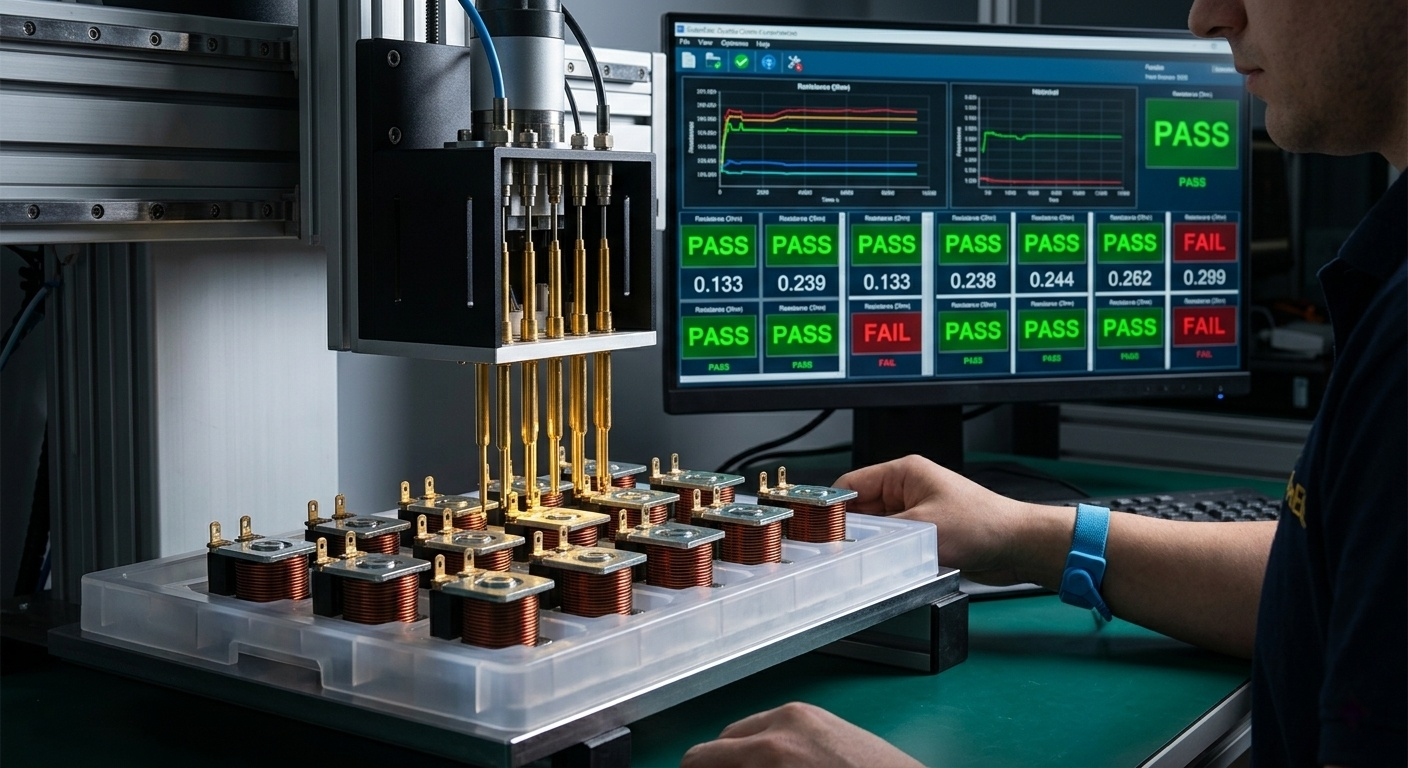
This is one of the smartest ways to get the best of both worlds. I often recommend this approach to clients in the home appliance space. You can use a powerful, fast-acting intermittent-duty solenoid without the risk of burnout. The "hit" provides the high force needed to move the plunger, while the "hold" phase generates minimal heat, allowing for what is effectively continuous operation. It’s an elegant engineering solution that reduces power consumption, minimizes thermal stress, and extends the solenoid's operational life, directly lowering the total cost of ownership. It turns a potential reliability problem into a competitive advantage.
Benefits of Hit-and-Hold Control
Implementing this strategy offers several commercial advantages:
- Energy Savings: The low holding voltage consumes significantly less power, which is a key selling point for energy-efficient appliances.
- Increased Lifespan: By minimizing heat, you reduce the primary cause of insulation degradation and coil failure. This leads to fewer warranty claims.
- Faster Actuation: You can use a more powerful "hit" phase for faster response times than a standard continuous-duty solenoid could provide.
- Cost Optimization: It may allow for the use of a smaller, less expensive intermittent-duty solenoid in an application that would otherwise require a bulky continuous-duty model.
This is a prime example of where a discussion with an experienced supplier moves beyond the spec sheet and into true application engineering.
How Do You Choose Between Continuous and Intermittent Solenoids for OEM Projects?
You're facing a tough choice for your new appliance. An intermittent solenoid is cheaper upfront, but a continuous one seems safer. How do you make a decision that you can defend to your management?
The choice is a risk management decision, not just a technical one. You must analyze the application's true operating conditions, including worst-case scenarios, and weigh the upfront cost against the potential long-term cost of failure.

When a procurement manager asks me this, I don't give a simple answer. Instead, I ask them questions. What happens if the solenoid fails? Is it a minor inconvenience or a critical safety issue? What's the cost of a single warranty claim? A mature supplier partner won't just sell you a part; they will help you model the risk. The right choice depends entirely on your application and your tolerance for risk. A low-cost component is no bargain if it ends up costing you millions in recalls and damages your brand's reputation for quality.
A Framework for Decision-Making
Use this table to frame your discussion with suppliers. The best partner will be able to talk through these points with you.
| Factor | Intermittent Duty Solenoid | Continuous Duty Solenoid | Key Question for Your Application |
|---|---|---|---|
| Upfront Cost | Lower | Higher | Does the initial saving justify the potential failure risk? |
| Primary Failure Mode | Burnout from overheating if left on too long. | Mechanical wear over millions of cycles. | What is the most likely failure mode in my specific use case? |
| Best Application | Short, infrequent actuations (e.g., door latch). | Long or indefinite "On" periods (e.g., diverter valve). | What is the true, real-world duty cycle, including fault conditions? |
| Risk Profile | Higher risk of thermal failure if misapplied. | Lower thermal risk, but higher initial investment. | What is the business impact (cost, reputation) of a field failure? |
This framework shifts the conversation from "which part is cheaper?" to "which solution presents the most acceptable level of risk for my business?"
Conclusion
Ultimately, a solenoid's duty cycle is a critical factor in managing heat and mitigating failure risk. The key is to partner with a supplier who helps you analyze your application's unique thermal challenges.