
How Do You Choose and Optimize the Right Solenoid for Your Project?
Choosing the wrong solenoid can lead to costly failures and damage your brand. You need a better way to select components than just looking at a datasheet.
The best way to choose a solenoid is to treat it as a business risk assessment, not just a technical choice. It involves matching your specific application's lifecycle demands with a supplier's manufacturing consistency and customization capabilities to protect your brand's reputation and manage total cost of ownership.

I've spent over 20 years helping procurement managers at major appliance brands select the right components. The most successful projects don't start with a perfect spec sheet. They start with a conversation about risk and long-term value. The goal isn't just to buy a part; it's to build a reliable product that protects your brand. In this guide, I'll walk you through the key questions we discuss with our partners to ensure they make a choice that looks good not just on paper, but in the hands of their customers years later.
How Do Solenoid Actuators Work: A Beginner’s Guide to Electromagnetic Principles?
Technical jargon about electromagnetism can feel overwhelming. But misunderstanding the basics can lead you to approve a component that is fundamentally mismatched for your product.
A solenoid actuator uses a coil of wire to create a magnetic field when electricity passes through it.1 This magnetic field moves a metal plunger, creating push/pull or turning motion. The force and speed depend on the coil's design and the electrical current applied.

From a manufacturer's perspective, these principles are directly tied to business outcomes. It’s not just abstract physics; it's a series of trade-offs that affect your bottom line.
From Current to Cost
To get more force, you either need more turns of copper wire in the coil or you need to push more electrical current through it.2 This isn't just a technical detail. More copper means higher material costs and a physically larger part. More current means the appliance consumes more power and generates more heat, which can affect other components and the product's overall energy rating. It's a balancing act between performance and cost.
The Lifecycle Impact
A solenoid's job is to turn electricity into motion, over and over again. This cycle of activation and deactivation is where wear and tear happens. The constant magnetic and physical stress is why material quality and manufacturing precision are so critical.3 A cheaply made coil might perform well in a lab test, but it will fail faster in the real world, leading directly to warranty claims and unhappy customers.
| Principle | Technical Detail | Business Implication for Procurement Managers |
|---|---|---|
| Electromagnetism | More wire turns create more force. | Higher unit cost due to more copper, potential for larger size. |
| Current | Higher current creates more force. | Increased appliance power consumption, more heat generated. |
| Plunger Movement | This is the mechanical action. | The primary point of physical wear and a key failure risk. |
Linear vs. Rotary Solenoids: Which Actuator Type Fits Your Application?
You see "linear" and "rotary" on spec sheets, but what does that mean for your appliance? Choosing the wrong type isn't just an engineering mistake; it's a project delay.
Choose a linear solenoid for simple push/pull tasks like locking a door or opening a valve. Use a rotary solenoid for twisting actions, such as moving a diverter flap or a shutter. The choice depends entirely on the mechanical movement your appliance needs to perform.

The decision between linear and rotary seems simple, but I've seen it become a source of unnecessary risk when teams try to over-engineer a solution to save a few cents.
Matching Motion to Machine
The key is to match the actuator's motion directly to the job it needs to do. In home appliances, the uses are very clear. Linear solenoids are perfect for the direct, straight-line motion needed to operate a washing machine's door lock or a coffee machine's water valve. Rotary solenoids are for tasks that require a specific angle of rotation, like an ice maker's diverter flap that directs ice into a bucket or through the door.
The Hidden Costs of Mismatches
I once worked with a procurement manager who was considering a complex linkage system. The plan was to use a cheaper linear solenoid to create a rotating motion. On paper, it saved a small amount on the component cost. However, we advised that adding extra mechanical parts would create multiple new points of failure.4 The initial savings would be quickly erased by higher warranty claims. By switching to a single, appropriate rotary solenoid, they reduced the number of parts, simplified the design, and increased the appliance's long-term reliability.
| Actuator Type | Common Appliance Use | Key Consideration for Procurement |
|---|---|---|
| Linear | Washing Machine Door Lock, Coffee Machine Valve | Simple, reliable, and cost-effective for push/pull actions. |
| Rotary | Ice Maker Diverter, HVAC Vent Control | Essential for turning tasks; avoids complex, failure-prone linkages. |
| Mismatch | Using a linear part for a rotary task. | Adds mechanical complexity, increases failure points and warranty risk. |
5 Essential Factors in Solenoid Selection: Force, Stroke, and Duty Cycle?
Datasheets are filled with numbers like force and stroke. But focusing only on these numbers without context can lead you to buy a part that fails in your application.
Beyond force (how hard it pushes) and stroke (how far it moves), the duty cycle is the most critical factor. It's the ratio of on-time to total time. Mismatching the duty cycle is a common cause of overheating and premature failure5, directly impacting your product's lifespan.

When I review a project with a brand manager, we spend less time on the maximum force and more time on how the solenoid will actually be used. The context of the application is far more important than any single number on a spec sheet.
The Duty Cycle Trap
A common question I get is, "This solenoid meets our force spec, so why is this other one more expensive?" The answer is almost always the duty cycle. A solenoid in a consumer coffee machine might be used 10 times a day. This requires a standard, or "intermittent," duty cycle. But a solenoid in a commercial coffee machine might be used 100 times an hour. This demands a "continuous" duty-rated solenoid that is designed to stay on longer without overheating. Choosing the cheaper, intermittent-duty solenoid for a continuous-use application is a guaranteed path to field failures.
Beyond the Big Three: Environment and Lifespan
The other two factors we always discuss are environment and required lifespan. A solenoid in a washing machine must withstand constant vibration. A solenoid in a steam oven has to perform in high heat and humidity. The numbers on a datasheet are recorded in a pristine lab environment. Your appliance is not a lab. This is where a deep conversation with an experienced OEM/ODM partner is invaluable. We can help you anticipate how the real-world environment will impact performance and select a part built to survive it.
Troubleshooting Common Issues: How to Extend the Lifespan of Your Solenoid Actuator?
Your team reports a high failure rate for a solenoid in a new appliance. This could mean costly recalls, brand damage, and a frantic search for a new supplier.
Most solenoid failures, like overheating or weak force, are not product defects but symptoms of a mismatch.6 The most common issues are an incorrect duty cycle, unstable voltage, or environmental stress (heat, moisture) that was not accounted for during the design phase.
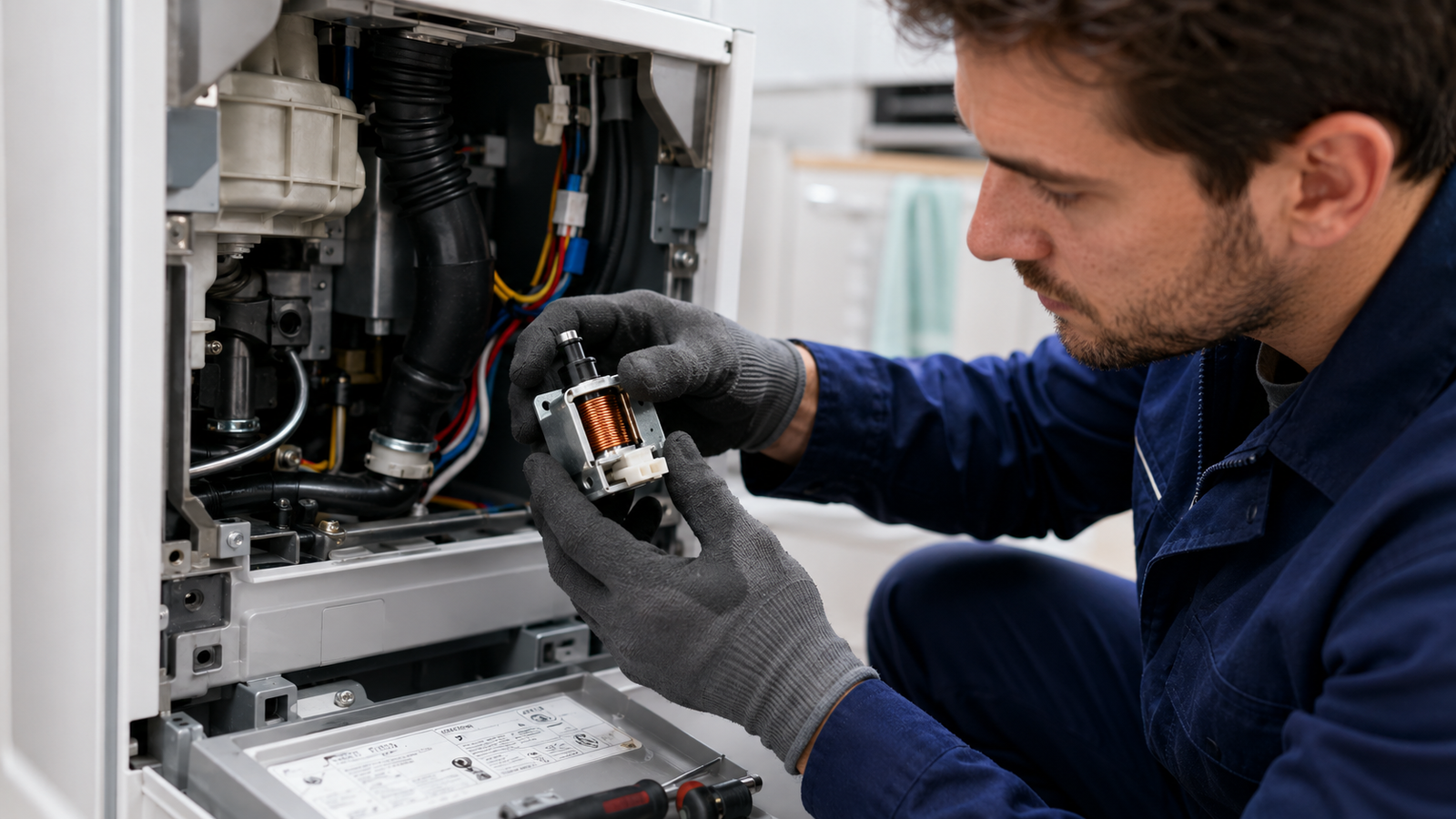
True optimization and lifespan extension happen long before a product fails in the field. It happens during the design phase, through a collaborative partnership between your team and your component manufacturer.
The Blame Game: Is It the Part or the Application?
When a client contacts us about a "faulty" solenoid, the first thing we do is ask about the system it's in. Is the power supply providing consistent voltage? Is the ambient temperature inside the appliance higher than expected? Is there unexpected moisture? More often than not, the "fix" isn't a different solenoid, but a small adjustment to the appliance's design or power delivery. Identifying the root cause as a system issue—rather than a component defect—saves time and prevents the problem from happening again.
Your Supplier as a Diagnostic Partner
A good supplier shouldn't just sell you parts; they should act as an extension of your engineering team. With our OEM partners, we analyze the entire system to de-risk their project. By understanding the application, we can help them move from troubleshooting failures to preventing them entirely.
| Symptom | Common Assumption | Often the Real Cause (System Issue) |
|---|---|---|
| Overheating | The coil is defective. | The chosen duty cycle is too low for the real-world application.7 |
| Weak Force | The magnet is weak. | There is a voltage drop in the appliance's wiring under load.8 |
| Sticking Plunger | Poor manufacturing. | Contamination from moisture or debris inside the appliance.9 |
Material Science in Actuators: Why High-Purity Copper and Insulation Matter?
You're asked to approve a cheaper solenoid. The specs look the same. The catch is often in the hidden materials, which can lead to widespread product failures months later.
High-purity copper ensures a consistent magnetic field and better heat dissipation10, preventing overheating. High-grade insulation prevents electrical shorts, especially in humid or high-heat environments.11 Cheaper materials degrade faster, leading to inconsistent performance and a shorter product lifespan.
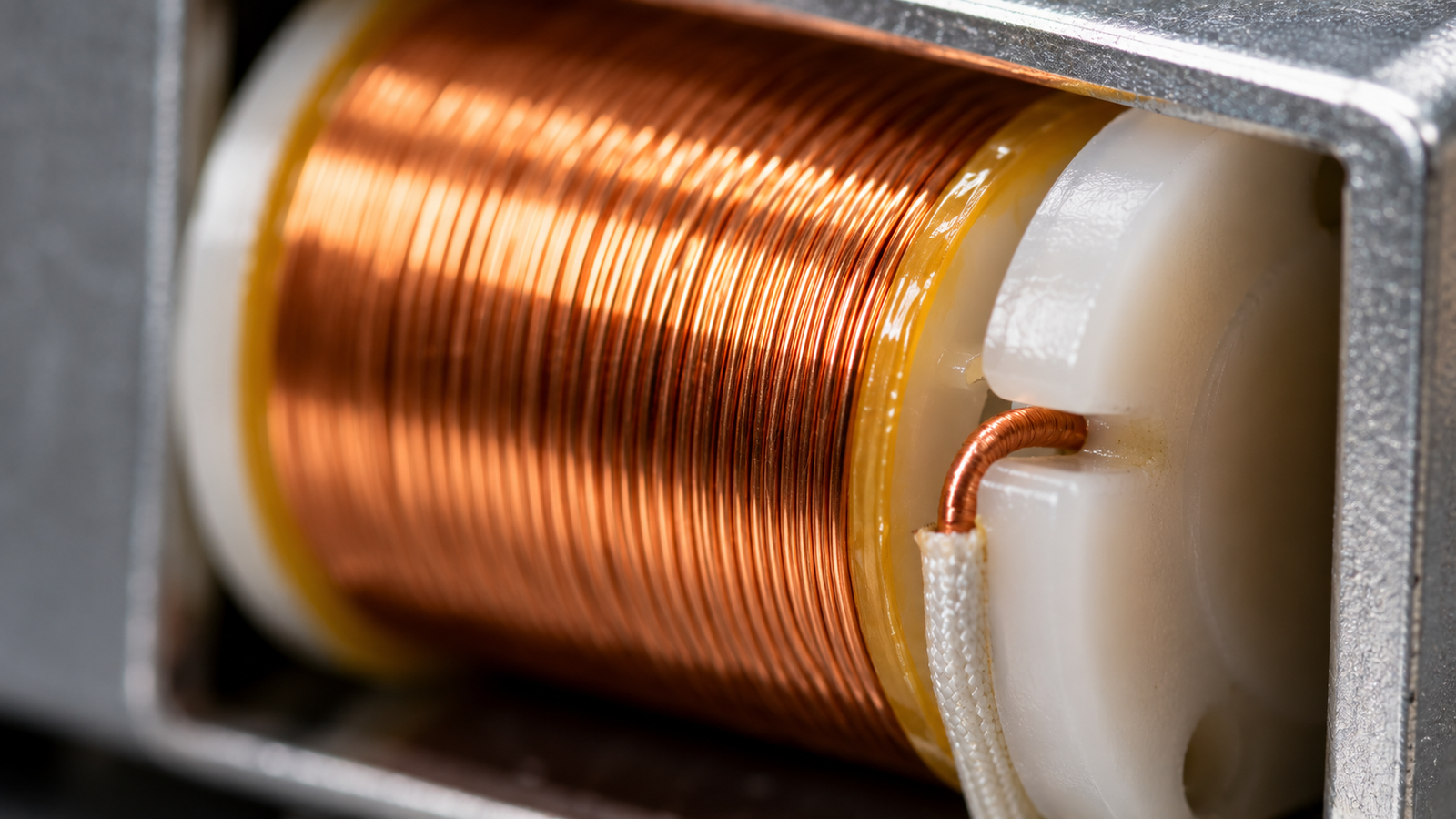
As a procurement manager, you are the gatekeeper of quality. Understanding the risks associated with raw materials is crucial for protecting your brand from the long-term consequences of a decision made to save a few cents per unit.
The Invisible Cost of Impurities
In our 20+ years of manufacturing, we have seen how material choices impact long-term reliability. A competitor's cheaper coil might use copper wire with more impurities or a lower-grade plastic for the bobbin. It passes initial tests. But over thousands of cycles in a hot, vibrating appliance, those impurities increase electrical resistance, causing the coil to run hotter and fail sooner. For a brand manager, this is a ticking time bomb that explodes in the form of warranty claims 18 months after launch.
Manufacturing Consistency is Your Best Insurance
This is why our factory puts such a heavy emphasis on incoming material inspection and process controls, like using an MES system for full traceability. It’s not about producing one perfect sample for you to test. It’s about ensuring the 500,000th unit that goes into your appliance is identical to the first. Your brand's reputation for quality relies on this consistency. That's what you are truly investing in when you partner with a manufacturer who controls their process from raw material to final inspection.
Conclusion
Ultimately, choosing the right solenoid is about building a partnership that manages risk, ensures manufacturing consistency, and protects your brand's reputation for the long term.
"Solenoid valve - Wikipedia", https://en.wikipedia.org/wiki/Solenoid_valve. A source can confirm that a solenoid is an electromechanical device that converts electrical energy into linear motion by using a coil of wire to generate a magnetic field that moves a ferromagnetic core, or plunger. Evidence role: definition; source type: encyclopedia. Supports: The source should define a solenoid actuator and explain its basic operating principle based on electromagnetism.. ↩
"Solenoid - Wikipedia", https://en.wikipedia.org/wiki/Solenoid. Physics and engineering texts can verify that the magnetic field strength (and thus the force) of a solenoid is directly proportional to the product of the number of turns in the coil and the current flowing through it. Evidence role: mechanism; source type: education. Supports: The source should explain the physics behind solenoid force generation, specifically how it relates to the number of coil turns and the magnitude of the electrical current.. ↩
"Actuation Fatigue and Fracture in High Temperature Shape Memory ...", https://oaktrust.library.tamu.edu/items/f765472d-7f7f-44d7-97f3-799313957619. Research on the reliability of electromechanical components shows that cyclical loading, both mechanical (plunger impact) and magnetic (thermal expansion and contraction), can lead to material fatigue, degradation of insulation, and eventual failure. Evidence role: mechanism; source type: paper. Supports: The source should discuss how repeated mechanical and magnetic stresses contribute to material fatigue and eventual failure in components like solenoids.. ↩
"[PDF] Mechanical Design Reliability Handbook - NASA", https://extapps.ksc.nasa.gov/reliability/Documents/Mechanical-Design-Reliability-Monograph.pdf. Reliability engineering principles state that, all else being equal, a system's overall reliability is inversely related to its complexity; increasing the number of components introduces more potential modes of failure. Evidence role: general_support; source type: education. Supports: The source should support the engineering principle that increasing the number of components in a mechanical system increases the number of potential failure points.. ↩
"[PDF] Reliability and life study of hydraulic solenoid valve. Part 2", https://www.eng.auburn.edu/~choeson/Publication/1132_2009_Reliability%20and%20life%20study%20of%20hydraulic%20solenoid%20valve-Part%202%20_S.%20V.%20Angadi,%20R.%20L.%20Jackson.pdf. Technical sources on solenoid application confirm that exceeding the rated duty cycle causes the coil to generate heat faster than it can dissipate, leading to a temperature rise that can melt wire insulation and result in a short circuit or burnout. Evidence role: mechanism; source type: paper. Supports: The source should explain that operating a solenoid beyond its rated duty cycle leads to excessive heat generation, which damages the coil and causes failure.. ↩
"Common faults and solutions of refrigeration solenoid valves", https://www.snway.com/article/822.html. A source such as a technical paper or engineering guide on solenoid troubleshooting can show that common failure modes like overheating or weak force are frequently traced back to system-level issues like incorrect voltage, excessive duty cycles, or high ambient temperatures, rather than defects in the solenoid itself. Evidence role: statistic; source type: paper. Supports: The source should provide data or expert analysis showing that a significant percentage of solenoid field failures are attributable to application errors.. Scope note: The exact percentage of failures due to mismatch versus defect can vary widely by application and manufacturer quality. ↩
"[PDF] Reliability and life study of hydraulic solenoid valve. Part 1", https://www.eng.auburn.edu/~choeson/Publication/1131_2009_Reliability%20and%20life%20study%20of%20hydraulic%20solenoid%20valve-Part%201%20_S.%20V.%20Angadi,%20R.%20L.%20Jackson.pdf. Engineering resources explain that when a solenoid is energized longer than its rated duty cycle, the heat generated by electrical resistance (Joule heating) accumulates faster than it can be dissipated, leading to a rapid temperature increase and potential failure. Evidence role: mechanism; source type: education. Supports: The source should explain the mechanism of Joule heating and how it relates to duty cycle and overheating.. ↩
"voltage determining solenoid force? - Electronics Stack Exchange", https://electronics.stackexchange.com/questions/43304/voltage-determining-solenoid-force. Technical documentation can confirm that the force produced by a solenoid is approximately proportional to the square of the current, which is directly affected by voltage. Therefore, even a small voltage drop within the system's wiring can lead to a significant reduction in actuation force. Evidence role: mechanism; source type: paper. Supports: The source should explain that solenoid force is highly dependent on the supplied voltage.. ↩
"[PDF] NUREG/CR-4819, "Aging & Service Wear of Solenoid-Operated ...", https://www.nrc.gov/docs/ML0403/ML040360264.pdf. Failure analysis studies of electromechanical components show that ingress of foreign materials, such as dust, debris, or moisture, can impede the movement of the plunger, leading to increased friction, binding, or corrosion that causes it to stick. Evidence role: case_reference; source type: research. Supports: The source should describe how foreign particles or moisture can interfere with the mechanical movement of a solenoid's plunger.. ↩
"Oxygen-free copper - Wikipedia", https://en.wikipedia.org/wiki/Oxygen-free_copper. Material science data shows that impurities in copper increase its electrical resistivity, which leads to greater heat generation (I²R losses) for a given current. High-purity copper, such as Oxygen-Free High-Conductivity (OFHC) copper, offers lower resistivity and higher thermal conductivity, improving both electrical efficiency and heat dissipation. Evidence role: mechanism; source type: paper. Supports: The source should explain how copper purity affects its electrical and thermal properties.. ↩
"[PDF] Impact of Environmental Variables on the Degradation of ... - OSTI", https://www.osti.gov/servlets/purl/1603931. Standards from bodies like NEMA and the IEC define insulation classes (e.g., Class F, H, N) based on the maximum continuous temperature an insulating material can withstand. High temperature and humidity accelerate the degradation of the material's dielectric strength, increasing the risk of short circuits. Evidence role: definition; source type: institution. Supports: The source should detail how high temperature and humidity can degrade insulating materials and explain the classification systems for insulation.. ↩