
Why Do Your Coffee Machine Solenoid Coils Keep Failing?
Worried about warranty claims from failing coffee machines? Frustrated by component burnout? The problem often lies in a tiny, overlooked part: the solenoid coil.
Solenoid coils in coffee machines often fail due to excessive heat that degrades the wire's insulation.1 This is preventable by selecting a coil with a thermal class (like Class H) that matches the machine's specific internal operating temperature and duty cycle2, not just its nominal voltage.
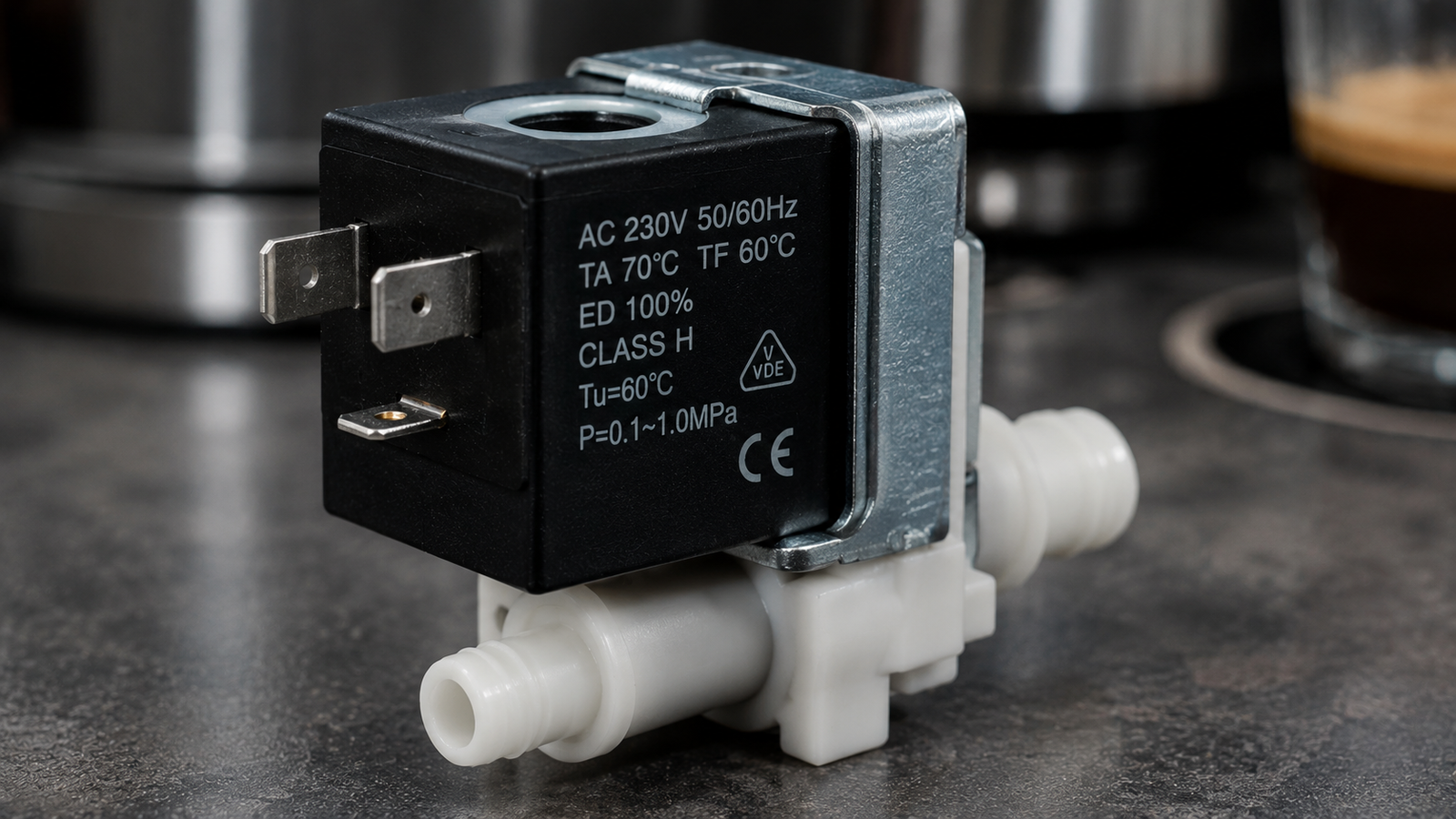
For over 20 years, I've worked with procurement managers from major European appliance brands. A common pattern I see is a call about solenoid coil failures in the field. They send me a burnt-out coil and a spec sheet, asking what went wrong. The spec sheet always looks fine on paper. But the real problem isn't written on the spec sheet. It’s hidden inside the hot, cramped space of the coffee machine itself. The question shouldn't be "Why did this part fail?" but rather "How do we design this part to never fail in the first place?". Let's dive into that.
What Really Causes Solenoid Coil Burnout in Coffee Machines?
Seeing coils burn out despite meeting the specs on paper? Frustrated by failures you can't predict? The cause is often a mismatch between the coil's rating and its actual working conditions.
Coil burnout is primarily caused by thermal degradation. When the internal temperature of a coffee machine exceeds the coil's insulation class rating (e.g., 155°C for Class F), the enamel insulation on the copper wire breaks down, leading to a short circuit3. This is a system design issue.
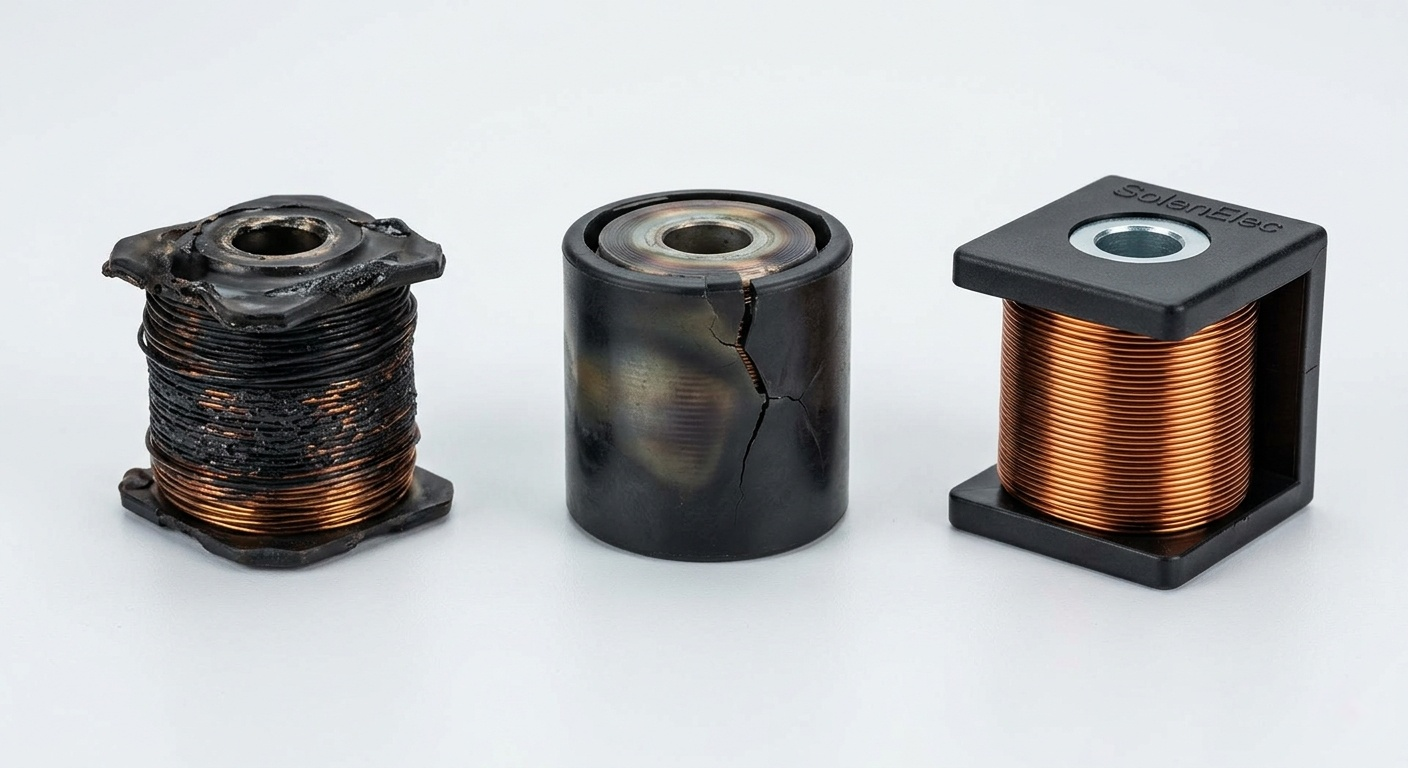
When an engineering buyer sends us a request for a quote (RFQ), it often specifies parameters like voltage and resistance. But the most critical factor for a coffee machine application is frequently missing: the true operating temperature. A coffee machine is a hostile environment for electronics.4 It's compact, poorly ventilated, and houses heating elements that can raise the internal ambient temperature to 80°C, 90°C, or even higher5.
When the coil is energized, it generates its own heat. This self-generated heat, added to the high ambient temperature, can easily push the coil's total temperature over its rated limit. For example, a standard Class F coil is rated for 155°C. This sounds high, but if the machine's internal environment is 95°C and the coil adds another 50°C, you're already at 145°C. That leaves a dangerously small safety margin. Over time, this sustained heat cooks the insulation, making it brittle and causing it to crack, which inevitably leads to a short circuit and burnout. The coil didn't fail because it was faulty; it failed because it was the wrong coil for the job.
Insulation Class: The Key to Survival
| Insulation Class | Max Temperature | Typical Application Scenario | Risk in Coffee Machines |
|---|---|---|---|
| Class F | 155°C | General-purpose, well-ventilated industrial applications. | High. Very small thermal margin, leading to premature aging. |
| Class H | 180°C | High-temperature environments, demanding appliances. | Low. Provides a crucial safety margin for long-term reliability. |
| Class N | 200°C | Extreme temperature or high-reliability aerospace/medical. | Generally overkill, but an option for extreme designs. |
How Does Heat Really Affect a Solenoid Coil's Performance and Lifespan?
Is heat silently killing your product's reliability? Struggling with performance dips over time? Excessive heat degrades coil performance long before it burns out, causing hidden problems.
Heat increases the copper wire's electrical resistance, which weakens the magnetic force the coil generates. This can cause sluggish valve operation. More critically, sustained high temperatures accelerate the aging of the insulation material, drastically shortening the coil's operational lifespan even before a complete burnout occurs.
Heat attacks a solenoid coil in two ways. First, there's the immediate impact on performance. As the copper wire heats up, its resistance increases.6 According to Ohm's law, this means less current flows through the coil for the same voltage, which in turn reduces the strength of the magnetic field it produces7. For a coffee machine, this could mean a valve that doesn't open or close snappily, affecting water flow and brew consistency. The user might not notice it at first, but it's a sign of a component under stress.
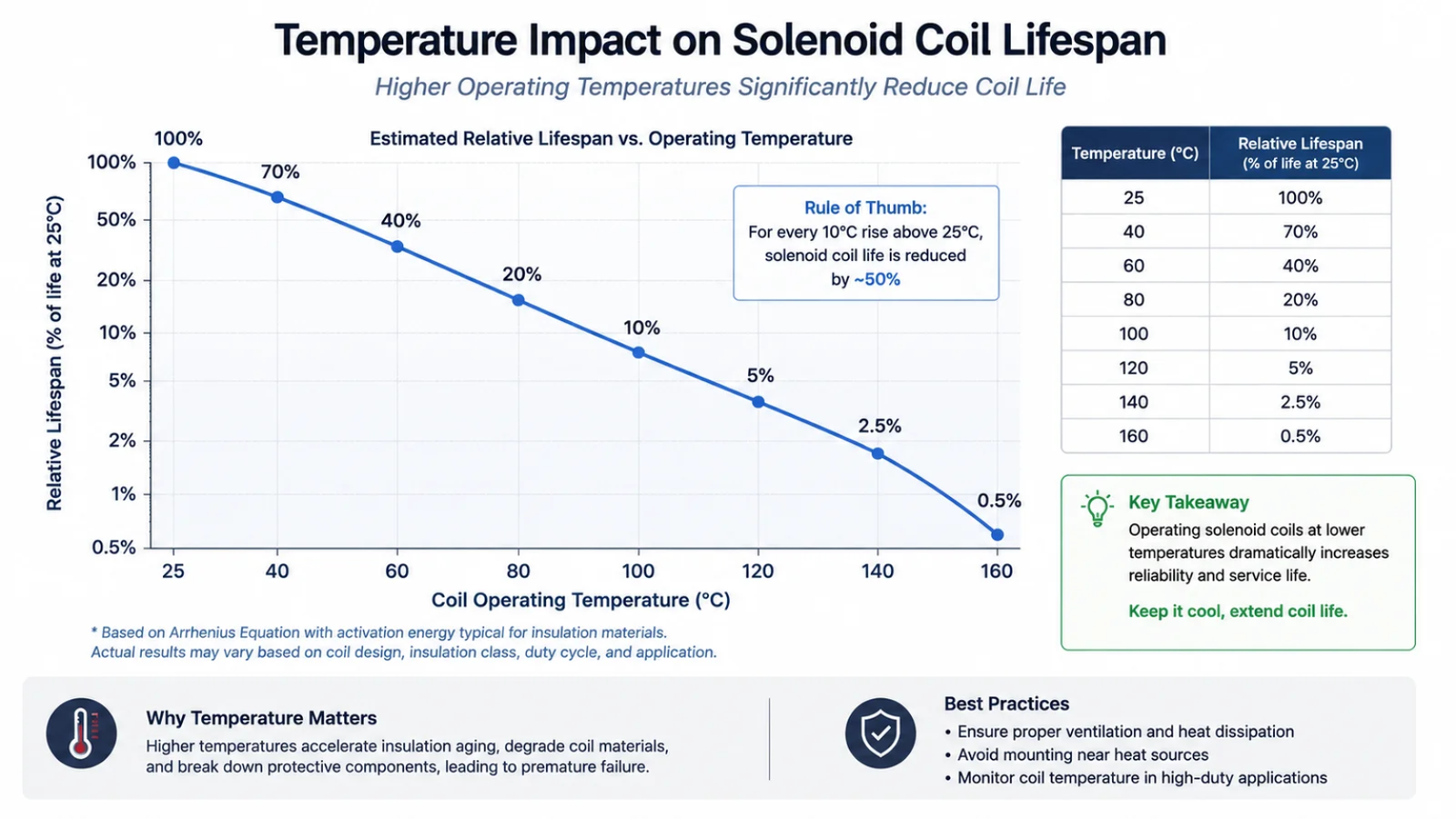
The second, more destructive effect is long-term degradation. The enamel that insulates the copper wire is essentially a polymer. Like any polymer, it breaks down over time when exposed to heat. A good rule of thumb in electronics, based on the Arrhenius equation, is that for every 10°C you operate above the recommended temperature, you cut the component's lifespan in half8. So, a Class F (155°C) coil that is consistently running at 145°C won't last nearly as long as one running at 115°C. This slow, silent cooking process is why failures often appear after a year or two in the field, right when warranty costs start to become a major headache.
Temperature's Effect on Expected Lifespan (Class F - 155°C Coil Example)
| Sustained Operating Temp | Thermal Margin | Expected Lifespan | Performance Impact |
|---|---|---|---|
| 115°C | 40°C | Excellent | Stable magnetic force, reliable valve actuation. |
| 135°C | 20°C | Reduced | Noticeable drop in magnetic force, risk of sluggishness. |
| 145°C | 10°C | Severely Reduced | High risk of inconsistent operation, accelerated aging. |
| 155°C | 0°C | Very Short | Drastic performance loss and imminent failure. |
Can Low-Quality Materials Really Cause a Solenoid Coil to Fail?
Trying to cut costs with cheaper materials? Finding that this leads to higher failure rates? The choice of copper wire and plastic encapsulation is a critical, but often overlooked, decision.
Yes, absolutely. Low-purity copper wire increases resistance and heat generation.9 Cheap plastics like standard PET can't withstand the high temperatures and moisture inside a coffee machine and may crack. This allows moisture ingress, leading to corrosion and short circuits, causing premature failure.
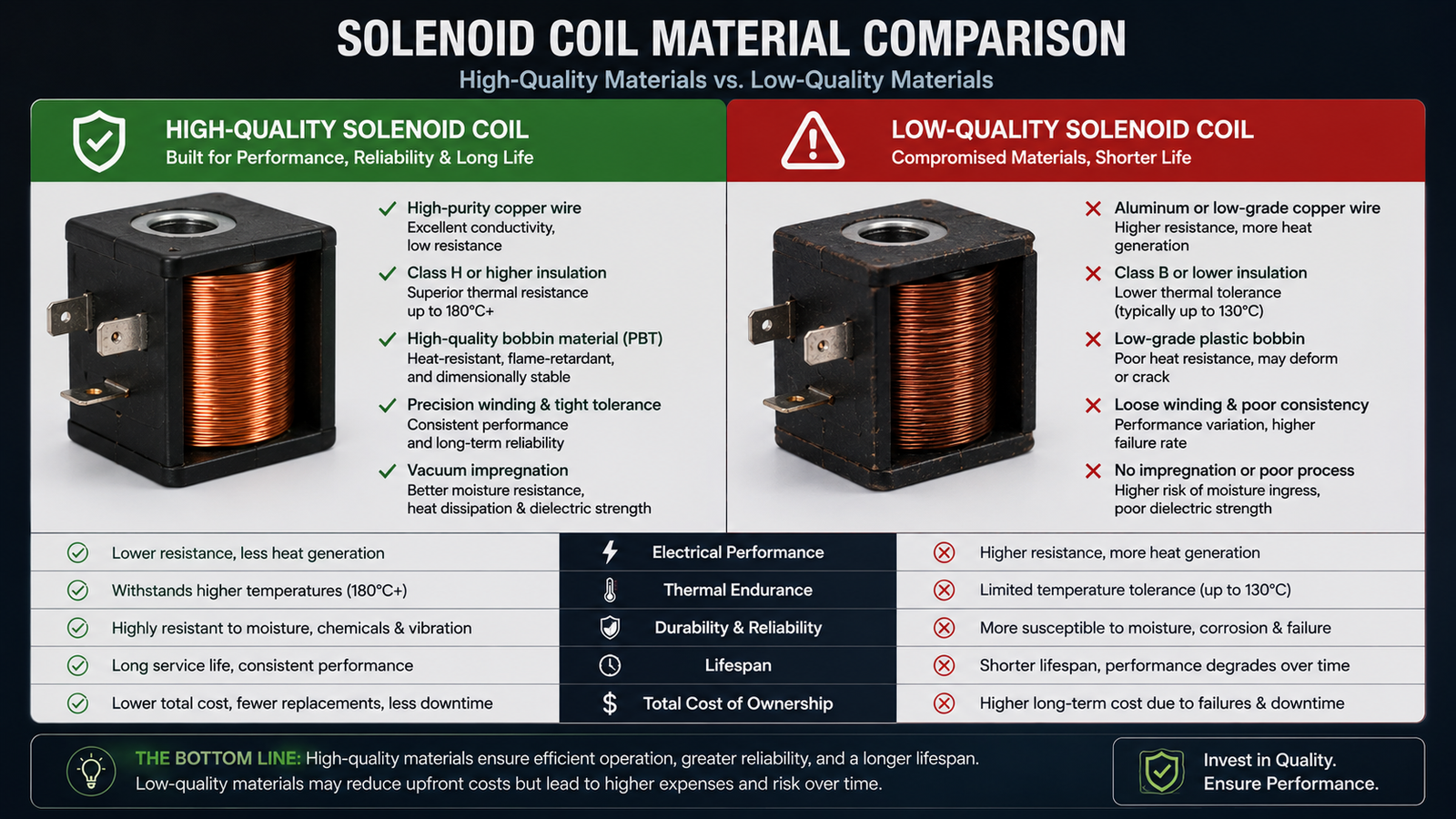
A solenoid coil is more than just a spool of wire. It's a system of materials that must work together. When procurement focuses only on the lowest unit price, suppliers are often forced to make compromises, and these compromises show up in material choices.
First, let's talk about the copper wire. We insist on using high-purity copper. A cheaper wire with more impurities will have a higher electrical resistance from the start. This means that for the same power rating, it will generate more heat, worsening the thermal problem we've already discussed. It's a vicious cycle: lower quality wire creates more heat, which degrades the insulation faster, leading to failure.
Second is the bobbin and encapsulation material—the plastic part. In a coffee machine, this plastic is subjected to constant heat cycles and moisture. A lower-grade plastic like standard PET (Polyethylene terephthalate) might be cheap, but it has a lower glass transition temperature10. It can become brittle or deform over time. We often see failures where the plastic bobbin has cracked, allowing steam and moisture to penetrate the coil windings. This leads to corrosion on the copper wire and eventually a short circuit. A better material, like PPS (Polyphenylene sulfide), costs more but offers far superior thermal stability and moisture resistance11, making it ideal for the demanding environment of an appliance.
Material Selection for Coffee Machine Coils
| Material | Component | Pro | Con |
|---|---|---|---|
| PET | Bobbin / Encaps. | Low cost. | Poor heat and moisture resistance. Prone to cracking. |
| PBT | Bobbin / Encaps. | Good balance of cost and performance. | Can be susceptible to hydrolysis in constant steam. |
| PPS | Bobbin / Encaps. | Excellent heat and chemical resistance. | Higher cost, but ensures long-term reliability. |
| Low-Purity Copper | Winding | Very low cost. | Higher resistance, generates more heat, inconsistent. |
| High-Purity Copper | Winding | Lower resistance, stable performance. | Slightly higher cost for raw material. |
How Can You Extend the Lifespan of Your Coffee Machine's Solenoid Coils?
Tired of dealing with premature component failures? Looking for a practical way to boost product reliability? Extending coil life is about smart design choices, not just buying a better part.
To extend a coil's lifespan, you must manage heat. Choose a coil with a higher insulation class (like Class H, 180°C) to create a thermal safety margin. Work with your supplier to co-design the coil, considering the machine's internal temperature, ventilation, and operational duty cycle.
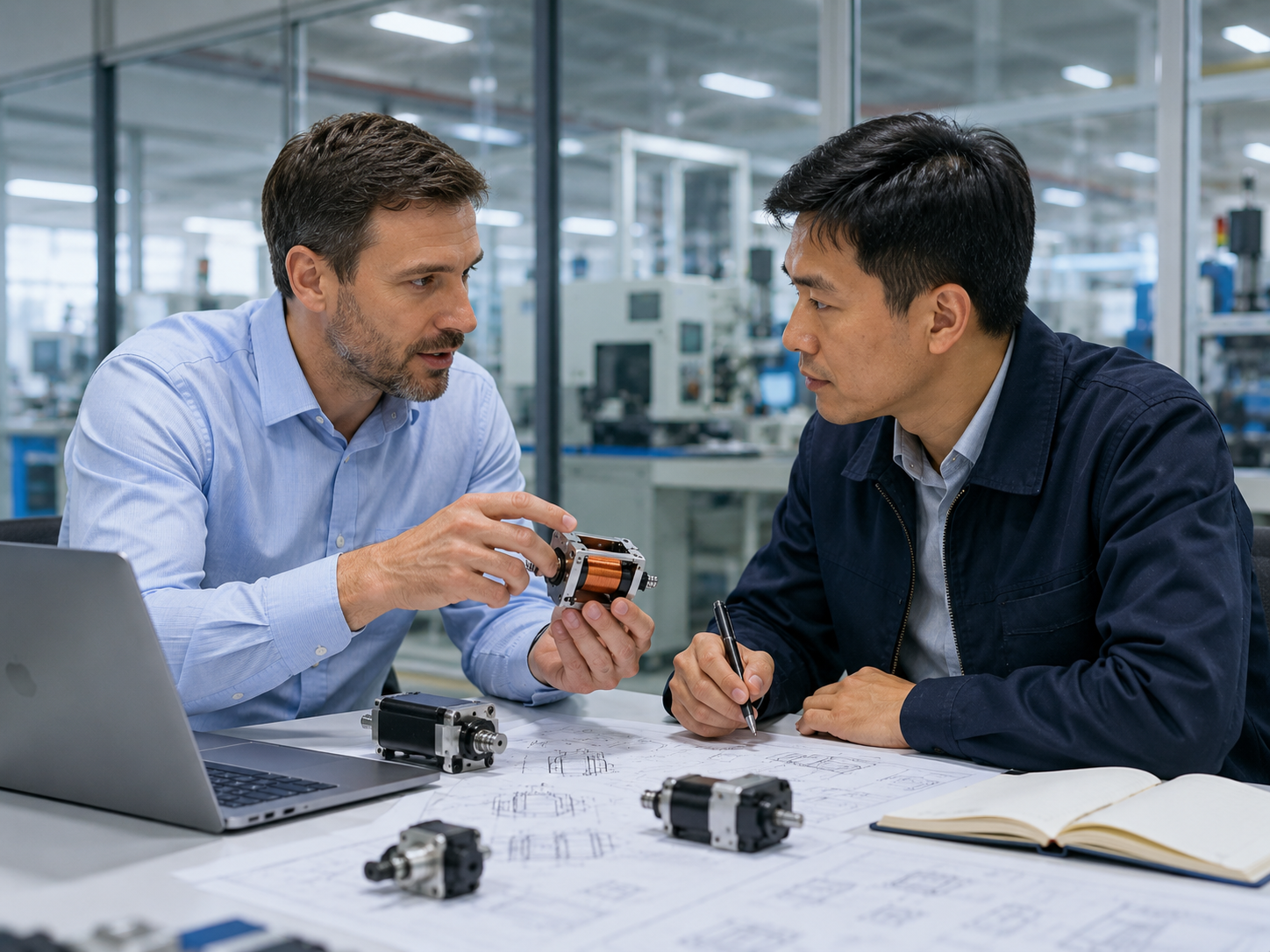
Preventing coil failure isn't about finding a magic bullet; it's about a systematic approach during the design and sourcing phase. As a manufacturer, we see ourselves as partners in this process. Simply sending us a spec sheet for a "120V, 15W coil" is a recipe for problems down the road. The best results come from collaboration.
Build in a Thermal Margin
The single most effective strategy is to select an insulation class that provides a healthy safety buffer. If your tests show the coil could operate at 140°C in a worst-case scenario, don't use a Class F (155°C) coil. You're building failure into your design. Moving to a Class H (180°C) coil provides a 40°C margin.12 This small change might increase the coil's unit cost by 15-20%, but it can mean the difference between a 10-year lifespan and a 2-year lifespan. When a single warranty claim can cost hundreds of dollars in logistics and service, the business case for the more robust coil is incredibly clear.
Co-Design with Your Supplier
A strong RFQ is one that starts a conversation. Instead of just specs, give your supplier the context. Tell us the expected duty cycle (e.g., 1 minute on, 2 minutes off). Share the thermal map of your machine. Where is the coil located? What is the ambient temperature around it? Is it exposed to moisture? When a buyer provides this information, we can move beyond being a simple order-taker. We can recommend the right materials (like PPS instead of PBT), suggest the appropriate thermal class, and even propose slight design modifications to improve reliability. This turns the procurement process from a transaction into a partnership.
What Should You Look for in a Reliable Solenoid Coil Supplier?
Choosing the right supplier feels like a gamble? Worried about inconsistent quality and support? A reliable partner acts more like a technical consultant than a simple parts seller.
Look for a supplier who asks deep questions about your application's thermal environment and duty cycle. They should offer material and insulation class options and explain the Total Cost of Ownership (TCO), not just the unit price. Certifications like ISO 9001 and product compliance are just the starting point.
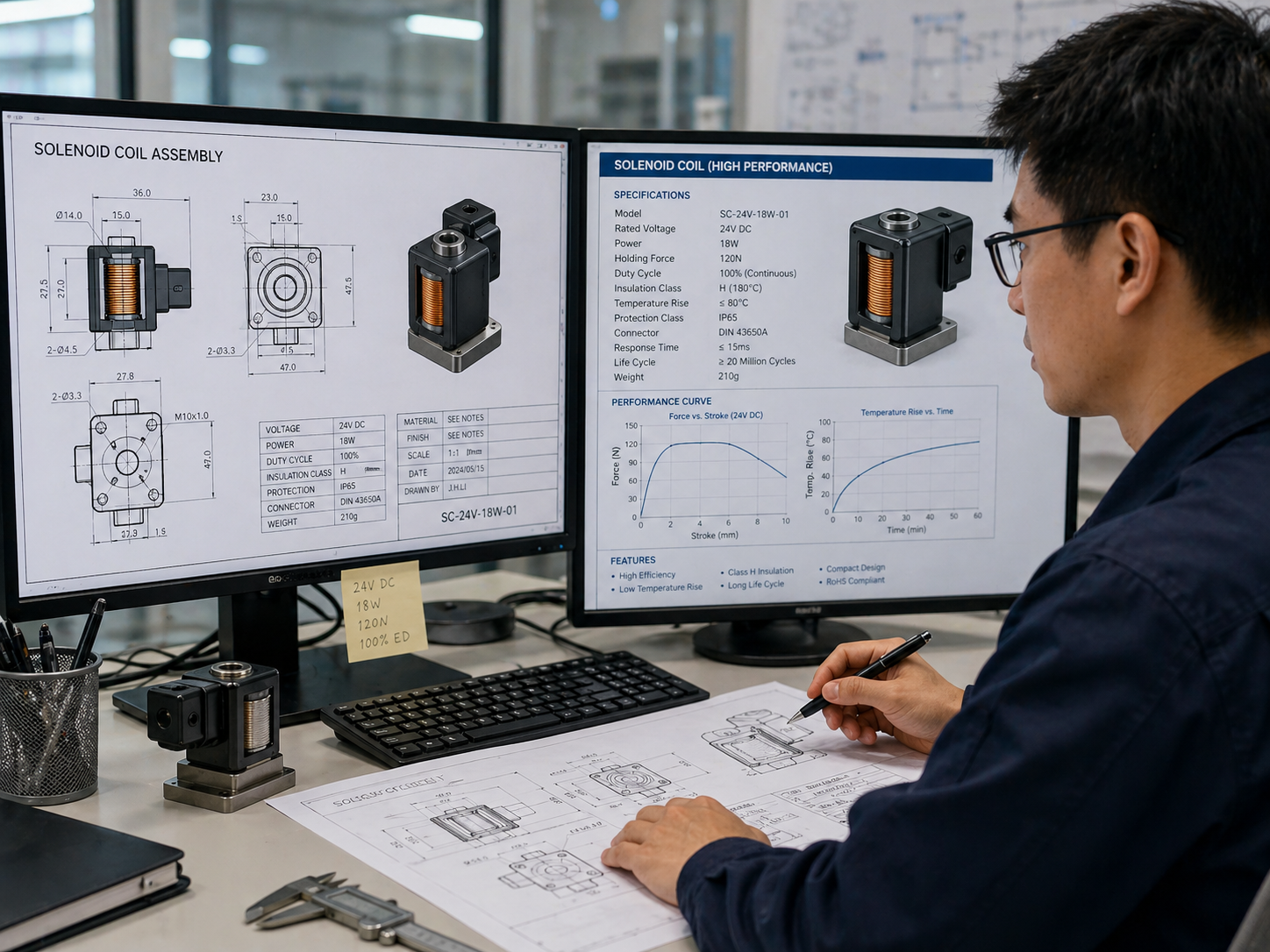
Over my two decades in this business, I've learned that the best supplier relationships are built on technical trust. When you're selecting a partner for a critical component like a solenoid coil, you're not just buying a part; you're buying their expertise and manufacturing discipline. Certifications are important, but they are the minimum requirement. The real value is in how they approach your project.
A great supplier will challenge your specifications. If you request a Class F coil for a hot application, they should flag it as a risk and explain why Class H is a safer bet. They should be able to have a detailed conversation about the pros and cons of different encapsulation plastics based on your machine's environment. They will speak in terms of Total Cost of Ownership (TCO). They will help you build the business case to your management, showing that a 15% increase in component cost can prevent millions in future warranty claims. Finally, look at their operations. Do they have robust quality systems like MES for traceability? Do they perform 100% outgoing inspection? This demonstrates a commitment to quality that goes beyond a certificate on the wall.
Evaluating a Supplier: Unit Price vs. Total Cost of Ownership
| Evaluation Metric | "Low-Cost" Supplier | Strategic Partner |
|---|---|---|
| Initial Quote | Lowest unit price (e.g., $1.00 for Class F coil). | Higher unit price (e.g., $1.20 for Class H coil). |
| Technical Discussion | Accepts specs without question. | Asks about duty cycle, thermal map, moisture exposure. |
| Solution Offered | Quotes the cheapest part that meets the paper spec. | Recommends the right part for reliability (e.g., Class H + PPS). |
| Business Case | Focuses on saving $0.20 per unit. | Focuses on preventing $200 per warranty claim. |
| Long-Term Result | High field failure rates, brand damage, high warranty costs. | Low field failure rates, strong brand reputation, low TCO. |
Conclusion
Reliable coils aren't bought from a spec sheet; they're co-designed with a partner who understands your machine's environment. This prevents failures and protects your brand's reputation.
"Degradation Monitoring of Insulation Systems Used in Low-Voltage ...", https://pmc.ncbi.nlm.nih.gov/articles/PMC7374401/. A technical source on electromagnetic coil or winding insulation failure supports that elevated temperature accelerates degradation of enamel insulation and can lead to inter-turn short circuits; this provides mechanism-level support rather than coffee-machine-specific failure-rate evidence. Evidence role: mechanism; source type: paper. Supports: A source should explain that elevated winding temperature accelerates insulation aging and can lead to turn-to-turn shorts or coil failure.. Scope note: Contextual support; it establishes the mechanism for wound coils generally, not a quantified failure rate for coffee machines. ↩
"Insulation system - Wikipedia", https://en.wikipedia.org/wiki/Insulation_system. Electrical insulation standards define thermal classes by maximum permissible operating temperature, supporting the use of an insulation class selected for the expected temperature rise and ambient conditions; the source does not by itself validate a specific coffee-machine design. Evidence role: expert_consensus; source type: institution. Supports: A standards or technical reference should define insulation thermal classes and explain their relation to permissible operating temperature in electrical equipment.. Scope note: Contextual support; standards define thermal ratings but do not prove that a given Class H coil will prevent all field failures. ↩
"Magnet wire - Wikipedia", https://en.wikipedia.org/wiki/Magnet_wire. Research on magnet-wire insulation failure supports that degradation of enamel insulation can reduce dielectric separation between adjacent turns and produce inter-turn short circuits; this directly supports the stated electrical failure mechanism. Evidence role: mechanism; source type: paper. Supports: A source should show that magnet-wire enamel provides electrical isolation between turns and that its degradation can cause inter-turn shorts.. ↩
"Stuff versus Stuff: Battle of the coffee makers | MIT Sustainability", https://sustainability.mit.edu/article/stuff-versus-stuff-battle-coffee-makers. Studies of electronics reliability in heated household appliances support that compact devices using heaters and water can expose components to elevated temperature and humidity; this is contextual evidence rather than a direct measurement of the model discussed here. Evidence role: general_support; source type: paper. Supports: A source should document that household appliances, including coffee machines or similar heated water appliances, expose components to elevated temperature and moisture.. Scope note: Contextual support; the source may address appliance environments generally rather than every coffee-machine architecture. ↩
"A guide to managing HX brew temperatures - Home-Barista.com", https://www.home-barista.com/tips/guide-to-managing-hx-brew-temperatures-t64840.html. Thermal measurements from coffee machines or comparable heated appliances would support that component compartments can reach high ambient temperatures near the cited range; absent coffee-machine-specific measurements, the evidence would remain contextual. Evidence role: statistic; source type: research. Supports: A source should provide measured internal temperatures for coffee machines or comparable heated appliances.. Scope note: May require appliance-specific test data; general appliance studies may not confirm the exact 80–90°C range. ↩
"Temperature coefficient - Wikipedia", https://en.wikipedia.org/wiki/Temperature_coefficient. Reference data for copper show a positive temperature coefficient of electrical resistance, supporting the claim that copper windings draw less current at a fixed applied voltage as they heat. Evidence role: mechanism; source type: government. Supports: A source should provide the positive temperature coefficient of resistance for copper.. ↩
"Solenoids as Magnetic Field Sources - HyperPhysics", http://hyperphysics.phy-astr.gsu.edu/hbase/magnetic/solenoid.html. Introductory electromagnetism references describe the magnetic field inside an ideal solenoid as proportional to coil current, supporting the inference that reduced current weakens actuation force; real solenoid geometry and magnetic saturation can modify the exact relationship. Evidence role: mechanism; source type: education. Supports: A physics or engineering source should state that a solenoid's magnetic field is proportional to current, all else equal.. Scope note: Contextual support; ideal solenoid equations approximate rather than fully model a valve actuator. ↩
"[PDF] Chapter 2. Reliability Overview", https://parts.jpl.nasa.gov/mmic/2.PDF. Reliability engineering references use Arrhenius temperature acceleration to explain the common rule that a 10°C temperature increase can approximately double degradation rate or halve life; the factor is material- and activation-energy-dependent rather than universal. Evidence role: expert_consensus; source type: government. Supports: A reliability source should describe the Arrhenius temperature-acceleration model and the 10°C rule as a rule of thumb for thermally activated degradation.. Scope note: The 10°C rule is an approximation and may not apply exactly to every insulation system or duty cycle. ↩
"Abnormal drop in electrical resistivity with impurity doping of single ...", https://pmc.ncbi.nlm.nih.gov/articles/PMC4071311/. Materials literature on copper conductivity supports that impurities reduce electrical conductivity and increase resistivity, which can increase I²R heating in a winding of fixed geometry; the magnitude depends on impurity type and concentration. Evidence role: mechanism; source type: paper. Supports: A materials source should show that impurities generally reduce copper conductivity, increasing resistance for a given geometry.. Scope note: The source would support the mechanism, not quantify the heat increase in the article's specific coil. ↩
"Prediction of the Glass Transition Temperature in Polyethylene ...", https://pmc.ncbi.nlm.nih.gov/articles/PMC9317600/. Polymer property references list PET's glass transition temperature and explain that polymers soften or lose stiffness near Tg, supporting the concern about PET in sustained high-temperature environments; the citation does not prove that all PET bobbins will crack in service. Evidence role: definition; source type: encyclopedia. Supports: A polymer reference should give PET's glass transition temperature and describe its relevance to dimensional stability near elevated temperatures.. Scope note: Contextual support; actual cracking depends on grade, additives, stress, humidity, and processing. ↩
"Polyphenylene Sulfide-Based Membranes: Recent Progress and ...", https://pmc.ncbi.nlm.nih.gov/articles/PMC9607490/. Polymer reference sources describe PPS as a high-performance thermoplastic with strong thermal and chemical resistance and relatively low moisture absorption, supporting its suitability for harsher appliance environments; cost and suitability still depend on grade and part design. Evidence role: general_support; source type: encyclopedia. Supports: A neutral polymer source should describe PPS as an engineering thermoplastic with high thermal and chemical resistance and low moisture uptake.. Scope note: Contextual support; the source establishes material properties but not a full cost-benefit result for the article's coil. ↩
"Insulation system", https://en.wikipedia.org/wiki/Insulation_system. Insulation-class standards identify Class F and Class H by maximum temperatures of 155°C and 180°C, respectively, supporting the stated increase in thermal margin for a 140°C operating condition; the citation does not establish the long-term life of a specific coil. Evidence role: definition; source type: institution. Supports: A standards reference should define Class F as 155°C and Class H as 180°C insulation thermal classes.. Scope note: The source supports the class ratings and margin calculation, not the exact reliability outcome. ↩