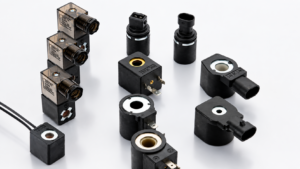

What Are Solenoid Coils for Switching and Proportional Valves and How Do They Work?
Your system needs reliable valve control, but choosing the wrong coil leads to failure. Understanding how they work is the first step to making the right choice for your application.
A solenoid coil is an electromagnet used to operate a valve. When electric current flows through the coil, it creates a magnetic field that moves a plunger. This movement opens or closes the valve (switching) or precisely adjusts its position for variable flow control (proportional).
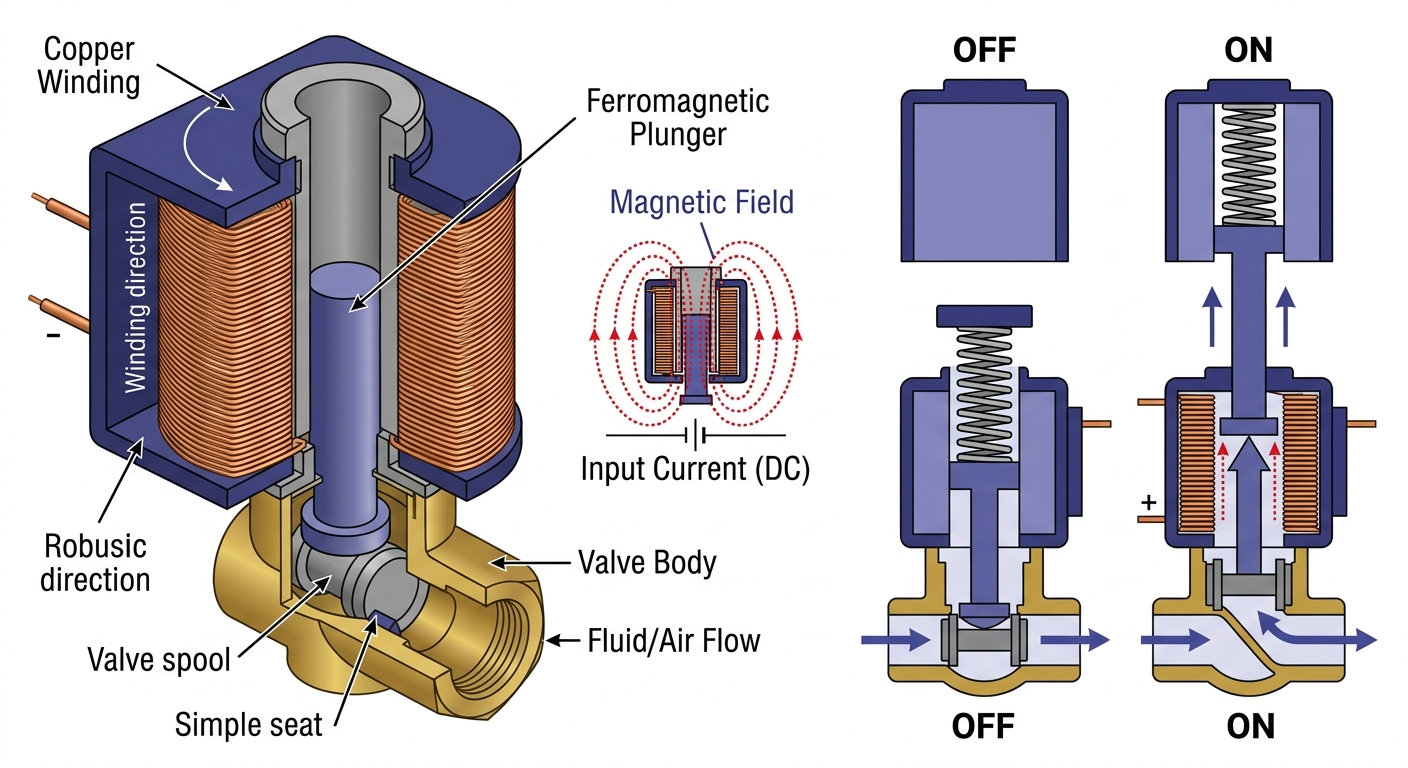
I've spent over 20 years manufacturing solenoid coils, and I've seen firsthand how a small component can make or break a multi-million dollar product line. The core function is simple: turn electricity into motion. But how it performs that function changes everything. Many people think the coils themselves are fundamentally different, but the real distinction lies in the precision demanded by the application. This difference is critical, and knowing it will help you avoid costly mistakes and ensure your equipment runs smoothly. Let's dive into what sets these coils apart and how they power your systems.
What Is the Difference Between Switching and Proportional Solenoid Coils?
You see "switching" and "proportional" on spec sheets, but they look almost identical. Using the wrong one can completely ruin your product's performance, leading to unhappy customers and expensive recalls.
The main difference is their function. A switching coil provides a simple, binary on/off action, like a light switch. A proportional coil offers variable, fine-tuned control over the valve's position, acting more like a dimmer switch to regulate flow or pressure precisely.
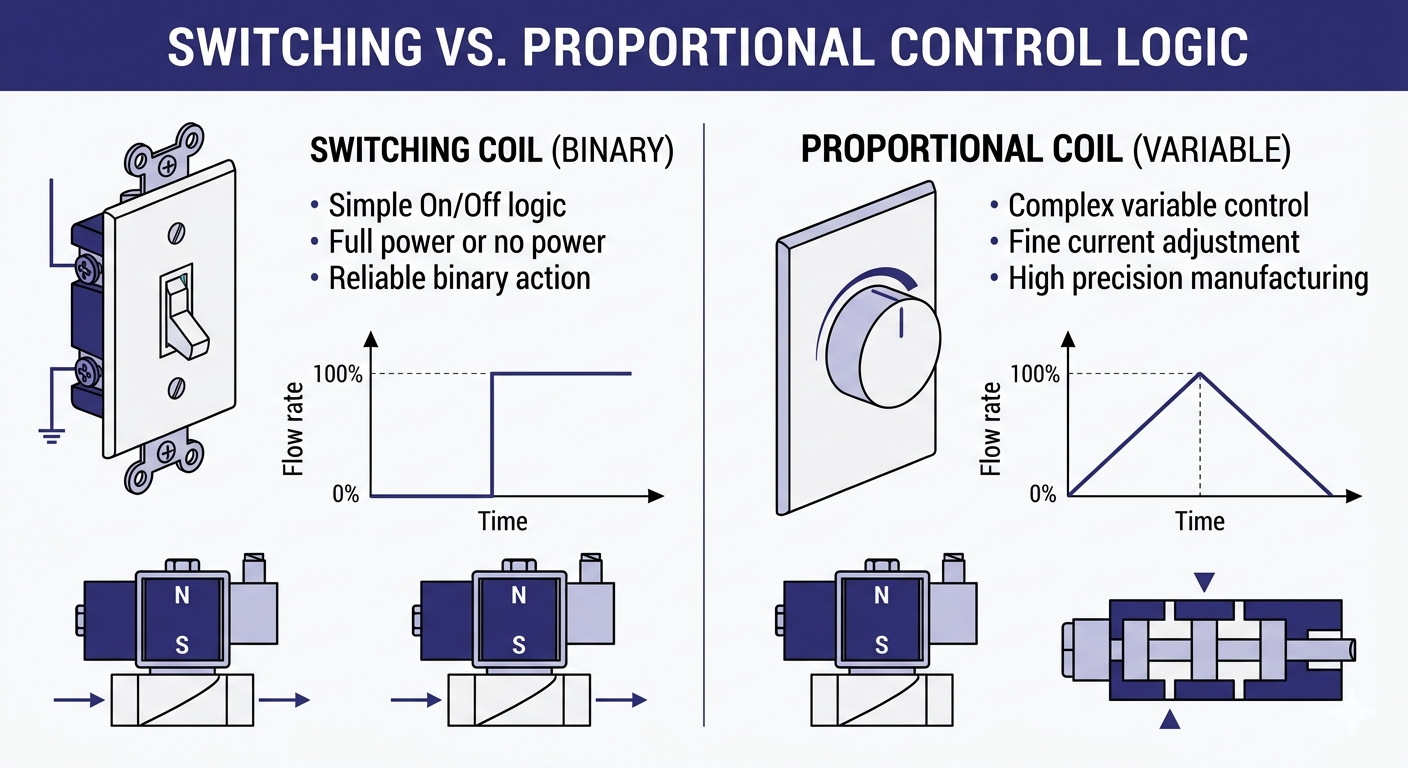
In my factory, we think about this difference in terms of logic. The logic of a switching coil is simple: "on" or "off." The logic of a proportional coil is complex: "how much?" For a switching valve, our manufacturing focus is on absolute reliability. The coil must generate enough force to pull the plunger in completely and hold it there without fail. When the power is cut, it must release cleanly. We test these for millions of cycles to ensure they are durable. The goal is dependable, fast action.
Proportional coils are a different story. They require incredible consistency. The coil must move the valve spool to precise intermediate positions based on tiny changes in the input current. Any inconsistency in the copper wire winding or instability in the bobbin material will cause the flow rate to fluctuate. Think of it like a basic water dispenser versus a high-end one. The basic model just has "on" and "off." The advanced model lets you select exactly 200ml of water. That precision is what proportional control delivers, and it requires a much higher level of manufacturing quality.
| Feature | Switching Solenoid Coil | Proportional Solenoid Coil |
|---|---|---|
| Function | On / Off (Binary) | Variable Control (Analog) |
| Control Logic | Fully Open or Fully Closed | Precise Intermediate Positions |
| Key Requirement | Durability, Reliability, Speed | Consistency, Precision, Stability |
| Manufacturing Focus | Strong magnetic force, long life | Uniform winding, stable materials |
| Analogy | Light Switch | Dimmer Switch |
How Do Solenoid Coils Control Hydraulic and Pneumatic Valves?
You know coils are the "brains" of the valve, but how do they actually make it move? Not understanding this simple mechanism can make troubleshooting problems like a stuck valve very difficult.
A solenoid coil controls a valve by converting electrical energy into linear motion. When energized, the coil generates a magnetic field that attracts a ferromagnetic plunger (or spool). This plunger's movement directly shifts the valve's internal parts, opening or closing pathways for fluid or air.
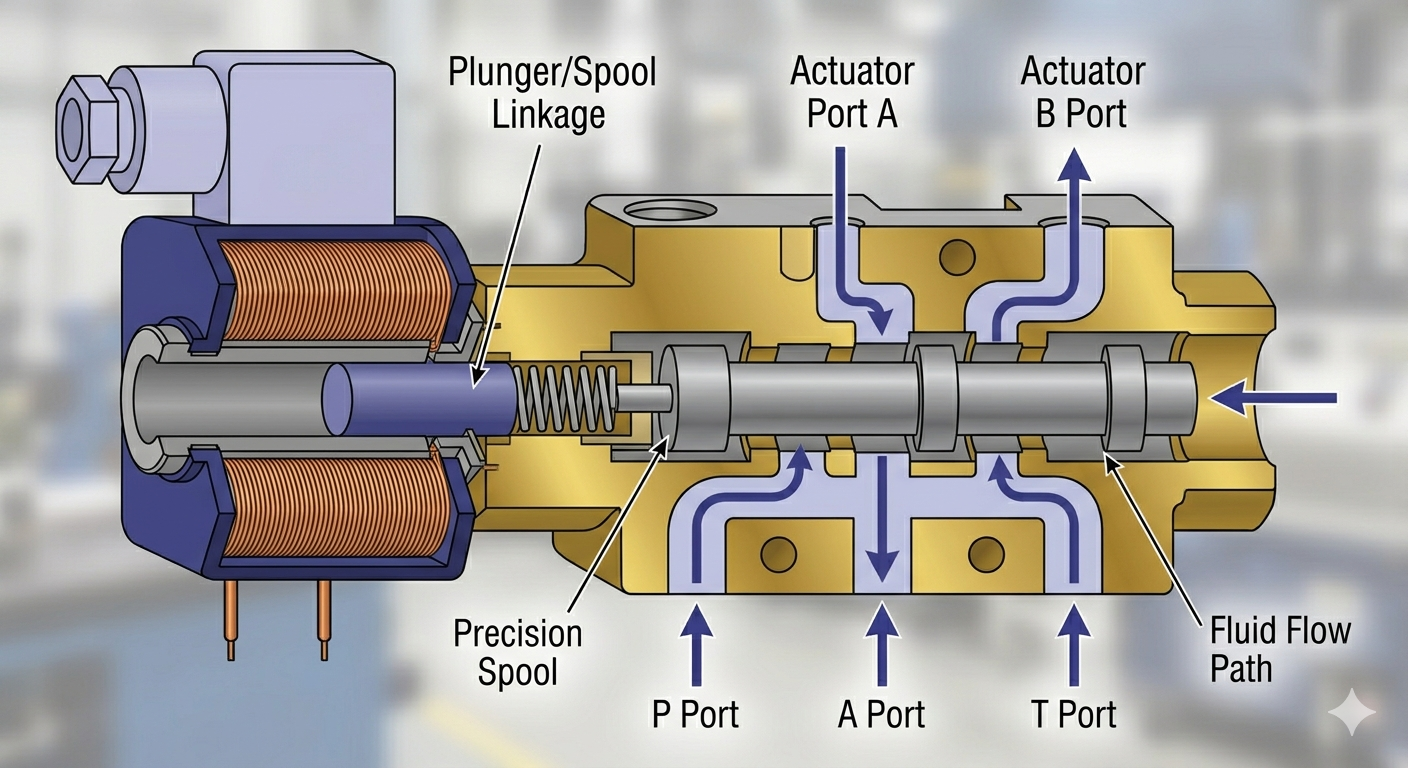
The principle is the same whether you're controlling hydraulic fluid or pneumatic air. It all comes down to basic electromagnetism. We wrap a high-purity copper wire thousands of times around a bobbin. When you send an electric current through that wire, a powerful magnetic field appears almost instantly. Inside this coil is a movable core, often called a plunger or spool, made of a material like iron. The magnetic field pulls this plunger toward its center with significant force.
This movement is what operates the valve. In a simple valve, the plunger might unseat a seal, allowing flow. In a more complex hydraulic valve, the plunger (now called a spool) slides within the valve body, uncovering or blocking different ports to direct high-pressure fluid. The coil's only job is to move that spool reliably. For switching valves, the coil is designed to slam the spool from one end to the other. For proportional valves, the coil is engineered to hold the spool steady at any point along its travel, balancing magnetic force against a spring. The valve does the heavy lifting with the fluid or air; the coil provides the precise, electrically-controlled muscle.
What Applications Use Proportional Solenoid Valves the Most?
You need precise control for your product, but where is this technology most effective? Misapplying a proportional valve in a simple on/off system is an expensive and unnecessary complication.
Proportional solenoid valves are essential in any application requiring precise regulation of flow rate, pressure, or speed. They are heavily used in advanced industrial automation, mobile hydraulics, medical equipment, and high-end home appliances where variable output is critical for performance.
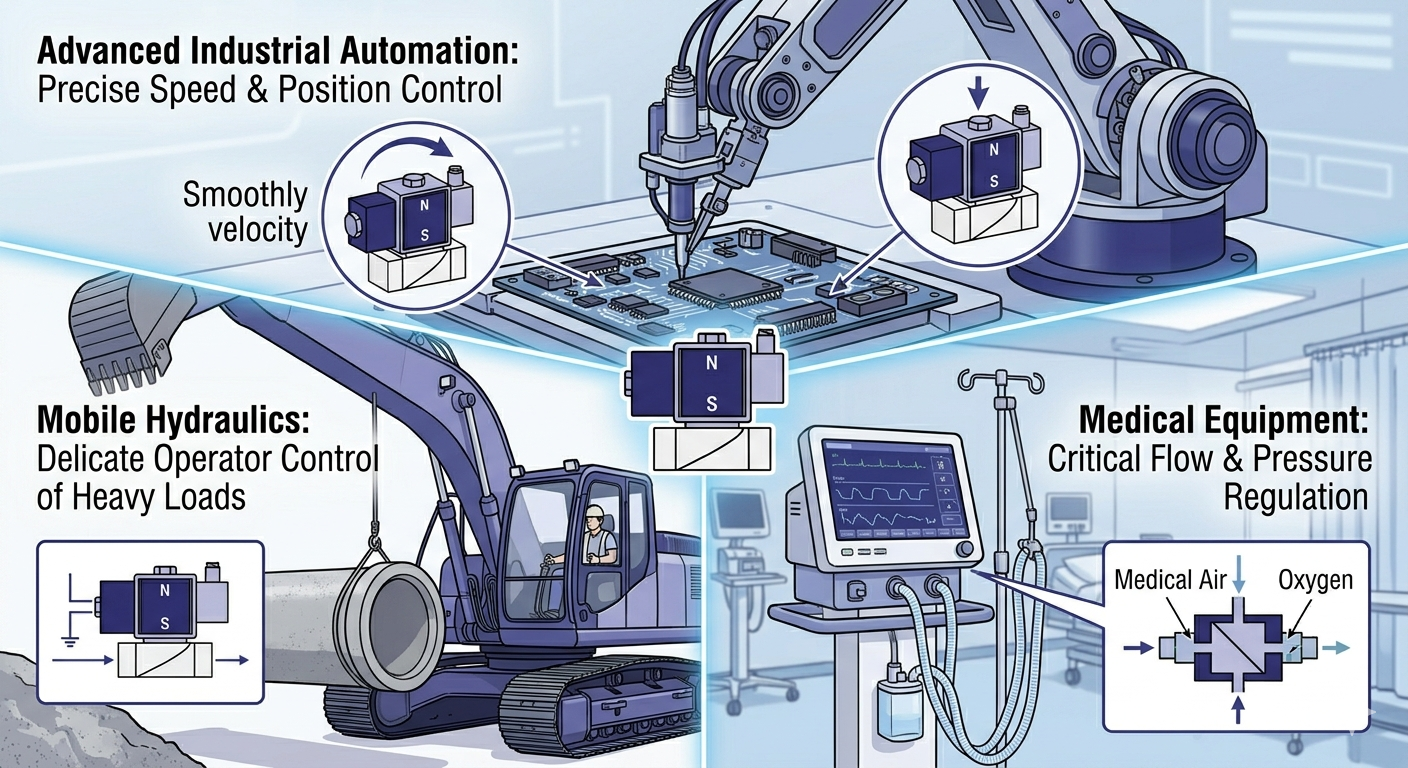
In my experience providing OEM solutions, the demand for proportional control has grown massively. It allows for smarter, more efficient, and more user-friendly machines. For example, in industrial hydraulics, a proportional valve can control the speed of a robotic arm, allowing it to move quickly and then slow down smoothly as it approaches an object. In construction equipment, they control the movement of a crane or excavator, giving the operator fine control for delicate tasks.
We also see them everywhere in products people use daily. A modern ventilator in a hospital uses proportional valves to mix oxygen and air with incredible precision, matching the patient's breathing pattern. We recently worked with a European home appliance brand to develop a coil for their new line of smart coffee machines. The machine needed to control the water flow and pressure with extreme accuracy to brew different types of coffee perfectly. A simple on/off valve couldn't do that. It required a proportional valve, driven by a highly consistent solenoid coil, to deliver that premium experience. These are the applications where precision isn't a luxury; it's the core of the product's function.
How to Choose the Right Solenoid Coil for Valve Control Systems?
Choosing a solenoid coil seems complex with all the different voltages, sizes, and ratings. Making the wrong choice leads to poor performance, overheating, and premature failure, causing costly downtime for your customers.
To choose the right coil, you must match its key specifications—voltage, duty cycle, force, and temperature rating—to the valve and the application's demands. Considering the operating environment, like moisture and dust exposure, is also crucial for long-term reliability.
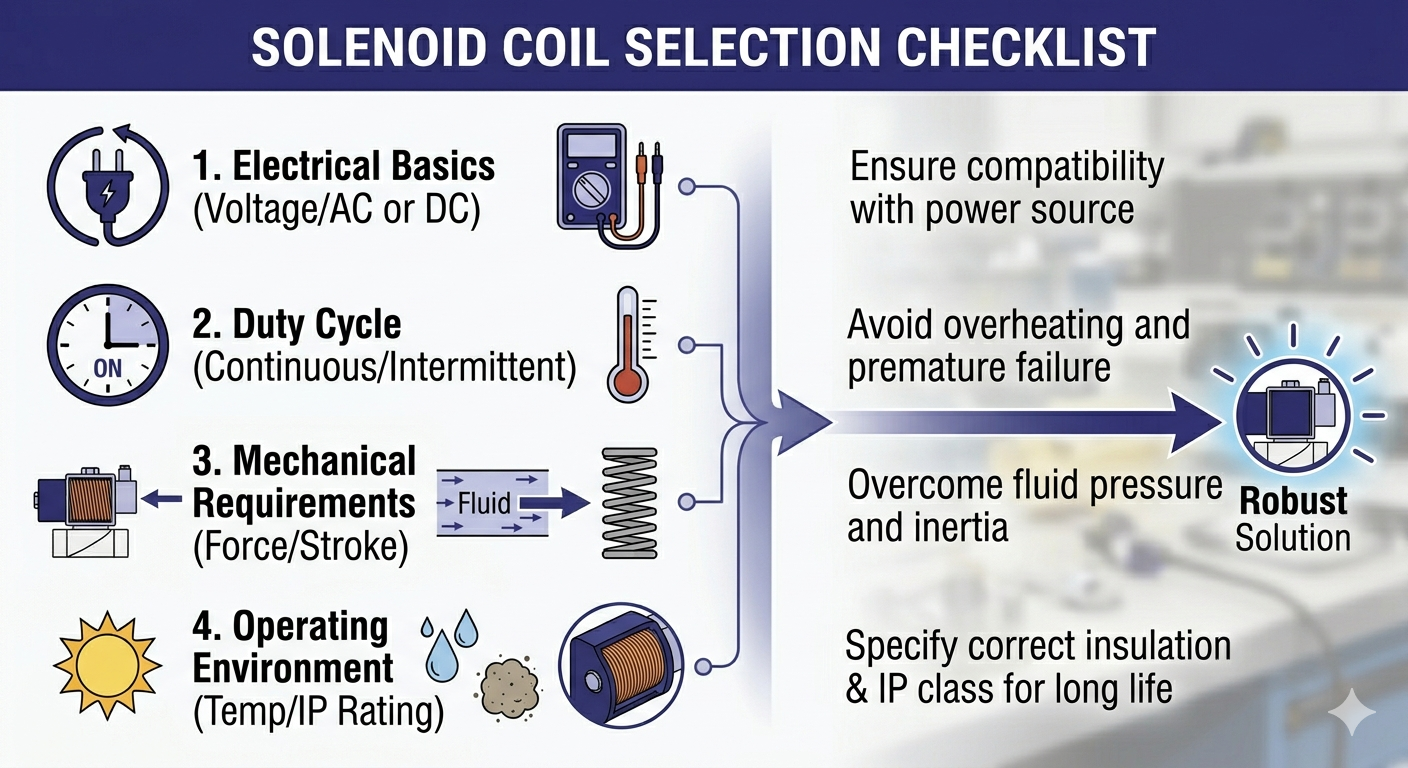
When a new client comes to us, the first thing my engineering team does is run through a checklist. We can't design a robust solution without understanding the full picture. The process isn't complicated if you break it down. First, you need the electrical basics: What is the available voltage and is it AC or DC? This is non-negotiable. Second, what is the duty cycle? Will the coil be on 100% of the time (continuous duty) or only for short bursts (intermittent duty)? Using an intermittent coil in a continuous application is the fastest way to burn it out.
Next, we look at the mechanical requirements. How much force does the coil need to generate to move the valve spool against fluid pressure and spring tension? This determines the size and power of the coil. Finally, we consider the environment. What is the maximum ambient temperature? Is the coil exposed to water or chemicals? This dictates the required insulation class and whether you need an encapsulated coil with a high IP rating. Getting these four areas right—electrical, duty cycle, force, and environment—is the foundation for selecting a coil that will perform reliably for years.
| Parameter | Question to Ask | Why It's Important |
|---|---|---|
| Voltage & Current | What is the system's supply voltage (e.g., 12VDC, 24VDC, 120VAC)? | Mismatching voltage causes immediate failure or poor performance. |
| Duty Cycle | Will the coil be energized continuously or intermittently? | An intermittent-duty coil will overheat and fail if used continuously. |
| Force & Stroke | How much force is needed to move the valve plunger, and how far? | Insufficient force will prevent the valve from opening or closing properly. |
| Environment | What is the operating temperature range? Is there exposure to moisture or dust? | Determines the required insulation class and IP (Ingress Protection) rating. |
What Causes Failure in Switching and Proportional Solenoid Coils?
Your solenoid coils are failing more often than they should, causing expensive service calls and damaging your brand's reputation. This downtime is frustrating, but it's often preventable if you know the root causes.
The most common causes of solenoid coil failure are overheating, electrical issues, and contamination. Overheating is typically due to incorrect voltage or a blocked valve plunger. Electrical problems include voltage spikes, while contamination involves moisture or dirt interfering with operation.
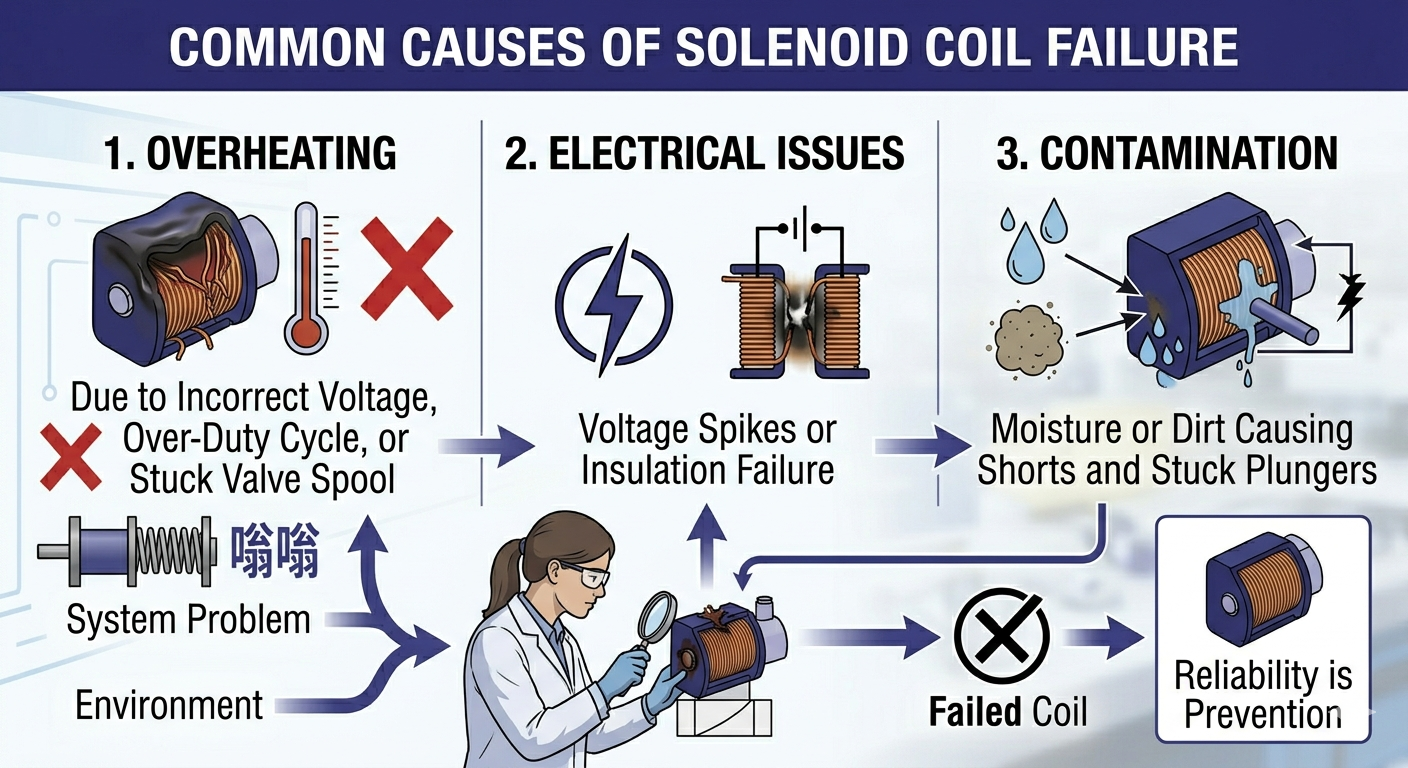
In our quality control department, we analyze failed coils to understand why they break. Overheating is, by far, the number one killer. A coil is designed to operate within a specific temperature range. If you apply a voltage that's too high, the current increases, and the coil generates too much heat, melting the wire's insulation and causing a short circuit. Conversely, if the voltage is too low, the coil may not have enough strength to pull the plunger all the way in. The plunger "buzzes" in a partially actuated state, which causes the coil to draw a very high inrush current continuously, leading to a quick burnout.
Another major cause is when the valve spool itself gets stuck due to dirt in the hydraulic fluid or a mechanical issue. The coil will keep trying to move it, drawing that high inrush current until it fails. This isn't a coil defect; it's a system problem that kills the coil. Finally, environmental factors play a big role. Water seeping into a coil that isn't properly sealed will cause a short. In our manufacturing, we use automated winding and high-quality encapsulation to protect against these issues, and our 100% outgoing inspection tests for any insulation weaknesses. But once it's in the field, protecting the coil from these external threats is key to a long service life.
Conclusion
Understanding the difference between switching and proportional coils is key. One is for simple on/off action; the other is for precision. Choosing correctly based on your application's needs ensures reliability.