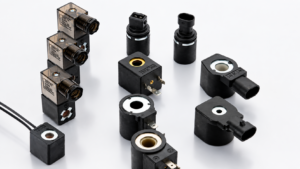

Parker Solenoid Valve Alternative for Espresso Machines: What Matters Beyond Specifications?
Relying on a single supplier for critical components creates risk.1 A supply disruption could halt your production, forcing you to find a partner who offers a better balance of reliability and cost.
The best alternative to a Parker solenoid valve for an espresso machine isn't just about matching technical data. It's about finding a manufacturing partner who provides a complete package: long-term reliability, consistent availability, deep technical support, and the flexibility to work together on your specific needs.
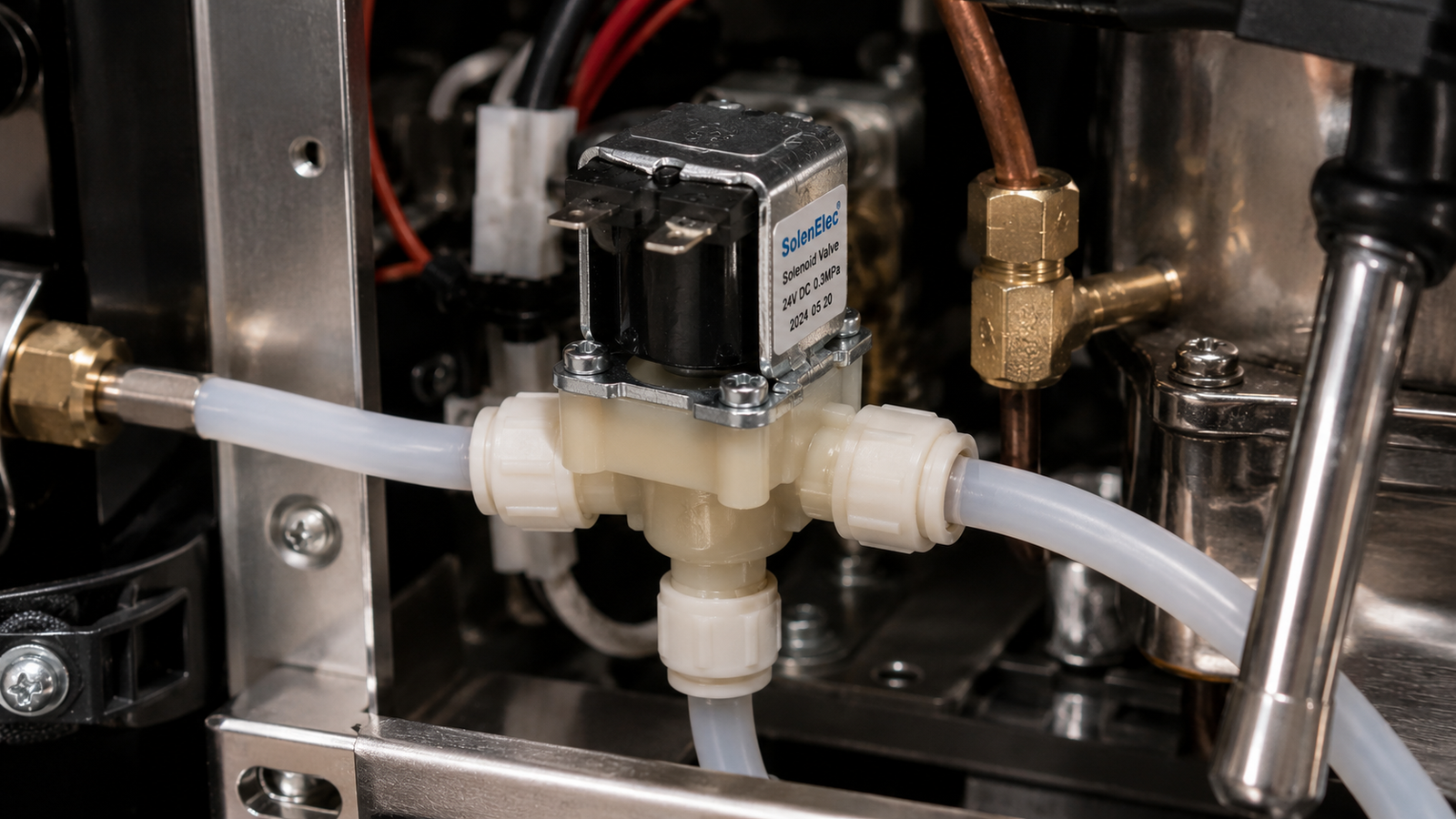
We all know that established brands like Parker hold a strong position in the market. I've seen their components in machines for years. But it's important to understand what makes them so successful, and more importantly, what pushes a smart manufacturer to start looking for an alternative. It's rarely about one single thing. Let's break down the factors that really matter when you're making this critical decision for your brand's future.
Why Has Parker Been So Successful?
You see Parker components everywhere, but do you know the real reasons for their dominance? Understanding their success is the first step to finding a truly comparable, or even better, partner.
Parker's success is built on a long history of proven reliability and a powerful brand reputation. Over decades, they built trust by delivering consistent performance and establishing a huge global distribution network, making them the safe, default choice for many engineers.
Based on my 20 years in OEM manufacturing, I see that a component's success is often about more than just its engineering. Parker mastered the non-technical aspects of the business, which is a lesson for anyone in this industry. When we analyze their position, we see a clear strategy that has paid off. It's not just that their valves work; it's that they have made themselves an easy and low-risk choice for procurement managers and engineers who are under pressure to deliver. The decision to use a Parker valve is rarely questioned internally.
A Legacy of Trust
The biggest asset any component supplier has is trust. Parker has been in the market for a long time, and their products have a track record. For an espresso machine manufacturer, whose brand reputation depends on every single machine working perfectly for years, this history is incredibly valuable. Choosing a Parker valve feels like a safe bet because thousands of others have made that same bet and succeeded. This reduces the perceived risk for a brand manager.
The Power of a Global Network
You can't overlook their distribution and support system. An engineer in Italy, Germany, or Brazil can easily find specifications, get samples, and order parts. If a machine needs service in the field, a replacement part is usually available nearby. This accessibility makes the design and maintenance process much simpler. A technically perfect valve is useless if you can't get it when you need it.
Brand Recognition as a Quality Signal
Using a well-known component brand can also be a subtle quality signal. It tells the engineering team and sometimes even the end customer that no corners were cut. This is what we call "ingredient branding," and it adds to the overall perception of the machine's quality.
| Factor | Description | Impact on Manufacturers |
|---|---|---|
| Reliability | Decades of proven field performance | Lowers perceived risk of component failure. |
| Distribution | Vast global network for sales and support | Simplifies design, procurement, and maintenance. |
| Brand Equity | Strong brand recognition and trust | Acts as an internal and external quality signal. |
Why Do Manufacturers Look for Alternatives?
Relying on one dominant supplier makes your business vulnerable. Price increases or supply chain problems can stop your production and hurt your profits, leaving you with no other options.
Manufacturers search for alternatives to single-source suppliers like Parker to reduce risk, gain better cost control, and find partners who offer more flexibility. The main goal is to build a stronger, more cost-effective supply chain without giving up the quality that defines their brand.
In my experience working with leading European brands, the conversation always turns to risk and partnership. No successful brand wants to be 100% dependent on a single supplier, no matter how good they are. It's just bad business strategy. A few years ago, I spoke with a procurement manager at a major appliance company. They faced a six-month production delay because their primary component supplier had a factory issue. That single event cost them millions and taught them a hard lesson: diversification isn't optional; it's essential for survival. This is the reality that drives manufacturers to explore new partnerships, even when their current components are working fine.
The Danger of Single-Source Dependency
The biggest driver is risk management. What happens if your main supplier has a raw material shortage, a labor strike, or a logistics breakdown? Your entire production line could stop. For a company with an annual purchasing volume of over $5 million, a one-month delay can be catastrophic. Having a qualified second source like us at SolenElec isn't just a backup plan; it's a core part of a resilient supply chain strategy.
The Constant Drive for Cost Optimization
Let's be direct: margins in the appliance industry are tight. While you can't sacrifice quality, you are always under pressure to manage costs. A dominant supplier often has more pricing power. By introducing a competitive alternative, you create a healthier negotiation dynamic. A few dollars saved on a valve, multiplied by 100,000 machines per year, adds up to a significant number that goes directly to your bottom line.
The Need for Flexibility and Customization
Large, established suppliers can sometimes be slow to move. They may be less willing to develop a custom solution for a project unless the volume is massive. We find that many of our clients come to us because they need a partner who is more agile. They might need a specific modification to a valve body, a different electrical connector, or a unique mounting bracket. A flexible OEM/ODM partner can deliver these custom solutions, helping the manufacturer innovate and differentiate their product.
| Driver for Change | Business Impact | Strategic Goal |
|---|---|---|
| Single-Source Risk | Production delays, loss of revenue | Build a resilient, diversified supply chain. |
| Cost Pressure | Shrinking profit margins | Achieve cost savings without quality loss. |
| Lack of Flexibility | Slower innovation, design compromises | Find an agile partner for custom solutions. |
Why Are Technical Specifications Alone Not Enough?
Your team is focused on matching the technical data on a spec sheet. But this narrow view can lead you to choose a component that fails in the real world, causing expensive warranty claims.
Technical specifications only describe a component's performance in a perfect lab setting, not inside a hot, high-pressure espresso machine2 over five years. Factors like material aging, ease of service, and manufacturing consistency are not on the spec sheet but are critical for your machine's real-world reliability.
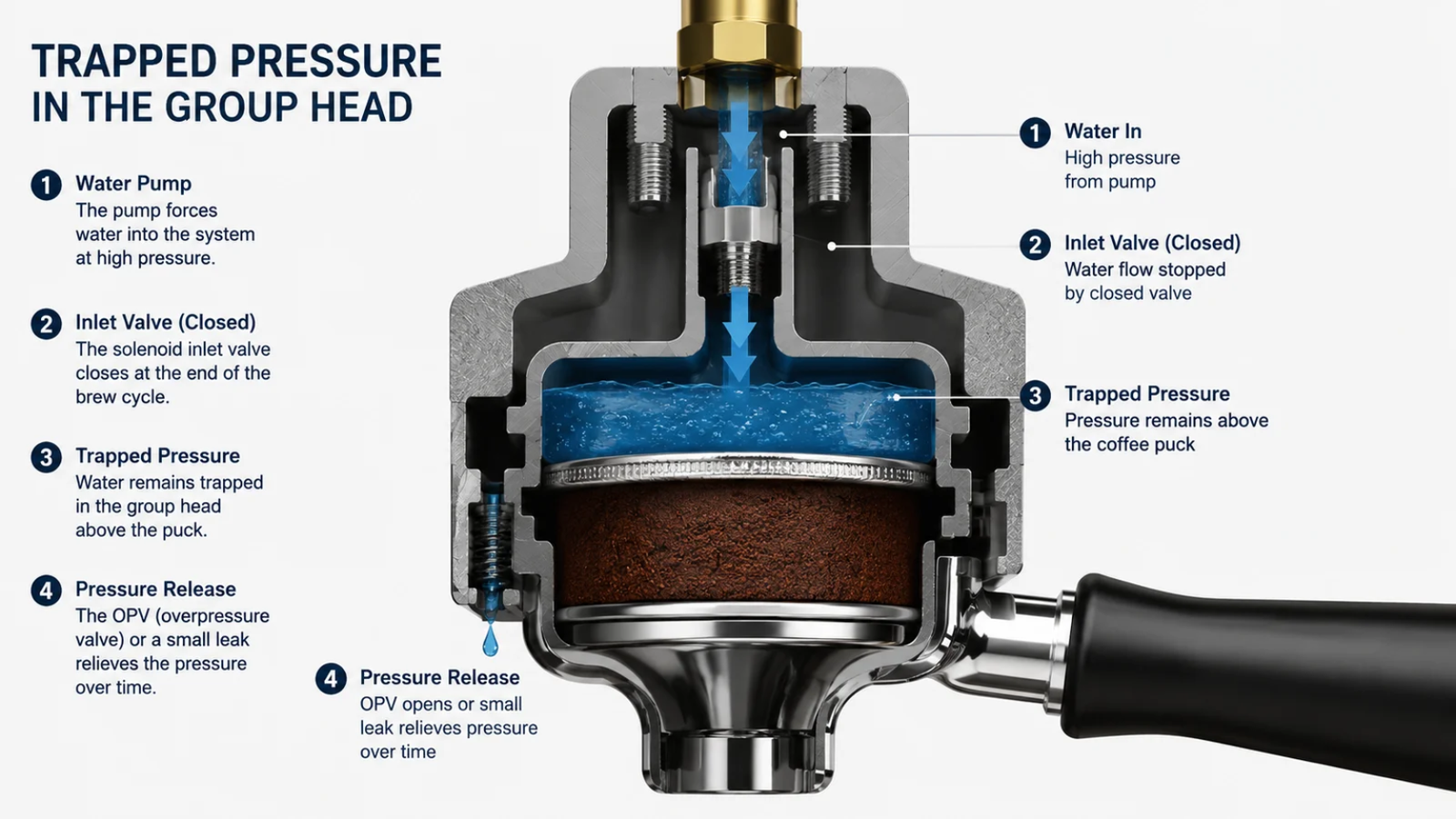
I believe this is one of the most important lessons in our industry. A component is evaluated not just for what it does, but for its total contribution to the machine's experience over time. A spec sheet can tell you the flow rate, pressure rating, and response time. But it can't tell you if the plastic will become brittle after 20,000 cycles of heating and cooling. It can't tell you if the seal will degrade when exposed to different water compositions.3 And it definitely can't tell you if a technician can easily replace it in a cramped space.
The Spec Sheet vs. The Real World
In our quality control process, we don't just test if a coil meets its electrical resistance spec. We put it through accelerated life testing—simulating years of use in just a few weeks. We test for heat resistance, vibration tolerance, and material durability. This is because a 2-way or 3-way valve in an espresso machine4 is a dynamic part. It's constantly working. Its long-term performance, something that a simple spec sheet cannot capture, is what truly determines the reliability of the final product.
The Hidden Costs of a "Good Enough" Component
A valve that costs $2 less but fails twice as often is not a cheaper valve. In fact, it's far more expensive. The cost of a warranty claim—including the replacement part, the technician's time, and the damage to your brand's reputation—can be 50 or 100 times the cost of the original component. This is why we focus so heavily on 100% outgoing inspection and process traceability with our MES systems. We are obsessed with consistency because we know that one bad coil in a batch of 10,000 can destroy the trust you've built with your customers.
| Evaluation Metric | Spec Sheet View | Real-World Impact |
|---|---|---|
| Durability | Material type listed | How the material behaves after years of heat and pressure. |
| Serviceability | Dimensions and fittings | How easily a technician can access and replace the part. |
| Consistency | Single unit performance | Whether the 10,000th unit performs exactly like the first. |
What Do Coffee Machine Manufacturers Actually Evaluate?
You need to choose a new valve supplier, but you're not sure what to prioritize beyond the technical data. Making the wrong choice can lead to production issues and damage your brand's reputation.
Espresso machine manufacturers evaluate potential suppliers on their total value. This includes the component's full lifecycle performance, the reliability of the supply chain, the quality of technical support, and the supplier’s willingness to collaborate on future projects. They are looking for a true partner.

When a procurement manager or brand manager from a major home appliance company talks to me, the conversation quickly moves beyond the valve itself. They want to know about our factory, our processes, and our people. They are evaluating us as a long-term partner. They need to know that if they design our component into their next flagship machine, we will be there to support them for the entire life of that product. This is where an experienced OEM/ODM manufacturer with a solid track record can really shine. It's about demonstrating that you can support their complete product lifecycle.
Total Cost of Ownership (TCO)5
Smart procurement managers don't just look at the purchase price. They calculate the Total Cost of Ownership. This includes the initial cost, but also factors in shipping, inventory, quality control, and, most importantly, the expected cost of failure or warranty claims. A reliable supplier with stable quality and consistent delivery actually lowers the TCO, even if their part price isn't the absolute lowest. Our ISO 9001 and IATF 169496 certified production lines are designed to provide that predictability.
The Supplier as a Partner
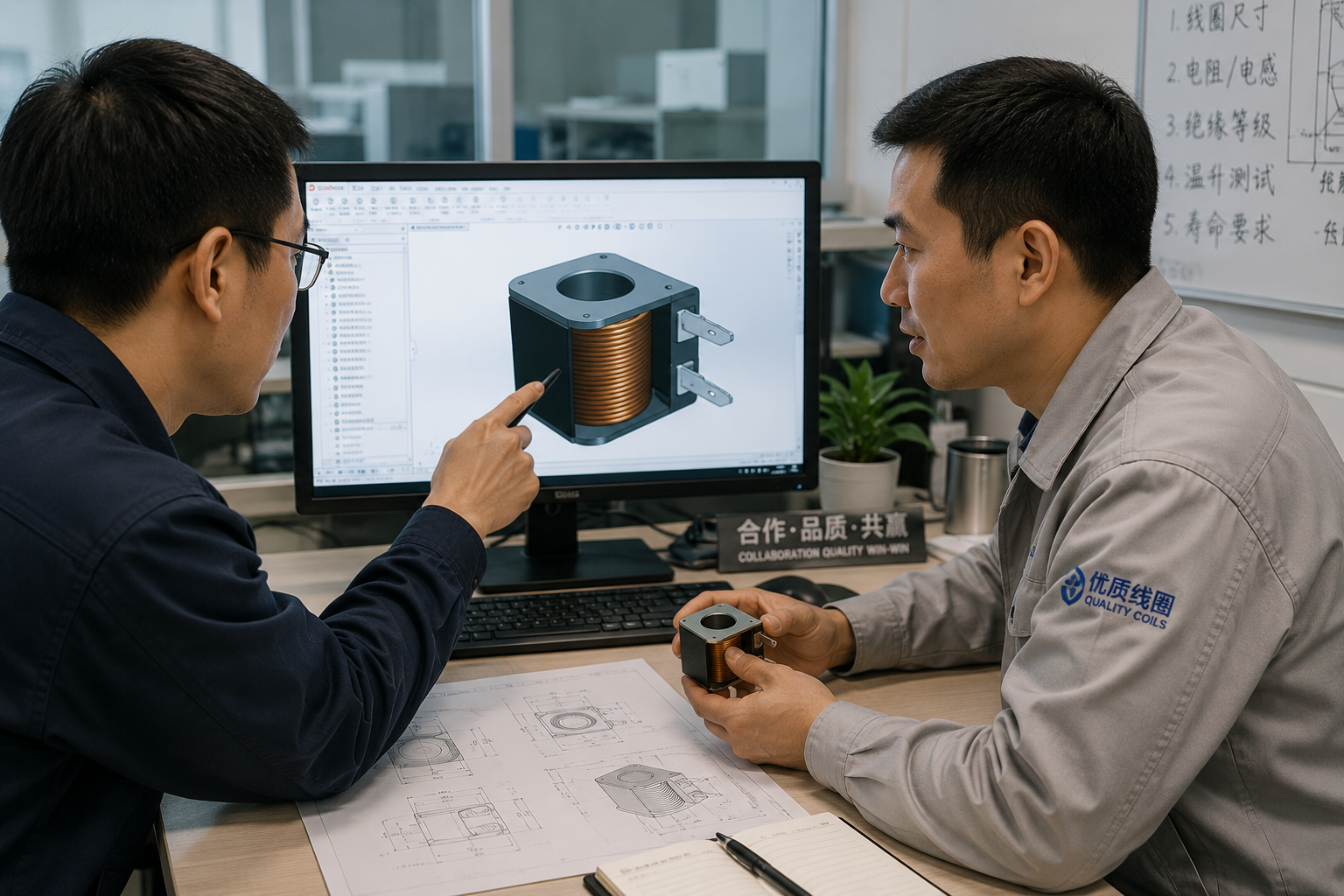
The best relationships are collaborative. Manufacturers want a supplier whose engineers can work directly with their R&D team. They might ask, "Can you help us design a coil that reduces energy consumption?" or "Can you develop a valve assembly that is quieter?" This requires an in-house engineering team with deep experience in materials and design, ready to engage in joint development projects. This is where our 20+ years of ODM experience becomes a major asset for our clients.
Supply Chain Resilience and Traceability
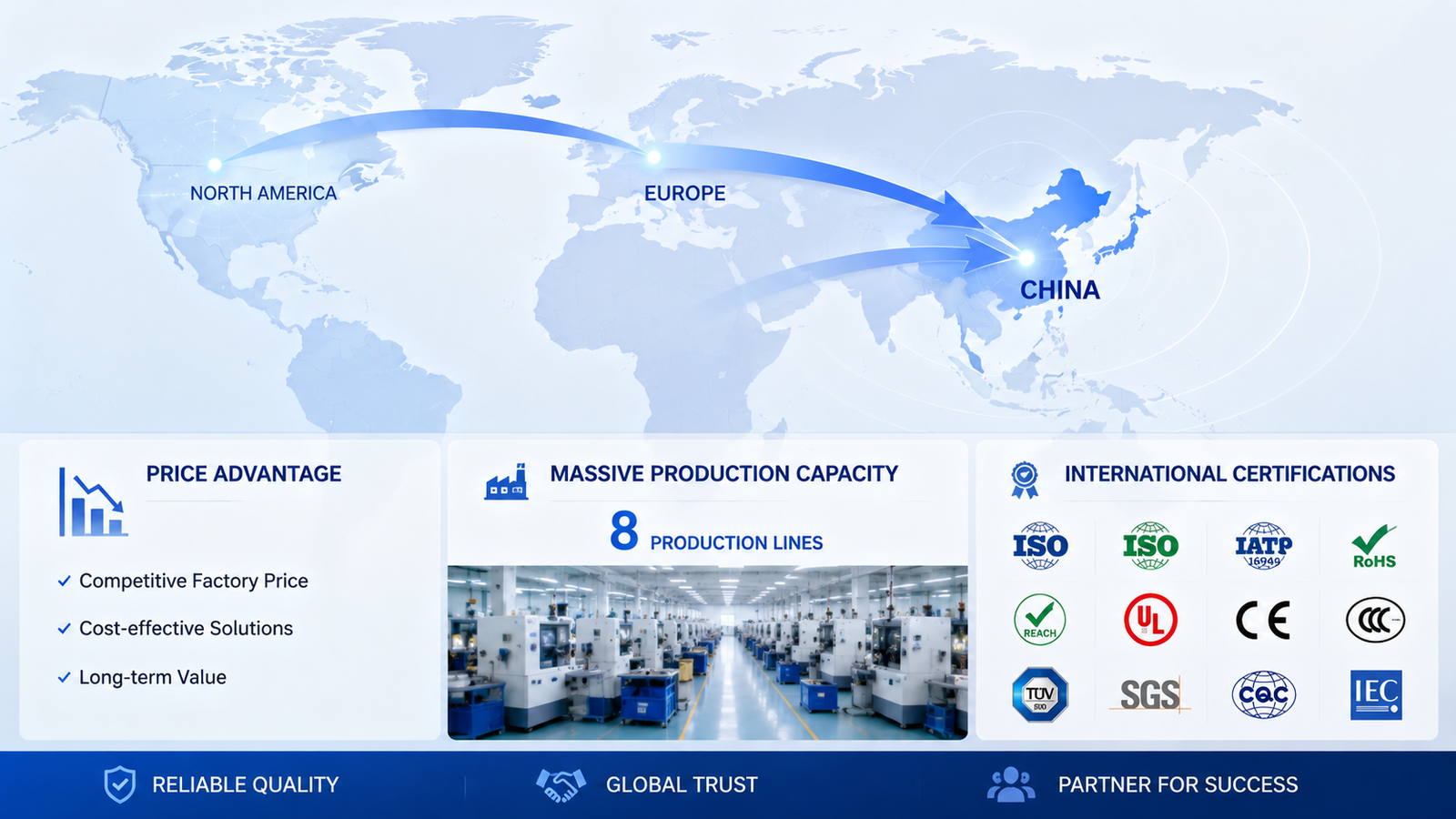
After the disruptions of the past few years, supply chain security is a top priority.7 A manufacturer will ask tough questions: "How do you ensure material availability?" "What is your production capacity?" "How do you trace a faulty component back to its production batch?" Having 8 production lines and an MES system for full traceability isn't just a feature; it's a direct answer to these critical concerns. It provides the peace of mind that supply will be stable and quality will be traceable.
| Evaluation Criteria | What It Means | Why It Matters to Your Brand |
|---|---|---|
| Total Cost of Ownership | Purchase Price + Long-Term Costs | Protects profitability and ensures true value. |
| Collaborative Spirit | Willingness to co-design and solve problems | Drives innovation and creates a better final product. |
| Supply Chain Security | Stable production and full traceability | Prevents costly production stoppages and ensures quality. |
| Lifecycle Support | Support from design to end-of-life | Guarantees the long-term success of your machine. |
Conclusion
Choosing a solenoid valve is about finding a strategic partner who balances performance, cost, and reliability. This secures your brand's future far beyond what a simple spec sheet can promise.
"SP 800-161 Rev. 1, Cybersecurity Supply Chain Risk Management ...", https://csrc.nist.gov/pubs/sp/800/161/r1/final. NIST’s guidance on supply chain risk management notes that dependence on single suppliers concentrates risk and recommends developing alternate sources to reduce the likelihood and impact of disruptions. Evidence role: expert_consensus; source type: government. Supports: That relying on a single supplier increases vulnerability to disruptions and that diversifying sources is a standard risk mitigation practice.. Scope note: The NIST framework is written for ICT supply chains; the general risk principle applies to manufacturing but context-specific details may differ. ↩
"Espresso - Wikipedia", https://en.wikipedia.org/wiki/Espresso. Technical summaries of espresso brewing report pressures near 9 bar and water temperatures around 90–96°C, underscoring the elevated thermal and pressure stresses in espresso machines. Evidence role: statistic; source type: encyclopedia. Supports: Typical espresso brewing pressure (~9 bar) and temperature (~90–96°C), indicating a hot, pressurized operating environment.. Scope note: Values are typical ranges; specific machines and internal valve environments can vary. ↩
"Limescale - Wikipedia", https://en.wikipedia.org/wiki/Limescale. Overviews of limescale note that mineral deposition from hard water accumulates in kettles and coffee makers, contributing to component impairment and maintenance needs. Evidence role: mechanism; source type: encyclopedia. Supports: That hard water leads to scale formation in hot water appliances, which can impair components and performance.. Scope note: Evidence focuses on scaling of wetted parts generally; specific degradation mechanisms for elastomer seals may vary by material and chemistry. ↩
"Solenoid valve - Wikipedia", https://en.wikipedia.org/wiki/Solenoid_valve. Descriptions of espresso machine design indicate the use of three-way solenoid valves to relieve brew pressure and manage water flow, illustrating the role of such valves as dynamic parts. Evidence role: general_support; source type: encyclopedia. Supports: That espresso machines often include a three-way solenoid valve to control pressure and flow.. Scope note: Sources highlight three-way solenoids; prevalence of two-way valves may depend on specific machine designs. ↩
"Category management - GSA", https://www.gsa.gov/buy-through-us/category-management. U.S. public procurement guidance defines total cost of ownership as encompassing acquisition, operation, maintenance, and end-of-life costs, not just the initial purchase price. Evidence role: definition; source type: government. Supports: That TCO includes acquisition, operation, maintenance, and other lifecycle costs beyond purchase price.. Scope note: Definitions are general; specific TCO models differ by agency and industry. ↩
"IATF 16949 - Wikipedia", https://en.wikipedia.org/wiki/IATF_16949. Official IATF materials describe IATF 16949 as the automotive quality management standard, built on ISO 9001 with additional industry-specific requirements. Evidence role: definition; source type: institution. Supports: The scope and purpose of IATF 16949 as a quality management standard for automotive production and service parts.. ↩
"[PDF] Policies to strengthen the resilience of global value chains (EN)", https://www.oecd.org/content/dam/oecd/en/publications/reports/2023/02/policies-to-strengthen-the-resilience-of-global-value-chains_e6dcc19a/fd82abd4-en.pdf. OECD analyses of COVID-19 impacts on global value chains report increased emphasis by firms and policymakers on resilience, diversification, and security of supply following widespread disruptions. Evidence role: historical_context; source type: institution. Supports: That COVID-19-era disruptions led to heightened focus on supply chain resilience, diversification, and risk management.. Scope note: Findings are macro-level; priority shifts at individual firms may vary by sector and exposure. ↩