Why Do Generic Coils Fail in Coffee Machines?
Struggling with unexpected machine failures? You think you've sourced a reliable part, but costly warranty claims keep piling up, hurting your brand's reputation and your bottom line.
The main reason generic coils fail is a mismatch between their standard specifications and the harsh, hot, and humid environment inside a coffee machine.1 These coils are not designed to withstand the rapid temperature changes and constant moisture exposure, leading to predictable material breakdown and electrical failure.
I've been in this industry for over 20 years, and I've talked to hundreds of purchasing managers. A common story I hear is about a sudden spike in field failures for a new coffee machine model. The machine works perfectly in the lab, but out in the real world, customers report problems. After some digging, the issue is almost always a tiny component: the solenoid coil. It’s a classic case of a part chosen for its price and basic specs, without considering the brutal environment it has to survive in every single day. Let's break down why this happens and how you can avoid it.
Why Are Your Machines Facing Sudden Flow Failures and Costly Warranty Claims?
Are your service centers seeing a rise in coffee machines that won't dispense water? This frustrating customer experience often leads directly to expensive warranty claims and damages your brand's reputation.
Sudden flow failure is a classic symptom of a burnt-out or shorted solenoid coil.2 When the coil fails, it can no longer generate the magnetic force needed to open the water valve, effectively stopping the machine from working and triggering a customer service call or return.
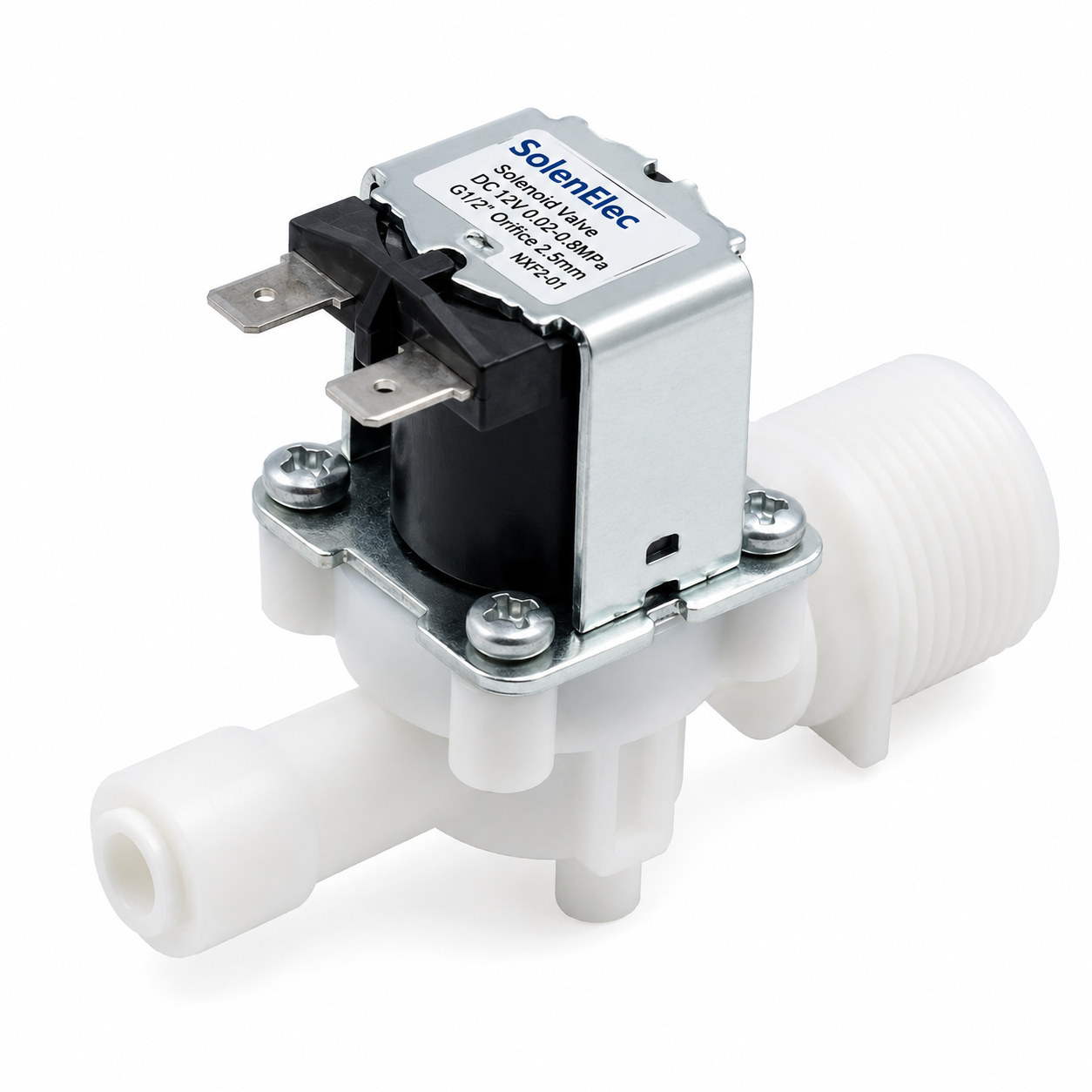
Let's look at this from a practical standpoint. I often get calls from brand managers who are confused. Their team tested the machine, and it worked. But now, they're dealing with angry customers and rising service costs. The problem is that the coil, which controls the water valve, has given up. A solenoid coil is essentially a magnet powered by electricity. When energized, it pulls a plunger, which opens a valve and lets water flow.3 If the coil's internal copper wiring breaks or shorts out, the magnetic field disappears. The valve stays shut. For the customer, this means no coffee. For your business, it means a product failure. This simple component failure creates a direct line from a technical issue to a business problem.
| Cause | Technical Effect | Customer Experience | Business Impact |
|---|---|---|---|
| Coil Winding Breaks | No magnetic field is generated | Machine turns on, but no water comes out | Warranty claim, product return |
| Coil Winding Shorts | Excessive current draw, potential burnout | Machine may trip a breaker, or stop working | Service call, replacement cost |
| Insulation Fails | Short circuit between windings | Intermittent function or complete failure | Damaged brand reputation |
Is Boiler Heat and Ambient Steam Quietly Killing Your Internal Electronics?
Worried about the long-term durability of your components? The inside of a coffee machine is a hostile environment, where high heat and constant steam can silently degrade parts not built to withstand them.
Yes, the combination of boiler heat and steam is a primary cause of coil failure. Heat breaks down the wire's thin enamel insulation4, while moisture penetrates the coil, corrodes the copper windings5, and ultimately leads to an electrical open or short circuit, causing burnout.
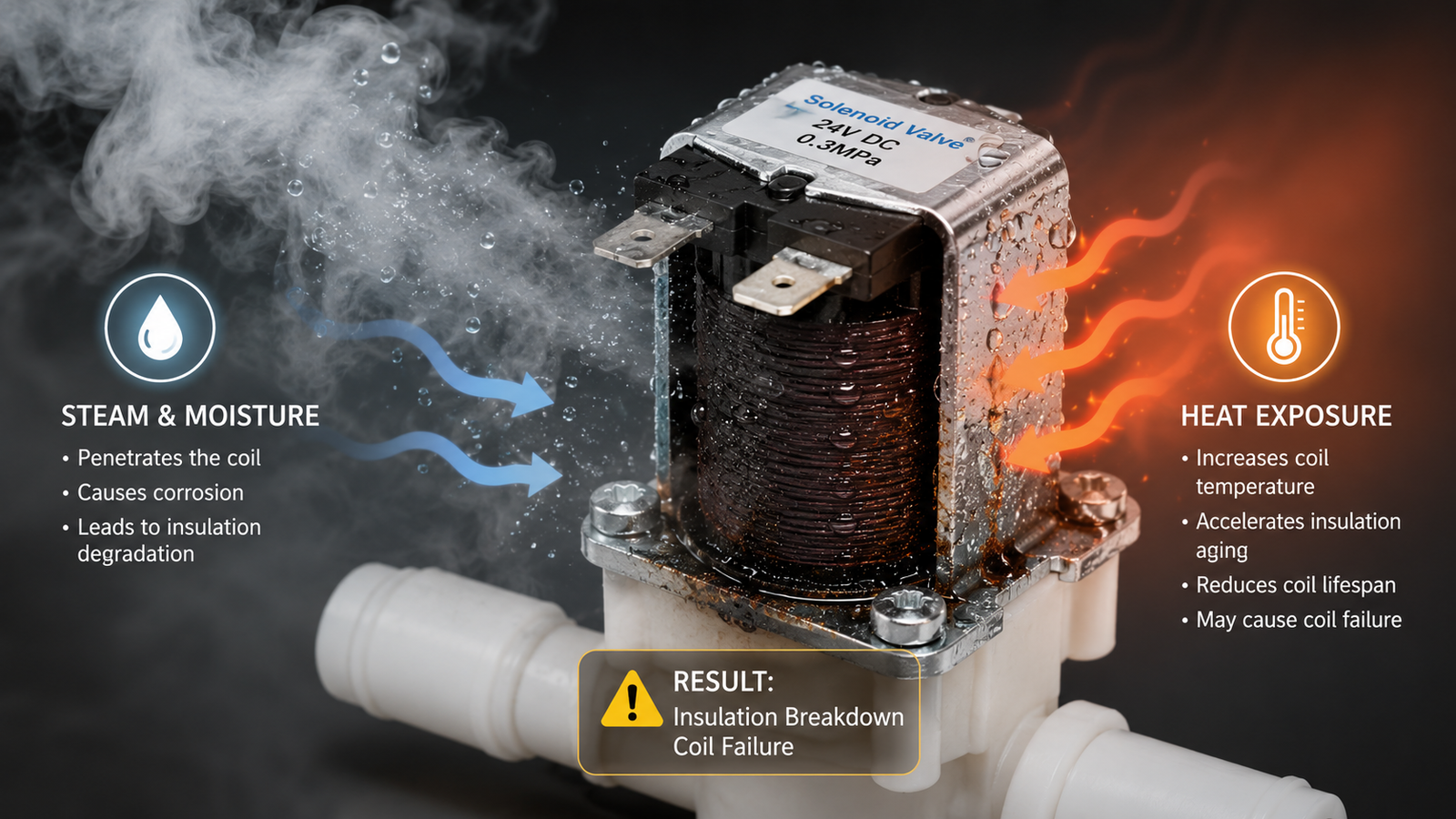
When we analyze failed coils from coffee machines, the evidence is almost always the same. We see two main culprits: heat and humidity. First, heat from the boiler slowly cooks the coil. Standard coils use a basic enamel insulation on the copper wire. Over time, constant exposure to high temperatures makes this insulation brittle. It cracks and flakes off, creating a short circuit between the wires. Second, steam is everywhere. This moisture gets into everything. A standard, unprotected coil will absorb this moisture like a sponge. The water then corrodes the incredibly fine copper wire. I remember one case where a client saw failures skyrocket in humid coastal regions. Their standard coil was fine in dry climates but couldn't survive the humidity. The plastic bobbin the coil is wound on can also warp from the heat, creating gaps that let even more moisture in. It's a predictable cycle of failure.
How Do Custom Insulation and Epoxy Encapsulation Prevent Coil Burnout?
Tired of seeing coils fail from heat and moisture? There must be a better way to protect these critical components and ensure your machines last for years in the hands of customers.
By selecting a higher temperature-rated insulation (like Class F or H)6 and fully sealing the coil with epoxy, you create a robust barrier7. The insulation withstands the heat, and the epoxy blocks all moisture, preventing the two most common causes of coil failure in coffee machines.
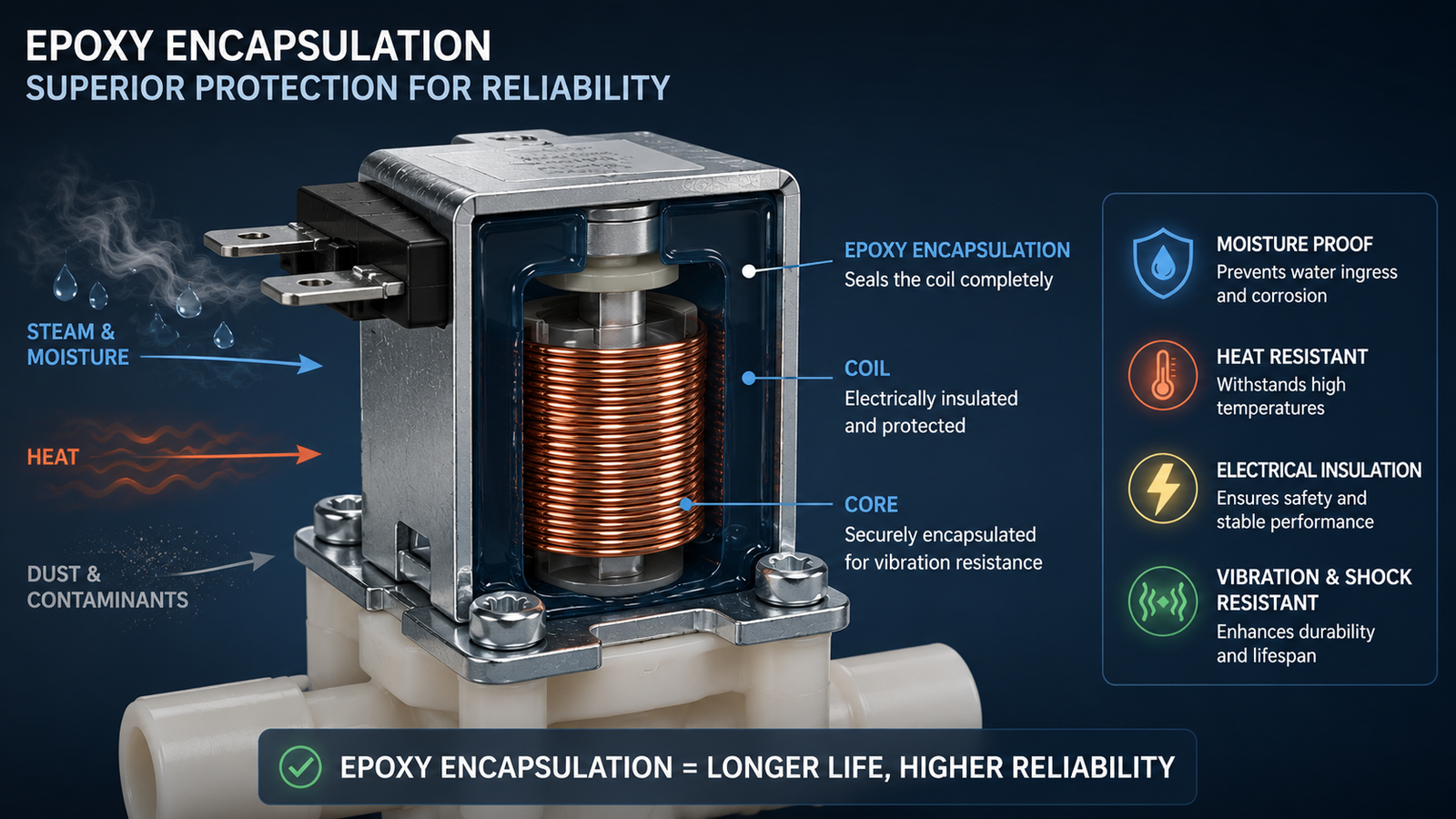
The solution is not to find a better "generic" coil. The solution is to specify a coil built for the job. We guide our partners to focus on two key areas: insulation and protection. First, we use a higher grade of wire insulation, typically UL-rated Class F (155°C) or Class H (180°C). This ensures the insulation doesn't break down even when sitting next to a hot boiler day after day. Second, we seal the entire coil assembly in a custom-formulated epoxy. This process, called encapsulation or overmolding, creates a solid, plastic block around the coil. It does two amazing things. It forms an impenetrable barrier against steam and moisture, so corrosion is no longer a risk. It also helps dissipate heat more effectively8, drawing it away from the delicate windings and transferring it to the surrounding frame. This combination turns a vulnerable component into a durable, reliable part.
| Feature | Standard Coil | Custom Encapsulated Coil | Benefit |
|---|---|---|---|
| Insulation | Standard Class B (130°C)9 | High Temp Class F/H (155°C+) | Prevents shorts from heat degradation |
| Protection | Open to air | Fully sealed in epoxy | Blocks moisture, prevents corrosion |
| Heat Transfer | Poor | Excellent | Runs cooler, extends life |
| Durability | Vulnerable to vibration | Highly resistant to shock/vibration | Reliable performance in daily use |
Are You Falling into the One-Size-Fits-All Trap with Catalog Components?
Relying on off-the-shelf parts to save time and money? This common procurement strategy can backfire when a standard component is not a good fit for your specific application, leading to unforeseen problems.
Yes, selecting a coil from a general catalog is a major risk. A catalog part is defined by its dimensions and electrical specs, not its ability to survive your machine's specific duty cycle, internal temperature, and humidity level.10 This one-size-fits-all approach ignores the actual operating environment.

I had a conversation with a purchasing manager from a major European brand. They were launching a new high-end espresso machine and were seeing a shocking 10% failure rate in early testing. The problem was the solenoid coil. They had used the exact same catalog part that worked flawlessly in their drip coffee makers for years. But an espresso machine is a different beast. The duty cycle is more intense, the internal temperatures are higher, and the steam production is greater. The coil that was perfectly fine in a low-stress environment failed quickly under these new demands. This is the one-size-fits-all trap. A supplier’s catalog can't tell you if a part will survive inside your machine. A good supplier shouldn't just ask for a part number; they should ask about your application. How hot does it get? How often does the valve cycle? Where is the coil located relative to the boiler? The answers to these questions determine the right coil design.
What Technical Checklist Should OEM Designers Follow for Sourcing Reliable Coils?
Looking for a way to improve your supplier vetting process? A clear technical checklist can help your design and procurement teams ask the right questions to ensure you get a component that truly meets your needs.
OEM designers should use a risk-based checklist focused on materials, manufacturing processes, and testing. This shifts the conversation from price to long-term reliability, ensuring the supplier's capabilities match the product's environmental demands. Ask about material traceability, process controls, and environmental stress testing.

To avoid these issues, your team needs to ask better questions during the sourcing process. It's about moving from a price-focused conversation to a risk-focused one. I always encourage my partners to have a technical checklist ready when they talk to a potential coil supplier. It helps you cut through the sales pitch and get to what really matters: whether their product can survive in your machine. A supplier who can answer these questions confidently is one you can trust. If they don't know the answers or say they are not important, that is a major red flag. This simple due diligence can save you millions in warranty costs and protect your brand's reputation.
| Category | Key Question for Your Supplier | Why It Matters |
|---|---|---|
| Materials | What is the UL insulation class of the copper wire? (e.g., F, H) | Determines the coil's maximum safe operating temperature. |
| What specific plastic are you using for the bobbin? (e.g., PET, PBT) | Ensures the frame won't warp or crack under heat. | |
| Process | How do you ensure the epoxy encapsulation is 100% void-free? | Voids (air bubbles) can trap moisture and lead to failure. |
| What controls do you have for winding tension and layering? | Prevents internal wire breaks and ensures consistent magnetic force. | |
| Testing | Do you perform 100% electrical testing on every coil? | Catches immediate defects like shorts or open circuits. |
| What thermal shock and humidity cycle tests do you conduct?11 | Simulates real-world conditions to prove long-term durability. |
Conclusion
Ultimately, preventing coil failure is not about finding a cheaper generic part. It's about partnering with a manufacturer who understands your application and can build a component designed to survive it.
"Degradation Monitoring of Insulation Systems Used in Low-Voltage ...", https://pmc.ncbi.nlm.nih.gov/articles/PMC7374401/. Studies of electrical winding reliability identify elevated temperature and moisture exposure as mechanisms that accelerate insulation degradation and corrosion-related electrical failure, providing contextual support for treating coffee-machine interiors as a high-risk environment for generic coils. Evidence role: general_support; source type: paper. Supports: Heat and moisture are established environmental stressors that can degrade coil insulation and contribute to winding failure.. Scope note: The source may address electrical coils or windings generally rather than solenoid coils in coffee machines specifically. ↩
"Solenoid Valve Fault Finding Chart - Connexion Developments Ltd", http://www.connexion-developments.com/solenoid-valve-full-fault-guide.html. Engineering explanations of solenoid-valve operation show that the electromagnetic coil provides the actuation force for opening or closing the valve; consequently, coil electrical failure can prevent valve motion and interrupt fluid flow. Evidence role: mechanism; source type: education. Supports: Solenoid valves rely on an energized coil to actuate the valve, so an open or shorted coil can prevent valve opening and stop flow.. Scope note: The source supports the operating mechanism and likely failure consequence, not the frequency of this symptom in coffee machines. ↩
"Solenoid valve - Wikipedia", https://en.wikipedia.org/wiki/Solenoid_valve. Reference descriptions of solenoid valves define them as electromechanically operated valves in which an energized coil moves an armature or plunger to control fluid flow. Evidence role: definition; source type: encyclopedia. Supports: A solenoid valve uses an electromagnetic coil to move a plunger or armature that changes the valve state and controls flow.. ↩
"[PDF] Thermal Accelerated Aging Methods for Magnet Wire: A Review - arXiv", https://arxiv.org/pdf/2004.09187. Research on thermal aging of enamel-coated magnet wire reports that elevated temperatures can reduce insulation integrity and dielectric performance, supporting heat-driven insulation breakdown as a plausible coil-failure mechanism. Evidence role: mechanism; source type: paper. Supports: Thermal aging can degrade enamel or polymer insulation on magnet wire, reducing dielectric strength and increasing risk of short circuits.. Scope note: The cited study may use controlled laboratory aging conditions rather than the exact temperature profile of a coffee machine. ↩
""Effects of Air Pollution, Temperature and Moisture Content on ...", https://surface.syr.edu/etd/1444/. Corrosion and electronics-reliability literature shows that moisture exposure can promote copper corrosion and conductive degradation, providing a mechanism by which moisture ingress into windings may cause open circuits, leakage, or shorts. Evidence role: mechanism; source type: paper. Supports: Moisture and humidity can promote corrosion of copper conductors and compromise electrical reliability in wound components.. Scope note: The evidence is mechanistic and may not quantify failure rates for coffee-machine solenoid coils. ↩
"Insulation system - Wikipedia", https://en.wikipedia.org/wiki/Insulation_system. Standards-based descriptions of electrical insulation thermal classes identify Class F and Class H as higher-temperature insulation categories, commonly associated with 155 °C and 180 °C ratings respectively. Evidence role: definition; source type: institution. Supports: Electrical insulation thermal classes F and H correspond to higher maximum temperature ratings than lower insulation classes.. ↩
"[PDF] POTTING AND MOLDING ELECTRICAL CABLE ASSEMBLY ...", https://standards.nasa.gov/sites/default/files/standards/KSC/E//KSC-STD-132-Rev-E-06-28-2023-Final-002.pdf. Electronics-packaging references describe epoxy encapsulation and potting as methods for limiting environmental exposure, including moisture ingress, thereby supporting their use as protective barriers around wound electrical components. Evidence role: mechanism; source type: research. Supports: Epoxy potting or encapsulation is used in electronics to reduce moisture ingress and protect components from environmental exposure.. Scope note: The source supports the protective function of encapsulation generally and may not evaluate the specific epoxy formulation used in a coffee-machine coil. ↩
"How Potting Materials Improve Heat Flow and Reliability in High ...", https://blog.caplinq.com/how-potting-materials-improve-heat-flow-and-reliability-in-high-power-electronics_7154/. Thermal-management studies of potted electronics report that encapsulants can provide a conductive path for heat away from components, supporting the claim that encapsulation may improve coil heat dissipation when material and design conditions are appropriate. Evidence role: mechanism; source type: paper. Supports: Potting materials with appropriate thermal conductivity can improve heat transfer from embedded electronic or electromagnetic components.. Scope note: This is conditional support; ordinary epoxy formulations vary widely in thermal conductivity and may not always improve cooling. ↩
"Insulation system - Wikipedia", https://en.wikipedia.org/wiki/Insulation_system. Electrical-insulation thermal-class references based on IEC or NEMA conventions list Class B insulation at 130 °C, supporting the table's stated rating. Evidence role: definition; source type: institution. Supports: Class B is a recognized electrical insulation thermal class with a 130°C rating.. ↩
"[PDF] NASA-STD-8739.10", https://s3vi.ndc.nasa.gov/ssri-kb/static/resources/nasa-std-8739.10.pdf. Reliability-engineering guidance on parts selection and derating emphasizes that components should be evaluated against electrical, thermal, environmental, and duty-cycle stresses, supporting the article's caution against relying only on catalog specifications. Evidence role: expert_consensus; source type: government. Supports: Reliability guidance emphasizes selecting and derating components according to operating environment, electrical stress, thermal stress, and mission profile rather than nominal specifications alone.. Scope note: The source supports a general engineering principle and may not discuss solenoid coils or coffee machines directly. ↩
"MIL-STD-810 - Wikipedia", https://en.wikipedia.org/wiki/MIL-STD-810. Environmental-testing standards such as IEC 60068 and MIL-STD-810 include thermal shock and humidity or damp-heat procedures, supporting the use of these tests to evaluate component robustness under temperature and moisture stress. Evidence role: expert_consensus; source type: institution. Supports: Standard environmental test methods include thermal shock and damp-heat or humidity cycling to evaluate equipment response to temperature and moisture stresses.. Scope note: Passing such tests supports environmental robustness under specified profiles but does not by itself prove lifetime reliability in every coffee-machine design. ↩