
Why Do Appliance Solenoids Overheat? Common Causes and Solutions
Appliance solenoids failing from heat? These failures lead to costly warranty claims and hurt your brand. Let's explore why this happens and how to prevent it.
Solenoid overheating is rarely a simple defect. It's usually a system mismatch between the solenoid’s specifications (voltage, duty cycle) and its actual operating environment, including ambient temperature, ventilation, and power supply stability. The key is proper integration.
Over my 20 years at SolenElec, I've seen countless procurement managers grapple with this issue. The problem often isn't the solenoid itself, but a disconnect in the specification process. To truly solve this, we need to look beyond the component and examine the entire system. Let's break down the common culprits.
What Causes Solenoid Coils to Overheat in Home Appliances?
Facing another burnt-out coil in a new appliance? Pinpointing the cause feels like a guessing game, creating risk. The issue usually stems from a few common, preventable factors.
The primary causes of overheating are a mismatch between the solenoid's rated voltage and the actual supply, using a solenoid beyond its specified duty cycle1, high ambient temperatures inside the appliance2, and restricted airflow around the coil, which prevents proper heat dissipation3.
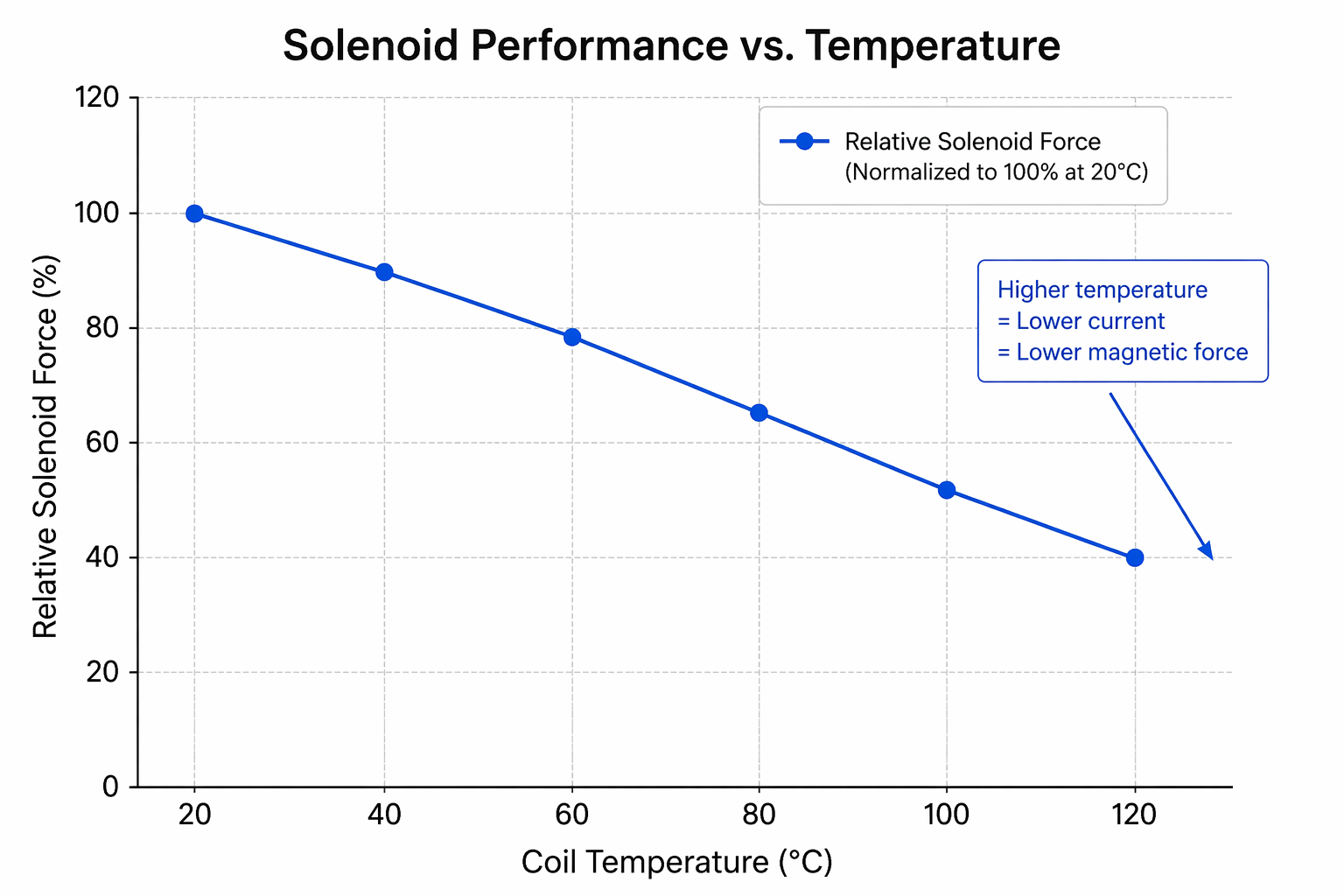
When a client reports an overheating issue, my first question isn't about the solenoid's quality. It's about its environment. A perfectly good solenoid will fail if it's not right for the job. We treat these causes not as defects, but as critical specification risks that must be managed during procurement. Think of it as a checklist for your R&D and engineering teams. For instance, a "continuous duty" rating is meaningless if the solenoid is placed next to a heating element in a sealed compartment. The heat has nowhere to go. This is a system design issue, not a component failure. Here's how these factors interact:
Key Overheating Risk Factors
| Risk Factor | Impact on Solenoid | What to Ask Your Team |
|---|---|---|
| Voltage Mismatch | Too high voltage increases current, generating excess heat.4 | Is our power supply stable? What are the voltage tolerances? |
| Duty Cycle | Using an intermittent-duty coil for continuous operation. | What is the exact on/off timing in the application? |
| Ambient Heat | External heat sources reduce the coil's ability to cool itself. | What is the max temp inside the appliance near the solenoid? |
| Poor Ventilation | Trapped heat accumulates, raising the coil's temperature. | Is there sufficient airflow around the solenoid? |
This systematic approach shifts the conversation from "is this part defective?" to "did we specify the right part?". This is where a procurement manager can add immense value by facilitating that conversation.
How Does Excess Heat Affect Solenoid Performance and Lifespan?
A warm solenoid might not seem like a big deal. But this excess heat silently degrades performance, leading to unexpected field failures and warranty headaches down the line.
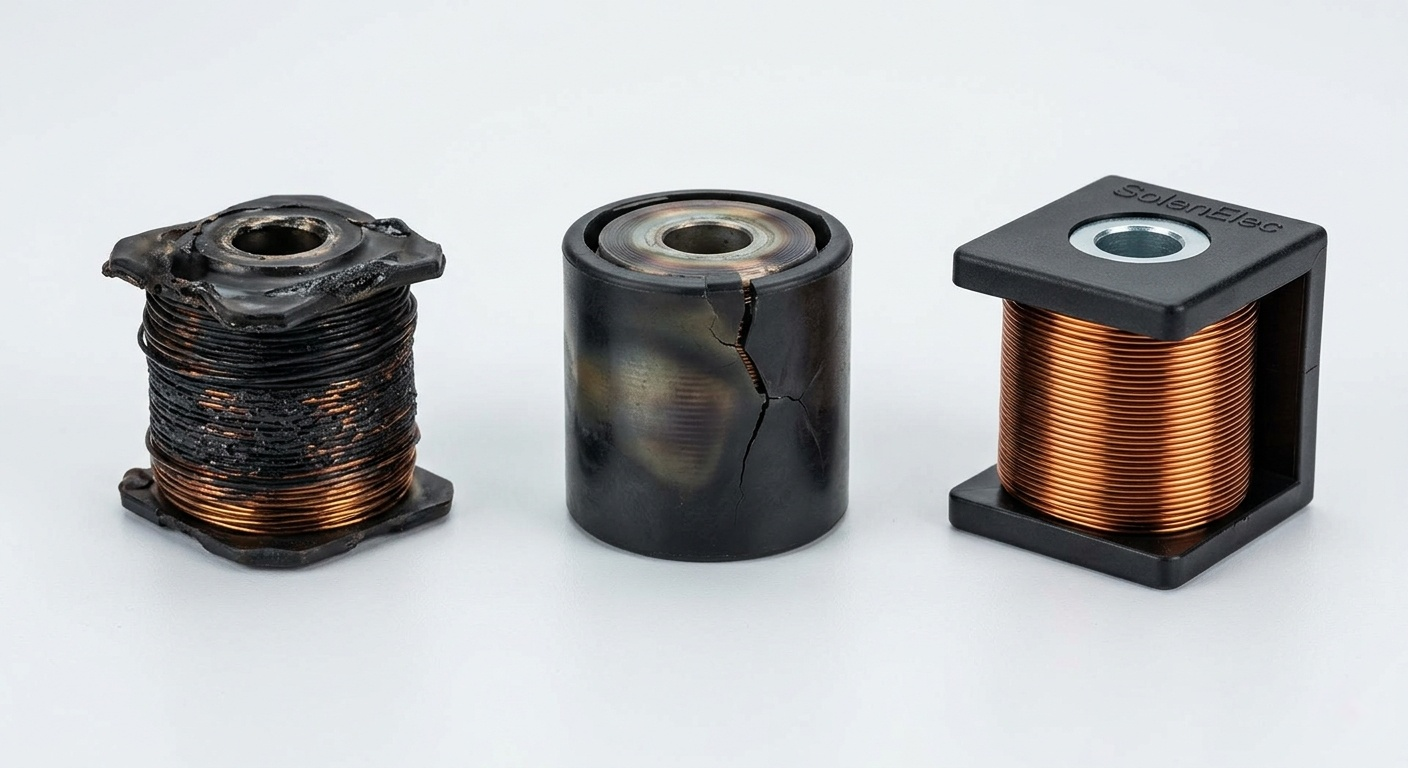
Excess heat breaks down the coil's insulation, leading to short circuits and failure.5 It also increases the wire's electrical resistance, which weakens the magnetic force, causing inconsistent performance.6 Ultimately, sustained overheating will cause the coil to burn out completely, resulting in total component failure.
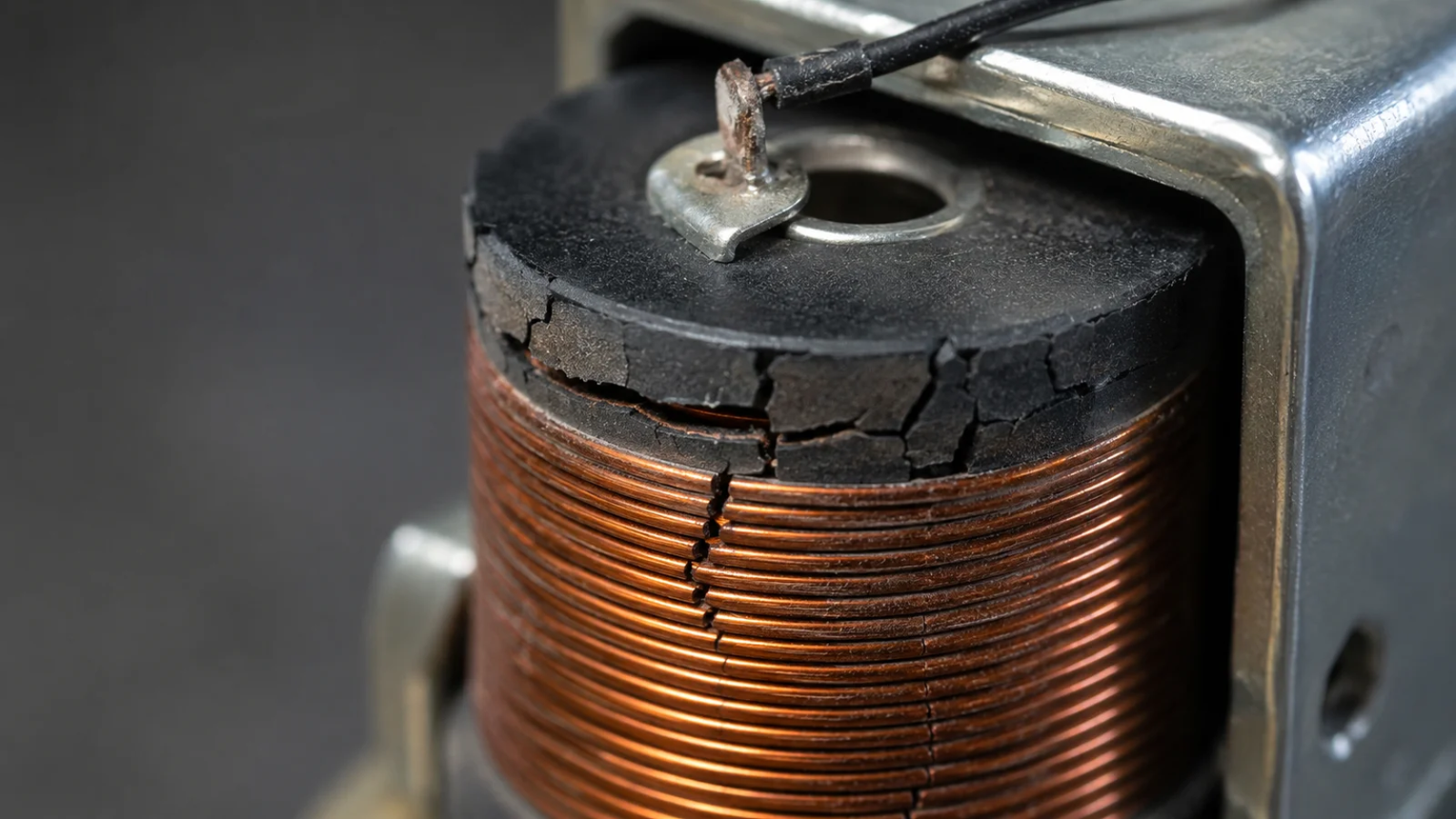
From a procurement perspective, the real danger of heat isn't a single catastrophic event. It's a slow, silent killer of product reliability. Each degree above the specified operating temperature shortens the lifespan of the coil's insulation.7 I once worked with a brand whose coffee machines started failing after 18 months. The cause? The solenoid, placed too close to the boiler, was slowly cooking. The insulation became brittle, cracked, and short-circuited. This is a classic example of a hidden cost. The initial product passes QC, but the long-term failure rate skyrockets8, damaging brand reputation and incurring massive warranty expenses. This gradual degradation is why a cheap solenoid is often the most expensive choice in the long run.
Stages of Thermal Degradation
| Stage | Symptom | Business Impact |
|---|---|---|
| 1. Increased Resistance | Weaker plunger pull/push force; sluggish operation. | Inconsistent appliance performance; negative customer reviews. |
| 2. Insulation Breakdown | Intermittent shorts, erratic behavior. | Hard-to-diagnose service calls; customer frustration. |
| 3. Coil Burnout | Complete failure; open circuit. | Total appliance failure; costly warranty replacement. |
Understanding this progression helps you argue for better components and design considerations, protecting your brand from long-term risk.
What Are the Most Common Overheating Problems in Appliance Solenoids?
You know overheating is a risk, but where should you look for it? Identifying these common failure scenarios in appliances helps you and your team proactively address them.
Common problems include water inlet valve solenoids in washing machines and dishwashers running continuously due to a faulty sensor9, or solenoids in coffee makers placed too close to heating elements. Another frequent issue is using an AC solenoid where a DC one would be more efficient10.
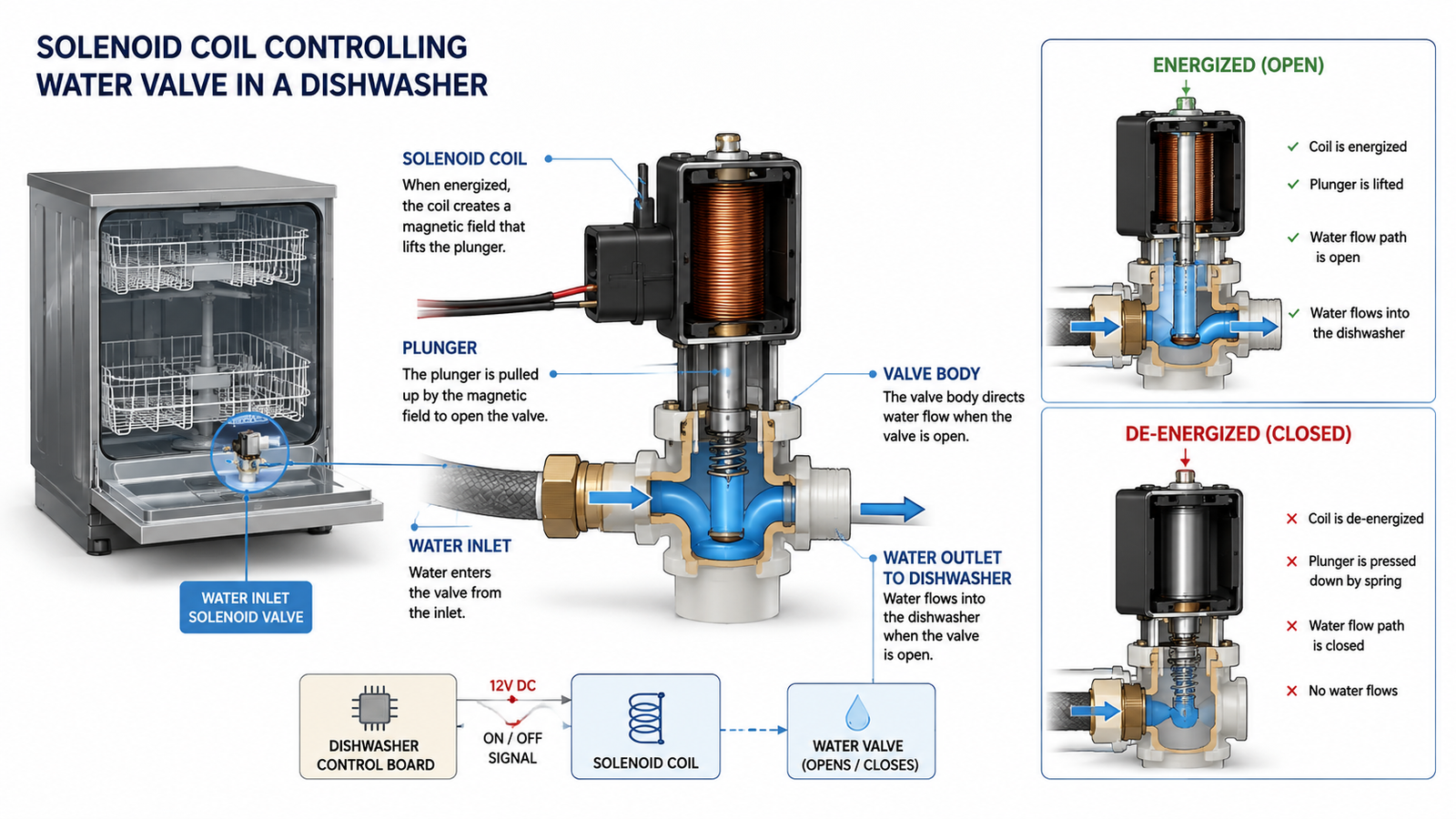
In my experience, context is everything. A solenoid that works perfectly in a dishwasher might fail spectacularly in a steam oven. The application dictates the risks. A common scenario we see is with water inlet valves. In a washing machine, the valve might be open for a few minutes at a time. But if the control board fails and leaves the solenoid energized continuously, an intermittent-duty coil will quickly burn out. This isn't a solenoid defect; it's a system failure mode that requires a solenoid robust enough to handle it. Another classic example is in compact coffee makers, where every component is crammed together. The solenoid for the brew group is often right next to the boiler. Here, the primary thermal challenge isn't the solenoid's own heat, but the high ambient temperature.
Common Application Failure Scenarios
| Appliance | Common Problem | Root Cause |
|---|---|---|
| Washing Machine | Water valve solenoid burns out. | Control board failure causes continuous energization. |
| Coffee Maker | Brew group solenoid fails prematurely. | High ambient heat from adjacent boiler degrades insulation. |
| Dishwasher | Dispenser solenoid becomes weak. | Heat from drying cycle increases coil resistance. |
As a procurement manager, your job is to ask: "Have we considered the worst-case failure modes for our appliance and specified a solenoid that can survive them?"
How to Prevent Solenoid Coil Overheating in Electrical Appliances?
Preventing solenoid failure seems technical, and you're not an engineer. But you are responsible for the outcome. You can drive prevention by asking your team the right questions.
Prevention starts with clear communication. Ensure your supplier fully understands the application's voltage, duty cycle, ambient temperature, and ventilation. Collaborate with suppliers on thermal management solutions like heat sinks or specifying higher-temperature insulation classes. Always validate the solenoid in the final product under worst-case conditions.
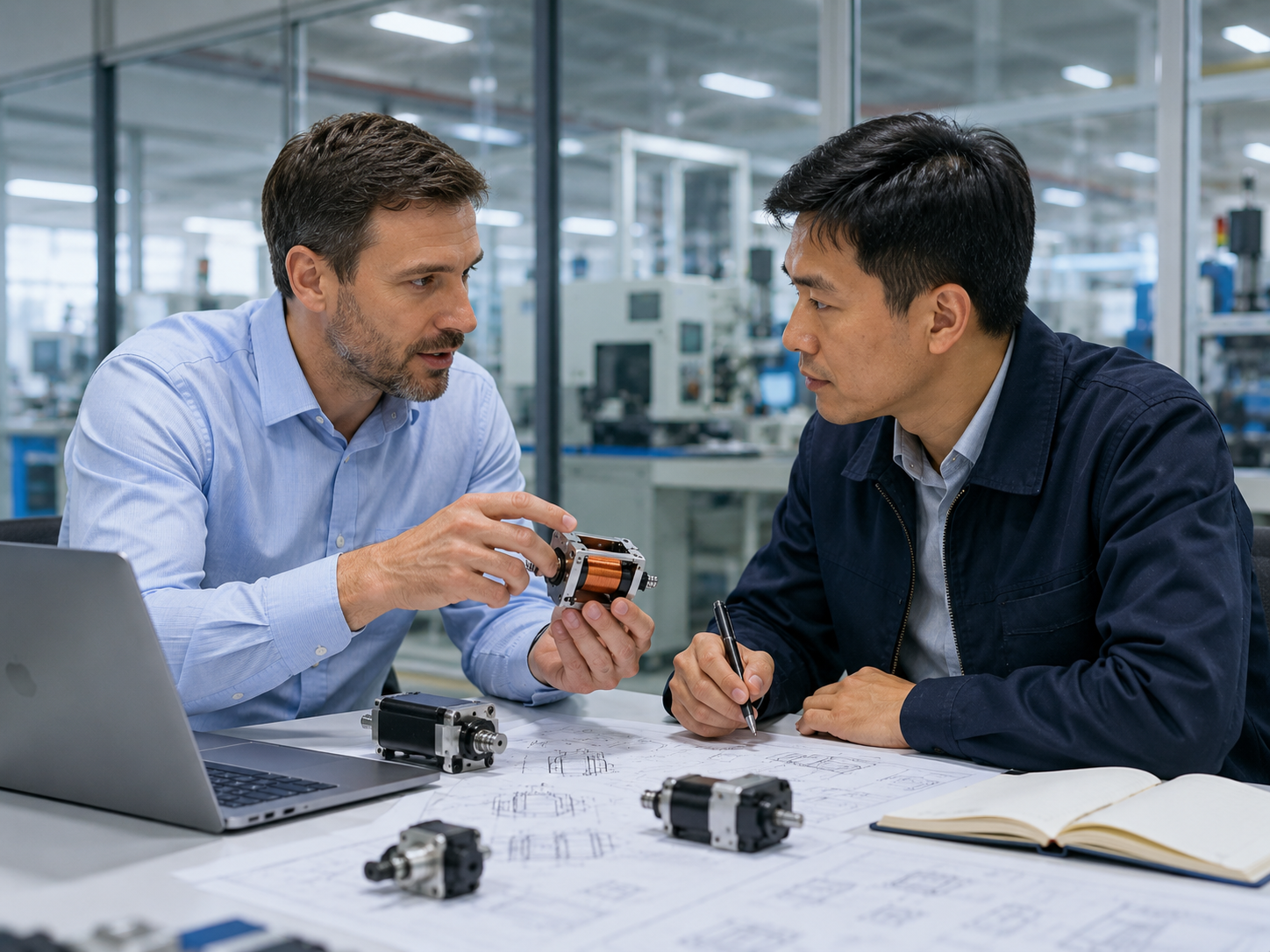
The most effective tool for prevention isn't a multimeter; it's a clear specification sheet and an open dialogue with your supplier. As a procurement manager, you are the crucial link between your R&D team and the component manufacturer. Your goal is to translate your appliance's real-world operating conditions into a set of requirements the supplier can act on. Don't just send a drawing; send a story. "This solenoid will be mounted 2cm from a heating element that reaches 80°C, in a sealed plastic housing, and it will be activated for 90 seconds every 5 minutes." That is infinitely more useful than just "continuous duty." A good supplier will use this information to recommend the right product or suggest a custom solution.
Critical Information for Your Supplier
| Parameter | Why It Matters | Example Spec |
|---|---|---|
| Duty Cycle | Prevents burnout from overuse. | On-time: 60s, Off-time: 120s |
| Max Ambient Temp | Ensures insulation can handle environmental heat. | 75°C max ambient near coil |
| Voltage Range | Accounts for power supply fluctuations. | 220-240 VAC, 50Hz |
| Mounting & Airflow | Determines how well the solenoid can cool itself. | Vertical mount, no forced airflow |
Providing this level of detail empowers your supplier to be a partner in your success, not just a parts vendor.
What Design and Material Factors Improve Solenoid Heat Resistance?
You know you need a more robust solenoid. But the datasheets are confusing. How do you know what actually improves heat resistance? Focus on a few key factors.
Higher insulation classes (like Class F or H) allow for higher operating temperatures.11 Using high-purity copper wire improves efficiency and reduces heat generation. Heat-resistant bobbin materials (e.g., PBT, PPS) prevent deformation12, and proper encapsulation protects the coil from moisture and improves heat transfer.

This is where the hidden risks of cost-cutting become apparent. A manufacturer might save a few cents by using a lower-grade Class B insulation instead of Class F. On paper, it might meet the minimum spec. But in the real world, where voltage spikes and high ambient temperatures are common, that Class B insulation will degrade much faster. At SolenElec, we've built our reputation with leading European brands by insisting on the right materials. For example, using high-purity copper wire isn't just about performance; it's about consistency. It generates less heat for the same magnetic force, providing a larger safety margin. It's a small detail that makes a huge difference in long-term reliability and reduces your total cost of ownership by preventing future warranty claims.
Common Insulation Classes
| Class | Max Temperature | Typical Application | Procurement Note |
|---|---|---|---|
| Class B | 130°C | General purpose, low-stress environments. | Lower cost, but higher risk in hot appliances. |
| Class F | 155°C | Most home appliances (e.g., washing machines). | Good balance of cost and performance. The standard for reliability. |
| Class H | 180°C | High-heat appliances (e.g., ovens, industrial). | Higher cost, but necessary for demanding thermal environments. |
When you review a quote, don't just look at the price. Ask about the insulation class and bobbin material. It's a direct indicator of the component's quality and durability.
Conclusion
Ultimately, preventing solenoid overheating isn't about finding a better part. It's about building a better partnership with your supplier through clear communication and detailed application-specific requirements.
"[PDF] Reliability and life study of hydraulic solenoid valve. Part 2", https://www.eng.auburn.edu/~choeson/Publication/1132_2009_Reliability%20and%20life%20study%20of%20hydraulic%20solenoid%20valve-Part%202%20_S.%20V.%20Angadi,%20R.%20L.%20Jackson.pdf. Technical references on solenoid actuators define duty cycle as the proportion of time a coil is energized and identify excessive on-time as a cause of temperature rise beyond the coil’s thermal rating. Evidence role: definition; source type: institution. Supports: A source should define solenoid duty cycle and explain that coil energization time affects temperature rise and allowable operation.. Scope note: This is general support for solenoid operation; it does not prove that any specific appliance design exceeds its rated duty cycle. ↩
"[PDF] Transformer Loading & Thermal Design Considerations", https://web-ded.uta.edu/cedwebfiles/conf/Thursday%208%2030%20AM%20XF%20Loading%20thermal%20design%20and%20operation%20considerations%20-John%20Pruente%20.pdf. Thermal-design literature treats a component’s operating temperature as dependent on both ambient temperature and internally generated temperature rise, so elevated ambient conditions reduce the available margin before insulation or material temperature limits are reached. Evidence role: mechanism; source type: research. Supports: A source should support that component temperature is the sum of ambient temperature and internally generated temperature rise, so higher ambient temperature reduces thermal margin.. Scope note: The support is contextual; appliance-specific temperatures would require measurements in the final product. ↩
"[PDF] 1 The Impact of Fin Parameter and Reynolds Number on Heat Sink ...", https://cmsw.mit.edu/wp/wp-content/uploads/form-maker/JHQcceKZuv.pdf. Heat-transfer references describe convection as a principal path for removing heat from electrical components; restricting airflow lowers convective cooling and can raise component temperature. Evidence role: mechanism; source type: education. Supports: A source should explain that airflow supports convective heat transfer from hot components and that restricted airflow reduces cooling.. Scope note: This supports the mechanism generally; the magnitude of temperature rise depends on geometry, enclosure design, airflow rate, and coil power. ↩
"[PDF] Electric Energy Concepts Electrical Laws (Ohm's law, Joule Heating ...", https://physics-legacy.pbsci.ucsc.edu/~sriram/Courses_All/Physics_2_2011/Lectures/Prefinal_Review_NLecture_19.pdf. Ohm’s law and Joule heating establish that, for a coil with approximately fixed resistance, increasing applied voltage raises current and electrical power dissipation, thereby increasing heat generation. Evidence role: mechanism; source type: education. Supports: A source should support that, for a resistive coil, higher applied voltage increases current and power dissipation, which appears as heat.. Scope note: This supports the electrical mechanism generally; actual solenoid heating also depends on coil impedance, AC/DC operation, duty cycle, and cooling conditions. ↩
"Degradation Monitoring of Insulation Systems Used in Low-Voltage ...", https://pmc.ncbi.nlm.nih.gov/articles/PMC7374401/. Studies of electrical-insulation thermal aging show that elevated temperature accelerates chemical and mechanical degradation of insulating materials, reducing dielectric strength and increasing the risk of winding shorts and failure. Evidence role: mechanism; source type: paper. Supports: A source should support that elevated temperature accelerates degradation of electrical insulation and can reduce dielectric integrity, creating short-circuit risk.. Scope note: This supports the failure mechanism; the exact time to failure depends on insulation material, temperature profile, voltage stress, and manufacturing quality. ↩
"Solenoids as Magnetic Field Sources - HyperPhysics", http://hyperphysics.phy-astr.gsu.edu/hbase/magnetic/solenoid.html. Electrical engineering references report a positive temperature coefficient for copper resistance and describe solenoid magnetic field strength as dependent on coil current, supporting the conclusion that heating can reduce available actuation force. Evidence role: mechanism; source type: education. Supports: A source should support that copper resistance rises with temperature and that solenoid magnetic field or force depends on coil current.. Scope note: This is a mechanism-level citation; actual force loss depends on the drive circuit, magnetic geometry, plunger position, and supply regulation. ↩
"A study of expected lifetime of XLPE insulation cables working at ...", https://pmc.ncbi.nlm.nih.gov/articles/PMC7002785/. Thermal-endurance standards and Arrhenius aging models for electrical insulating materials indicate that insulation life decreases as operating temperature rises above the material’s rated thermal class. Evidence role: expert_consensus; source type: institution. Supports: A source should support that insulation life decreases as operating temperature increases, commonly modeled by Arrhenius-type thermal aging or thermal endurance standards.. Scope note: The source may support the direction and model of life reduction rather than a precise loss of life for each individual degree in a specific solenoid. ↩
"Physical models of infant mortality: implications for defects in ... - PMC", https://pmc.ncbi.nlm.nih.gov/articles/PMC7719151/. Reliability engineering literature distinguishes initial conformance testing from long-term wear-out mechanisms and notes that thermal aging can produce failures after products have passed initial inspection. Evidence role: general_support; source type: research. Supports: A source should explain that qualification or acceptance tests may not reveal cumulative thermal-aging mechanisms that appear during field service.. Scope note: This supports the reliability concept generally; it does not verify the article’s particular coffee-machine example or the scale of any specific failure rate increase. ↩
"How are washing machine intake valve solenoids controlled?", https://diy.stackexchange.com/questions/195937/how-are-washing-machine-intake-valve-solenoids-controlled. Appliance technical references describe water inlet valves in washers and dishwashers as solenoid-operated devices controlled by sensors and electronic controls, making continuous energization a plausible failure mode when the control system malfunctions. Evidence role: case_reference; source type: institution. Supports: A source should document that washing machines or dishwashers use electrically operated inlet valves controlled by appliance control systems, and that control faults can affect valve energization.. Scope note: This is contextual support for plausibility; it does not establish the frequency of this failure mode across appliance models. ↩
"DC vs. AC distribution: Revealing the efficiency advantage of ... - PMC", https://pmc.ncbi.nlm.nih.gov/articles/PMC12063908/. Technical literature comparing AC and DC solenoid actuators identifies differing loss mechanisms and drive characteristics, and notes that DC designs can offer lower steady-state power consumption in suitable applications. Evidence role: mechanism; source type: research. Supports: A source should explain the different loss mechanisms and power behavior of AC and DC solenoids, including conditions under which DC actuation may reduce power consumption.. Scope note: The support is conditional; AC or DC efficiency depends on actuator geometry, stroke, drive electronics, holding requirements, and supply architecture. ↩
"Insulation system - Wikipedia", https://en.wikipedia.org/wiki/Insulation_system. Electrical insulation thermal-class standards, such as IEC 60085 or NEMA classifications, assign higher permissible temperatures to Class F and Class H insulation systems than to lower classes such as Class B. Evidence role: definition; source type: institution. Supports: A source should define electrical insulation thermal classes and their associated maximum temperatures, including Class F and Class H.. Scope note: This supports standardized thermal class definitions; actual allowable coil temperature also depends on the complete insulation system and product certification requirements. ↩
"[PDF] Polyphenylene Sulfide (PPS) - DIC's Global", https://www.dic-global.com/pdf/products/catalog/dic_pps_property_en.pdf. Materials references describe PBT and PPS as engineering thermoplastics used in electrical and electronic components, with heat-resistance and dimensional-stability properties relevant to coil bobbins exposed to elevated temperatures. Evidence role: general_support; source type: research. Supports: A source should provide material-property data showing that PBT and PPS are engineering thermoplastics used in electrical components with heat resistance and dimensional-stability characteristics.. Scope note: This supports material suitability in general; deformation resistance in a specific solenoid depends on grade, fillers, load, temperature, and exposure time. ↩