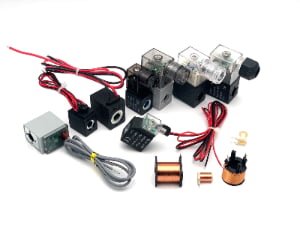
Struggling to pick between brass and plastic solenoid valves1? Choosing the wrong one can lead to leaks and failures. I will help you find the right material for your needs.
The best material depends on your application. Brass is great for industrial use because of its durability. Plastic is often used in home appliances, especially when food-grade materials are needed. The right choice balances performance, cost, and safety requirements for your specific project.
Choosing the right material is a big decision. It affects everything from how long your product lasts to its overall cost. Let's break down the key differences to help you make a smart choice and find a reliable solution that works for you.
Which material lasts longer in real-world applications?
Worried your valve will wear out too soon? A valve failure can damage your brand's reputation. Let's see which material, brass or plastic, offers the best long-term durability.
Generally, brass valves last longer, especially in tough industrial settings. They resist wear and tear better than most plastics. However, high-quality engineering plastics2 can also be very durable, particularly when designed for specific environmental challenges like chemical exposure or constant moisture.
In my 20 years of experience as a manufacturer, I've seen brass valves in factories that have been running for decades. They are incredibly tough and handle physical stress very well because they are metal. On the other hand, some plastics can become brittle or crack over time, especially if they are exposed to sunlight or big temperature changes. But "plastic" is a very broad term. Some advanced plastics, like those we use for specialized projects, can actually outperform brass in certain corrosive environments.
For home appliances, we engineer plastic valves that are designed to last for over ten years of daily use. It all comes down to the quality of the specific material and the manufacturing process. As a supplier to major European brands, our quality control is strict. A poorly made brass valve will fail much faster than a high-quality plastic valve from one of our eight production lines.
Durability at a Glance
| Feature | Brass | Plastic |
|---|---|---|
| Mechanical Strength | Excellent | Good to Excellent (Varies by type) |
| Wear Resistance | High | Moderate to High |
| Typical Lifespan (Industrial) | 10-20+ Years | 5-10 Years (Varies greatly) |
| Typical Lifespan (Appliance) | Very Long | 7-15 Years (Engineered for product life) |
Which valve is better for water, gas, or chemical media?
Are you afraid of using the wrong valve for your specific media? A chemical reaction could cause leaks or contamination. Let's match the right material to your application's media.
Brass is excellent for neutral media like water, air, and inert gases. For aggressive chemicals or very pure water, specialized plastics are often a better choice. Food-grade plastics are required for any application involving drinking water or food products to ensure safety.
The fluid or gas that runs through your valve is the most important factor. Brass works great with things that are not corrosive. Think air, oil, or neutral water. However, some types of water with high mineral content can cause a problem called dezincification, which weakens the brass over time.
This is where plastic really shines. There is a huge variety of plastics available. Some are perfect for acids, while others work well with bases. In the home appliance industry, especially for kitchen products, we must use food-grade plastic3. This ensures the user's health and safety. For other uses, like a standard toilet, the safety requirements for the plastic are lower.
I remember a project for a client who was designing a toilet for coastal homes that used seawater for flushing. Brass was not an option because the salt would corrode it quickly. We worked with the client to develop a custom valve using a special polymer that was highly resistant to saltwater. The project was a huge success. It showed me how a custom plastic solution is often the superior choice for a specific, challenging environment.
Media Compatibility Guide
| Media Type | Brass Recommendation | Plastic Recommendation |
|---|---|---|
| Potable Water | Good, but check for lead-free compliance4. | Excellent (Must be food-grade plastic). |
| Air, Inert Gas | Excellent. | Good. |
| Acids & Bases | Poor. | Excellent (Requires specific chemical-resistant plastic). |
| Saltwater | Poor (Corrodes). | Excellent (Requires specific corrosion-resistant plastic5). |
Is brass worth the higher cost compared to plastic?
Is your budget tight? The higher initial cost of brass can be a concern. Let's analyze if the long-term value of brass justifies its price tag compared to plastic.
Brass valves have a higher upfront cost because of the raw material price and the machining process6. Plastic valves are generally cheaper to produce, especially in large volumes. The "better" value depends on the total cost of ownership, including lifespan and replacement costs.
As a manufacturer, we see these costs every day. The price of copper, which is used to make brass, is much higher than the price of plastic resins. Also, shaping a valve from a solid piece of brass requires more machine time and labor than injection molding7 a plastic part. For our clients who are large appliance brands and order millions of units, the cost savings from using a custom-molded plastic valve are huge.
However, the initial price is not the whole story. You have to think about the total cost of ownership. For a procurement manager at an industrial plant, paying more for a brass valve that prevents even one hour of factory downtime is an easy choice. A cheap plastic valve that fails early can end up costing much more in repairs and lost production. The key is to balance the initial investment with the long-term reliability required for your product. It’s not just about the price of the part; it’s about the cost of failure.
Cost Analysis
| Cost Factor | Brass | Plastic |
|---|---|---|
| Raw Material Cost | High | Low |
| Manufacturing Process | Machining (More Expensive) | Injection Molding (Less Expensive) |
| Initial Purchase Price | Higher | Lower |
| Total Cost of Ownership | Can be lower in demanding applications | Can be lower in high-volume, less demanding applications |
Which material performs better under pressure and temperature8 changes?
Are you concerned about performance in extreme conditions? High pressure or temperature can cause a valve to fail. Let's see which material holds up best when the conditions get tough.
Brass generally handles higher pressures and a wider range of temperatures than most standard plastics. It is less likely to deform under heat. However, special high-performance plastics9 can be engineered to withstand significant pressure and temperature extremes.
Pressure and temperature are critical stress factors for any valve. Brass, being a metal, has a natural advantage here. It can typically handle very high pressures and temperatures found in industrial steam lines or hydraulic systems without losing its shape.
Plastic, on the other hand, has a lower tolerance for heat and pressure. Standard plastics can soften or warp if they get too hot. However, this is not true for all plastics. We work with advanced engineering polymers that are designed for high-performance applications. In a home appliance like a coffee machine or a dishwasher, the temperatures and pressures are well within the operating range of the food-grade plastic3s we use. Our engineering team always confirms the client's specifications for pressure and temperature. Then, our quality control staff, who support our 8 production lines, test the products to make sure they meet these critical performance standards and all compliance requirements like CE, UL, and TUV.10
Performance Limits
| Parameter | Brass | Standard Plastic | High-Performance Plastic |
|---|---|---|---|
| Max Pressure | Very High (e.g., >500 PSI) | Low to Moderate (e.g., <150 PSI) | Moderate to High (e.g., >250 PSI) |
| Max Temperature | High (e.g., >150°C / 300°F) | Low (e.g., <60°C / 140°F) | High (e.g., >120°C / 250°F) |
| Performance in Cold | Excellent | Can become brittle | Good (Varies by type) |
How do I choose the right valve material for my specific application?
Are you feeling overwhelmed with all the choices? Making the wrong decision can lead to costly mistakes. I will give you a simple framework to select the perfect valve material.
To choose correctly, you must analyze your application's specific needs. Consider the media type, operating pressure and temperature, required lifespan, and your budget. Creating a checklist of these factors will guide your decision between brass and plastic.
As a purchasing or brand manager, asking the right questions is the key to avoiding problems later. At SolenElec, we have used our 20+ years of OEM/ODM experience11 to create a simple process to help our clients. We walk through these questions together to find the perfect solution.
First, define the media. What will flow through the valve? Is it corrosive? Does it need to be food-safe? Second, determine the operating conditions. What are the maximum and minimum pressures and temperatures the valve will experience? Third, think about the environment. Will it be indoors or outdoors? Will it be exposed to chemicals or sunlight? Fourth, evaluate lifespan versus cost. How long does the product need to last, and what is your target cost for the component? Finally, consider compliance. What certifications like RoHS, REACH, or UL are necessary for your market? By answering these questions, you create a clear profile for the ideal valve. This makes the choice between brass, plastic, or a custom solution much simpler.
Your Decision-Making Checklist
| Question | Your Application's Need | Material Indication |
|---|---|---|
| 1. What is the media? | (e.g., Drinking Water, Chemicals, Air) | Food-Grade Plastic for water; Special Plastic for chemicals; Brass for air. |
| 2. What is the max pressure? | (e.g., 50 PSI, 300 PSI) | Plastic for low pressure; Brass for high pressure. |
| 3. What is the max temperature? | (e.g., 40°C, 120°C) | Plastic for low temp; Brass or High-Performance Plastic for high temp. |
| 4. What is the required lifespan? | (e.g., 5 years, 15+ years) | Plastic for shorter life; Brass for very long life. |
| 5. What is the budget per unit? | (e.g., Low, Flexible) | Plastic for lower budgets; Brass if performance justifies the cost. |
Conclusion
Choosing between brass and plastic is not about which is better, but which is right for you. By analyzing your needs, you can select a valve that ensures reliability and value.
Plastic solenoid valves are often used in home appliances for their cost-effectiveness and suitability for food-grade applications. ↩
Engineering plastics offer unique properties that can outperform metals in certain environments, making them a valuable choice. ↩
Food-grade plastic ensures safety and compliance in kitchen appliances, preventing contamination and ensuring user health. ↩
Lead-free compliance is crucial for safety and regulatory reasons, especially in applications involving potable water. ↩
Corrosion-resistant plastics are essential for applications involving aggressive chemicals or saltwater, ensuring valve longevity. ↩
The machining process for brass valves contributes to their higher cost but ensures precision and durability. ↩
Injection molding allows for cost-effective mass production of plastic valves, making them affordable for large-scale use. ↩
Understanding material performance under pressure and temperature is crucial for selecting the right solenoid valve. ↩
High-performance plastics can withstand extreme conditions, offering an alternative to metals in demanding applications. ↩
Understanding TUV certification helps ensure your solenoid valves meet international safety and quality standards, crucial for reliable and compliant products. ↩
OEM/ODM experience ensures high-quality production and customization to meet specific client needs in solenoid valves. ↩